
Grow Guides
How Often to Water Plants (Beginner Guide)
A beginner-friendly rhythm for watering edible plants at home, with the finger test that prevents most early failures.
Grower-to-grower guides on how to start, water, feed, and harvest a garden at home. Written for the kitchen windowsill, the balcony container, and the backyard raised bed.
Whatever a home grower meets in a season, the answer should be findable here in under a minute. Every guide is written by a grower for growers, no jargon, no fluff.

What the roots are sitting in, when to water, and how to read what the plant is telling you.
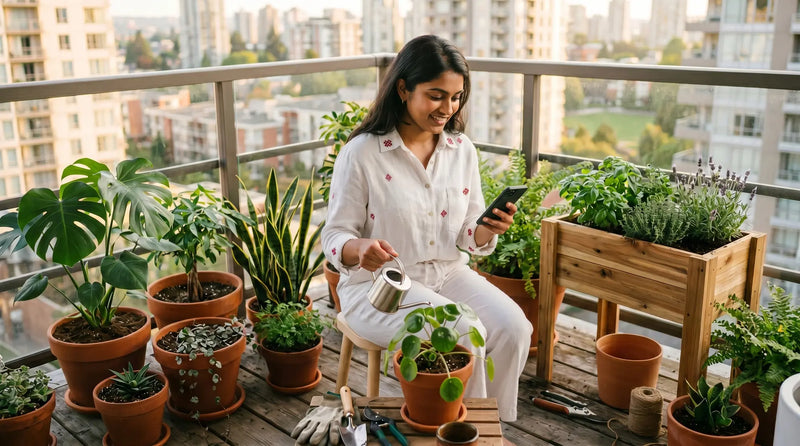
A beginner-friendly rhythm for watering edible plants at home, with the finger test that prevents most early failures.

A side-by-side guide to telling the difference between overwatering and underwatering, with the symptoms that look similar at first and the fixes for each.
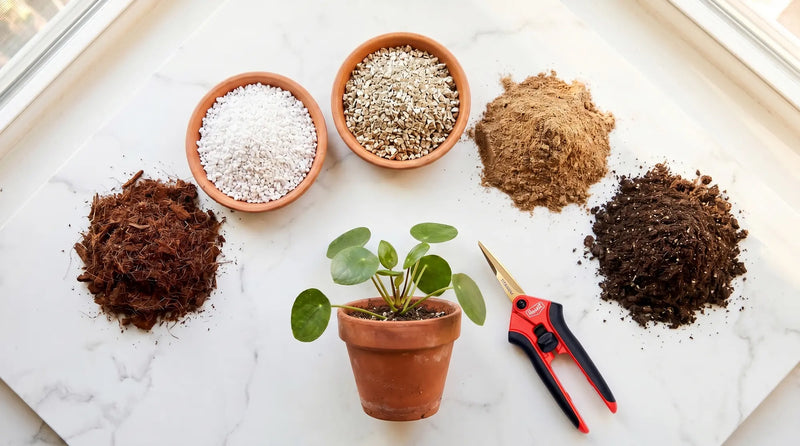
A practical look at coco coir, perlite, vermiculite, and peat for indoor growers, with the strengths, weaknesses, and best uses of each.
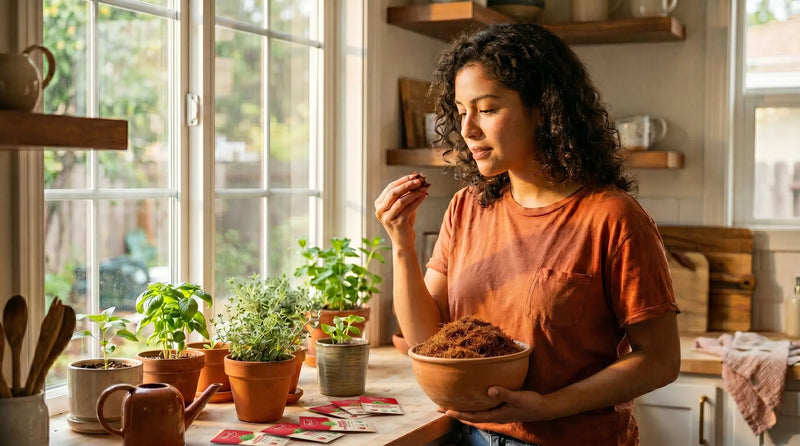
A plain-English guide to coco coir: what it is, where it comes from, why it works as a growing medium, and how to use it well at home.
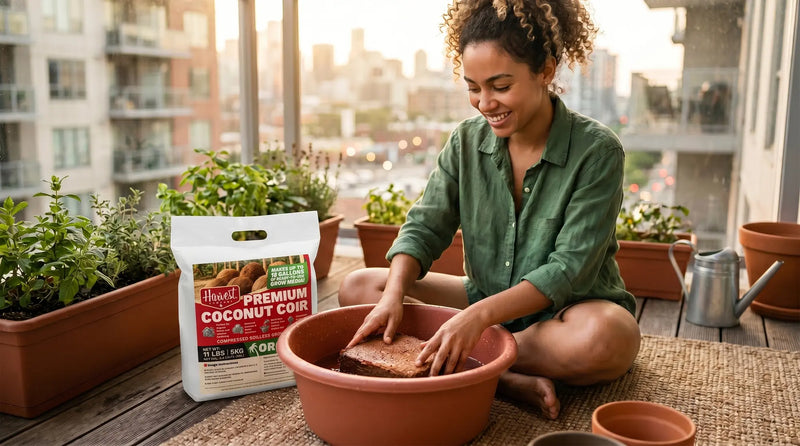
Step-by-step guide to using coco coir at home: how to rehydrate, mix, plant, and feed for healthy roots through the season.

A grower-focused look at why the root zone is where most plant problems start, and the simple habits that keep roots healthy through the season.
Pick a space, pick a plant, and set up a garden that fits the life around it. The eight guides every first-time grower should read in order.
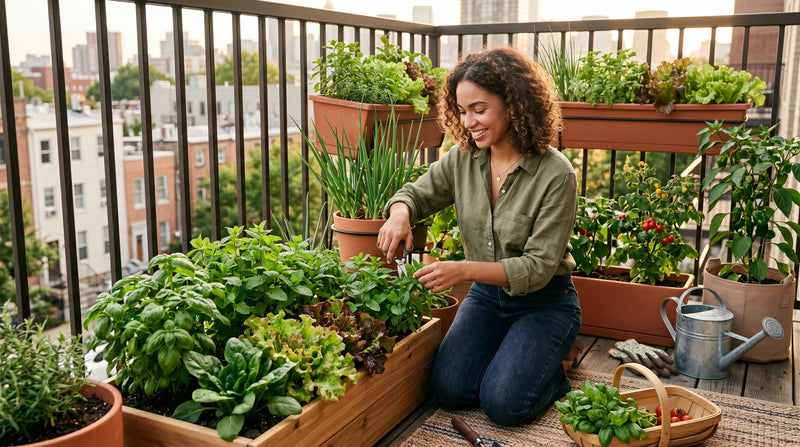
Growing your own food at home is mostly about getting a few things right at the start: the right media so roots have somewhere to go, water on...
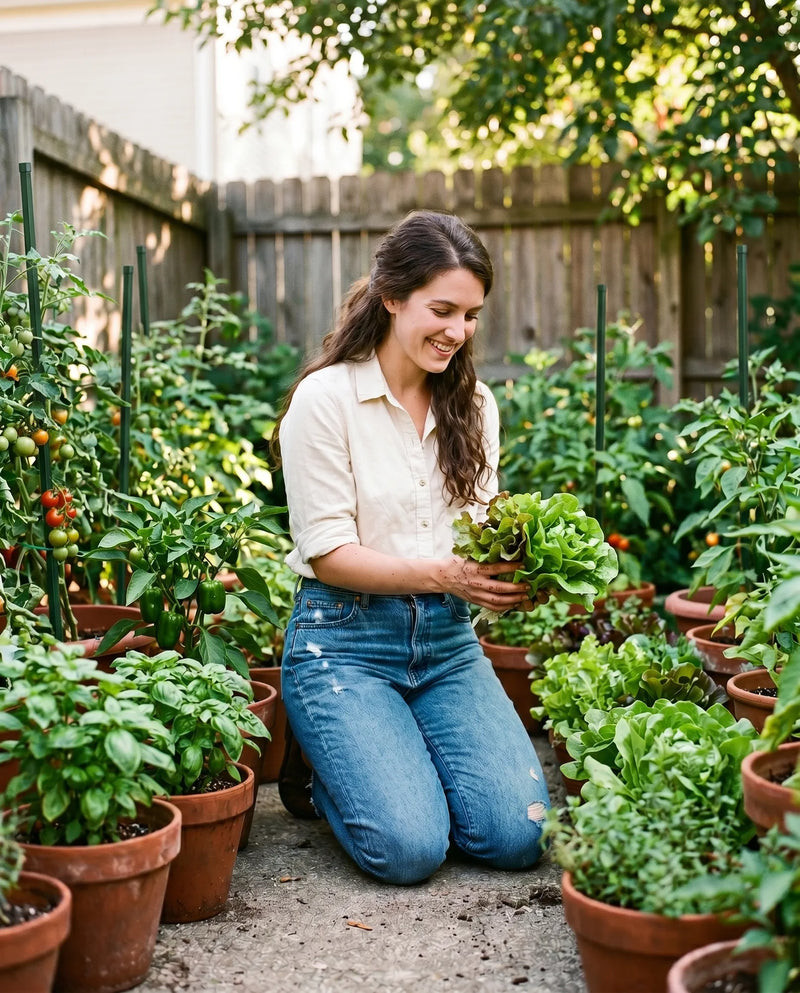
The decision tree for starting a garden at home: pick your space, pick what to grow, set up a forgiving system, and start with the four habits that...

A windowsill-first guide to growing food inside. Year-round herbs and leafy greens, the right window, a simple grow-light option, and the rhythm that keeps an indoor garden producing.

The seasonal version of starting a garden. Pick a sunny spot, decide between in-ground and raised beds, prep the soil, and pick crops that actually fit your climate.

Pots on a patio, balcony, or deck are the most flexible way to grow food at home. Pick the right size, fill it right, and run the season...
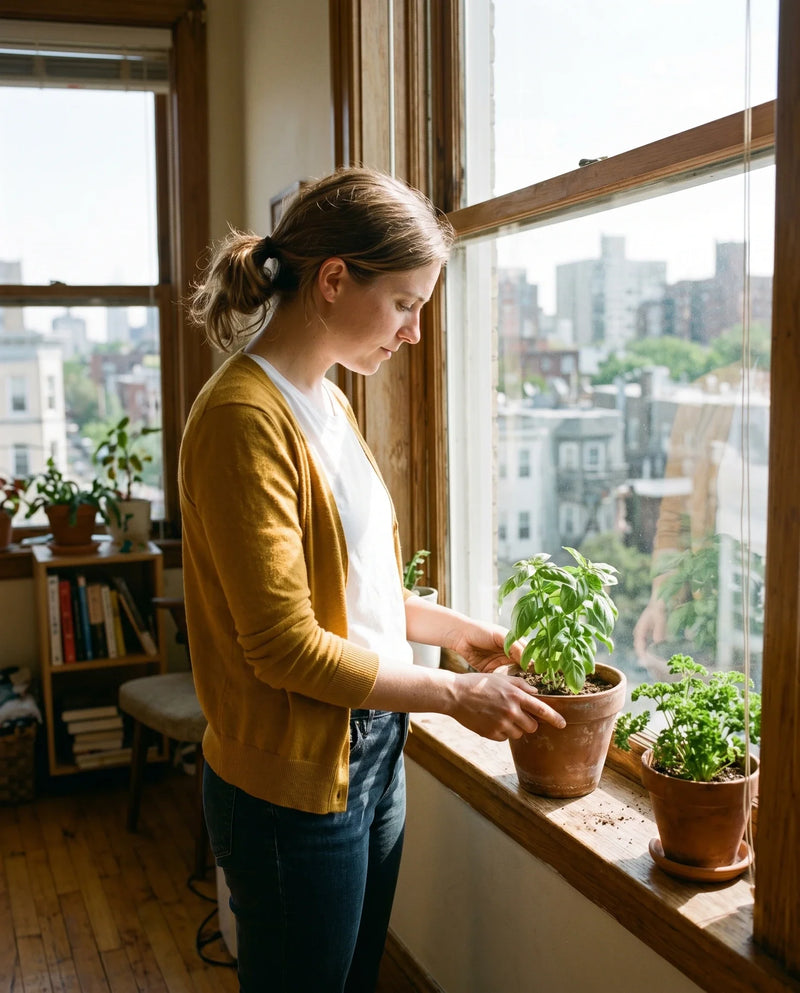
A practical guide to growing food in an apartment. Work around limited light, no yard, and a lease with a setup that is renter-friendly, productive, and easy to...
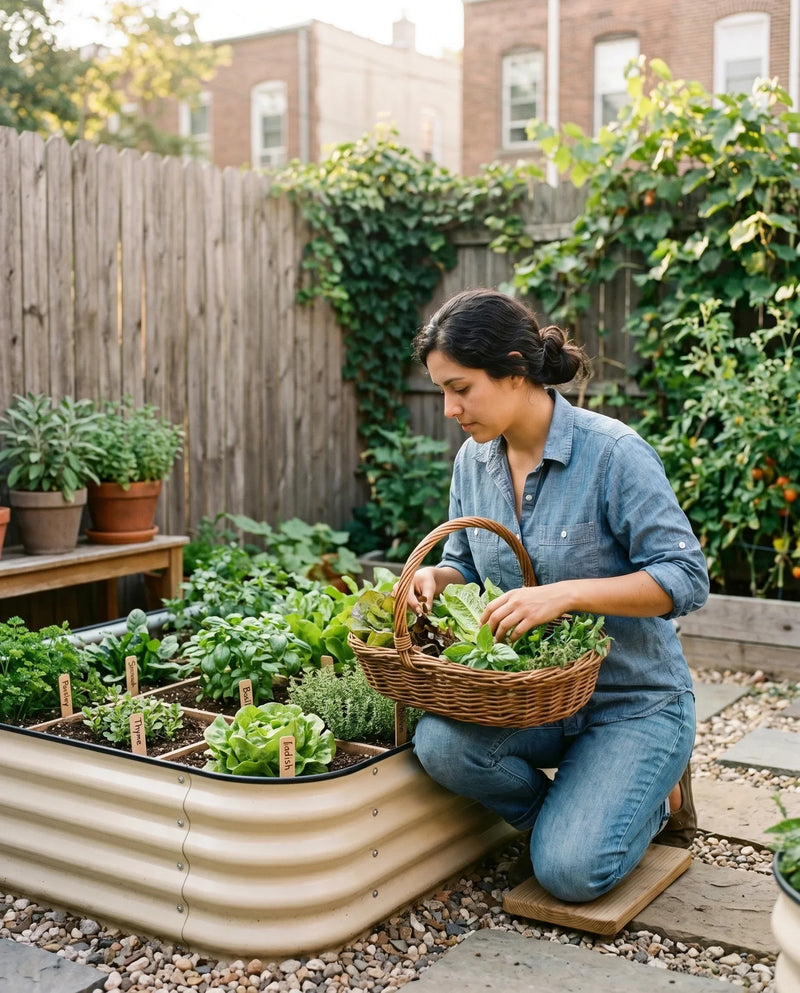
Growing food in tight quarters. Vertical setups, square-foot planning, dense planting, and the crops that produce the most yield per square foot of space.

A weekend setup plan for first-time gardeners. The shopping list, the assembly order, the first-week routine, and three tiers of starter kits to match your budget.

The ten mistakes that derail most first-season gardens and the small habit shifts that fix them. Written by growers, for growers, no judgement.
The easiest crops for a first season, what to plant in spring and fall, herbs worth a sunny windowsill, and a garden planned around the meals you cook every week.
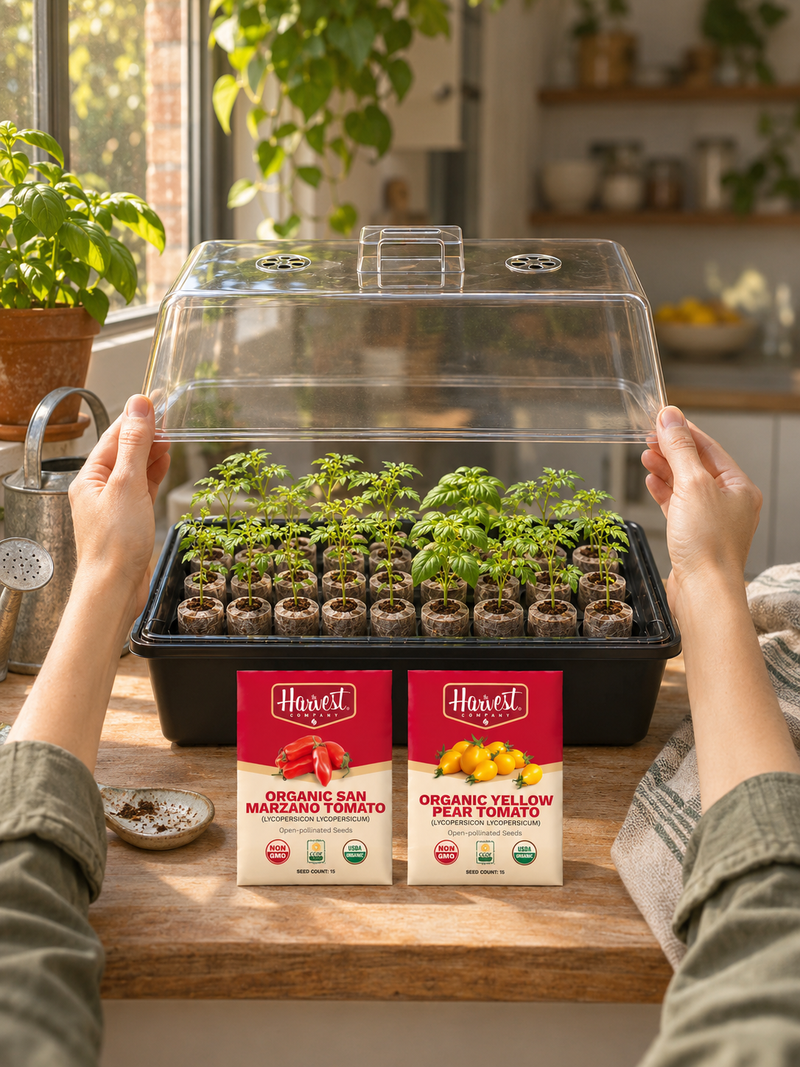
A short list of vegetables that suit a first garden, how to match them to your sun and space, and how to plant them in an order that...
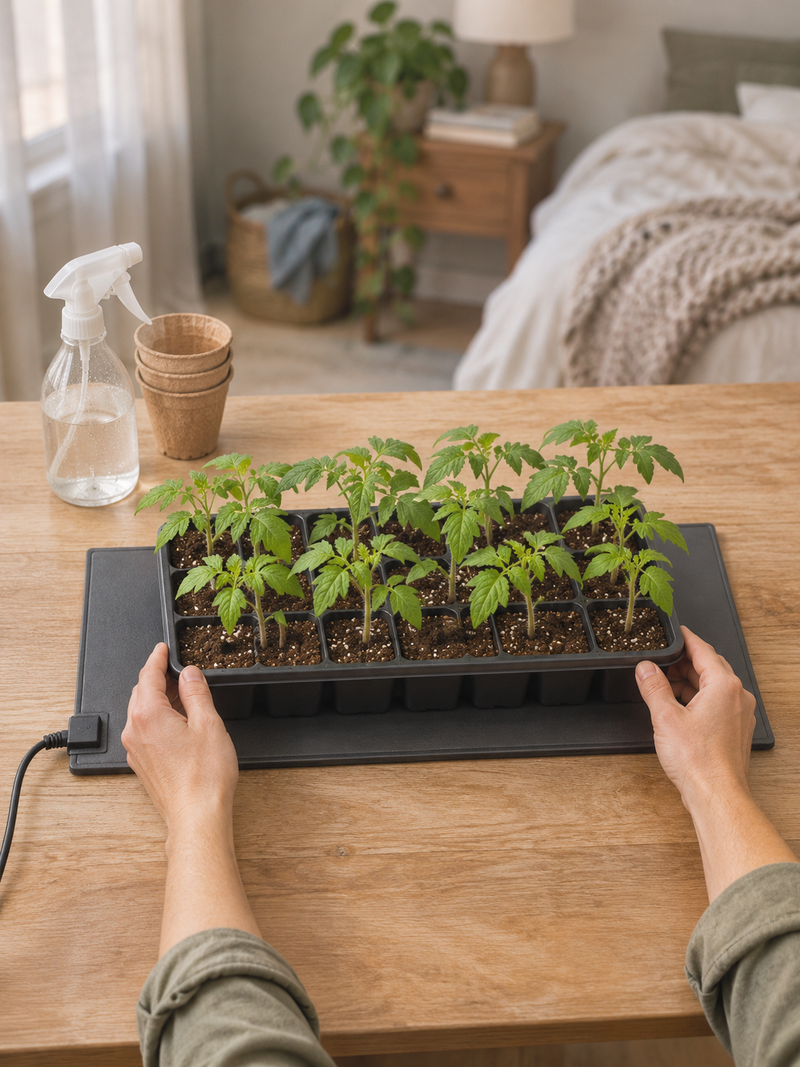
Which crops can go out before your last frost, which wait for warm nights, and how to sequence a spring planting around your local frost date.
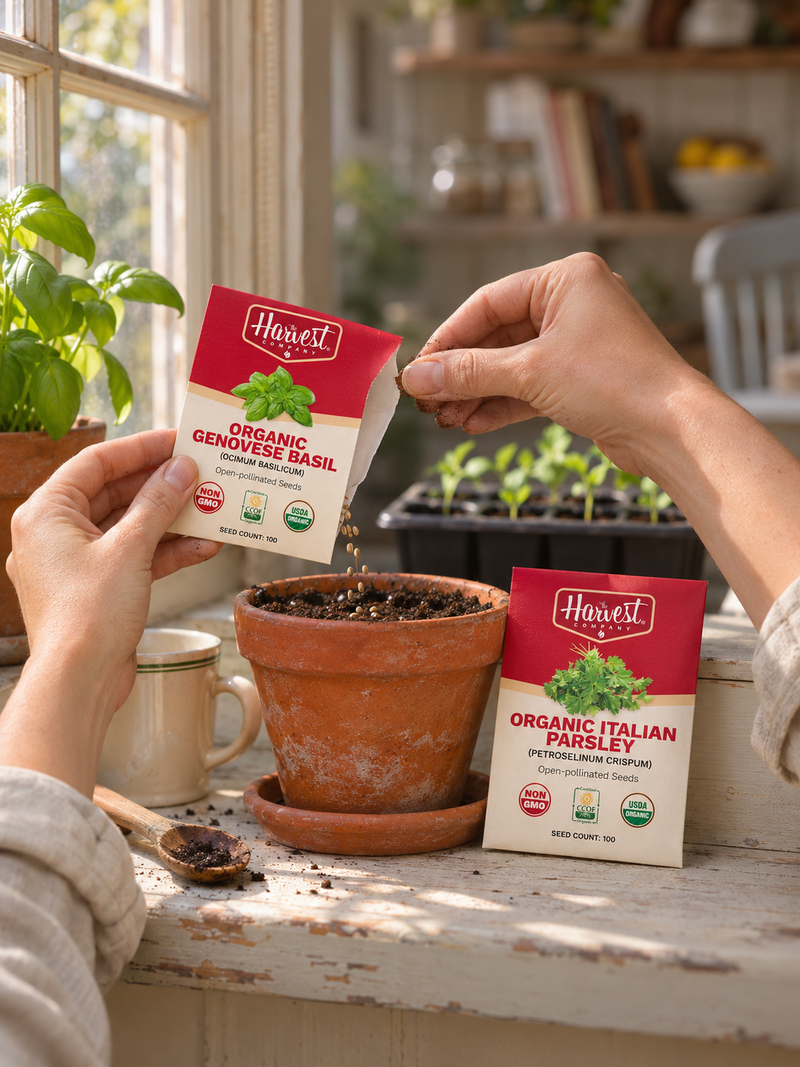
Which herbs earn a place in a home garden, how basil, oregano, and parsley differ in what they want, and how to match each one to a pot,...

How to lay out a pizza garden with San Marzano and Yellow Pear tomatoes, basil, and oregano, including spacing, sun, planting order, and support.
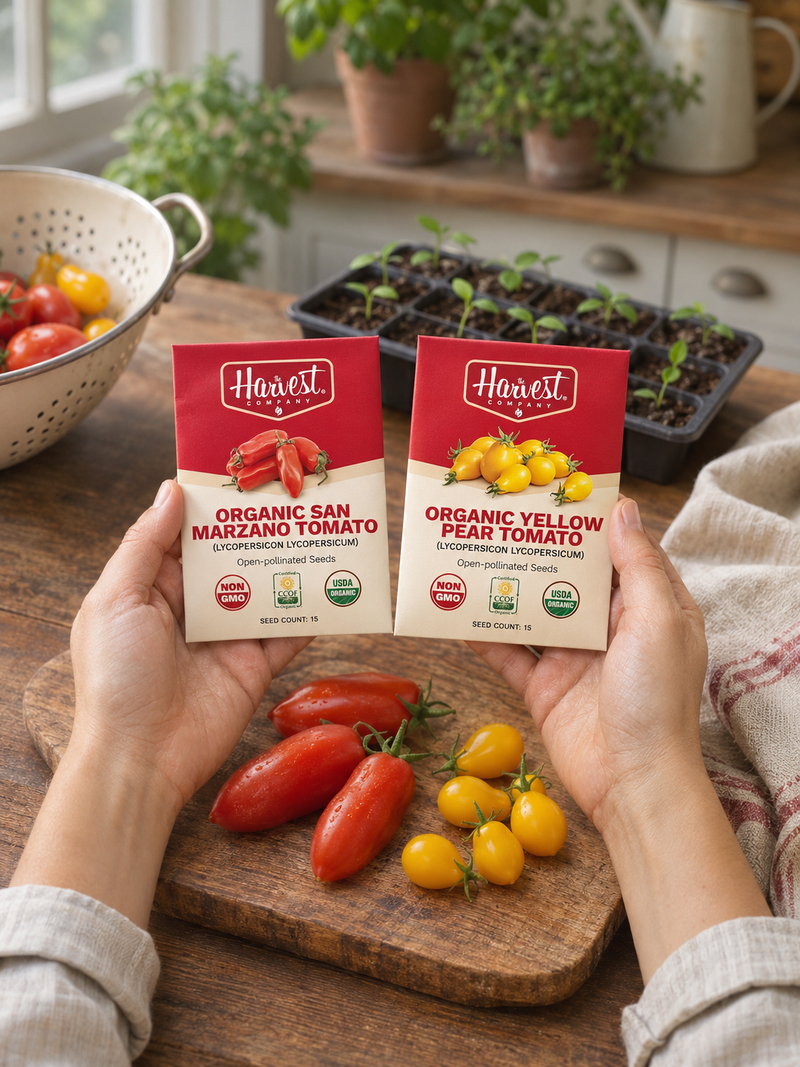
How paste, cherry, and slicing tomatoes differ in use, size, and support, and how to choose the right types for sauce, snacking, and sandwiches.
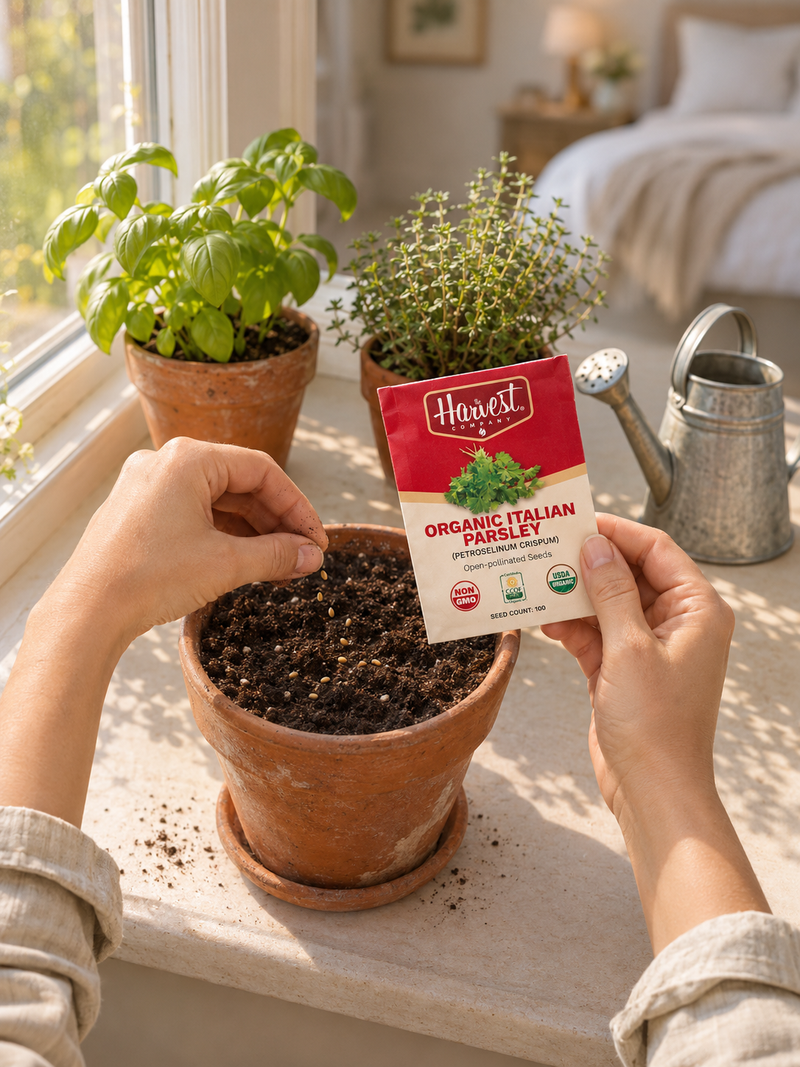
Which crops suit a fall garden, how to count back from your first frost, and which herbs and greens can keep growing on a cool-weather sill.
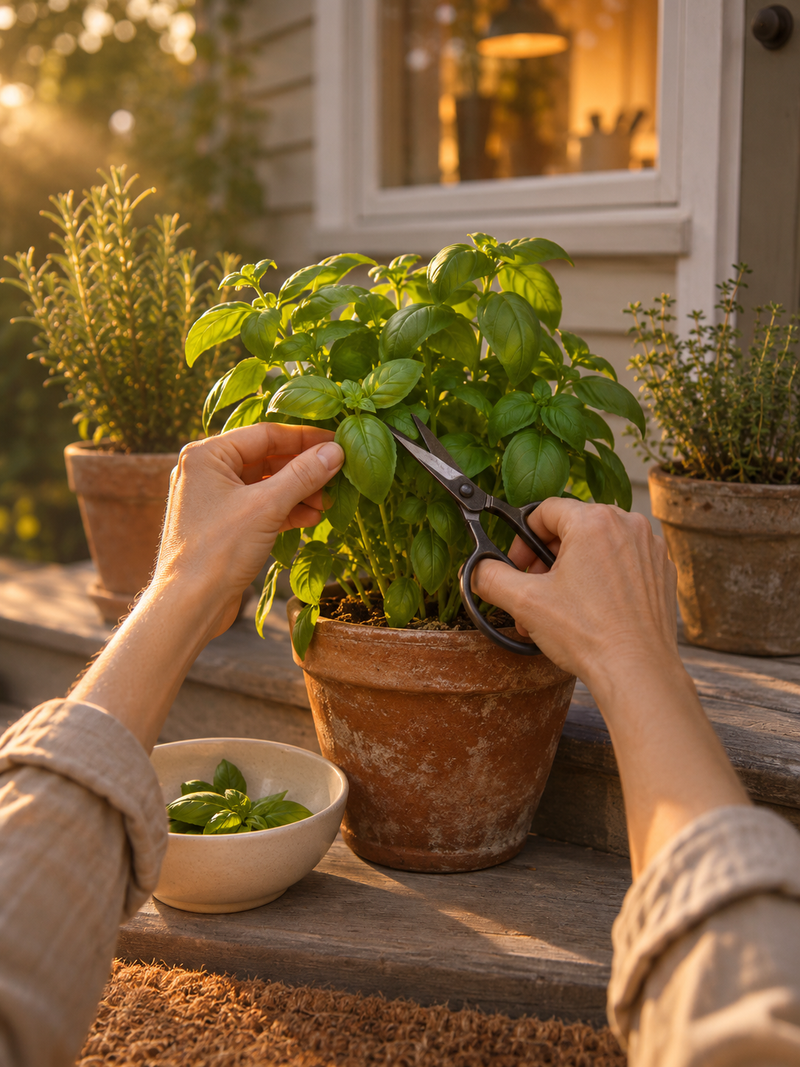
How to turn the dishes you cook most into a planting list, sort crops into daily, weekly, and seasonal tiers, and place them so the garden feeds your...
When to sow, what to sow into, why seeds stall, and how to move seedlings outdoors. Six guides that carry a seed all the way to the garden bed.
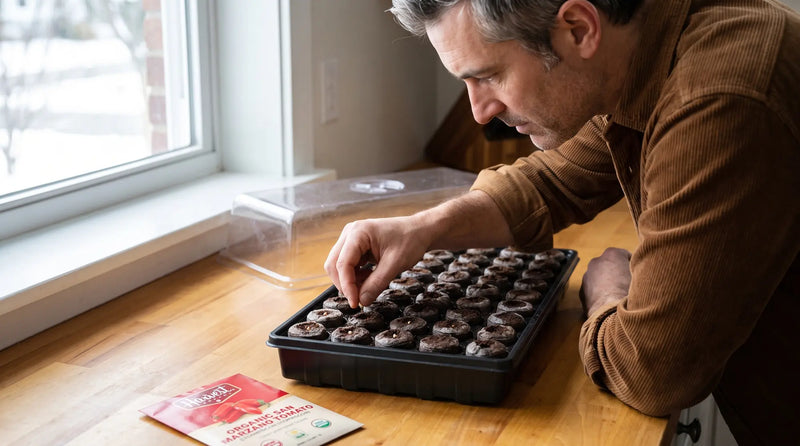
The full seed-to-seedling arc for a windowsill or a balcony: sowing depth, moisture, warmth, light, and the moment to move a seedling into its first real container.
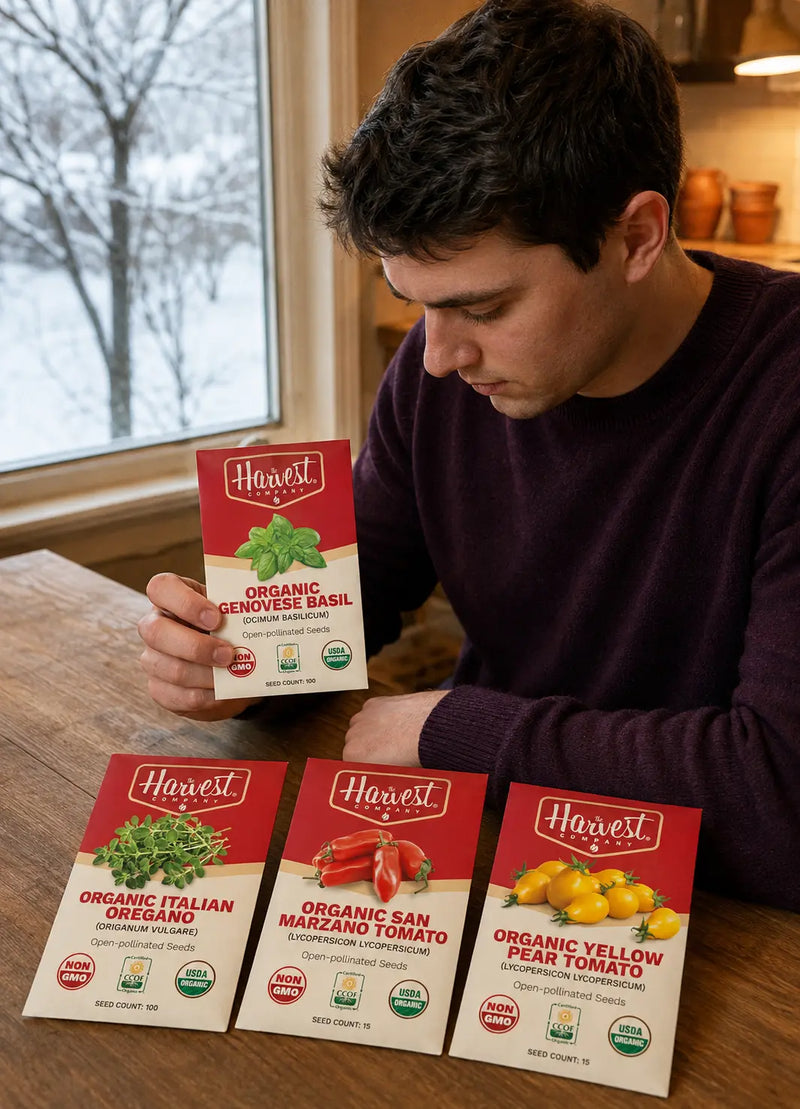
How to count backward from your last frost date to a sowing week, with a month-by-month calendar for tomatoes, basil, oregano, and parsley.
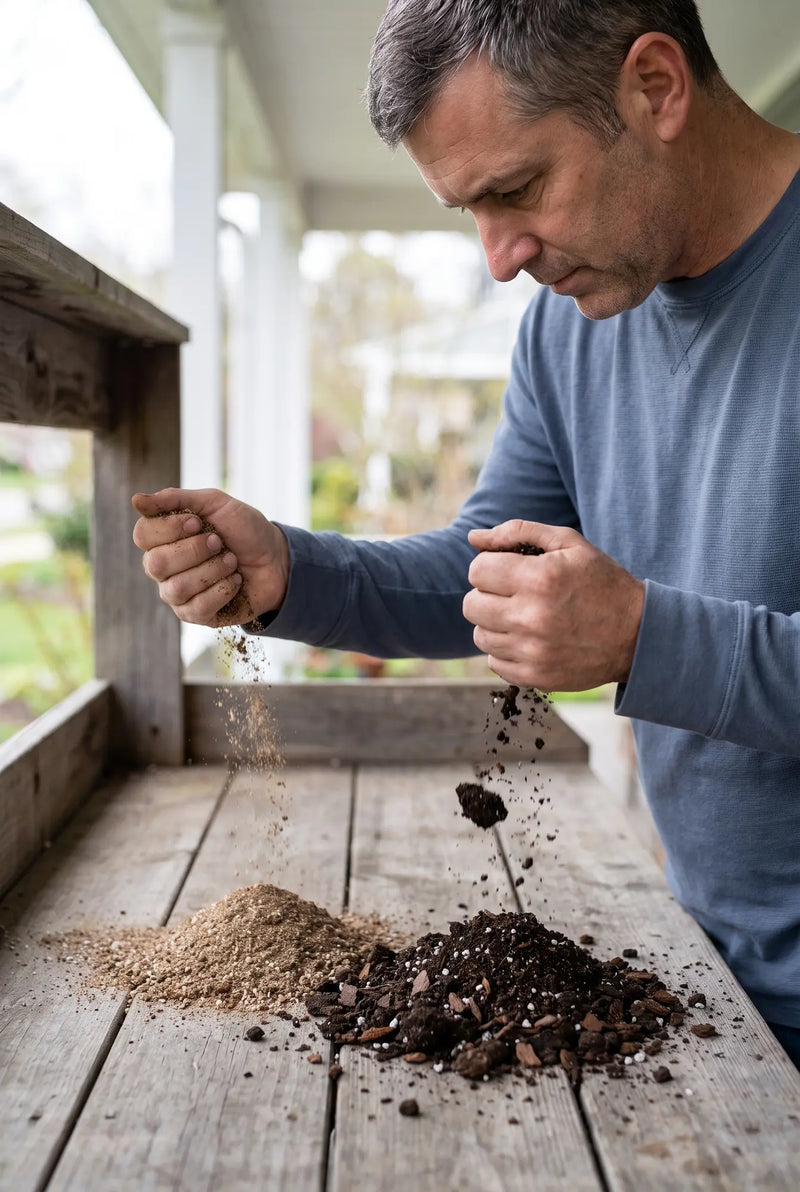
Why a seedling's first four weeks want a different medium than the rest of its life. What makes a coir plug more forgiving than a bag of potting...
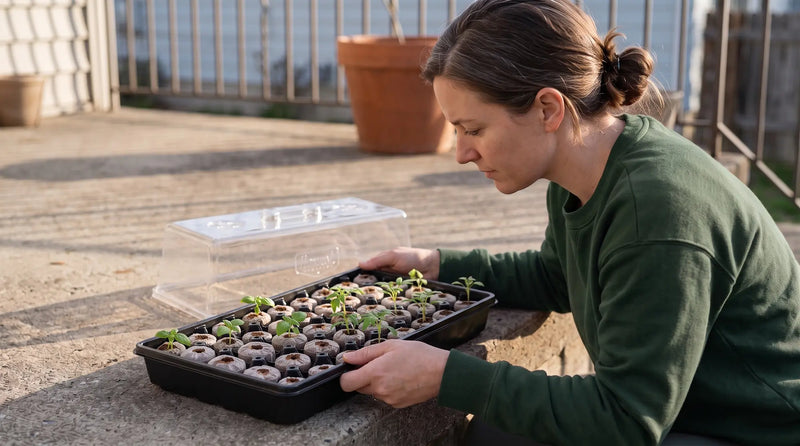
A symptom-first walk through the five reasons a seed tray stays empty. How to tell which cause you are looking at, and when to wait rather than re-sow.
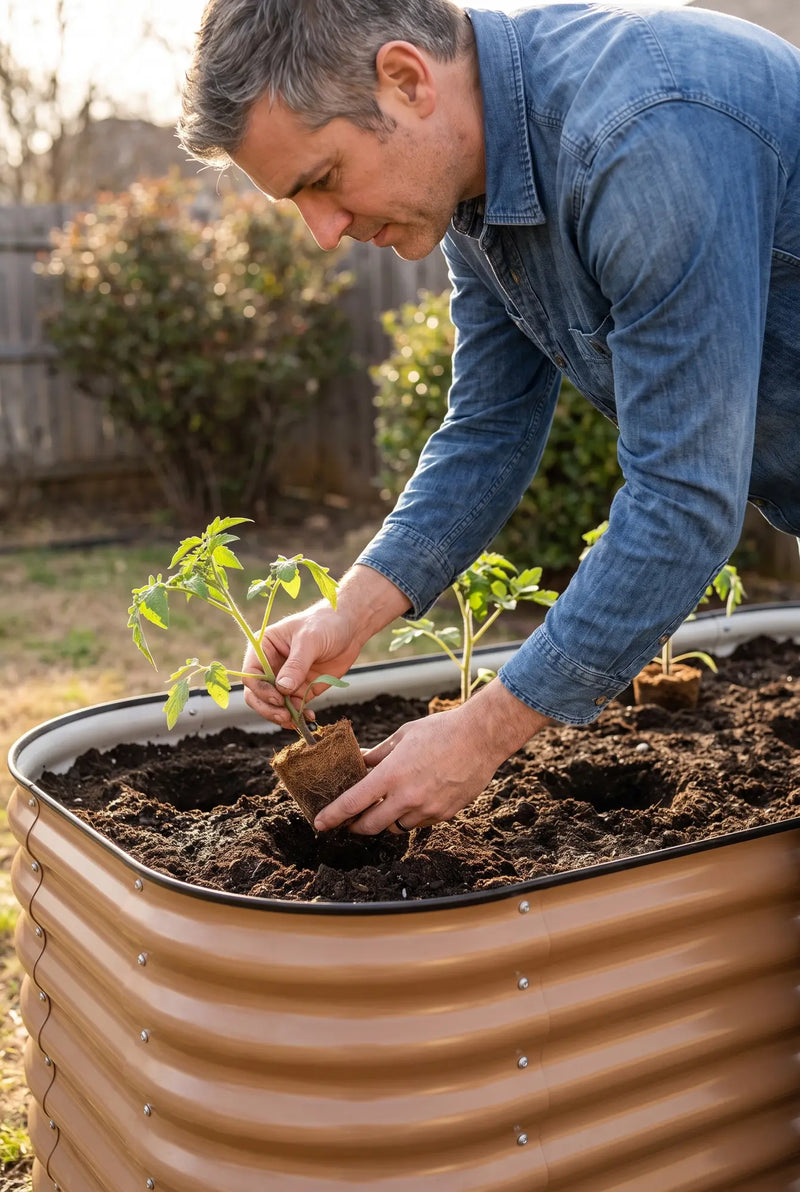
How to read true leaves to time a transplant. The handling that moves a seedling into its long-term container without costing a week of growth.

A seven-day schedule for moving indoor-raised seedlings outside without scorch or stall, and what actually changes inside the plant during that week.
Basil, oregano, parsley, San Marzano and Yellow Pear, each grown from our own seed packets, with the timing, support and harvest notes for that plant.
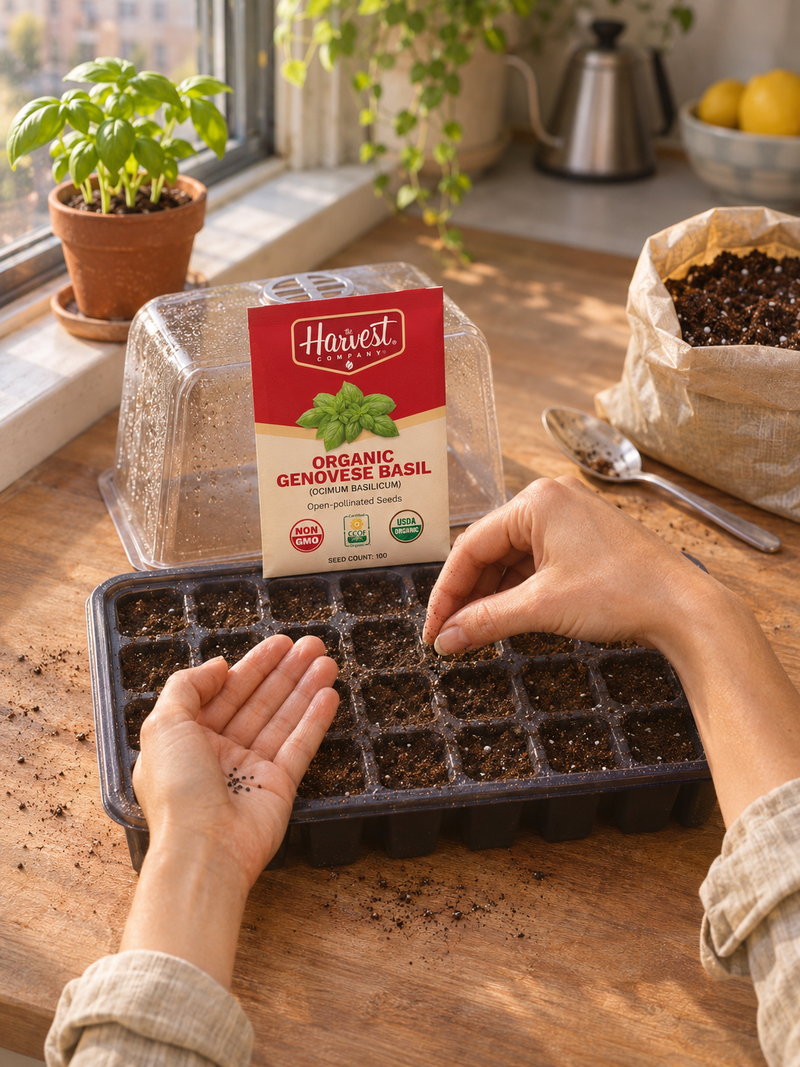
How to grow Genovese basil from seed, from warm sowing and light to pinching, harvesting, and keeping the plant producing through the summer.
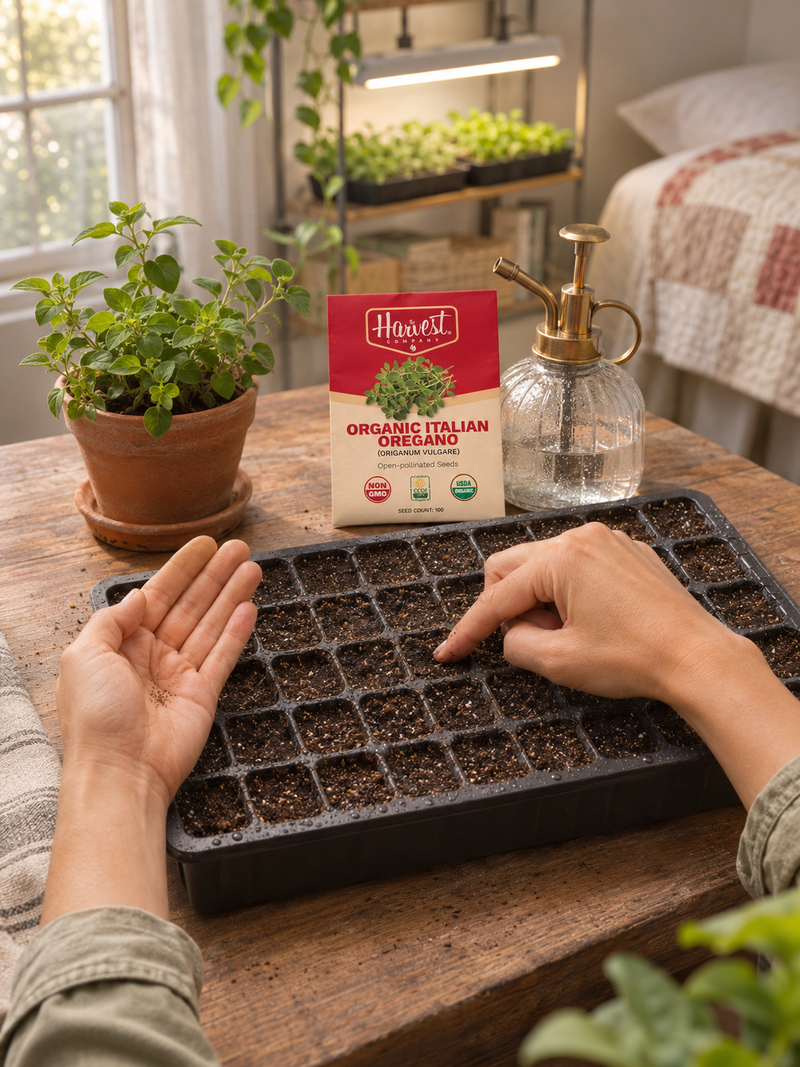
How to start Italian oregano from seed, from sowing the tiny seed on the surface to thinning, hardening off, harvesting, and drying the leaves.
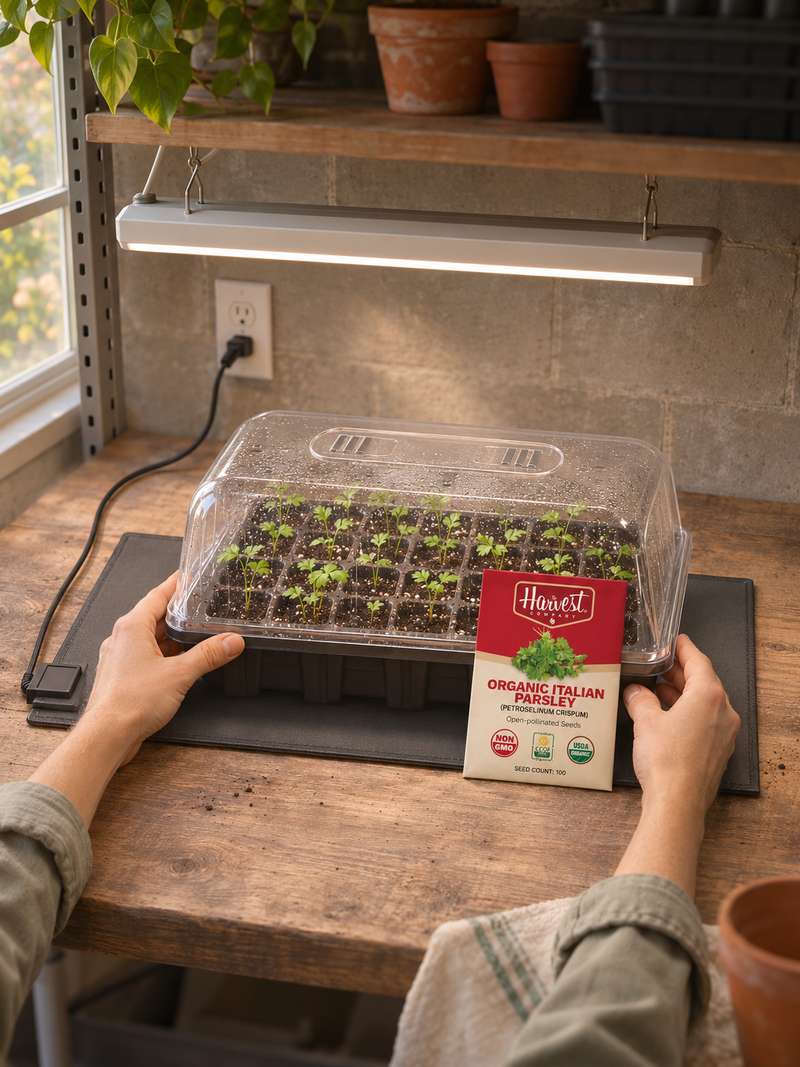
How to grow Italian flat-leaf parsley from seed, including how long it takes to sprout, how to soak the seed, and how to cut it so the plant...
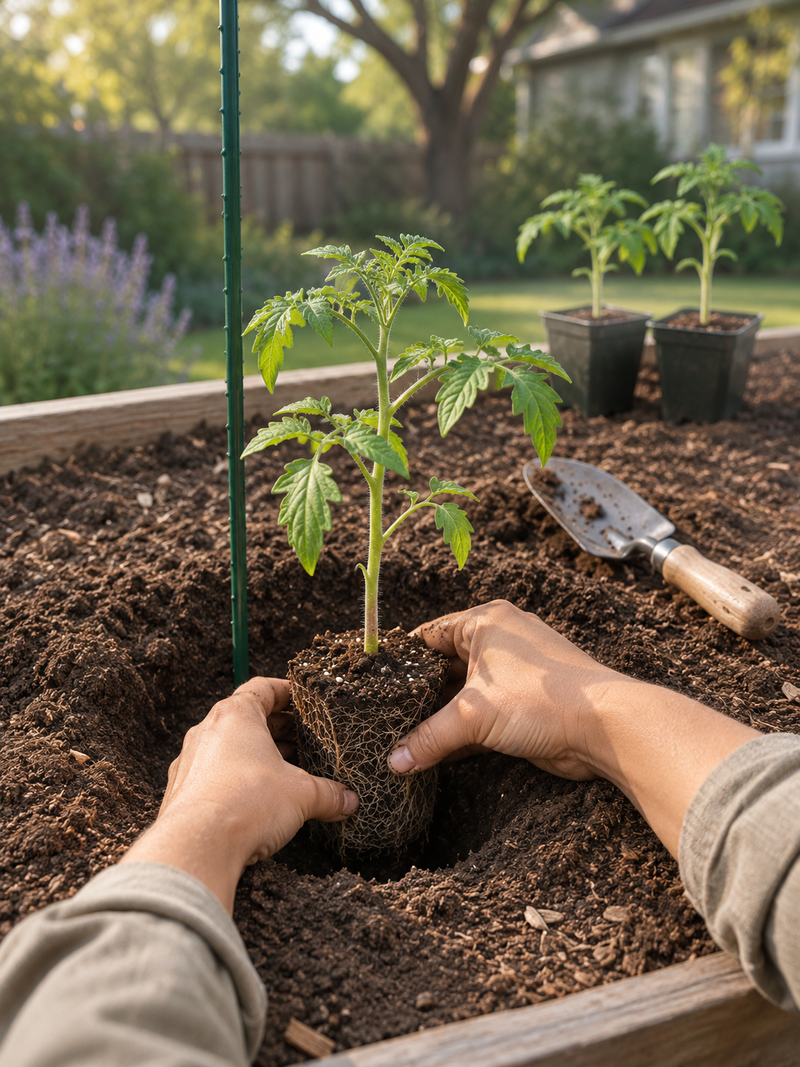
How to grow San Marzano paste tomatoes from seed, from starting indoors six to eight weeks before the last frost to staking, watering, and picking fruit for sauce.
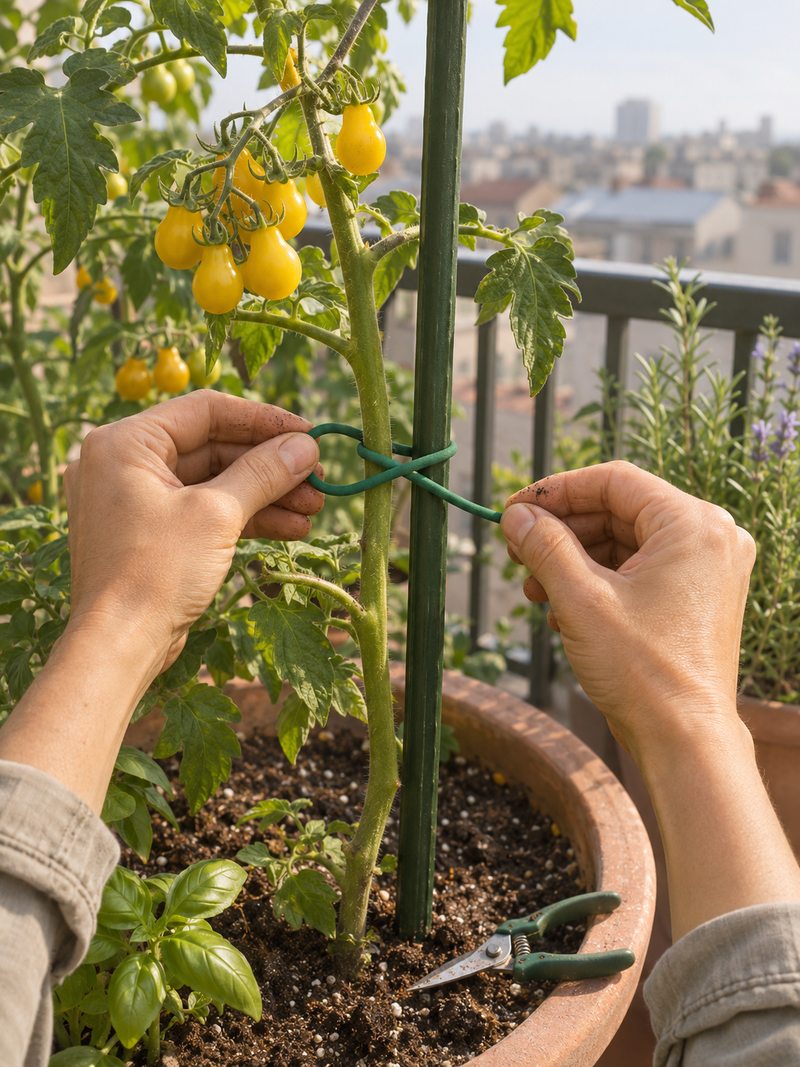
How to grow Yellow Pear cherry tomatoes from seed, covering the indoor start, container or bed planting, support for the vines, and picking fruit at the right moment.
Raised beds, containers, irrigation, starter kits, and growing up instead of out. Five guides to the gear and layout decisions that make every season easier.
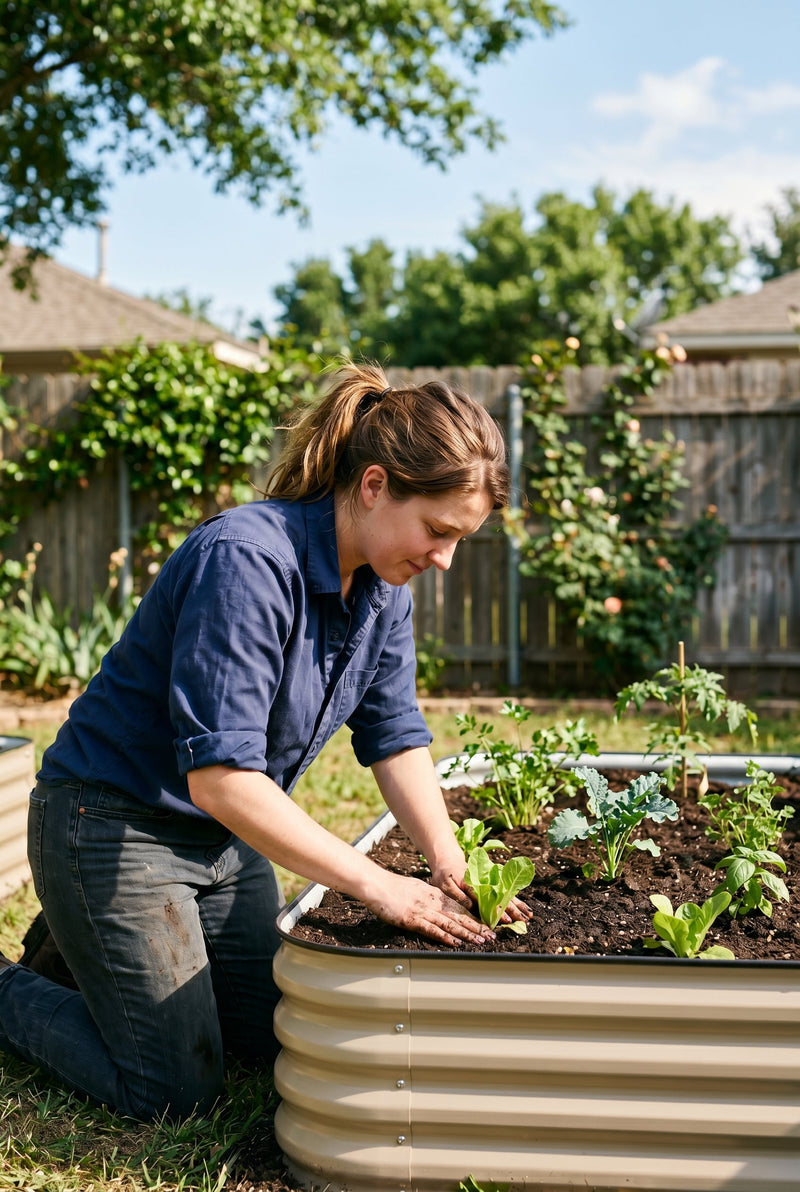
How to choose, build, and fill a raised bed that drains well and grows more food, from siting and sizing to the media mix that makes the season...

How to choose the right container for vegetables, from material and size by crop to drainage and what to fill it with, so the setup works from the...

A beginner-friendly walk-through for building a simple drip-watering system from tubing and barbed fittings, covering layout, main line, branching, emitter placement, shut-off, and timer.

How to choose a starter kit for a first season, what a good kit actually includes, who each type suits, and how to avoid buying gear you will...

How to multiply yield in a small footprint by growing up rather than out, with crop selection, container picks, support methods, and a watering rhythm built for vertical...
Perlite and vermiculite, coir formats and ratios, and a potting mix you can make at home for pots, beds and seed trays.
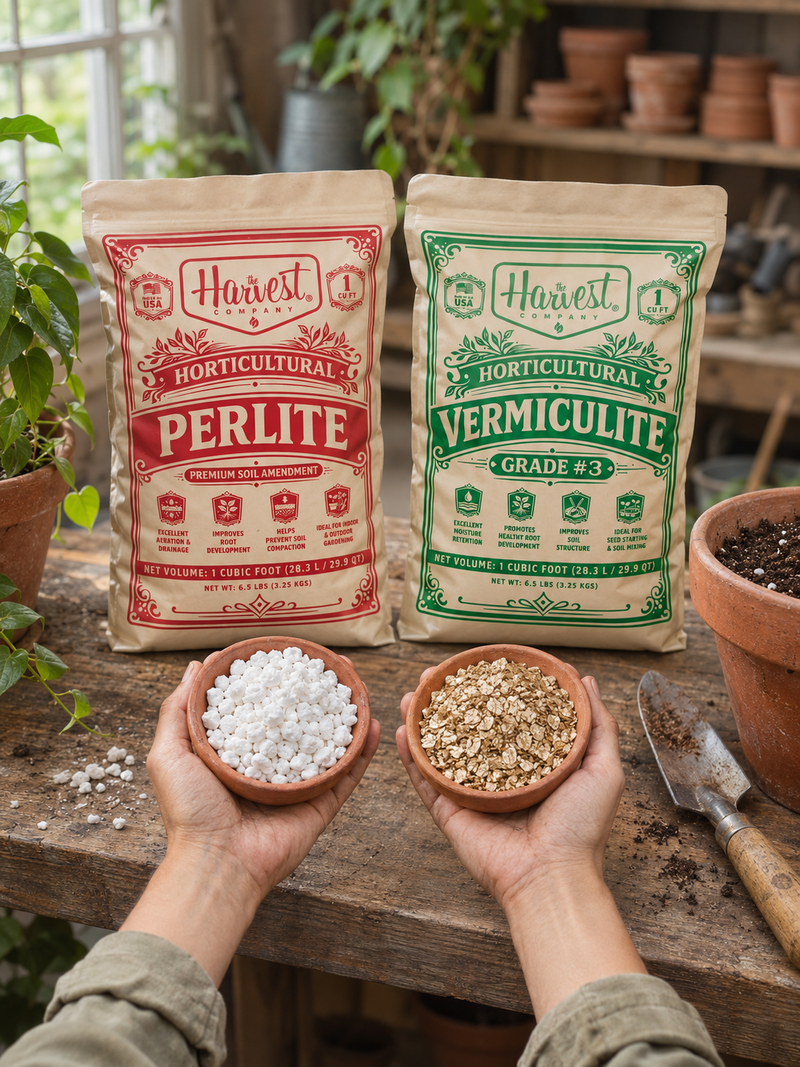
How perlite and vermiculite differ, what each one does in a potting mix, and how to choose between them based on whether your mix runs too wet or...
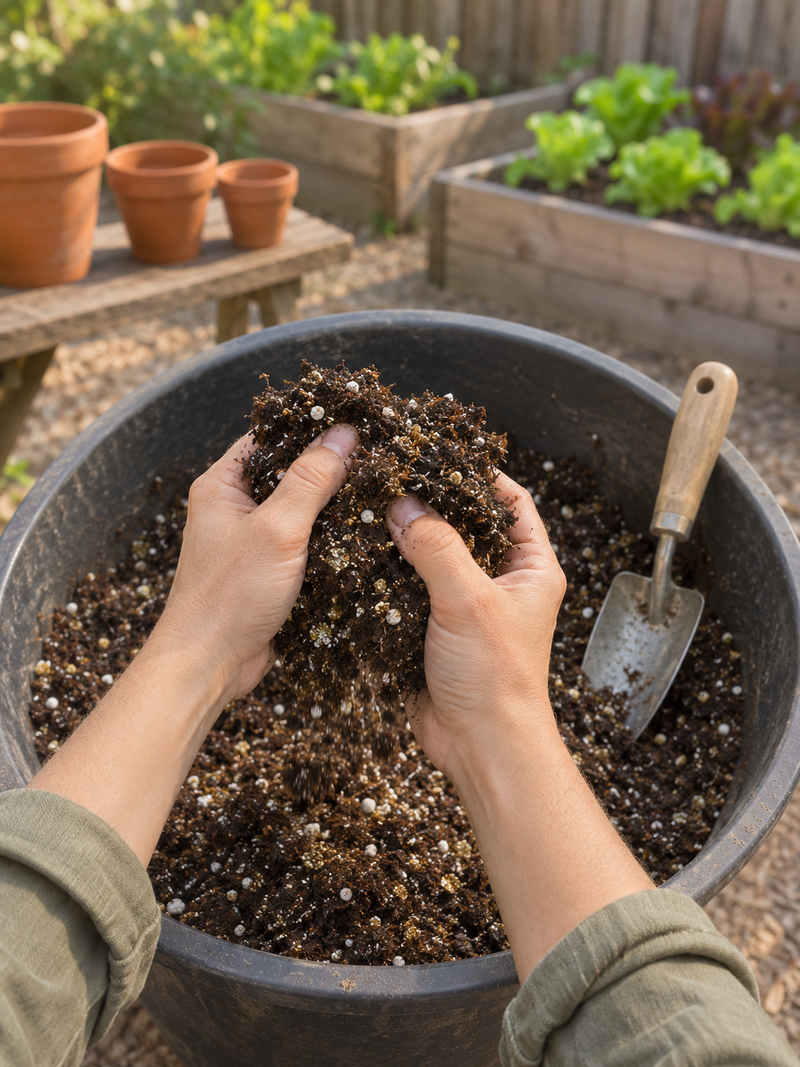
A step-by-step way to blend a soilless potting mix from coco coir, perlite, and vermiculite, with notes on what each ingredient does and how to test the result.

How coarse and chunky perlite differs from standard horticultural perlite, which containers and beds each grade suits, and how to match the grade to your mix.
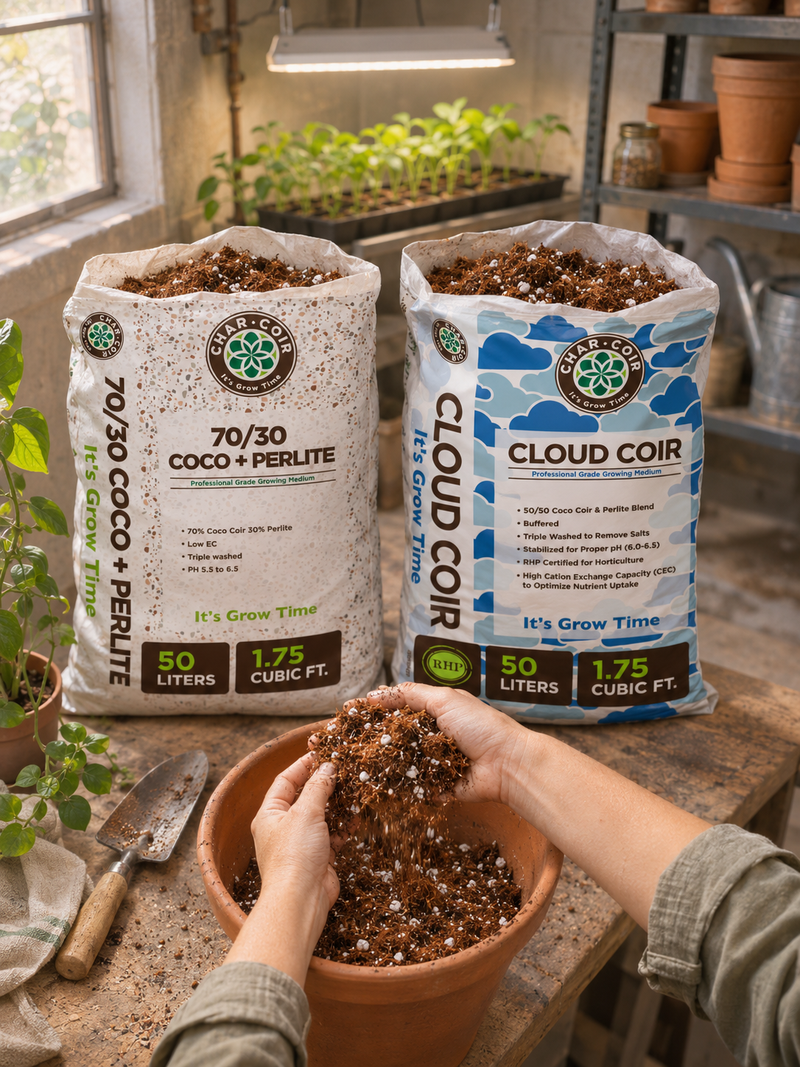
How to choose a coco coir to perlite ratio such as 70/30 or 50/50 based on the plant, the pot size, and your watering routine, with pre-blended options.
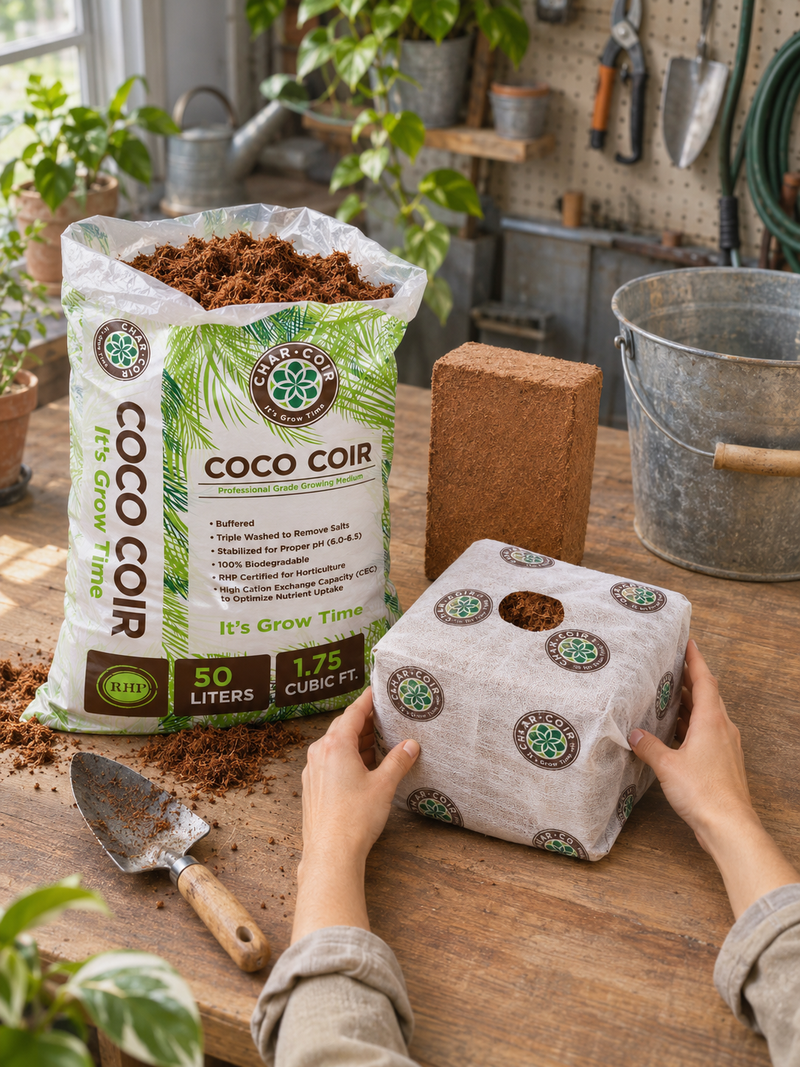
How compressed bricks, loose bags, blocks, and ready-filled coir pots differ, and how to choose the format that fits your space, storage, and planting routine.
Trellises, stakes, netting and soft ties, plus labels that last the season, so climbing crops stay upright and easy to pick.
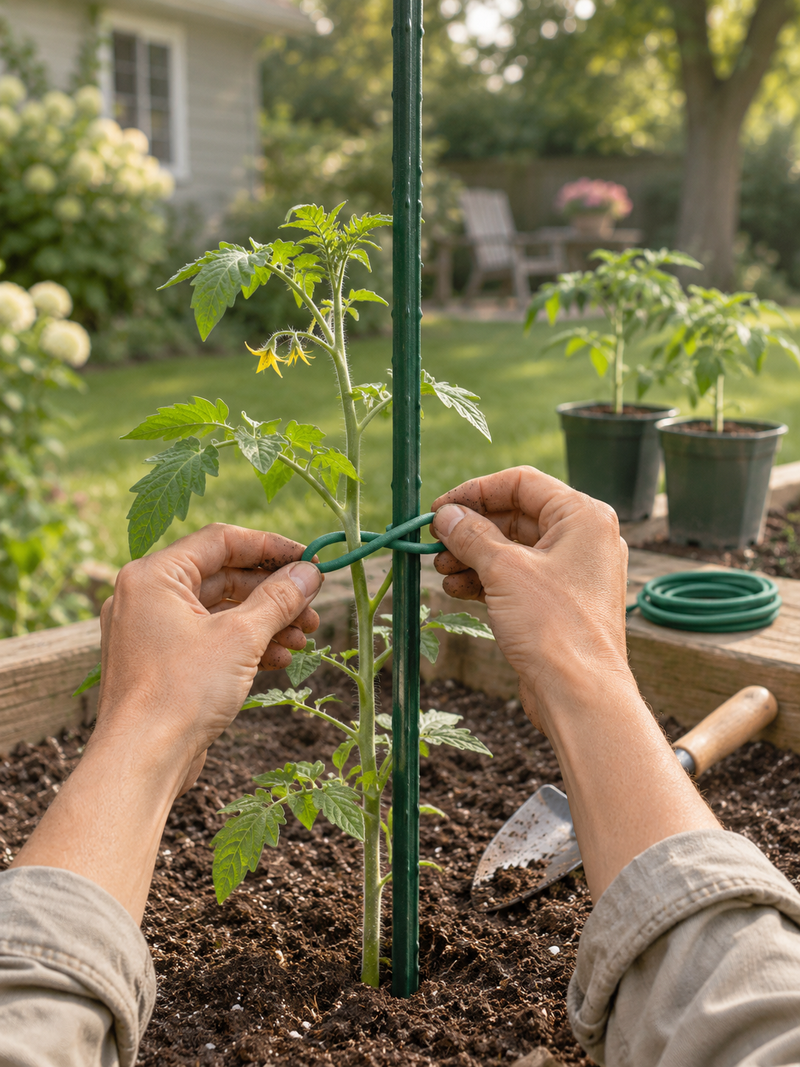
How to support tomato plants with a stake, trellis netting, or a cage, when to set the support, and how to tie vines so the fruit stays clean...
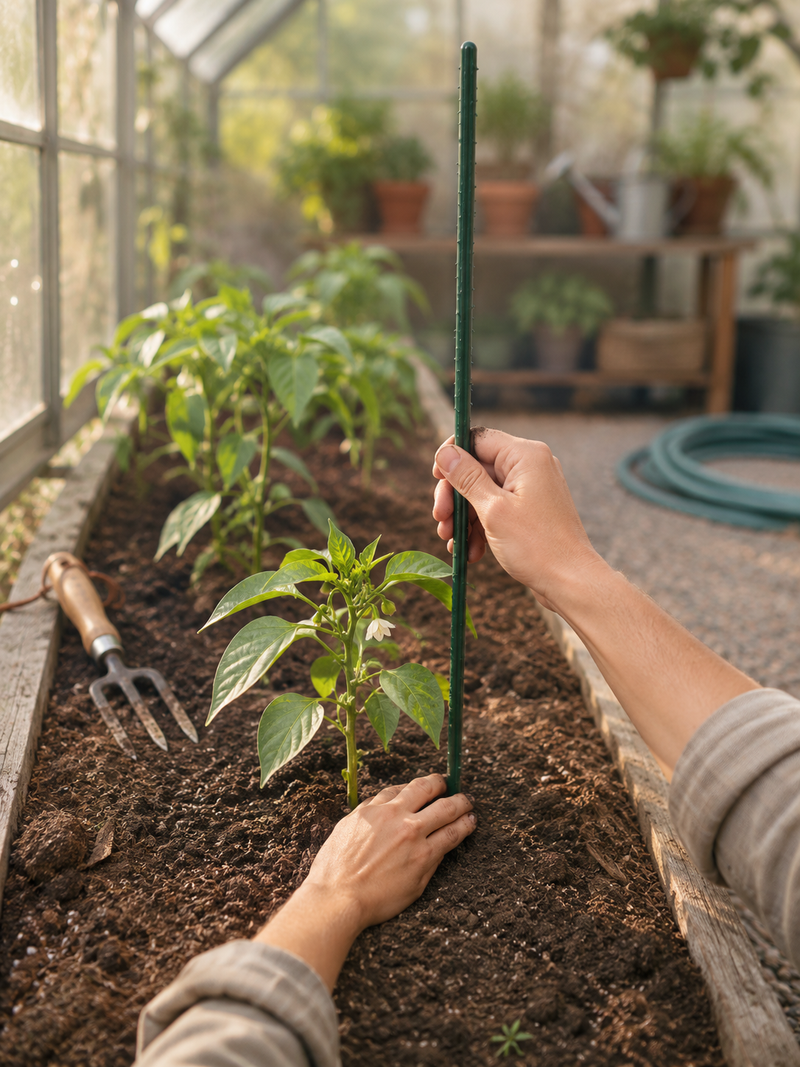
Which plants benefit from a stake, when to place it, how deep and how far from the stem to drive it, and how to tie the plant so...

How to choose trellis netting by width, mesh size, and material, how to install it between posts, and how to guide peas, beans, and cucumbers up the mesh.
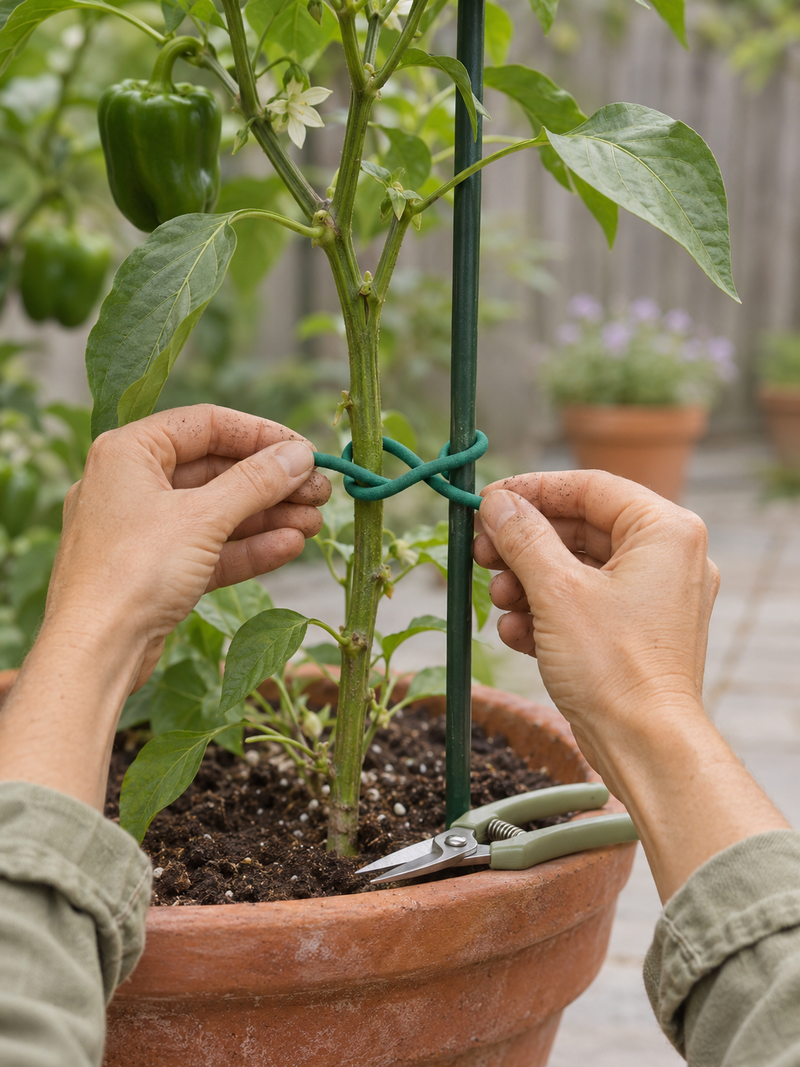
How to tie plants to stakes and trellises with a soft tie, how to read the signs of a tie that is too tight or in the wrong...
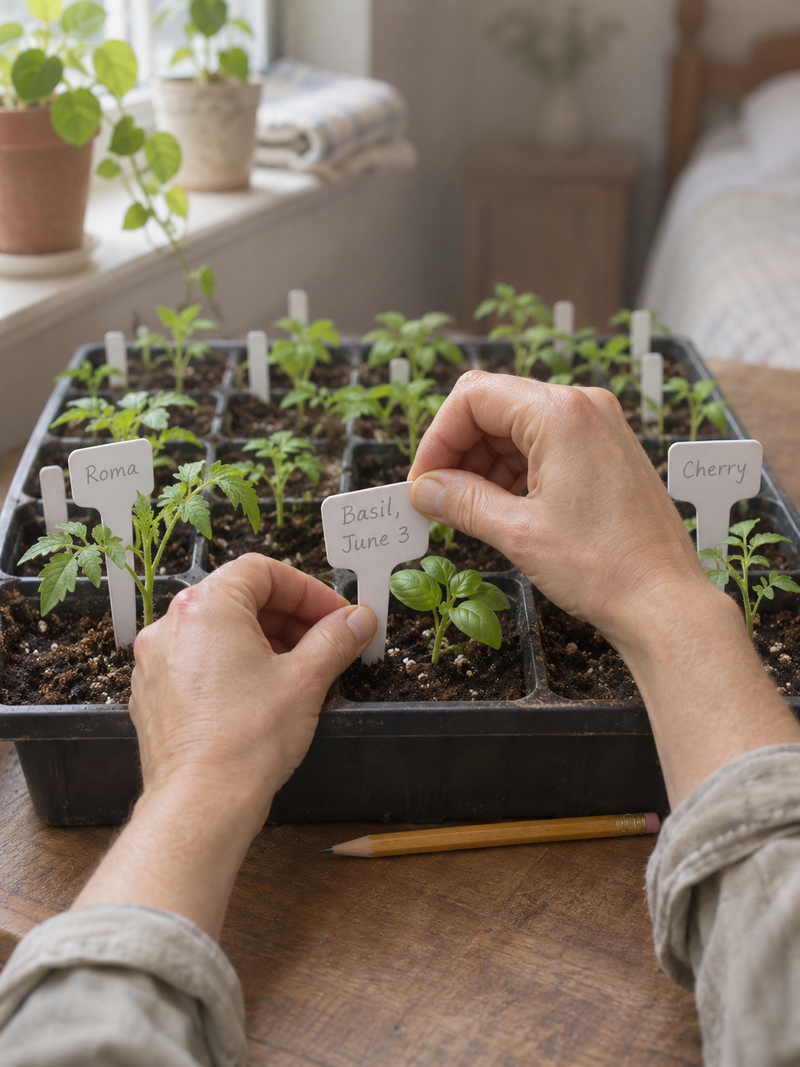
What to write on a plant label, how to choose between stake labels and wrap labels, and how to keep a labeling habit that holds up from seed...
How much light crops need, how to read the sun in your space, what grows in low light, and when a grow light earns its place.
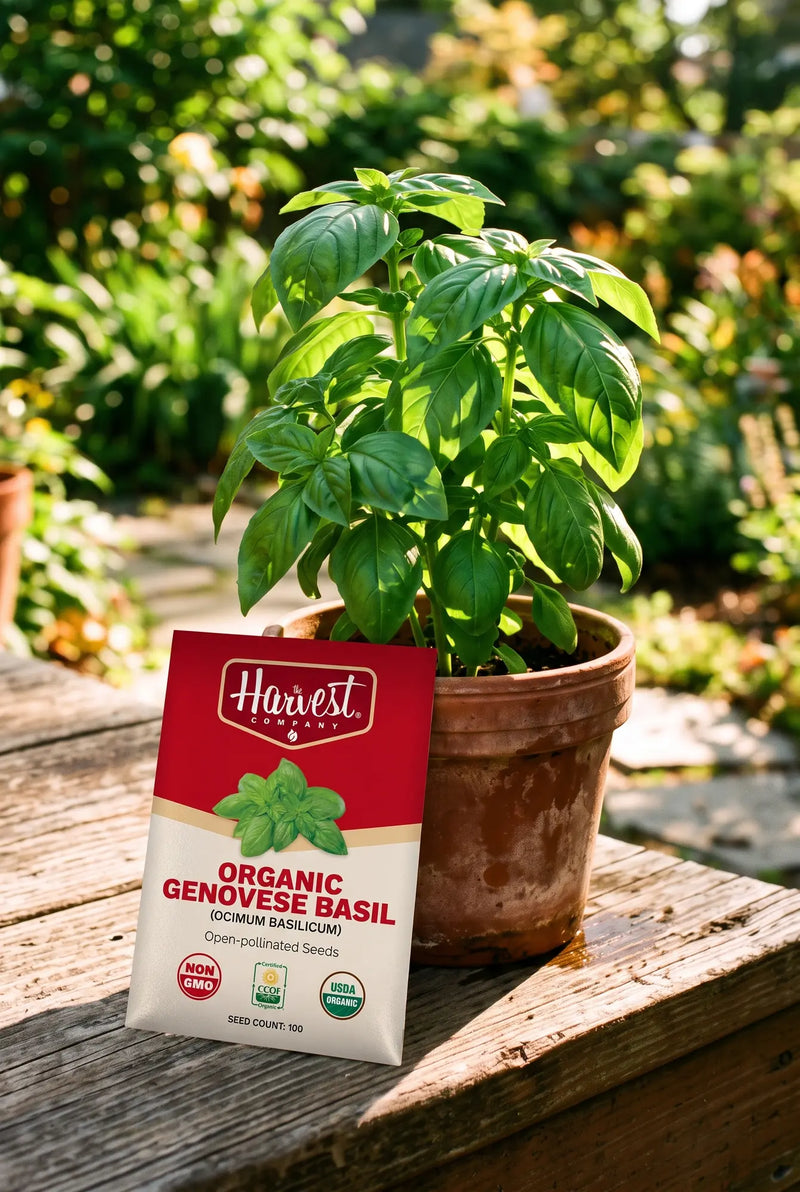
How to match a plant to the light it needs, from full sun to shade, and how to read whether a window or a yard gives enough before...
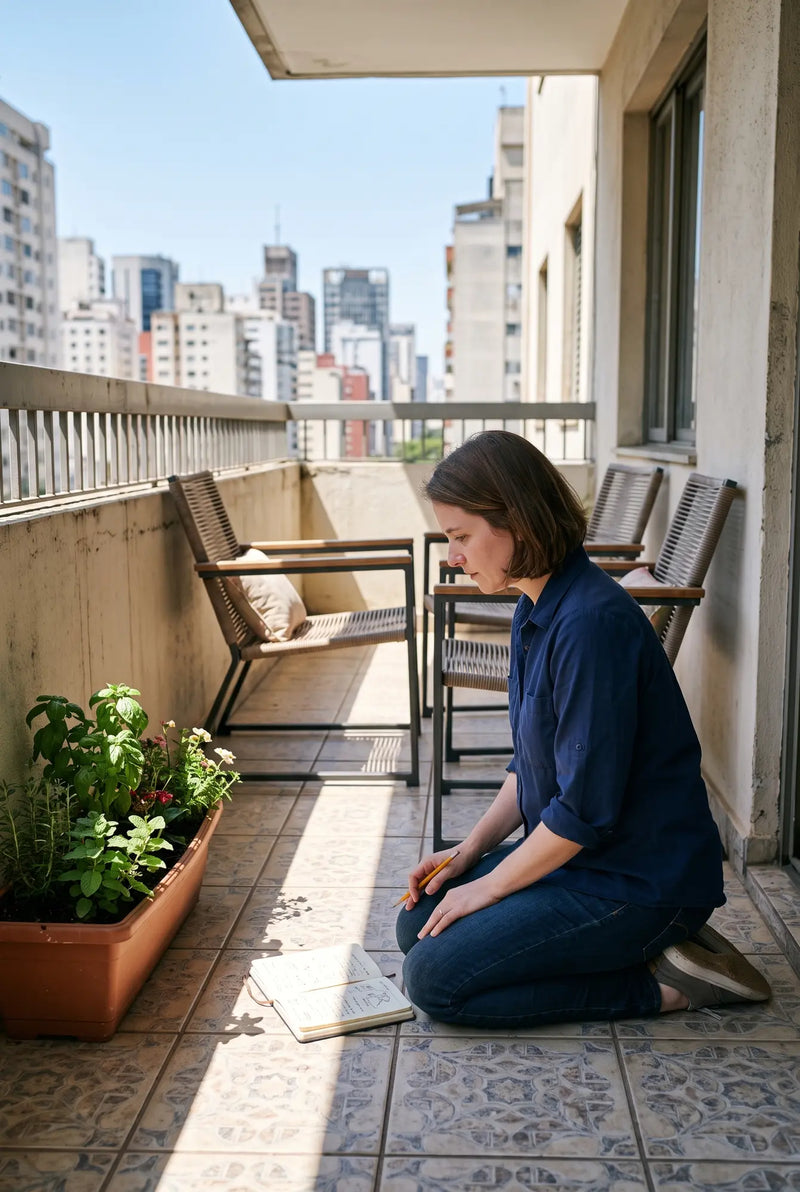
How to read the light a balcony, window, or yard actually gets across a day, so you can place each crop where it will thrive.
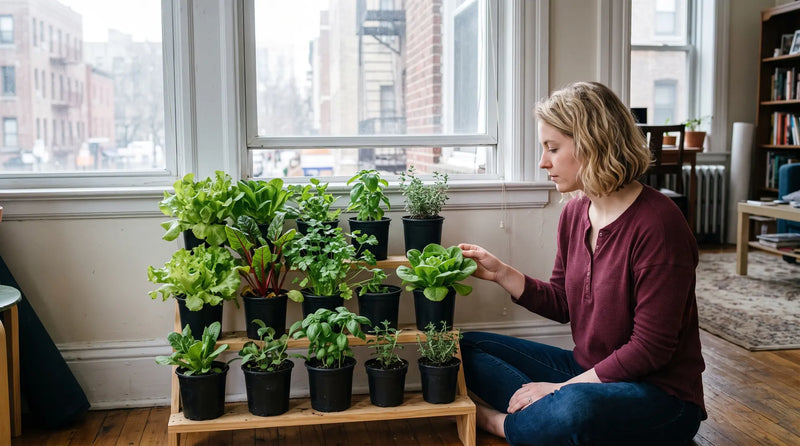
The edible crops that produce in low light, from leafy greens to herbs, and how to tell when a space is too dim to grow without a little...

When a windowsill is enough and when a grow light earns its place, with the signs that tell you a plant is asking for more light than the...

How to choose and use a grow light, from picking a full-spectrum LED to setting the right distance and run time so plants grow compact and strong.
How hydroponics works, a bucket system you can build in an afternoon, clay pebbles, pH, and mixing nutrients step by step.
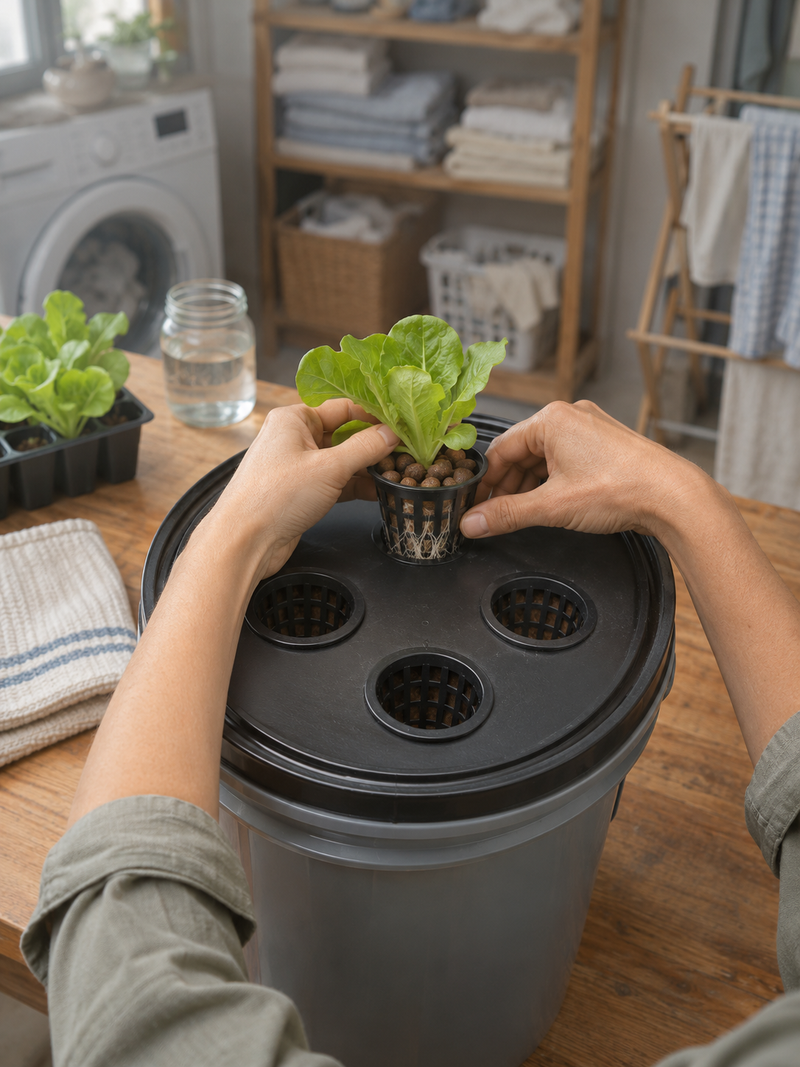
What hydroponics is, how plants feed without soil, how it differs from growing in a bed or pot, and the steps for setting up a simple first system...
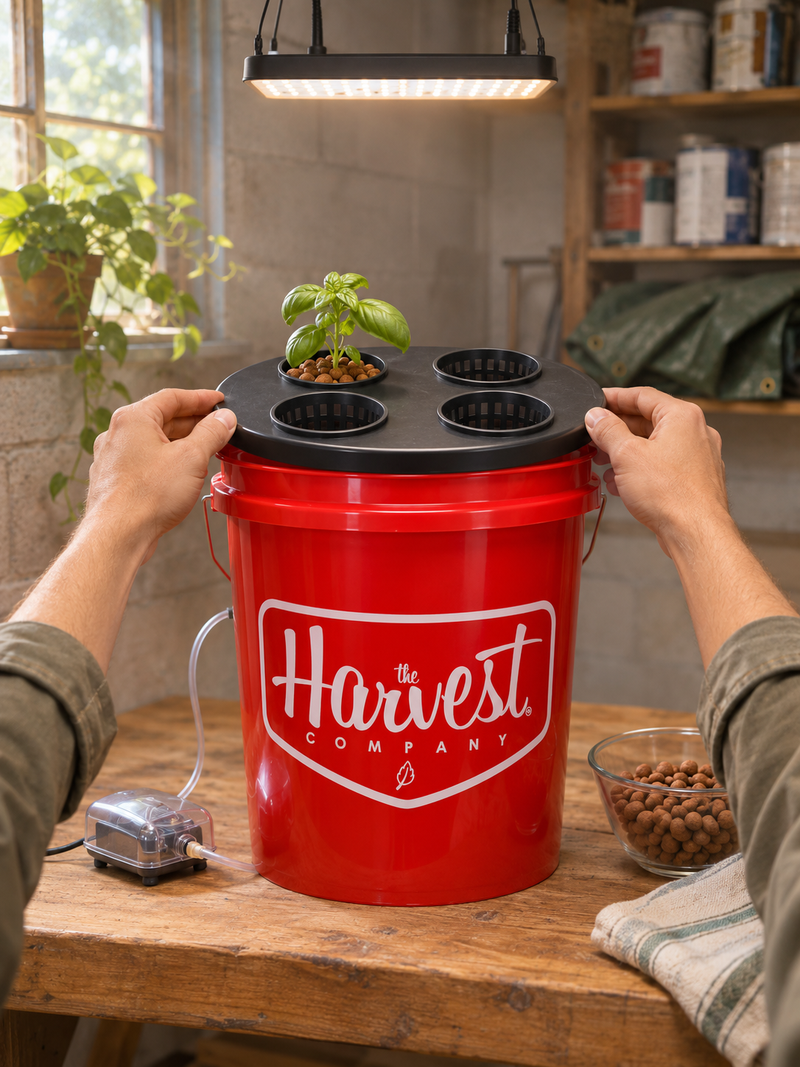
How to build a bucket hydroponic system, from choosing the bucket and net-pot lid to filling the reservoir, planting in net pots, and keeping the water healthy.
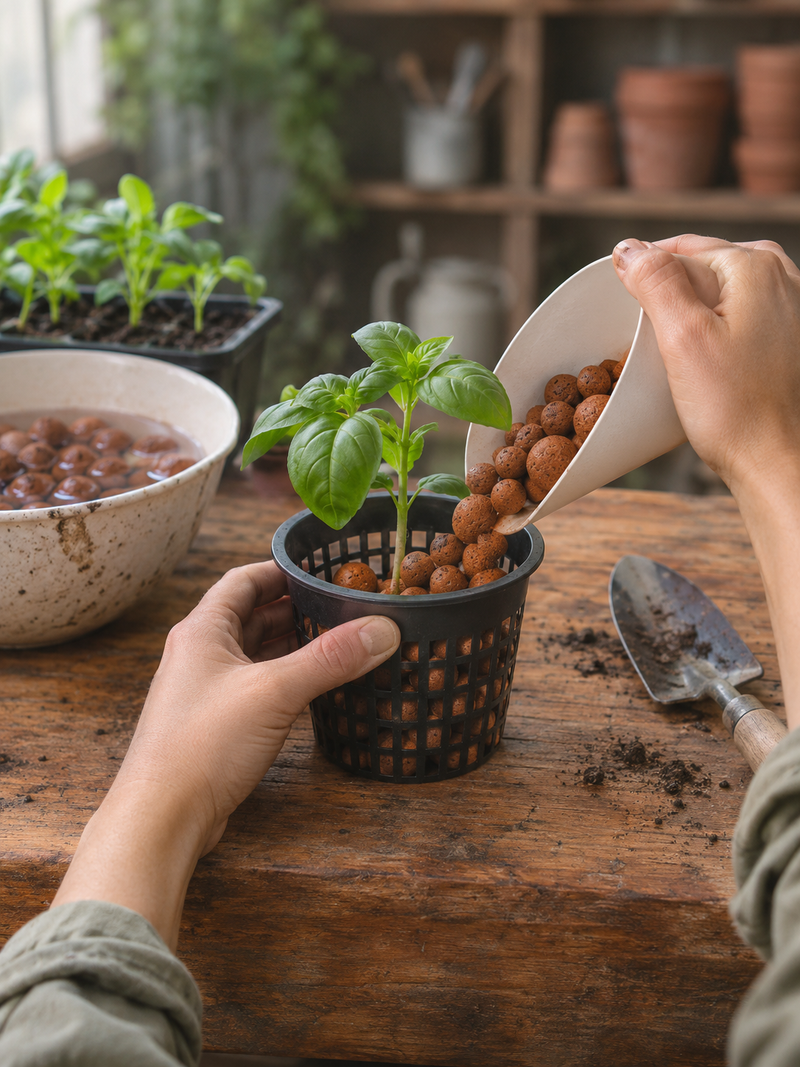
What expanded clay pebbles are, why hydroponic growers use them, and how to rinse, fill, plant in, and reuse them in net pots, buckets, and container systems.

Why pH matters in a hydroponic system, how to test the solution, how pH Up and pH Down adjust it, and how to read the signs that pH...
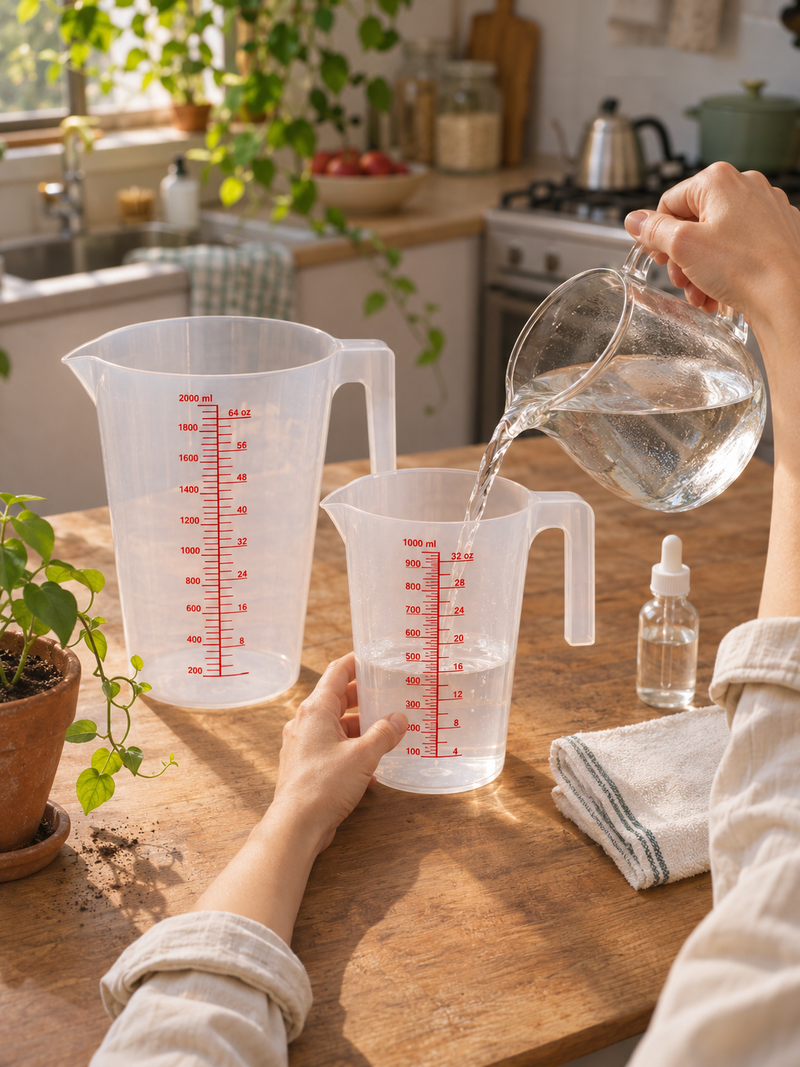
A step-by-step method for mixing a hydroponic nutrient solution, from measuring water and adding each part in order to stirring, testing pH, and recording what you mixed.
Cuttings from herbs and tomatoes, rooting gel, aeroponic cloners, light and humidity, and what to check when roots are slow to show.
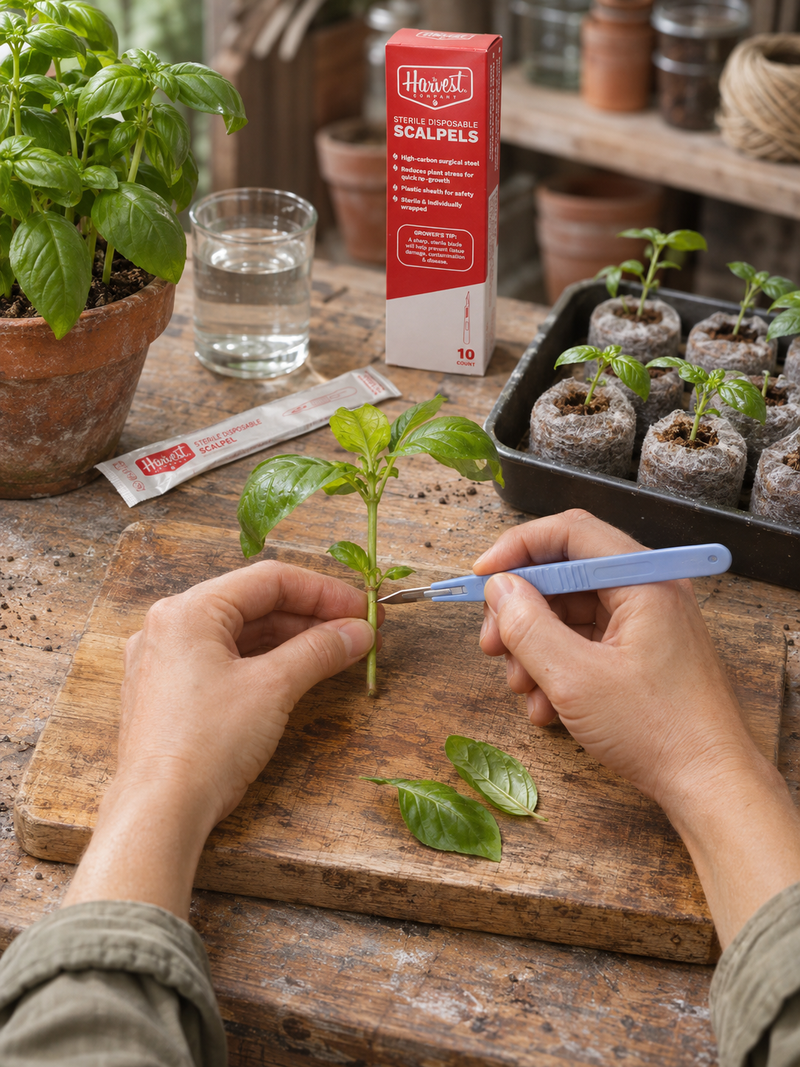
A step-by-step guide to cloning herbs and tomato suckers from cuttings, from choosing a healthy stem to moving rooted clones into their first pot.
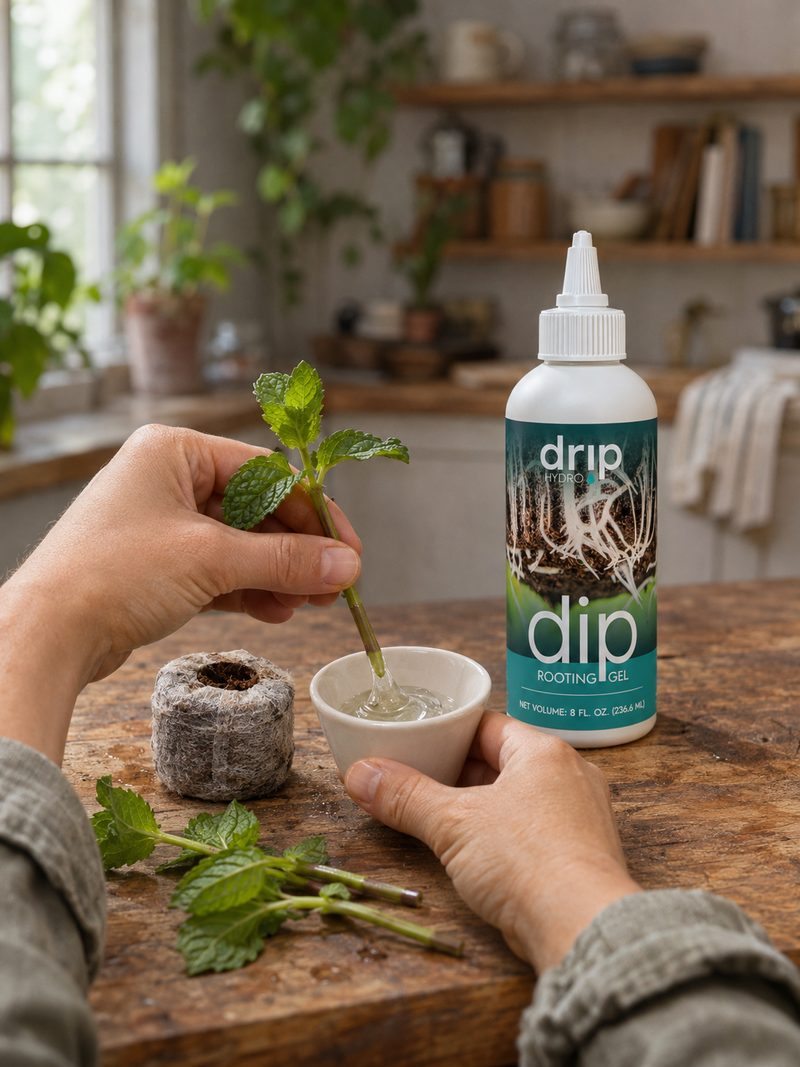
What rooting gel does at the cut end of a stem, how it differs from powder, and how to apply it to herb and tomato cuttings in a...
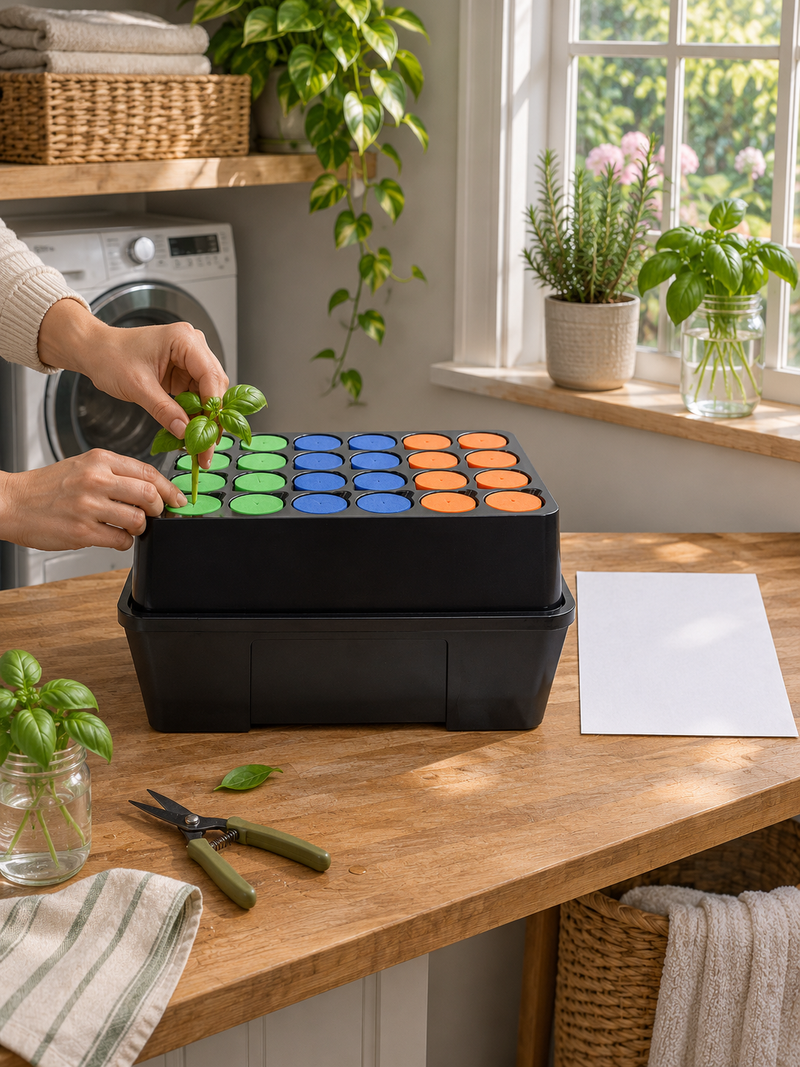
How an aeroponic cloning machine roots cuttings with a pump, a misting manifold, and neoprene collars, and how to run one for herbs and tomato suckers.
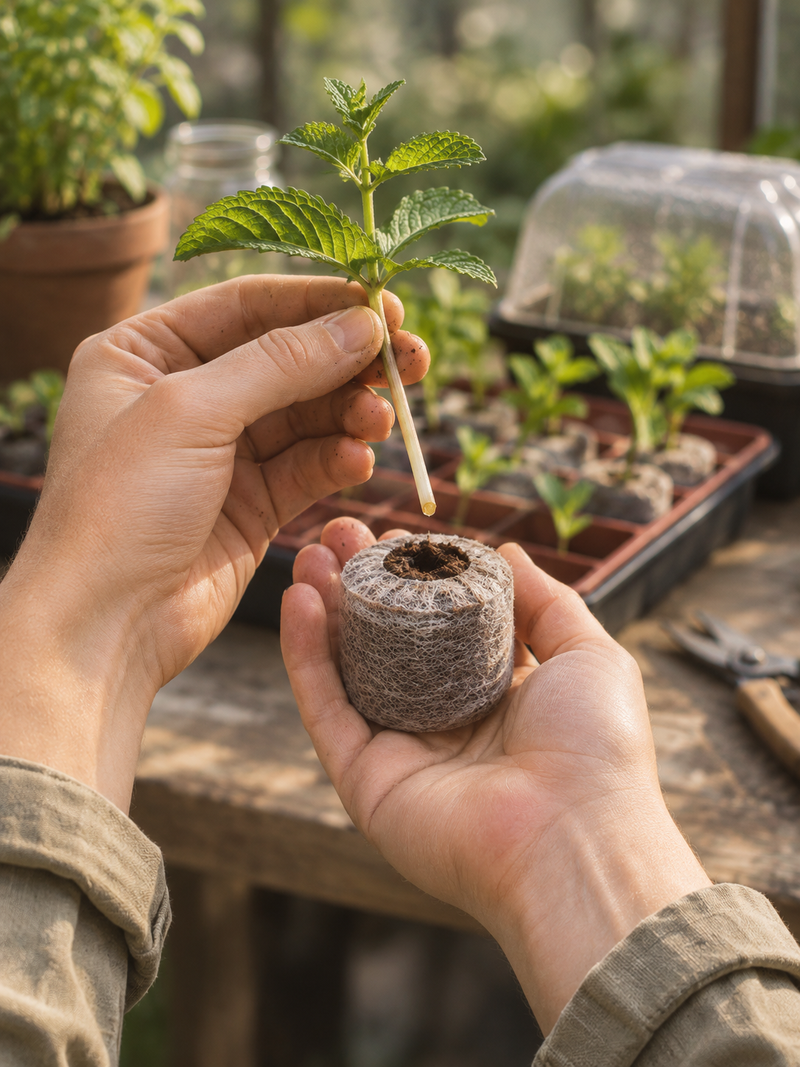
How to read wilting, black stems, and stalled cuttings, and the common causes behind each, from dull blades and dry plugs to weak light and rot.
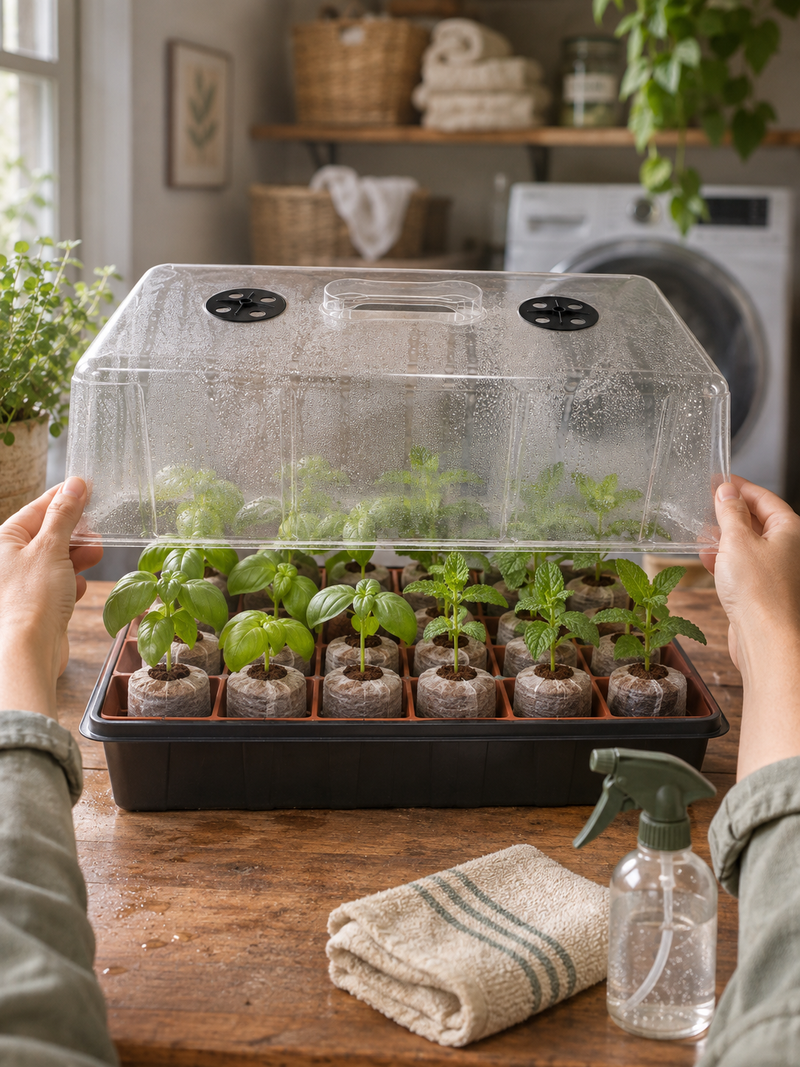
How much light and humidity cuttings need before they have roots, how to use a dome and a gentle clone light, and how to ease cuttings toward normal...
Yellow leaves, wilting, stalled growth, pests, disease. Five symptom-first guides that route every cause to the right fix.

A grower-focused way to read yellow leaves: which pattern points to overwatering, which to a feed or pH issue, and the first thing to try for each.

A grower-focused way to read a droop: telling wet wilt from dry wilt from root or heat stress, and the first fix that fits each one.
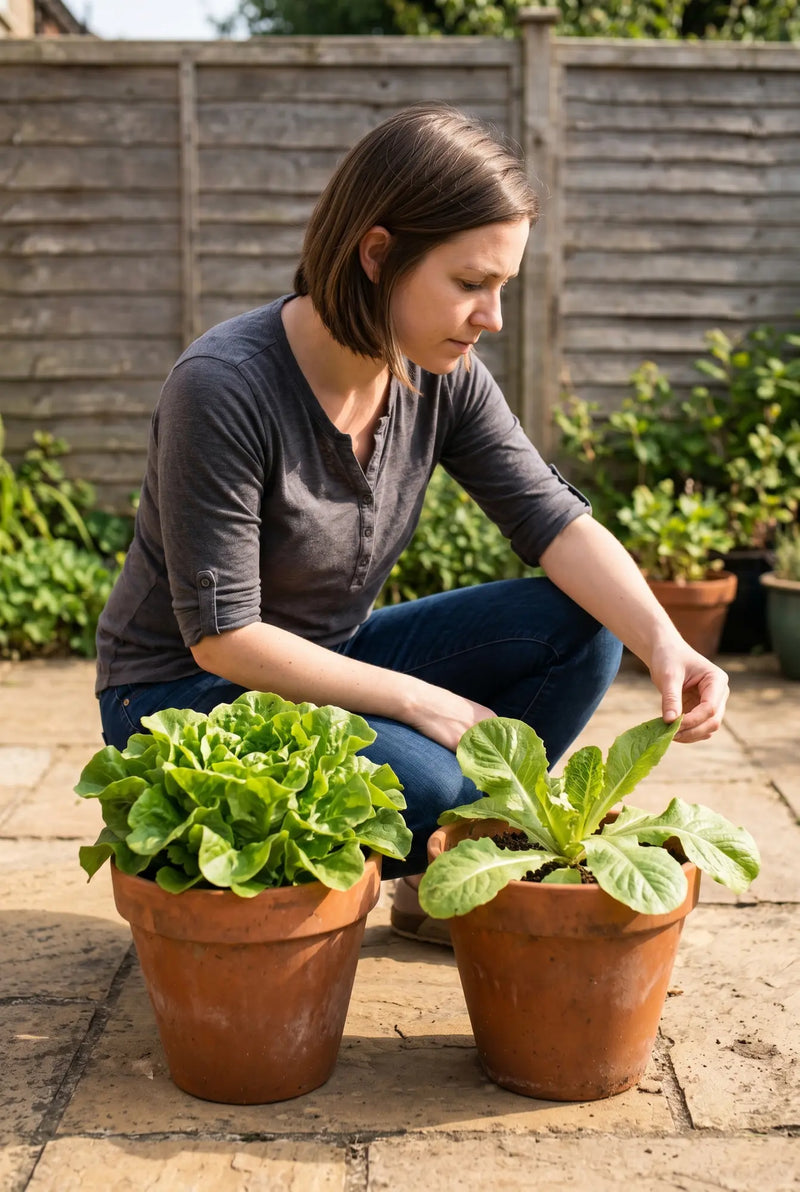
A stalled plant is usually limited by one of four things: light, feed, root-bound roots, or temperature, and reading which one comes first tells you what to change.
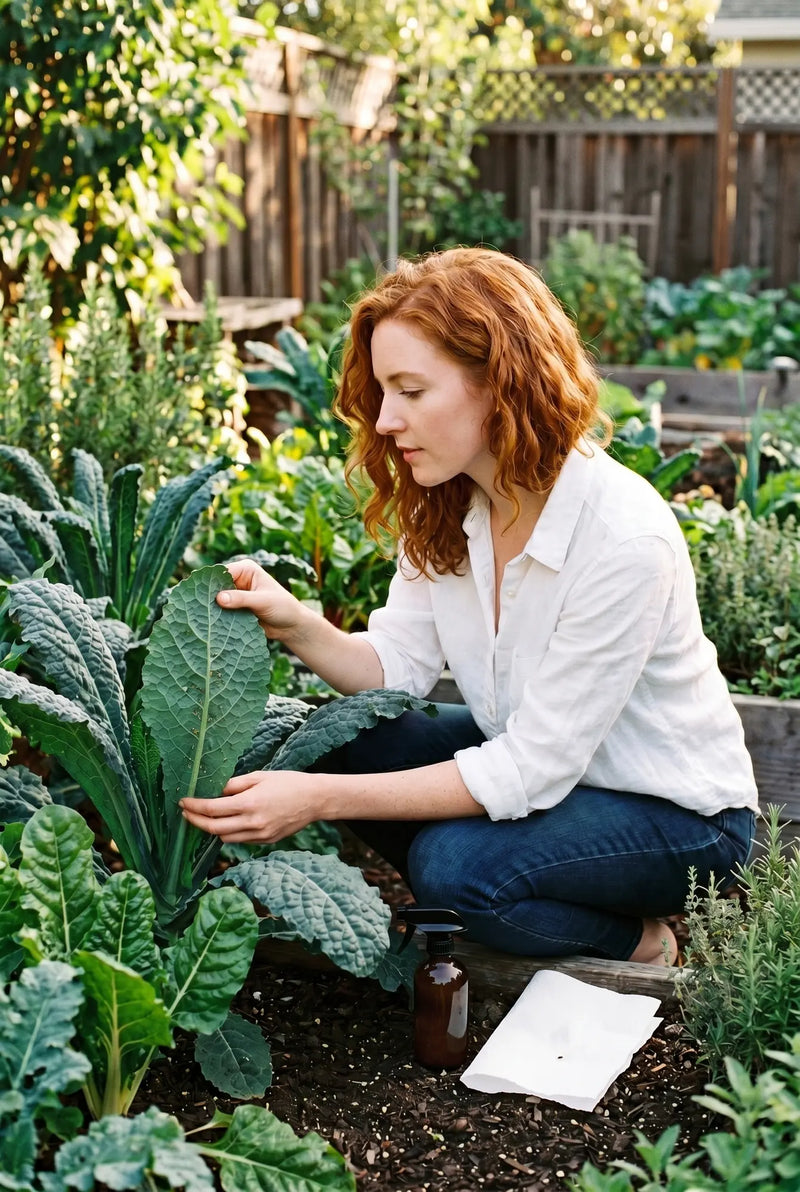
Identify the five pests a home garden actually sees and treat them organically before they spread.

A grower-focused way to spot root rot, powdery mildew, and surface mold early, and the moisture and airflow conditions that prevent them.
When to pick, how to prune, caring for plants and tools after a harvest, and resetting beds for the next season. Five guides for the back half of the year.
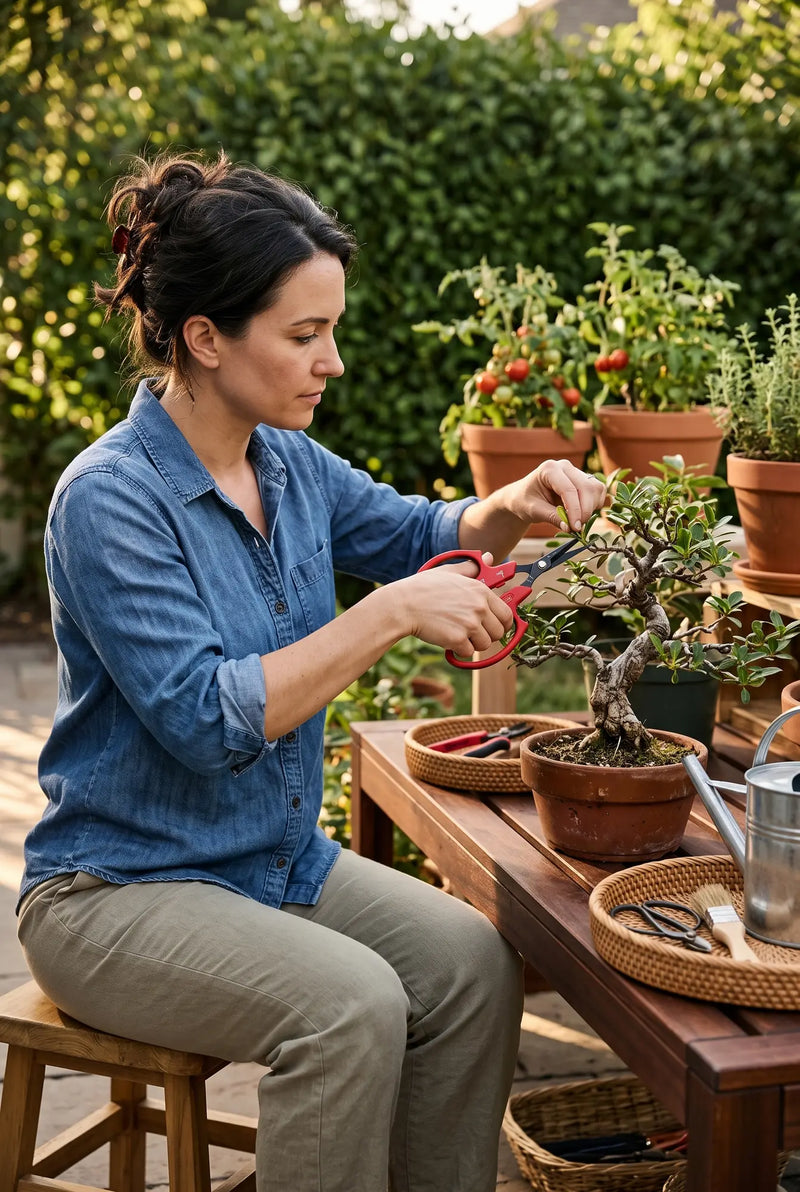
How to read the ripeness signal for common home crops, cut instead of pull, and pick on a rhythm that keeps a plant producing through the season.
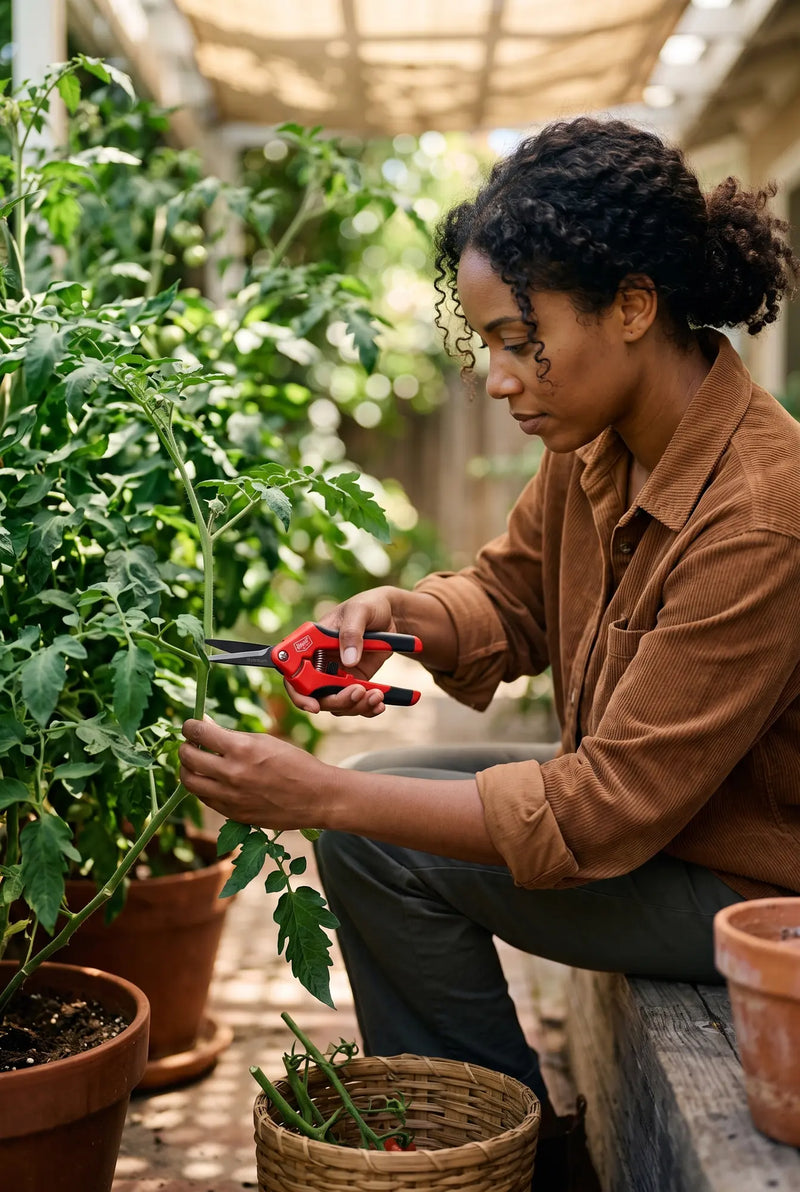
When to prune for airflow and shape, when to deadhead for continued bloom and fruit, and the clean-cut technique that keeps both from setting the plant back.
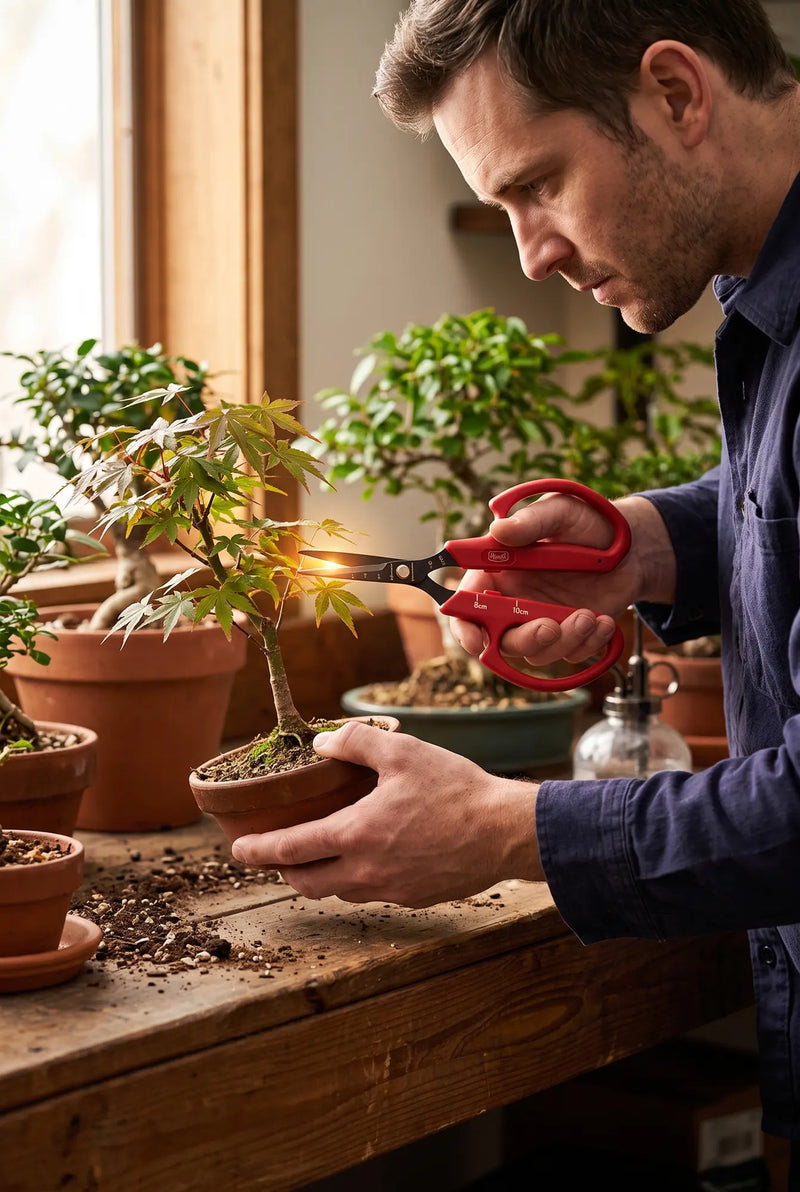
The cleaning, sharpening, and storage rhythm that keeps pruners and harvesting shears cutting cleanly for seasons rather than one.
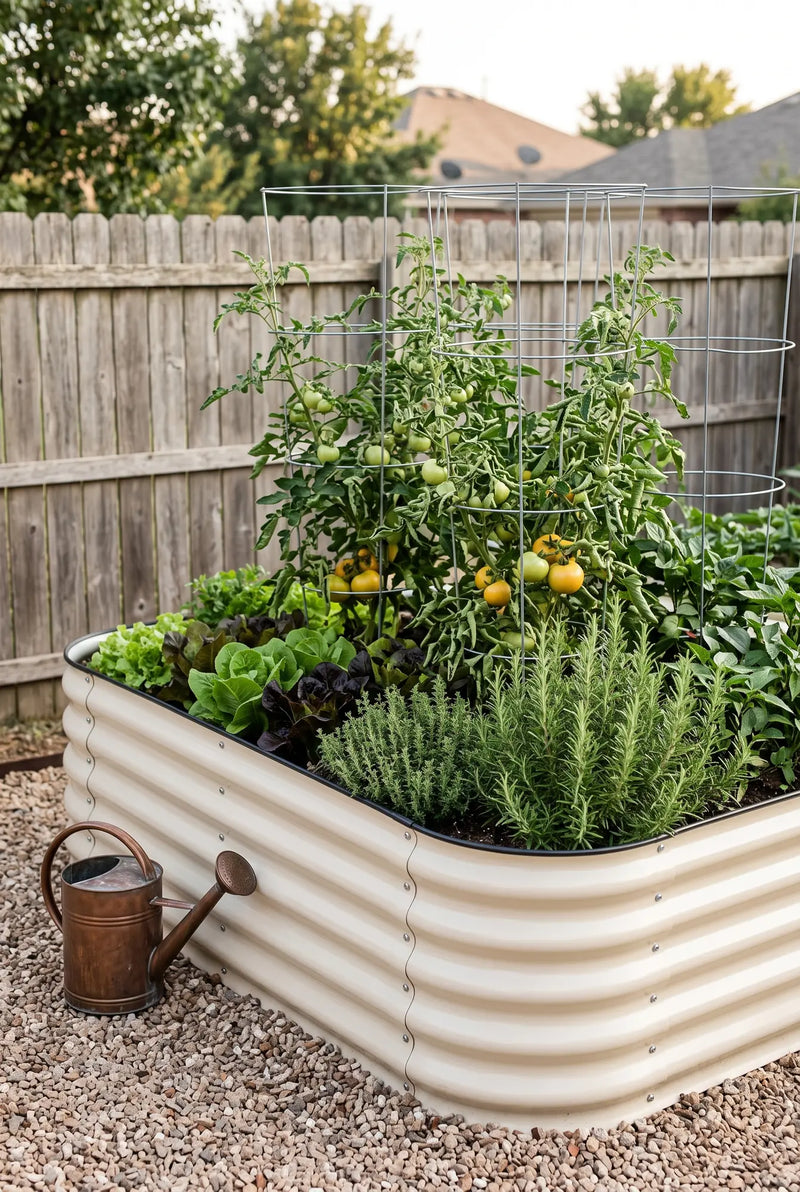
How to read a plant after a heavy harvest or hard cutback, what normal recovery looks like, and the signs that call for a closer check.
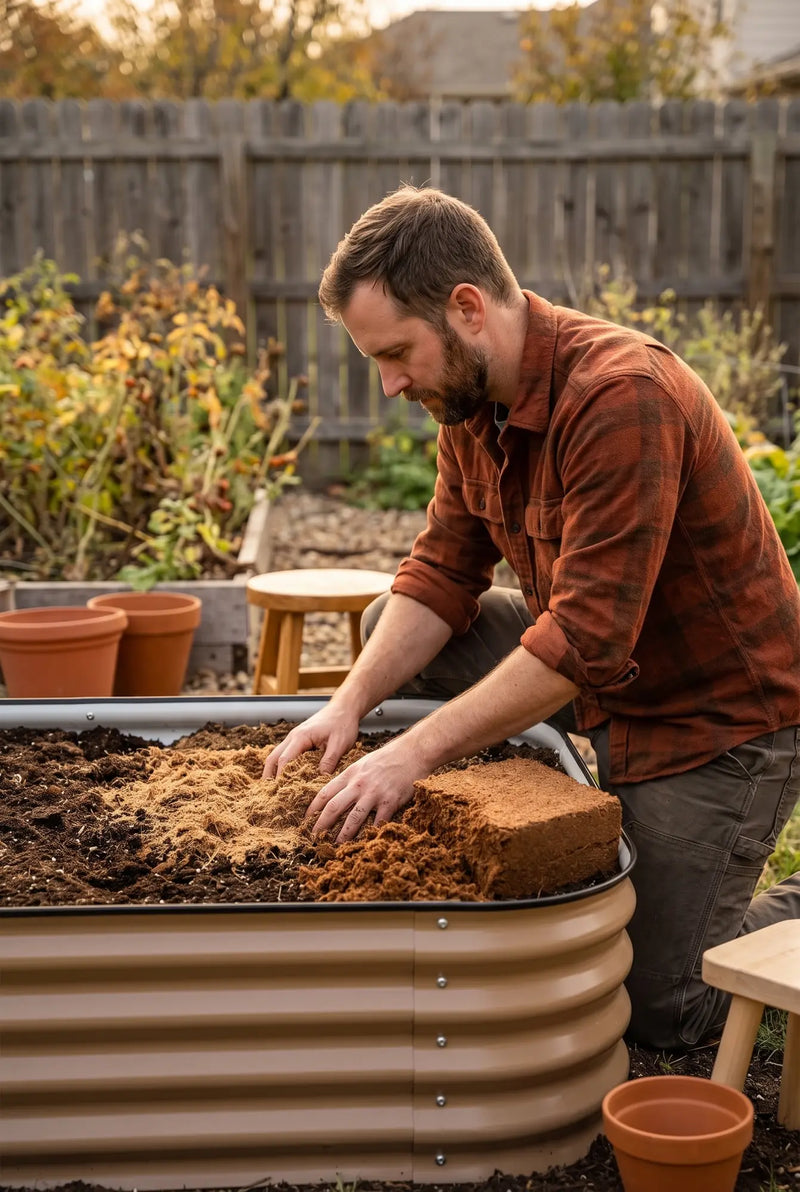
How to clear a spent bed, refresh the grow media instead of replacing it, and feed the next cycle so a raised bed or container keeps performing season...
Drying herbs, vacuum sealing, freezing, and storing fresh produce so the garden keeps feeding you after the season ends.
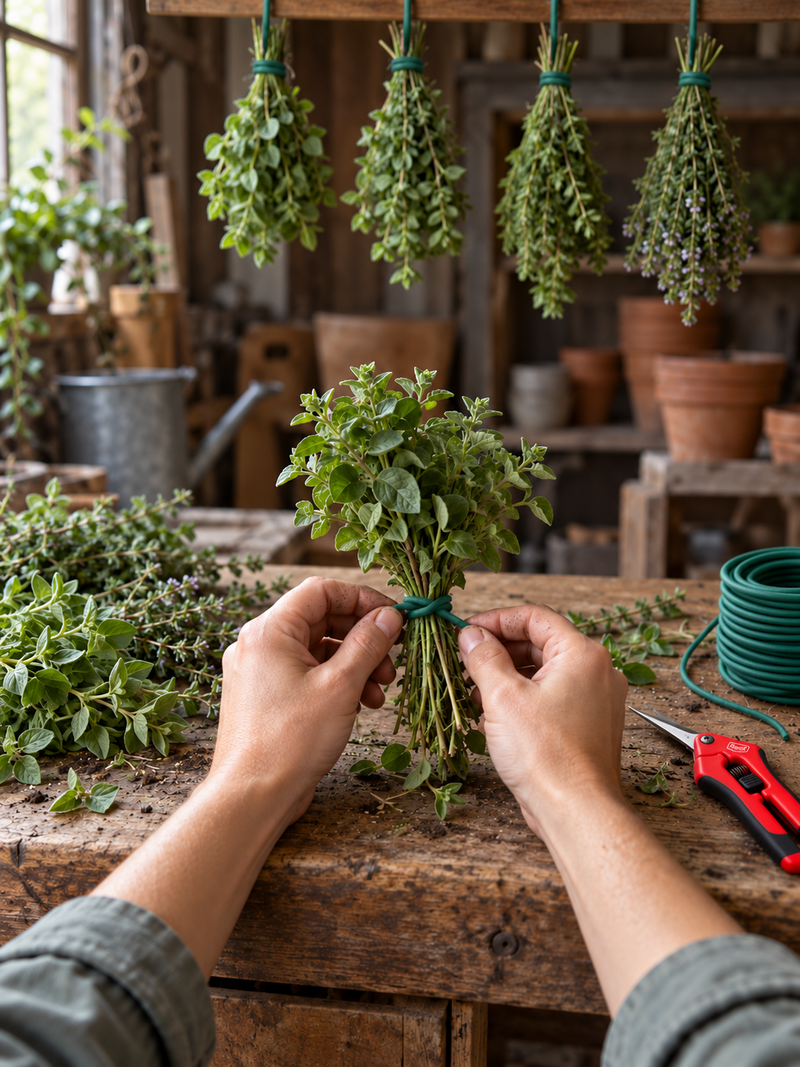
How to pick, dry, test, and store garden herbs at home, with a simple air-drying method and a low-heat option for humid weeks.
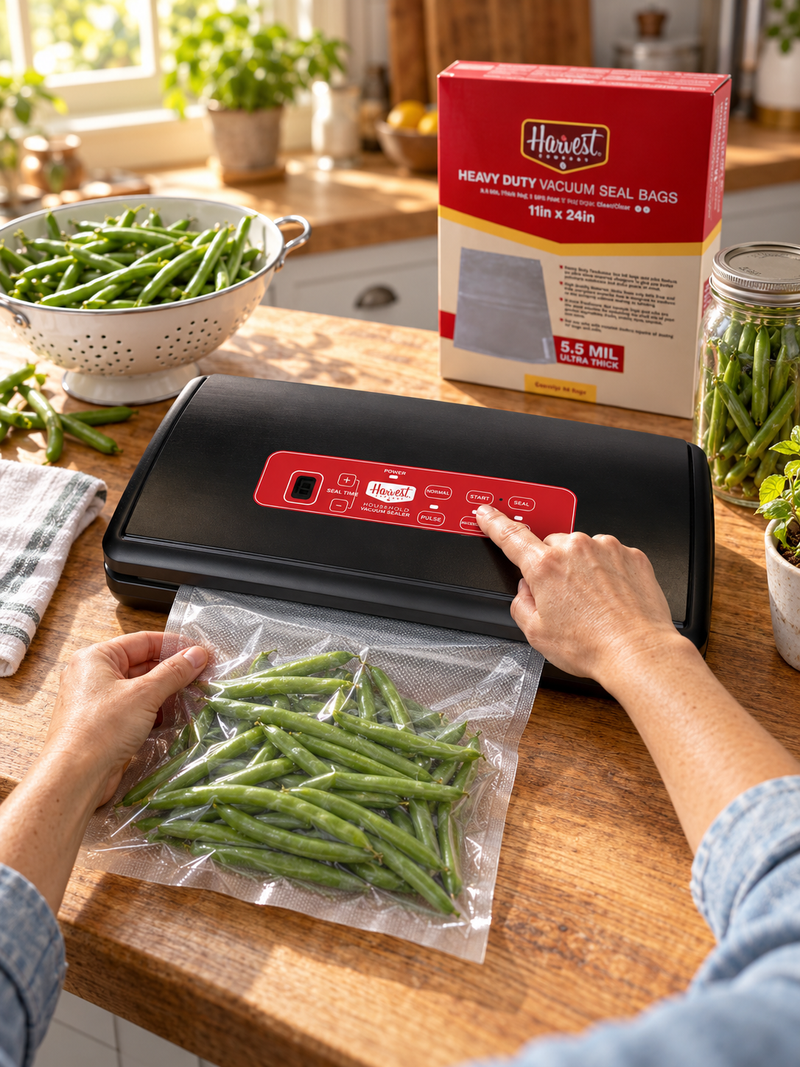
How to prep, pack, and vacuum seal garden vegetables, herbs, and fruit for the freezer or refrigerator, and which common habits weaken a seal.

The blanch, cool, dry, pack, and label routine for freezing garden vegetables, and which crops can go into the freezer without blanching.
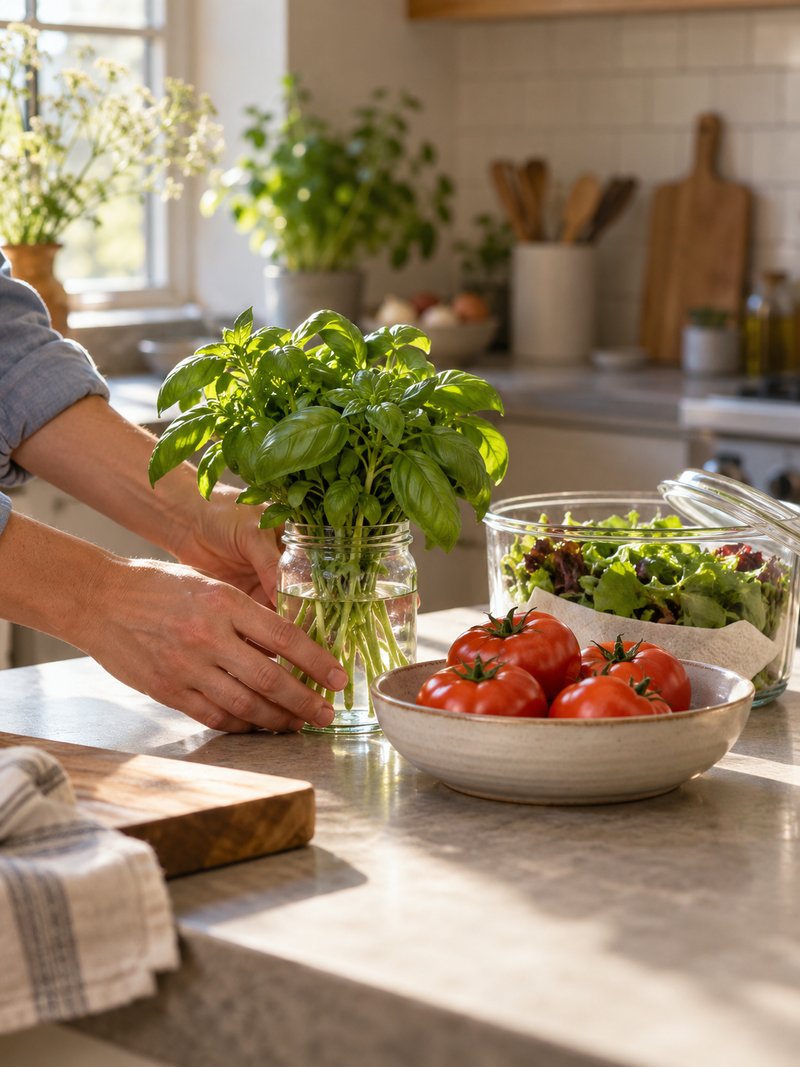
How to read the signs that fresh garden herbs and vegetables are storing badly, what causes each one, and what to change in how you store them.
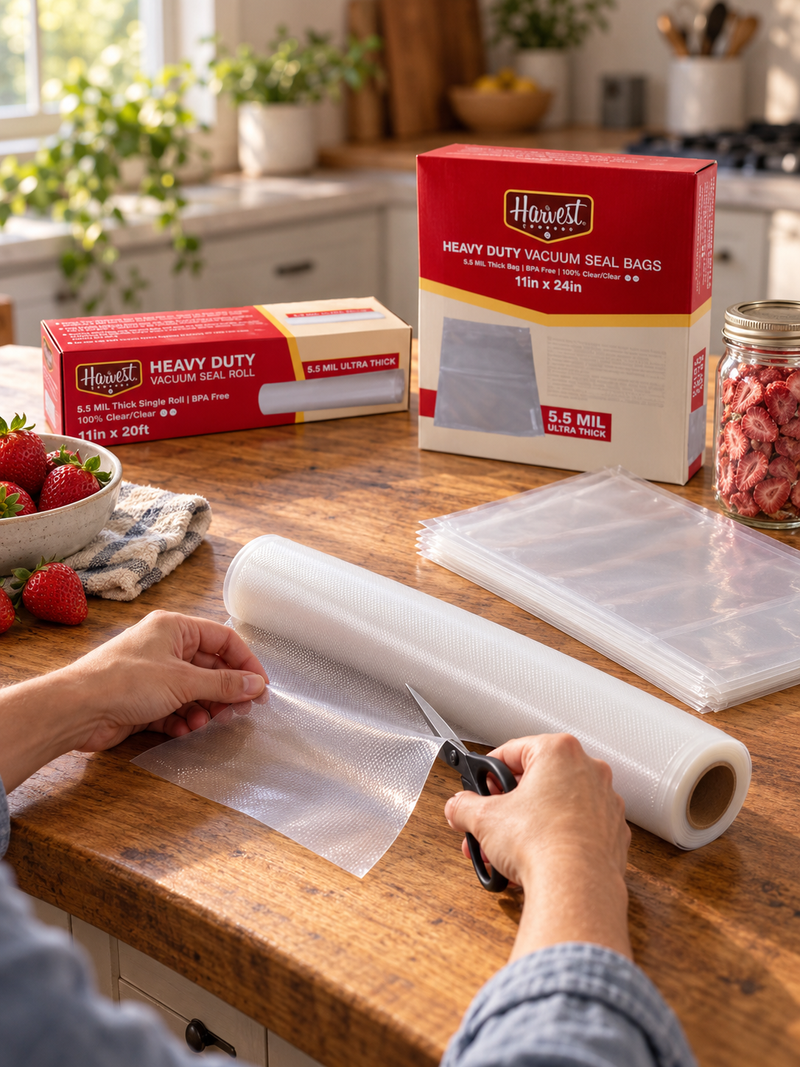
How precut vacuum seal bags and bulk rolls compare for garden produce, and how to choose by sealer width, portion size, and how you like to work.
Reading a fertilizer label, building a feeding rhythm, Cal-Mag, silica, and the organic amendments that build better soil.

What the three numbers on a fertilizer label mean, what nitrogen, phosphorus, and potassium each do for a plant, and how to match a formula to the stage...
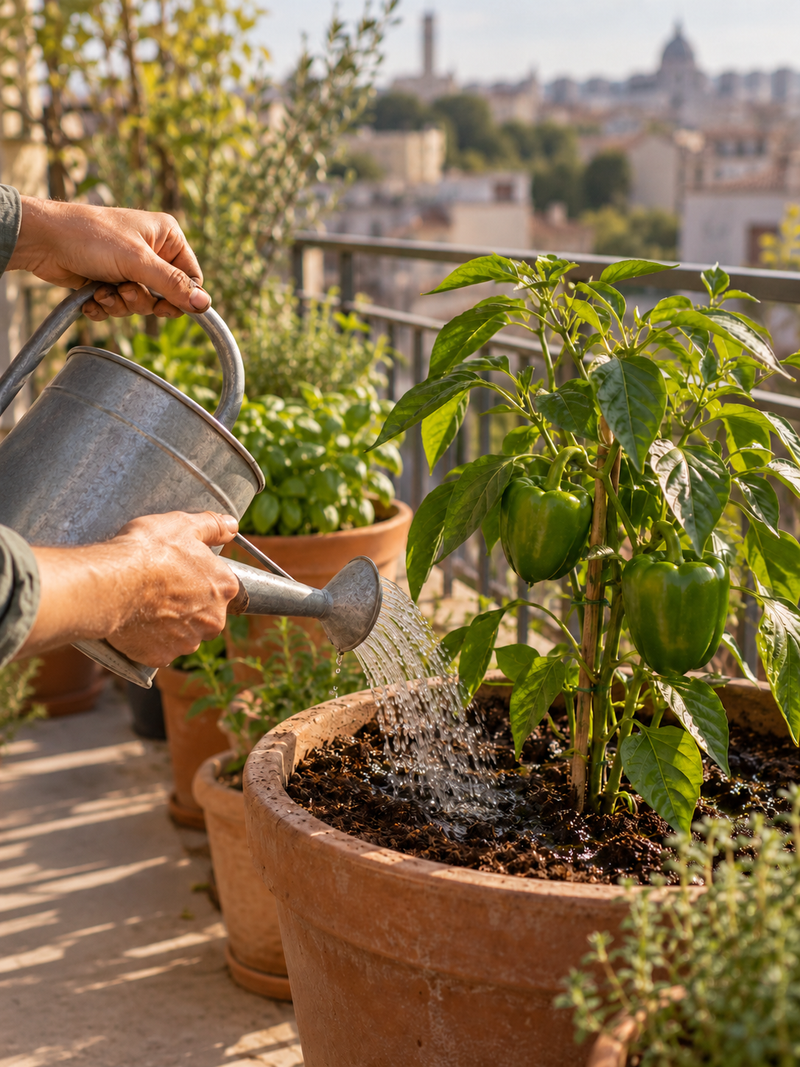
When to start feeding, how often containers and garden beds need it, how to shift the feed as plants move from leaves to flowers and fruit, and when...
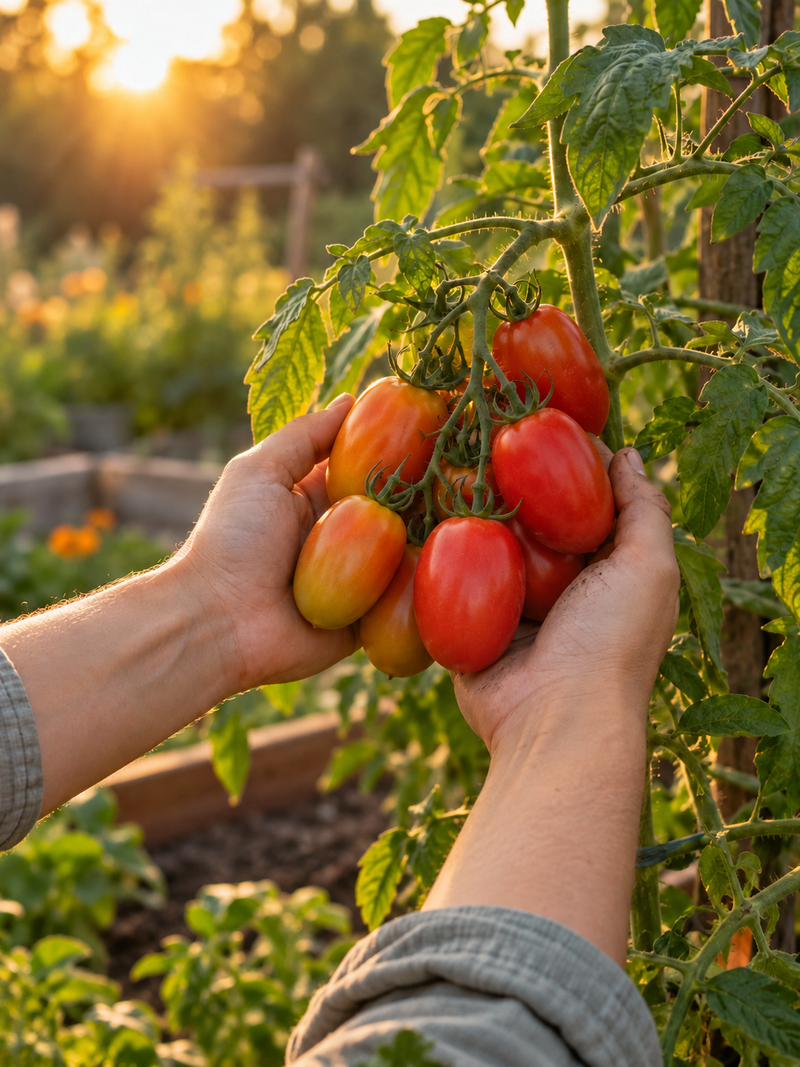
What calcium and magnesium do for a plant, how to read the signs that one of them is running short, and when a Cal-Mag supplement is the right...
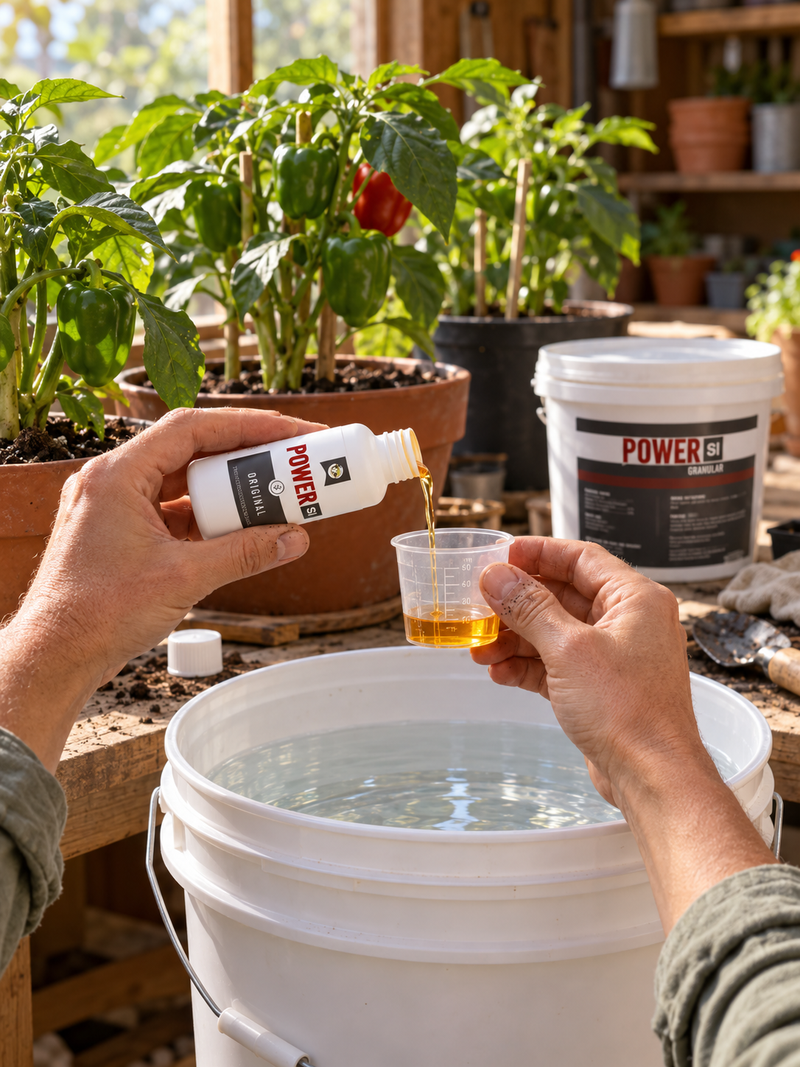
What silica does inside a plant, why growers in containers, coco coir, and hydroponics add it, and how to use liquid and granular silica in a feeding routine.
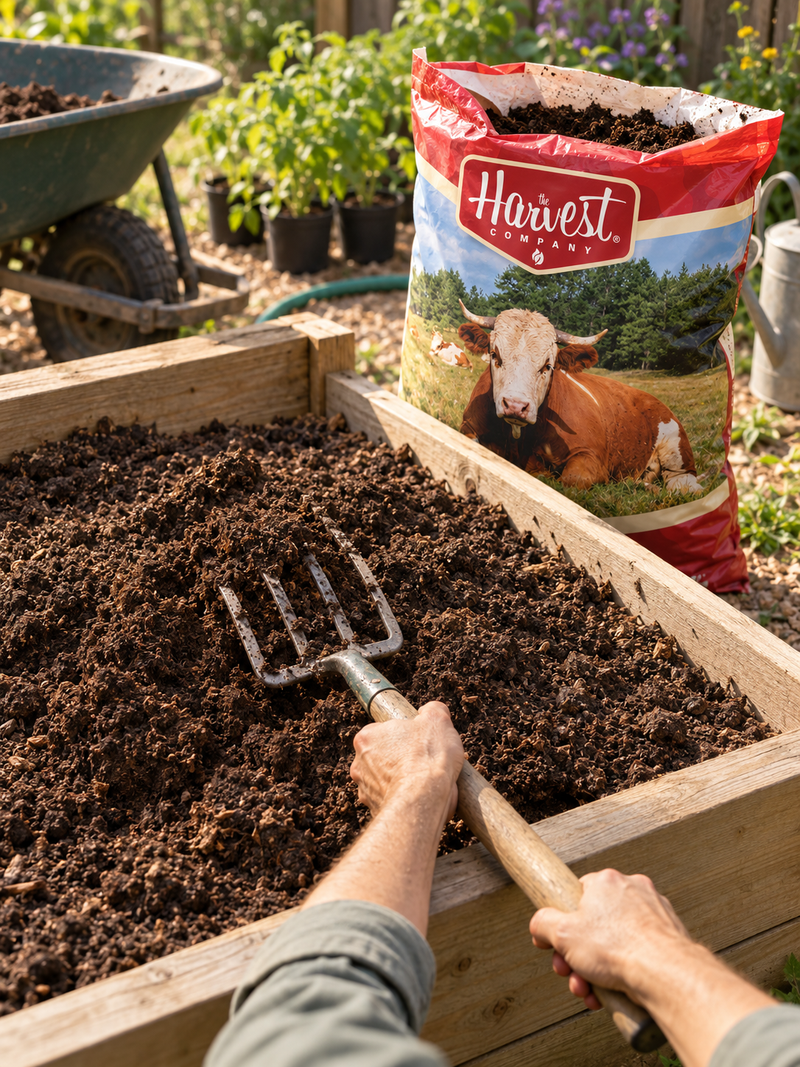
How worm castings and aged cow manure improve garden soil, where each one fits, and how to use them in beds and containers from planting through the end...
Rubber and wood mulch side by side, how much to order, mulch glue, choosing a color, and what to check before covering a play area.
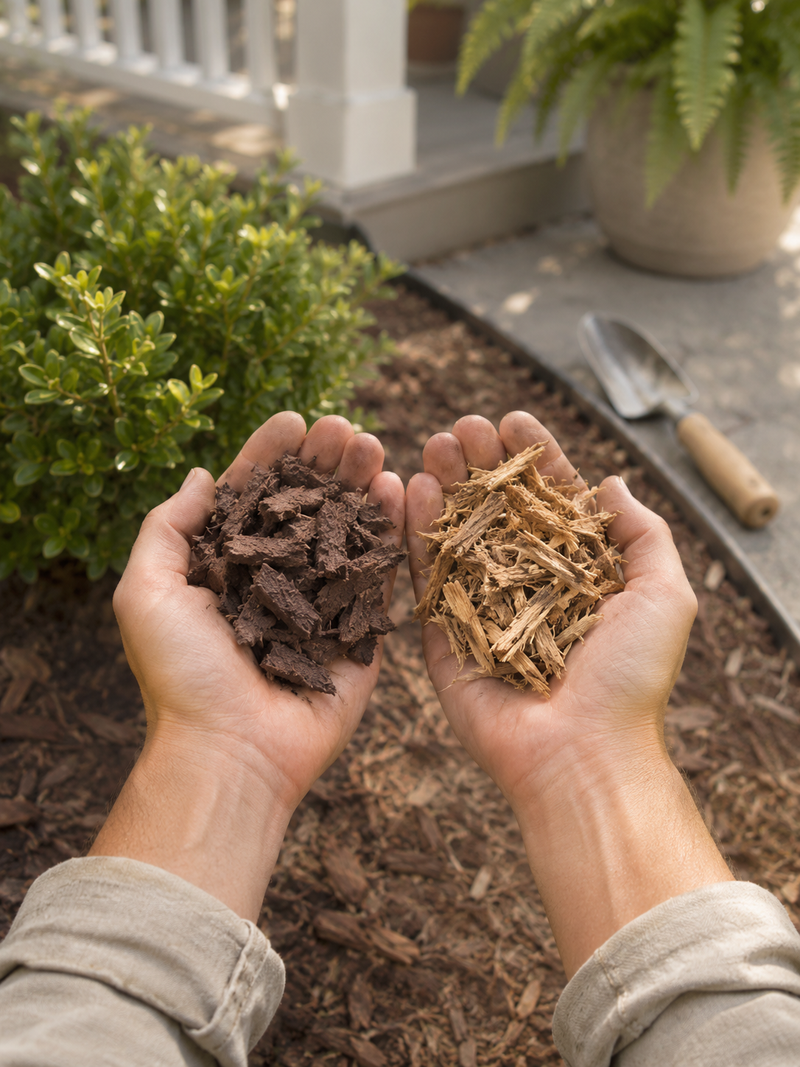
How rubber mulch and wood mulch differ in upkeep, soil benefit, and best use, and how to decide which one fits your landscape beds, walkways, or play area.
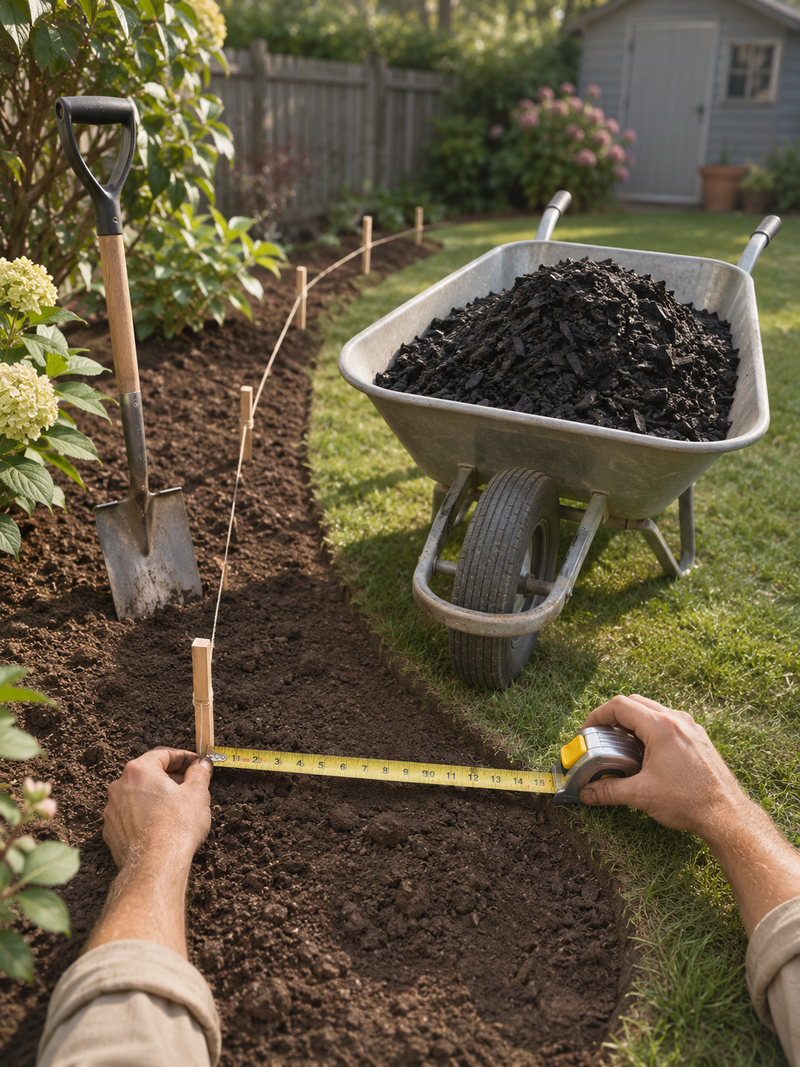
A simple way to turn the size of a bed or play area into cubic feet and bags of mulch, with worked examples and the mistakes that leave...
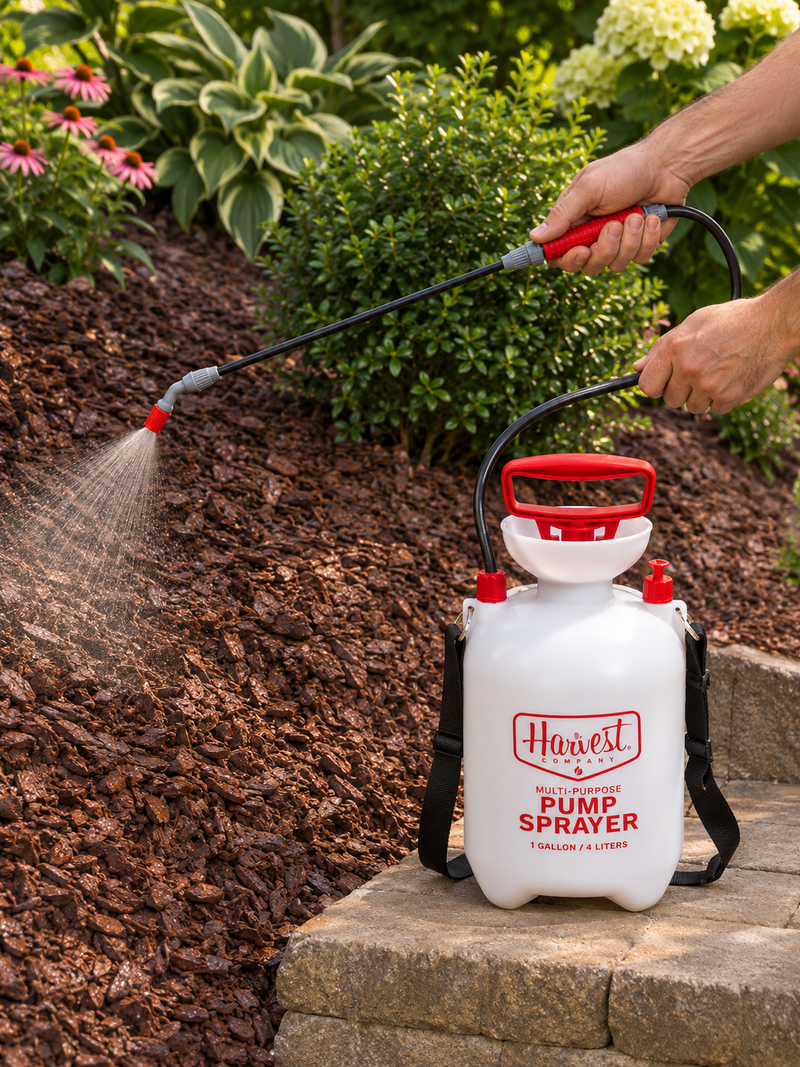
What mulch glue does, how to mix it with water, how to spray it over mulch, pine straw, or gravel, and what to check on the label before...

A checklist for anyone considering rubber mulch for a play area: what the listing says, what to confirm with the equipment manufacturer, and what local rules may require.
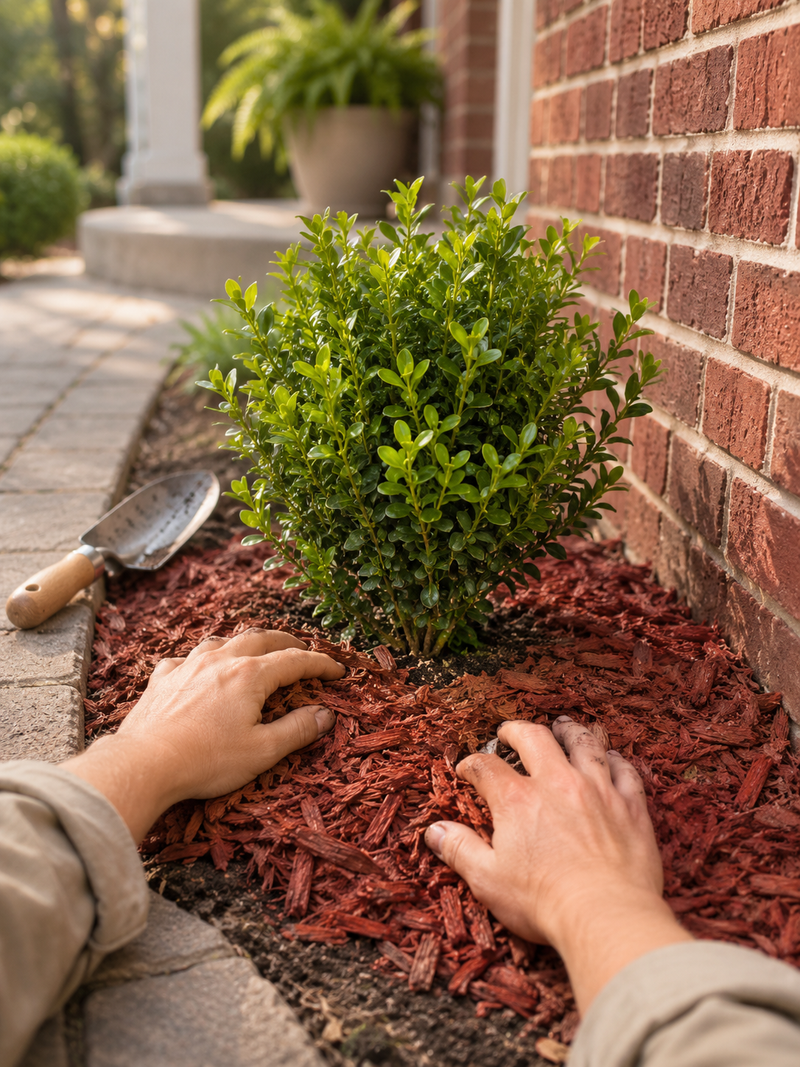
How to choose between brown, green, red wood, black, and silver rubber mulch by matching the color to your house, plantings, and how the area is used.