
Vertical Gardening for Small Spaces
Growing vertically multiplies the productive area of a small garden without requiring a single extra square foot of ground. The Harvest Company approaches vertical setups the same way across different small spaces, because crop selection, container choices, and supports follow the same principles. Vining tomatoes, cucumbers, climbing beans, and leafy greens all move up a structure naturally and reward a grower who gives them one. Understanding how quickly vertical containers dry compared to ground-level beds is what keeps a vertical setup healthy through the season.
Crop selection, the right support structure, and a watering rhythm that fits containers that dry from multiple sides are the three decisions that shape a vertical garden.

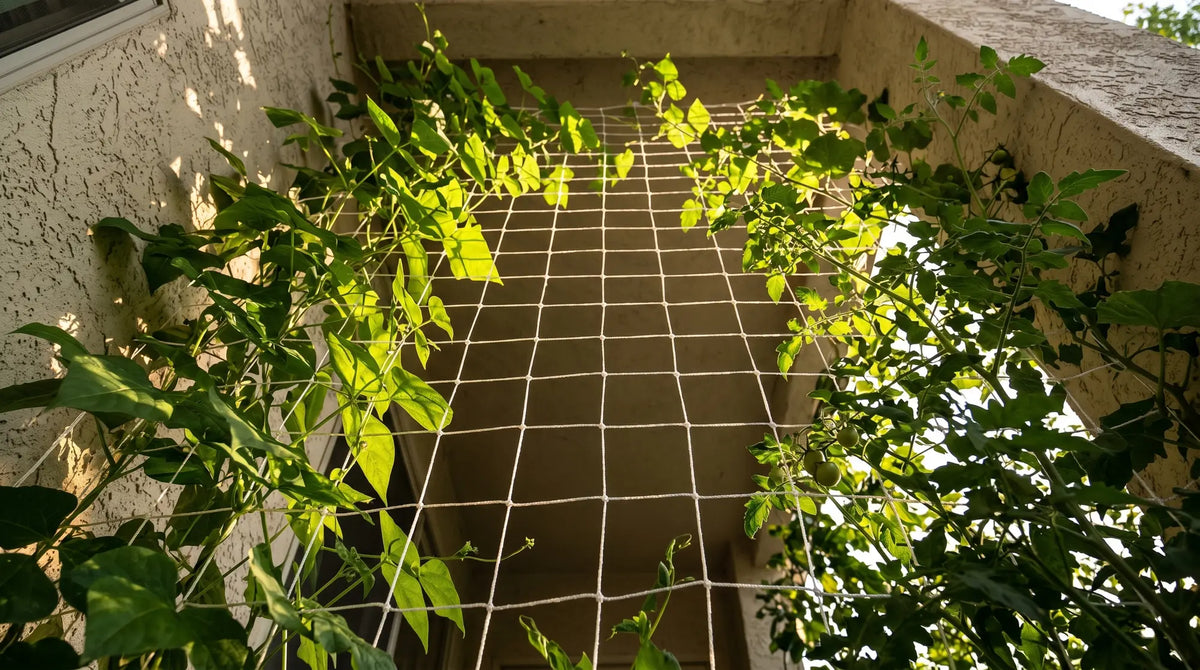
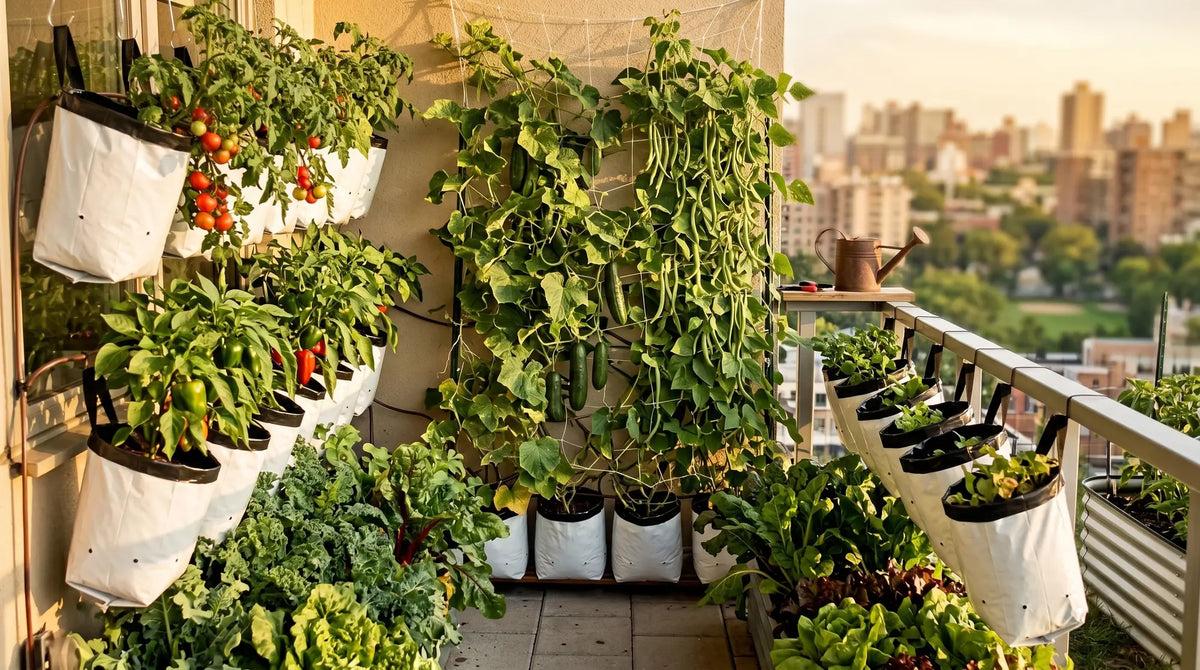
A trellis, wall-mounted bags, or stakes multiply the growing area of one square foot of ground several times over. That multiplication is the whole logic of vertical growing in any tight space, from a balcony to a narrow side yard.
Containers mounted on walls or stacked in columns lose moisture from every exposed side, so they dry faster than a ground-level pot in the same conditions.
From bare wall to productive climb.
Five steps, in order. Each one prepares the next, so working through them is the complete setup plan.
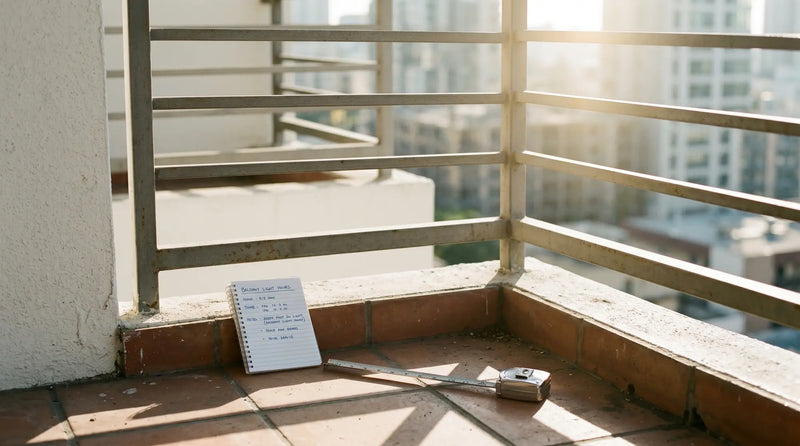
Assess the space and the light
Walk the balcony, patio, or yard and count the hours of direct sun the best wall or rail gets. Six or more hours opens up fruiting crops like tomatoes and cucumbers, while four to five hours suits leafy greens, herbs, and beans.
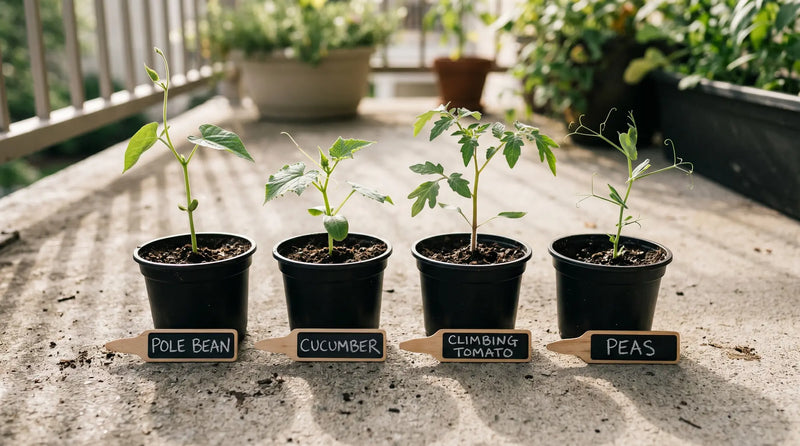
Choose vertical-friendly crops
Pick crops that climb or stack naturally, because the structure only works when the plant wants to use it. Indeterminate tomatoes, pole beans, cucumbers, and peas climb a trellis with very little guidance, while leafy greens and herbs fill wall-mounted pockets and stacked bags cleanly.
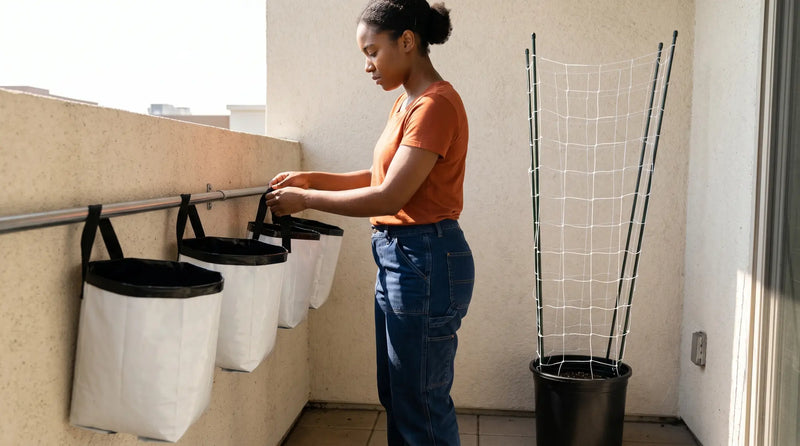
Pick containers and supports
Fabric grow bags with handles stack and hang without permanent fixing, while wall-mounted pocket planters and rail-clip pots work where the structure is already in place. Match the support method to the crop weight and the wall or rail structure before you fill any container.
Shop pots & containers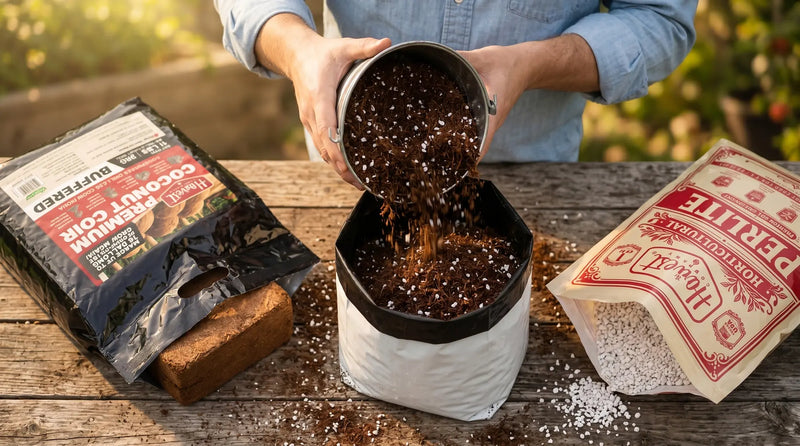
Fill with a moisture-holding mix
A coir-based mix holds water and air together better than standard potting soil, which is important in containers that dry out faster than ground-level beds. Add perlite at about 20 percent by volume for extra drainage in taller vertical containers.
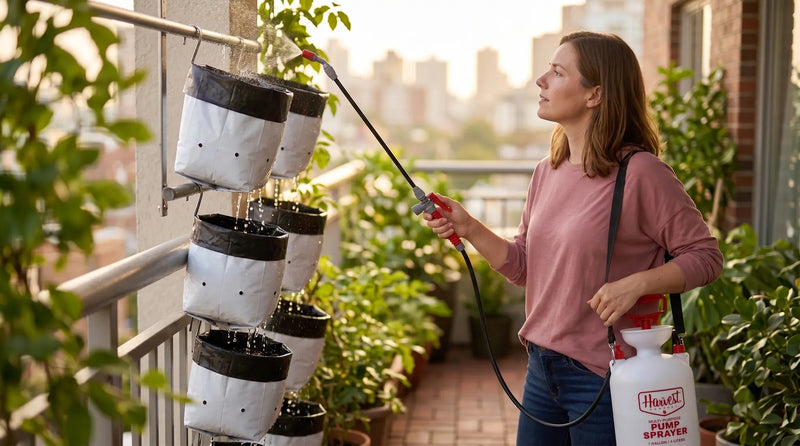
Set a watering rhythm
Check the top inch of media in vertical containers daily during warm weather, because they dry from multiple sides and the change can happen fast. Deep, slow watering until it drains through keeps the root zone consistent even when the container surface dries quickly.
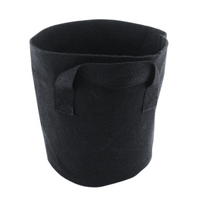
Fabric aeration bags with handles stack, hang, and move easily, making them a practical container for vertical setups where wall space and weight limits both matter.

A two-gallon biodegradable pot with aeration built in, holding a coir blend that retains moisture while keeping roots breathable in a compact vertical container.
Three habits behind a struggling vertical setup.
Each one is a setup or rhythm choice, and each is easy to get right before the season starts.

Five things to remember.
- 01Vertical gardening multiplies productive area without adding ground space, making it the right approach for balconies, patios, and narrow side yards.
- 02Six or more hours of direct sun opens up fruiting crops like tomatoes and cucumbers, while four to five hours suits leafy greens and herbs.
- 03Indeterminate tomatoes, pole beans, cucumbers, and climbing peas are the crops most naturally suited to a trellis or wall-mounted support.
- 04Vertical containers dry faster than ground-level pots because they lose moisture from multiple exposed sides, so daily checks in warm weather are the right rhythm.
- 05A coir-based mix with perlite holds water and air together in a compact container, keeping the root zone consistent even when the container dries from the outside.
Questions or notes? Drop them here.
A real grower replies within a business day.
No comments yet. Be the first.