Grow Guides · Light

Best Plants for Low-Light Spaces

July 10, 2026· 7 min read· 0 comments

A dim apartment or a north-facing window does not rule out growing food, it just narrows the list to crops that evolved under the shade of taller plants. The Harvest Company picks the plant to fit the light rather than fighting a low-light space, because a shade-tolerant green in a bright-indirect window will out-produce a tomato that never sees enough sun. Knowing which crops thrive on less is what turns a dim corner into a working garden.

Leafy greens, tender herbs, and a few fast crops carry a low-light space, and a simple read of how dim it really is tells you whether to plant or to add a light.

Quick answer
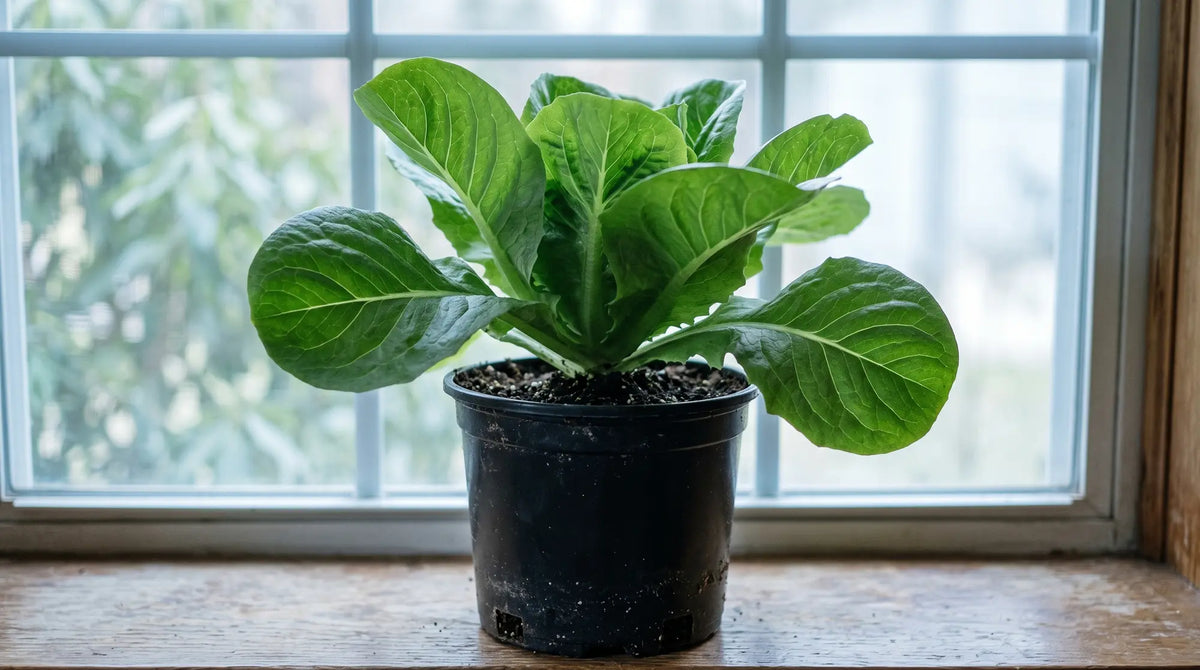
The best edible crops for low light are leafy greens like lettuce, spinach, arugula, and kale, along with herbs such as mint, parsley, cilantro, and chives. These grow on three to five hours of sun or bright indirect light. Fruiting crops like tomatoes need far more, so a very dim space is better matched to greens or supplemented with a grow light.
Best Plants for Low-Light Spaces
Leaves over fruit in low light

Crops grown for their leaves need far less light than crops grown for their fruit. A space that could never ripen a tomato will happily turn out lettuce, spinach, and herbs week after week, so lean into the leafy side of the garden.

Know when it is truly too dim

If even shade-tolerant greens stretch tall, pale, and floppy, the space is below what natural light can carry. That is the point to either move to a brighter spot or add a grow light, rather than keep trying crops that cannot cope.

What works, what struggles

Pick for the light you have.

Low light rewards the leafy crops and frustrates the fruiting ones, so match the plant to the space honestly.
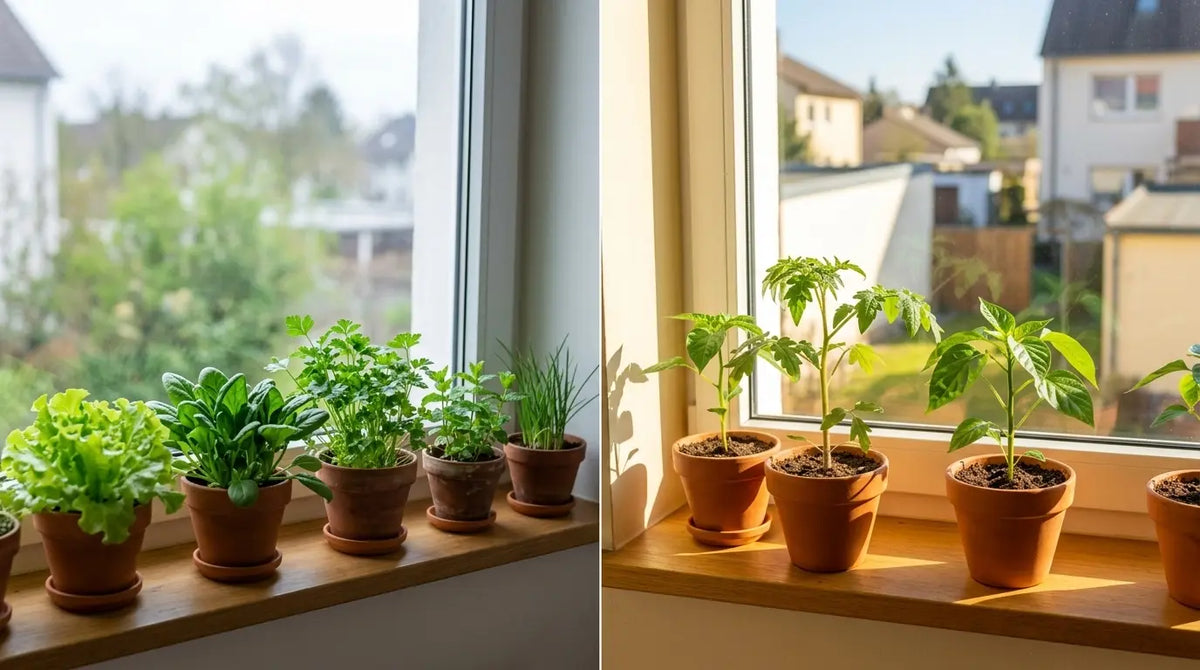
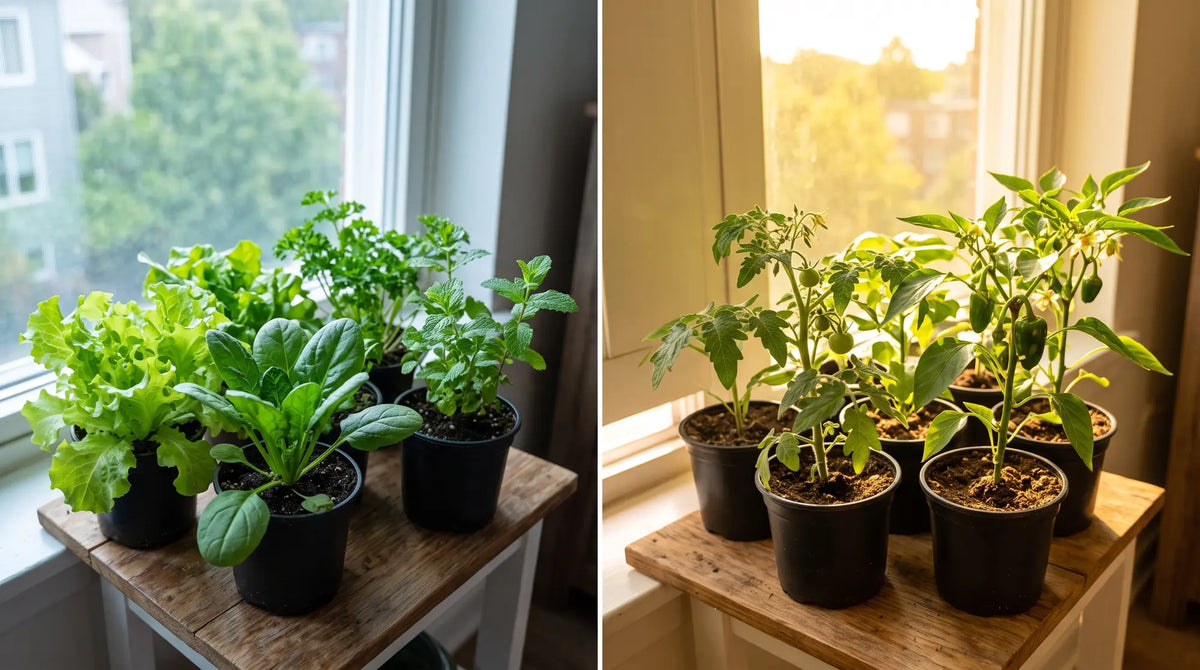
Thrives in low light
Needs full sun
Crops
Lettuce, spinach, arugula, kale, chard, mint, parsley, cilantro, chives, and green onions.
Tomatoes, peppers, cucumbers, squash, eggplant, and most crops grown for their fruit.
Light needed
Three to five hours of sun or steady bright indirect light near a window.
Six or more hours of direct sun to flower and set fruit that sizes up.
Where they fit
North and east windows, shaded balconies, and the dappled edge of a yard.
South and west windows, open balconies, and the unshaded part of a yard.
If light is short
They still grow, just slower and a little leggier, and a grow light fills the gap.
They stretch, fail to flower, and rarely fruit, so a grow light becomes necessary.
Key takeaways

Five things to remember.

  1. 01A dim space does not rule out a food garden, it narrows the list to crops grown for their leaves rather than their fruit.
  2. 02Lettuce, spinach, arugula, kale, and tender herbs are the reliable producers in low light.
  3. 03Most low-light crops want three to five hours of sun or steady bright indirect light to keep producing.
  4. 04Fruiting crops like tomatoes and peppers need full sun, so a very dim space is the wrong home for them.
  5. 05When even shade-tolerant greens stretch and pale, the space is too dim and a grow light is the next step.
Discussion

Questions or notes? Drop them here.

A real grower replies within a business day.

No comments yet. Be the first.

FAQ

Common questions about low-light growing.

Leafy greens are the strongest performers: lettuce, spinach, arugula, kale, chard, and Asian greens like bok choy. Many herbs also cope, including mint, parsley, cilantro, and chives. These crops grow for their leaves rather than fruit, so they need far less light than tomatoes or peppers.
Some, with patience. Mint, parsley, and chives tolerate the bright indirect light of a north window better than sun-lovers like basil. Growth is slower and a little leggier than in a sunny window, so a small grow light noticeably improves the harvest if the window is your only option.
Watch the plants. If shade-tolerant greens stretch tall with wide gaps between pale leaves and flop over, the space is below what they can manage. Healthy low-light growth is slower but stays compact and green, so floppy, stretched, washed-out plants are the signal to add light.
Less than they do in harsh sun and heat, which is one advantage of a cooler, shadier spot. Bolting is driven more by heat and day length than by shade, so low light can actually extend the harvest window for lettuce and spinach that would bolt quickly in full summer sun.
Not quite. Many popular low-light houseplants are foliage plants that survive on very little light without needing to produce a crop. Edible greens still need enough light to make leaves worth harvesting, so they sit a step above true low-light houseplants in what they require.
The promise

Grow better. Eat better. Every day.

Your partner in every harvest. Match the crop to the light, and even a dim corner brings something home.

Posted July 10, 2026 · Updated July 10, 2026 · 7 min read