
Best Soil Alternatives for Indoor Growing
Bagged potting soil works for most outdoor gardens, and it works for some indoor ones too. Indoors, where containers are smaller, watering comes around more often, and weight matters, a few alternatives make the job easier for a first-time grower in almost every way that counts.
Coconut coir, perlite, and vermiculite are the most common alternatives, and each one earns its place for a different reason. Here is what each one is, when it shines, and when to pass.

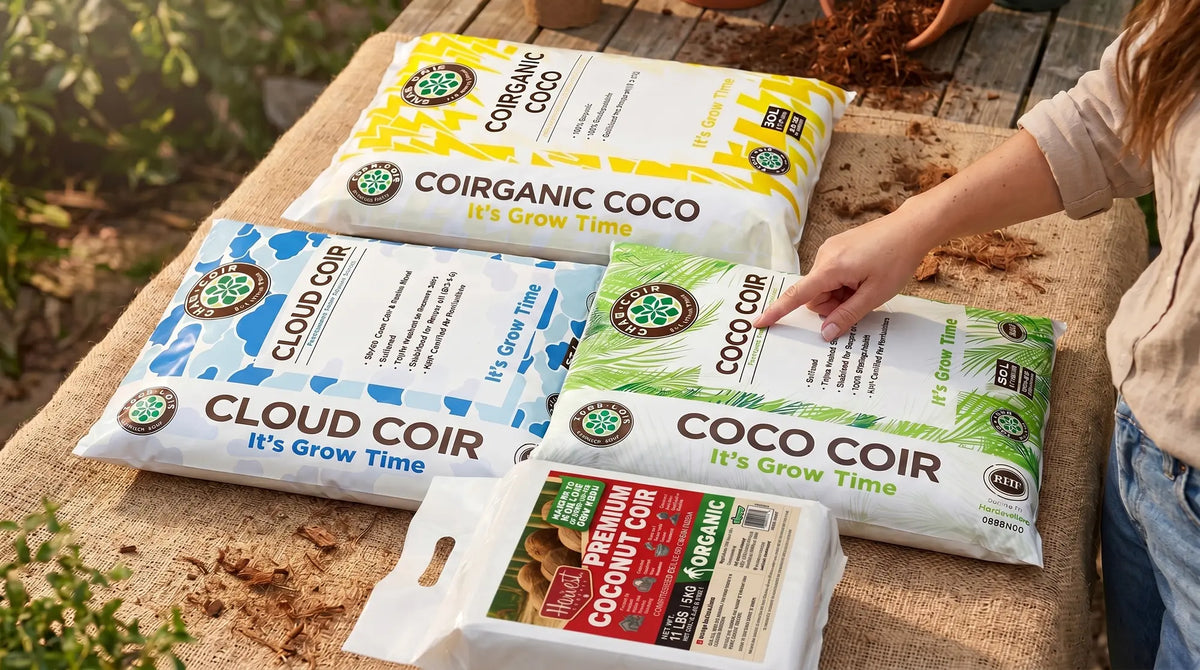
If you are picking one medium for the whole garden, pick buffered coconut coir. It is the most forgiving general-purpose option and works for nearly every edible crop a home grower wants.
You can use any of these on their own. Most experienced growers blend them: 70 percent coir as the base, 20 percent perlite for drainage, 10 percent vermiculite for moisture retention.
Coconut coir.
Coconut coir is the fibrous material from the husk of a coconut. Once buffered and processed, it becomes a soft, sponge-like growing medium that holds water and air at roughly equal parts. That balance is what makes it forgiving for first-time growers: roots get oxygen and water at the same time, instead of one or the other.
Coir comes compressed into bricks. A 5 kg brick rehydrates into roughly 75 liters of usable media, which is enough to fill a few large containers or a small raised bed. Storage is easy until you need it.
The trade-off is that raw, unbuffered coir holds onto sodium and potassium that can lock out other nutrients. Always start with a buffered product. Reading the bag label is the only step that matters here.

Perlite.
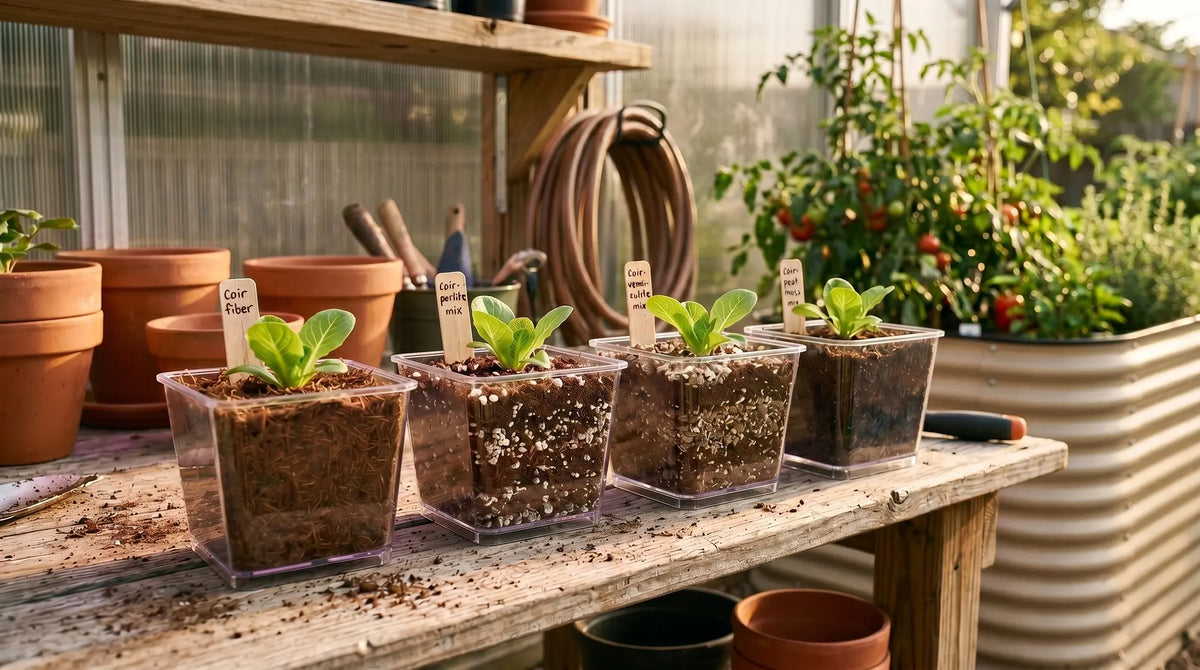
Perlite is volcanic glass that has been heated until it pops, like popcorn, into white airy pellets. The pellets are mostly air. Mixed into a base medium, perlite creates pockets that let water drain through and oxygen reach the root zone.
On its own perlite is too dry and too light to hold a plant up, so it is almost always used as an amendment. A common starter ratio is one part perlite to four parts coir or soil. Heavier-feeding crops like tomatoes do well with more.
Perlite is dusty when poured. Wet it down with a hose or watering can before mixing, and the dust drops to nothing.

Vermiculite.
Vermiculite is a layered mineral that puffs up when heated, forming soft, sponge-like flakes. Where perlite improves drainage, vermiculite improves moisture retention, holding many times its weight in water and releasing it slowly as roots demand.
Vermiculite is most useful for seed starting, where keeping the surface evenly moist matters more than drainage. Beyond germination it is sometimes blended into mixes for water-loving crops.
It does compact over time. Replace the medium each season rather than relying on the same vermiculite mix year after year.

Peat moss.
Peat moss is the partially-decomposed plant matter from peat bogs. It was the standard soilless medium for decades because it is cheap, widely available, and holds water well.
The downsides have grown clearer over time. Peat is acidic and almost always needs amending with lime to get the pH where vegetables want it. It compacts quickly under repeated watering. Once dry, it becomes hydrophobic and resists rewetting until soaked. Peat extraction also damages bog ecosystems that take centuries to form.
Coir performs the same job with better moisture handling, neutral pH, and a renewable supply chain. For most home growers, the case for staying with peat has weakened.

How the four media compare on what matters most.
Pick the row that matters most for your setup. For first-time growers the most important rows are forgiveness on watering and how easy the medium is to manage.
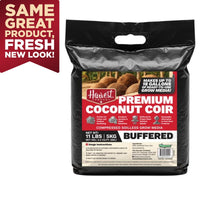
Triple-washed and pH-balanced. One brick rehydrates into about 75 liters of usable medium.
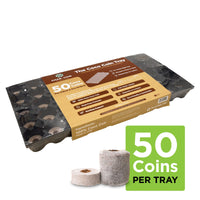
A 50-cell propagation tray with pre-filled coco coir plugs. Even moisture across the tray, clean germination.
Five things to remember.
- 01Coconut coir is the best single-medium choice for most indoor home gardens. Buy it buffered.
- 02Perlite improves drainage. Use one part perlite to four parts coir or soil for most edible crops.
- 03Vermiculite improves moisture retention. Use it for seed starting more than for established growth.
- 04Peat works but is heavier, more acidic, and harder to rehydrate. Coir does the same job better for most home growers.
- 05A solid mix for most indoor edible crops: 70 percent coir, 20 percent perlite, 10 percent vermiculite.
Questions or notes? Drop them here.
A real grower replies within a business day.
No comments yet. Be the first.