Grow Guides · Troubleshooting

Why Are My Plants Wilting?

June 4, 2026· 6 min read· 0 comments

A wilting plant looks like one problem, but the same droop can come from soil that is too wet, soil that is too dry, damaged roots, or an afternoon of hard heat. Reading what the soil and the pot are doing is what turns a guess into a clear next step. At The Harvest Company we treat a wilt as a question to answer, not a plant to write off.

What the soil feels like one inch down, how heavy the pot is, and whether the droop fades by evening are the three things that separate too much water from too little from a root or heat issue.

Quick answer
A droopy plant in wet soil usually points to damaged roots from too much water, so it needs to dry out, not be watered again. A droopy plant in dry, light soil is simply thirsty and recovers fast with a deep soak. A plant that wilts in afternoon heat but bounces back by evening is heat-stressed, not short of water. Check the soil one inch down and lift the pot before you do anything else.
Why Are My Plants Wilting?
Before anything else

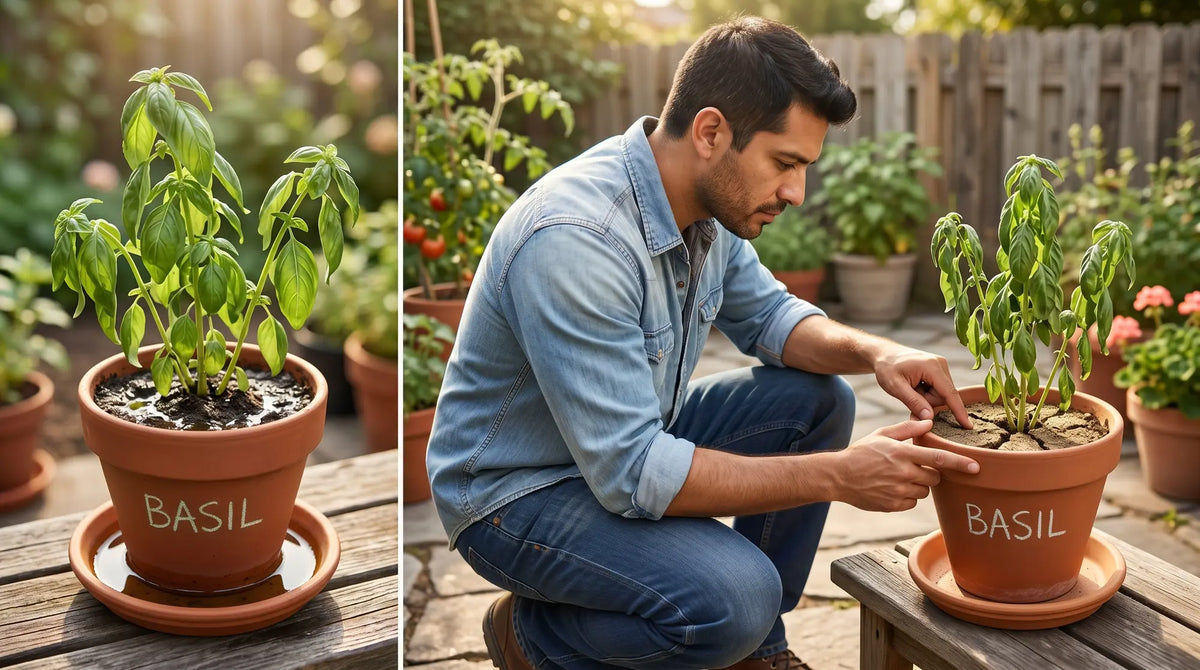
Push a finger one inch into the soil and lift the pot before you reach for the watering can. A heavy pot with wet soil and a light pot with dry soil are two opposite problems, and the can only helps one of them.

The dangerous overlap

A waterlogged plant wilts in almost exactly the same way a thirsty one does, because roots damaged by saturation cannot pull water up even when the soil is full of it. Adding more water to that plant makes the droop worse, so the soil check has to come first.

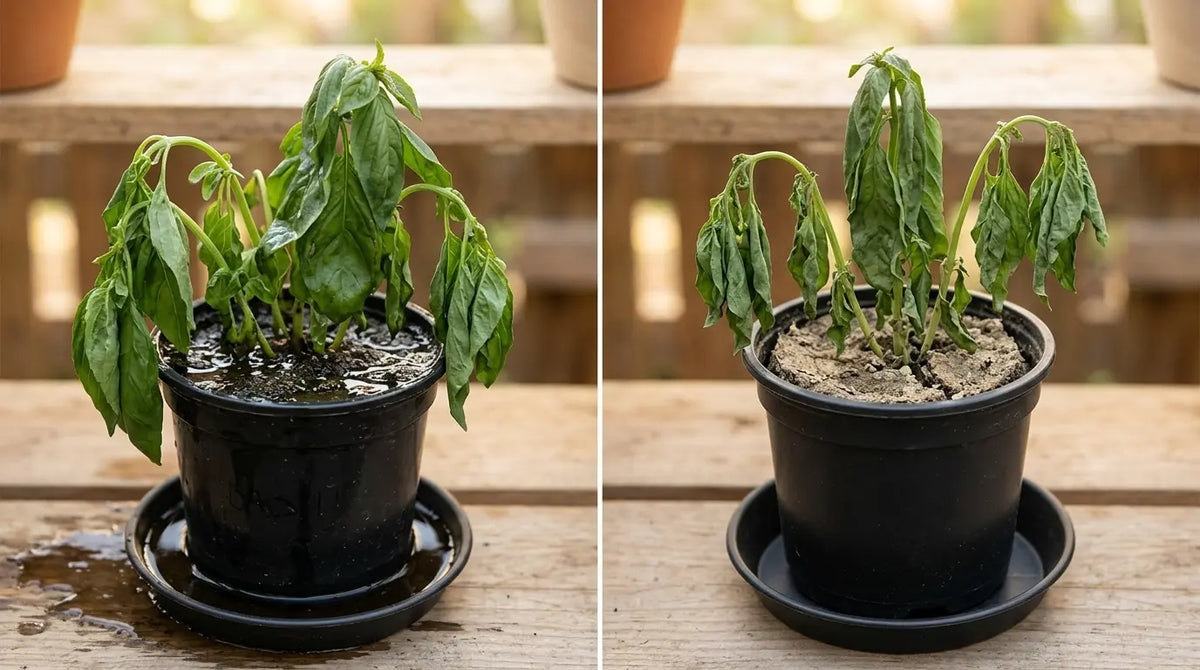
The two wilts side by side

Same droop, different cause.

Match what the soil and the pot are doing to the column that fits, and the right move follows.
Wet wilt
Dry wilt
Soil one inch down
Wet and heavy, often cool to the touch, sometimes with a faintly sour smell at the surface.
Dry and crumbly, pulling away from the sides of the pot, with no moisture on a probing finger.
Pot weight
Heavy and sluggish to lift, holding water it cannot move because drainage or roots have failed.
Noticeably light, almost dry-feeling, with nothing left in the media to hold the plant up.
Recovery
Slow and uncertain, since the roots have to repair before the plant can take water up again.
Fast, usually within hours of a deep soak, as the plant rehydrates and lifts back into shape.
Roots
Soft, brown, or mushy where they have sat in saturated media without enough air.
Firm and pale, just dry, with no rot or damage once water reaches them again.
First fix
Stop watering, move the pot somewhere airy, and let the media dry well down before anything else.
Water deeply until it runs from the drainage holes, then repeat the soak after about an hour.
Symptom checker

I see this on my plant.

Match the symptom to the most likely cause and the first thing to try. Work from the highest-severity match down.
Symptom
Likely cause
Quick fix
Severity
Whole plant droops, soil is wet
Root rot from saturation, the roots have been damaged by sitting in waterlogged media and cannot pull water up.
Pull the plant, trim away any mushy roots, and repot into fresh dry media so the survivors can breathe.
High
Whole plant droops, soil is dry
Standard underwatering, the media has run dry and there is nothing left to support the plant.
Water deeply until it runs from the drainage holes, then repeat the soak after about an hour.
Low
Wilts in afternoon heat, soil still moist
Transient heat stress, the plant is losing water faster than the roots supply it for a few hours, not running short overall.
Provide shade through peak heat and do not add water, since the soil is already moist enough.
Low
Wilting with a sour smell from the soil
An anaerobic root zone, chronic wet conditions have pushed the media off and starved the roots of air.
Repot into fresh airy media and fix the drainage so the root zone can breathe between waterings.
High
A new transplant wilts within a day
Transplant shock, the disturbed roots cannot yet keep up with what the leaves are losing.
Move it into shade, keep the media evenly moist, and hold off feeding until it settles and perks up.
Medium
Wilts despite daily watering
Drainage failure or no drainage holes, the root zone stays wet and the roots are slowly drowning.
Move the plant to a container that drains, then let the top inch dry between waterings from now on.
High
Why this keeps happening

Three habits behind most wilting.

Each is a small adjustment, not new gear.

Common beginner mistakes
No.
Mistake
What goes wrong
The fix
Severity
01
Watering a wilt without checking
Treating every droop as thirst and reaching straight for the watering can, even when the soil is already saturated and the roots cannot use more water.
Check soil moisture one inch down and lift the pot first, then decide which wilt you are actually looking at.
Most common
02
No drainage holes
Growing in a pot that cannot drain, which keeps the root zone wet long after watering and quietly sets up the wet-wilt pattern.
Grow in containers that drain freely so excess water can leave and the roots get air between waterings.
Common
03
Watering the afternoon droop
Adding water to a plant that is only heat-stressed, when the soil is still moist and the droop would have faded on its own by evening.
Give shade through peak heat and recheck in the evening before deciding the plant needs water.
Underrated
Key takeaways

Five things to remember.

  1. 01Wilting is a signal that something is off with water supply, not a verdict on the plant or the gardener.
  2. 02Check the soil one inch down and lift the pot before you water, because the same droop can mean opposite things.
  3. 03Wet wilt needs the media to dry out and the drainage fixed, since more water only pushes a drowning plant further down.
  4. 04Dry wilt recovers fast, usually within hours, once the plant gets a slow deep soak that reaches the whole root ball.
  5. 05Afternoon heat-wilt with soil that is still moist needs shade through the worst of the day, not another round of water.
Discussion

Questions or notes? Drop them here.

A real grower replies within a business day.

No comments yet. Be the first.

FAQ

Common questions about wilting.

Often, yes. A thirsty plant in dry soil usually lifts back within hours of a deep soak. A plant wilting in wet soil takes longer and only recovers if the roots are still partly sound, so the sooner you stop watering and let it dry, the better its chances.
Because roots that have sat in saturated media are damaged and cannot pull water up, even with plenty around them. The plant droops as if it were thirsty when the real problem is too much water. Let the soil dry well down and check the drainage before you water again.
On a hot day a plant can lose water through its leaves faster than the roots replace it, so it droops through peak heat and then firms back up as the day cools. If the soil one inch down is still moist, this is heat stress, not thirst, and shade helps more than water.
Not until you have checked the soil and lifted the pot. A light pot with dry soil wants a deep soak. A heavy pot with wet soil wants the opposite, since more water on damaged roots makes the droop worse. The check takes a moment and decides which way to go.
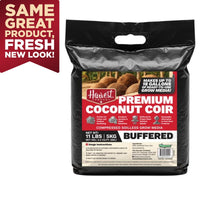
It helps with the most common cause. Buffered coir holds water and air together, so the root zone rarely goes fully waterlogged and the wet-wilt pattern is far less likely. It does not replace good drainage, but it gives roots a much more forgiving place to live.
The promise

Grow better. Eat better. Every day.

Your partner in every harvest. Read what the soil and the pot are telling you, and the right move tends to follow on its own.

Posted June 4, 2026 · Updated June 4, 2026 · 6 min read