
Raised Bed Gardening: A Complete Guide
A raised bed is the simplest way to give a home garden good drainage, warm soil, and a root zone you control from the first season. The Harvest Company builds beds the same way whether the garden is a single box on a patio or a row of beds in the backyard, because the fundamentals do not change with scale. Get the spot, the size, and the fill right, and the bed does much of the work for you.
The whole decision comes down to three things: where the bed sits, how it is sized for reach and drainage, and what goes inside it.

Keep a bed you can walk around to four feet wide or less, so you can tend the center from either side without compacting the soil. A bed against a wall should be half that, about two feet, so the back stays in reach.
A raised bed wins because water moves through it freely, so the fill matters more than the frame. A mix that holds water and air together gives roots both at once, which is the difference between a bed that thrives and one that stays soggy.
When a bed is worth building.
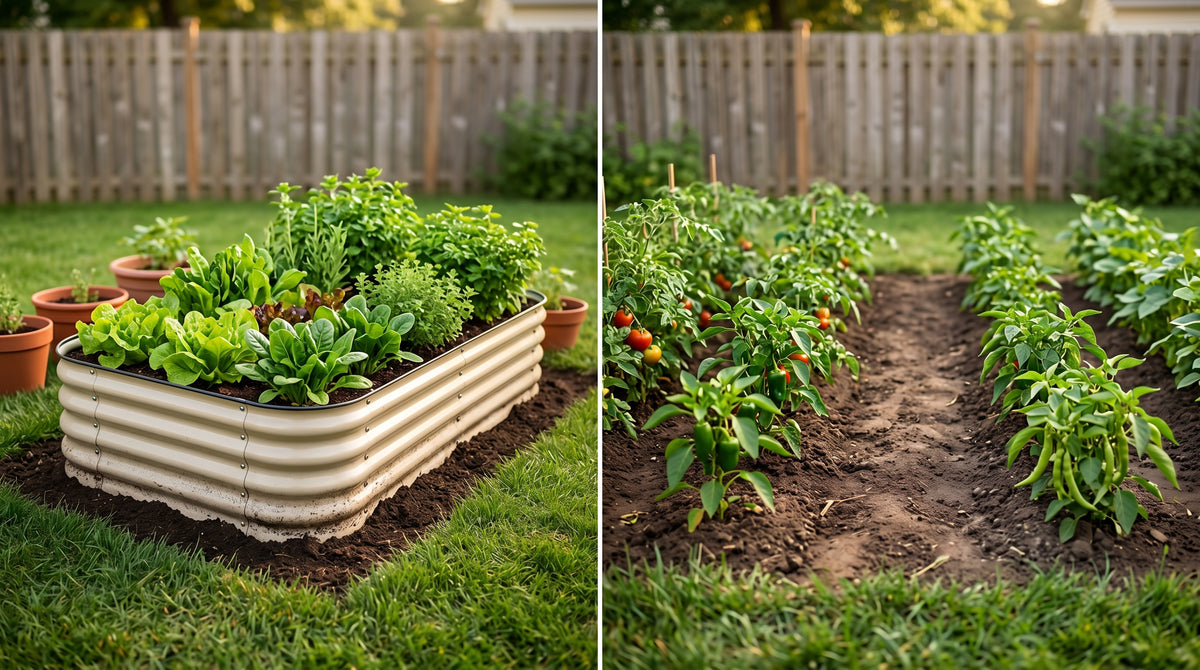
Both grow good food. The bed earns its cost where the native ground works against you.
From empty frame to planted bed.
Five steps, in order. Each one sets up the next, so working through them is the plan for the whole bed.
Pick the spot
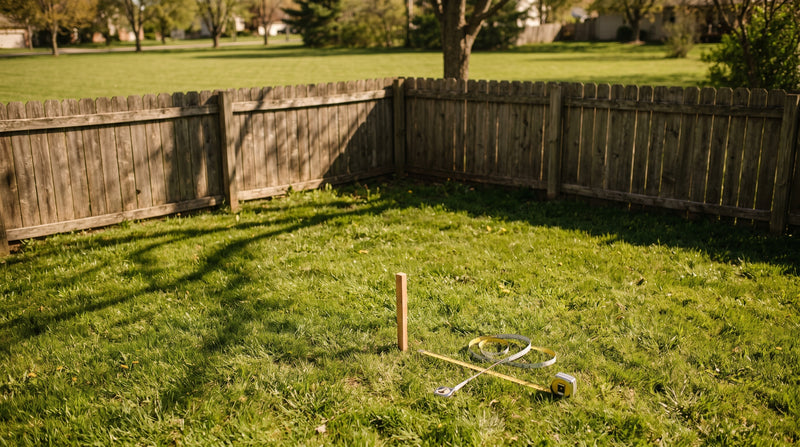
Choose a place that gets six or more hours of direct sun and sits level. Sun decides what you can grow far more than anything in the bed, so settle this before you build.
Frame it for reach
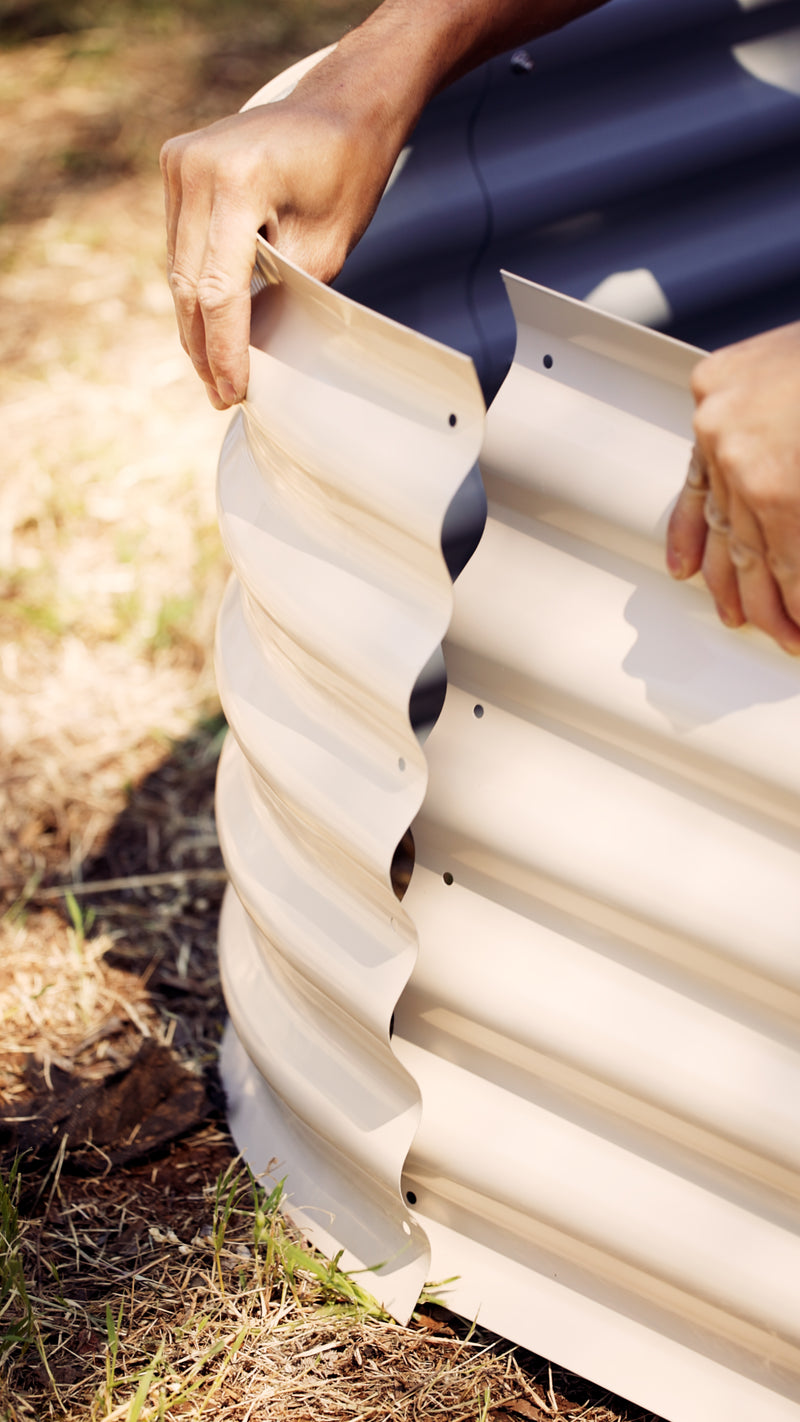
Build the frame no wider than four feet so you can reach the center from either side, or two feet against a wall. Eight to twelve inches deep gives most vegetables the root room they want. A ready-made galvanized bed arrives at the right proportions and skips the build entirely.
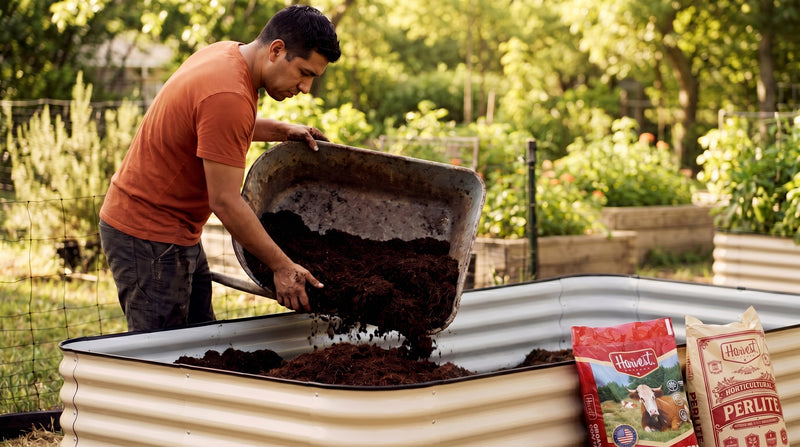
Fill with a draining mix
Fill with a blend that drains freely and still holds moisture, built on coir with compost and castings worked through. Skip bagged topsoil on its own, which packs down and drains poorly in a frame.
Shop grow media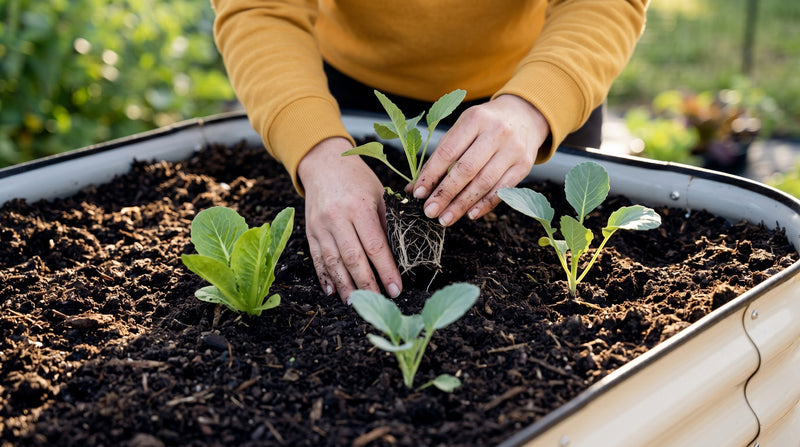
Plant and space
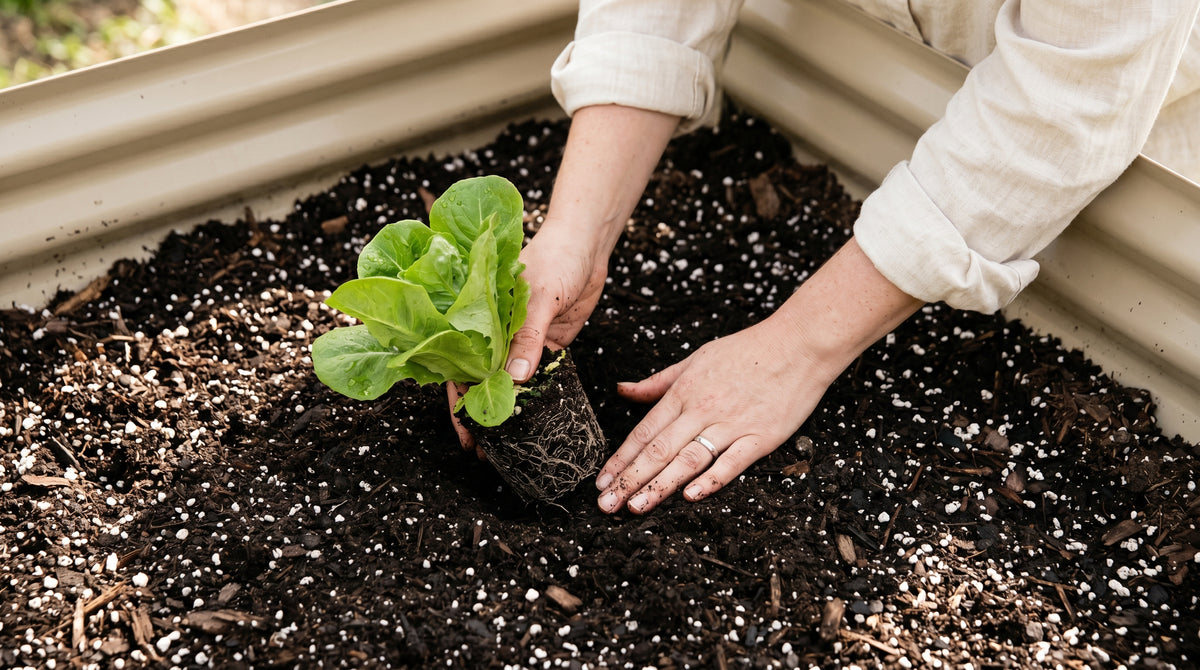
Set transplants or sow seed at the spacing each crop wants, working from the center out so you never lean across what you have planted. A new bed is loose and easy to plant into.
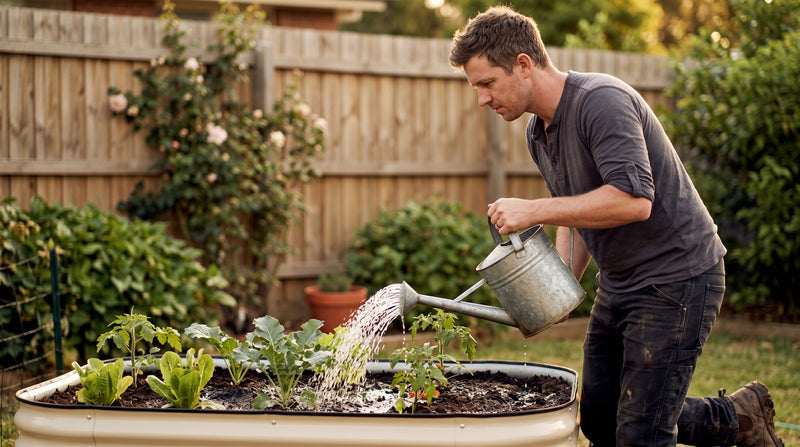
Water it in
Water deeply right after planting until it runs through, which settles the mix around the roots and removes air pockets. From there, let the top inch dry between waterings.
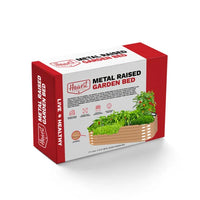
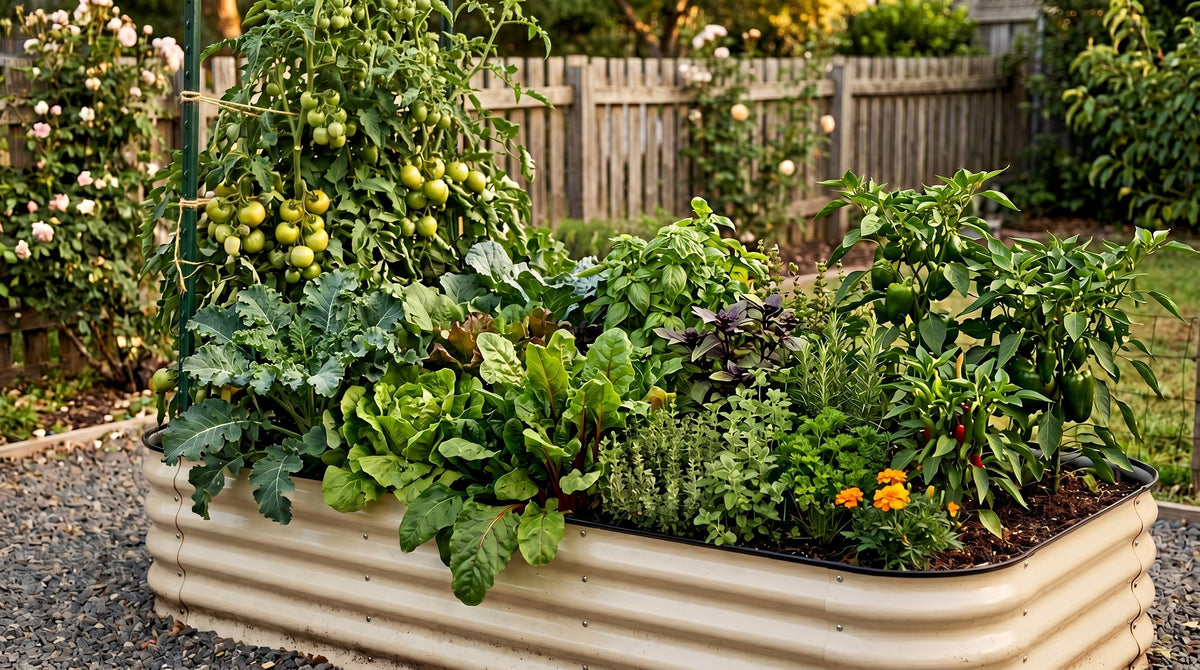
A galvanized steel bed at six feet by three feet with a fourteen-inch depth, sized so you can reach the center from either side and deep enough for nearly any home crop. It skips the cutting and building and gives the season a clean, draining start.

One buffered, triple-washed brick rehydrates into many liters of media that holds water and air together, the backbone of a raised-bed fill that drains well from the first watering.
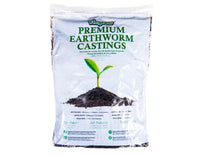
Worked through the fill, castings give a bed a mild, steady source of nutrition that is very hard to overdo, so the soil feeds the plants gently across the season.
Three habits behind a slow bed.
Each is a setup choice, easy to get right at the start.

Five things to remember.
- 01A raised bed earns its cost where the native ground drains poorly, warms late, or is hard to reach.
- 02Site for sun first, six hours or more, because light decides the harvest more than anything in the bed.
- 03Keep a walk-around bed to four feet wide so you can tend the center without compacting the soil.
- 04Fill on coir with compost and castings rather than topsoil alone, so the bed drains and feeds from day one.
- 05Water deeply at planting to settle the mix, then let the top inch dry between waterings.
Questions or notes? Drop them here.
A real grower replies within a business day.
No comments yet. Be the first.