Grow Guides · Troubleshooting

Plant Diseases: Rot, Mildew & Mold

June 5, 2026· 7 min read· 0 comments

Most of what looks like plant disease starts as a condition rather than an infection, and reading the condition is what lets you act before it spreads. Rot, mildew, and mold each tell you something specific about moisture and air around the plant. At The Harvest Company we treat the early sign as a chance to change the setup rather than a loss.

Where the trouble shows up, how wet the media stays, and how well air moves through the leaves are the three things that separate harmless damp from a disease worth treating.

Quick answer
Mushy roots with a sour smell point to root rot from saturated media. White powder on the leaf tops points to powdery mildew from still, humid air. White fuzz on the surface is usually harmless mold from a wet surface. Check the moisture and airflow before you treat anything.
Plant Diseases: Rot, Mildew & Mold
Before anything else

Nearly every common disease is a moisture and airflow condition first, so most prevention is simply drier surfaces and air that keeps moving. Change those two things and the problem usually loses the foothold it needs.

The common mix-up

Harmless surface mold on damp media gets mistaken for a plant disease all the time. It is a wetness signal rather than an infection of the plant, so the response is to dry the surface, not to treat the plant.

The five patterns side by side

Same look, different driver.

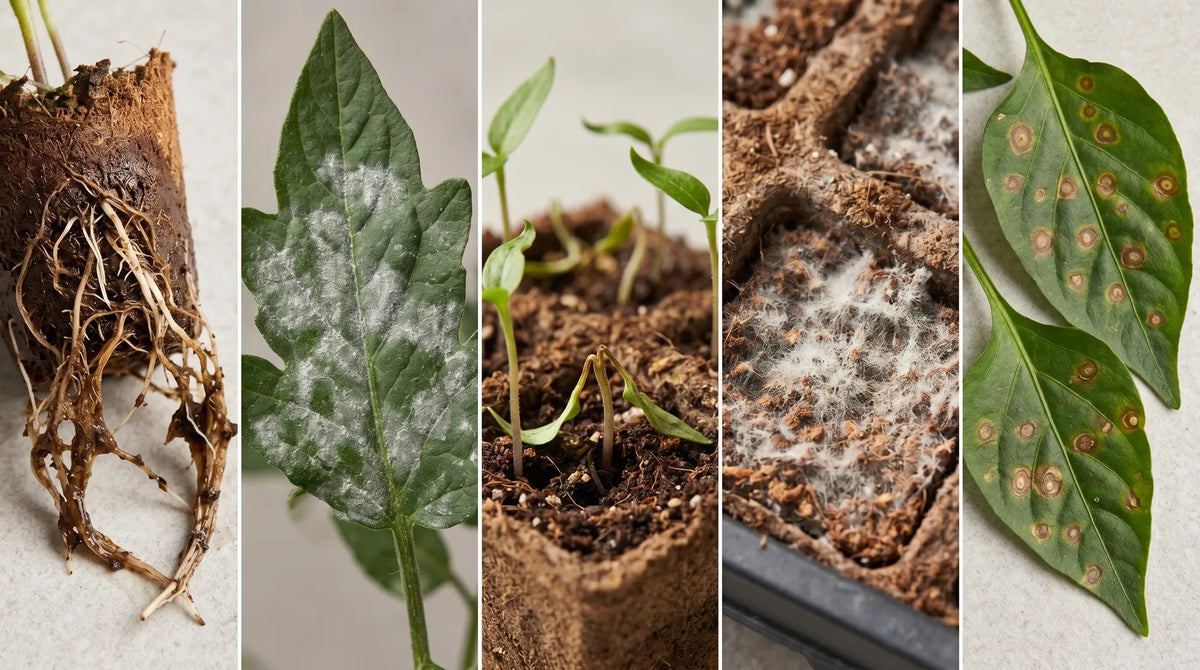
Match what you are seeing on the plant to the condition that actually drives it.
Looks like
Driven by
Root rot
Roots turn mushy and brown, the plant wilts even though the soil is damp, and the media smells sour.
Saturation: media that stays soaked so long the roots are starved of air and begin to break down.
Powdery mildew
A white powdery coating sits on the tops of leaves and spreads across the upper canopy.
Still, humid air: crowded foliage with no airflow holds the moisture this fungus settles into.
Damping-off
Healthy seedlings collapse and topple at the soil line within a day or two.
Cold, wet media: airless, overwatered seed media that the seedling stems cannot survive.
Surface mold
A patch of white fuzz appears on the surface of the media but the plant looks fine.
Chronic surface wet: a top layer that never dries between waterings feeds harmless mold.
Leaf spot
Concentric brown spots appear on leaves, often lower ones first, and slowly enlarge.
Splashing and overhead wet: water hitting the leaves and sitting on them carries the spores in.
Symptom checker

I see this on my plant.

Match the symptom to the most likely cause and the first thing to try. Work from the highest-severity match down.

Symptom
Likely cause
Quick fix
Severity
Mushy brown roots and a sour smell
Root rot from saturated media, the root zone has been wet so long it has gone anaerobic and started to break down.
Trim the worst roots, repot into fresh airy media, and fix the drainage so the new media can dry between waterings.
High
White powdery coating on the tops of leaves
Powdery mildew from still, humid air, the canopy is holding moisture with no air moving through it.
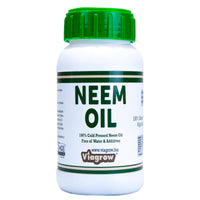
Improve airflow first, treat with organic neem oil while it is still light, and remove the worst affected leaves.
Medium
Seedlings collapse and topple at the soil line
Damping-off in cold, wet, airless media, a soil-borne issue that hits stems at the surface.
Start over with fresh clean media, water less, and give the tray more air and a little more warmth.
High
White fuzz on the surface of the media
Harmless saprophytic mold living on a chronically wet surface, it feeds on damp organic matter, not the plant.
Dry the surface, add airflow over the pot, and water less often so the top layer is allowed to dry out.
Low
Concentric brown spots on leaves
Fungal leaf spot, spread by splashing and overhead wet that lands spores on leaves and keeps them damp.
Remove the affected leaves, water at the base instead of over the top, and avoid wetting the foliage.
Medium
Rapid wilt with the soil still firm and moist
A vascular or root disease that has moved inside the plant, the kind it rarely recovers from once it shows.
Isolate the plant from the rest right away, and remove it if it does not recover within a few days.
High
Why this keeps happening

Three habits behind most disease.

Each is a small adjustment, not new gear.

Common beginner mistakes
No.
Mistake
What goes wrong
The fix
Severity
01
Watering overhead late in the day
Leaves that stay wet overnight are exactly where fungal disease starts, and a late overhead watering leaves them damp through the coolest, stillest hours.
Water at the base of the plant, earlier in the day, so any moisture on leaves has time to dry.
Most common
02
Crowding plants together
Still air between packed plants holds the humidity that mildew and leaf spot need to take hold and spread from one plant to the next.
Space plants so air moves freely between them, and thin a crowded canopy when it closes up.
Common
03
Reusing old wet media for seed starting
Damp used media carries the cold, airless conditions that damping-off needs, so seedlings collapse before they ever get going.
Start seeds in fresh clean media every time, and keep the seed tray on the drier side.
Underrated
Key takeaways

Five things to remember.

  1. 01Nearly every common disease is a moisture and airflow condition first, so the setup is what you treat.
  2. 02Root rot is a drainage problem rather than a spray problem, so airy media and dry-down matter most.
  3. 03Airflow prevents more powdery mildew than any treatment, so moving air is the strongest prevention.
  4. 04Surface mold on the media is usually harmless and reads as a wetness signal, not an infection.
  5. 05Isolate a struggling plant early and discard the ones that cannot be saved before they spread it.
Discussion

Questions or notes? Drop them here.

A real grower replies within a business day.

No comments yet. Be the first.

FAQ

Common questions about plant disease.

Sometimes, if you catch it early. Trim away the mushy roots, repot into fresh airy media, and let the new media dry between waterings so the remaining roots can breathe. If the rot has reached the stem or most of the root mass is gone, the plant rarely comes back and isolating it protects the rest.
That is powdery mildew, a fungus that settles on the leaf surface when air is still and humid. It spreads across the canopy if nothing changes, so the first move is more airflow, then removing the worst leaves, then an organic neem oil treatment while it is still light.
Usually not. The fuzzy white mold that grows on damp media surfaces feeds on moisture and organic matter, not the plant, so it reads as a wetness signal rather than a disease. Dry the surface, add airflow over the pot, and water less often and it tends to clear on its own.
Damping-off comes from cold, wet, airless media, so prevention is mostly drier and airier conditions. Start seeds in fresh clean media, water less than feels natural, give the tray gentle air movement, and keep it a little warmer so the surface is not constantly soaked.
Organic neem oil helps most with powdery mildew caught early and as ongoing prevention, applied before the problem is widespread. It is not a cure for established root rot or an internal disease, where airflow and drainage matter far more than any spray. Treat it as an early and preventive aid, not a rescue.
The promise

Grow better. Eat better. Every day.

Your partner in every harvest. Catch the condition early, and most disease never gets the chance to take hold.

Posted June 5, 2026 · Updated June 5, 2026 · 7 min read