
Grow Lights for Beginners
A grow light turns a dim windowsill or a winter room into a place where seedlings and greens grow as if the sun were cooperating. The Harvest Company keeps the choice simple, because a beginner needs a full-spectrum LED set at the right height for the right hours, not a spreadsheet of technical figures. Get the type, the distance, and the schedule right, and a grow light does its job quietly in the background all season.
Three decisions cover almost everything: which light to buy, how far to hang it from the plants, and how long to run it each day.

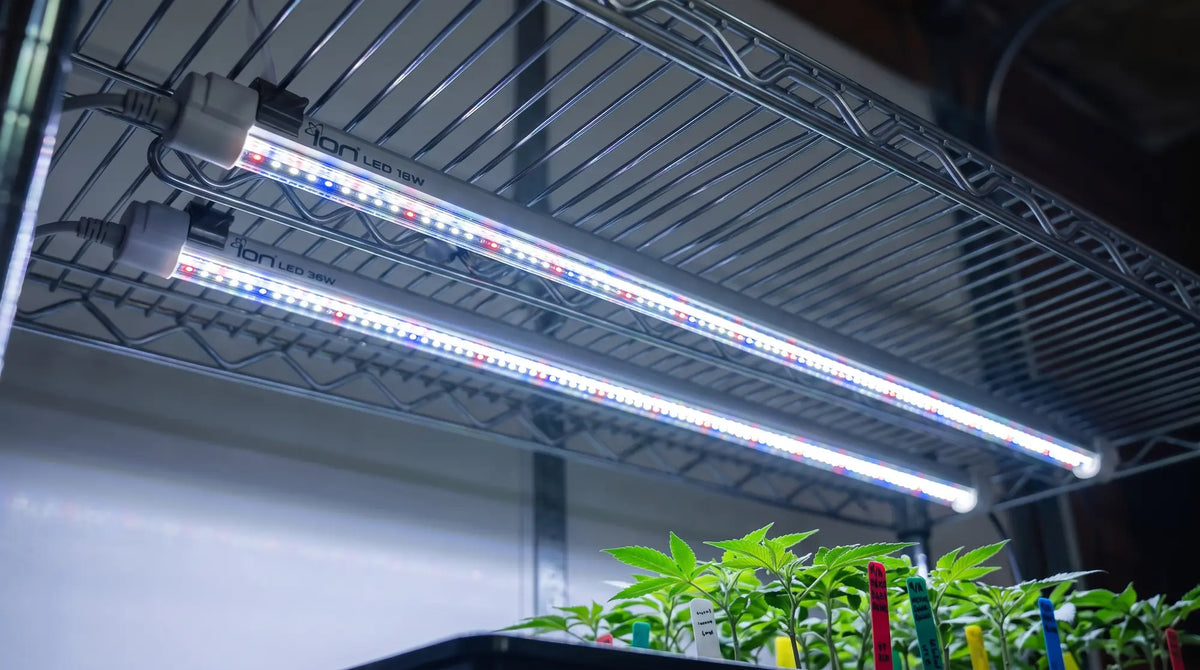
A full-spectrum LED covers the range of light plants use, runs cool enough to sit close without scorching, and sips power. For a beginner growing seedlings, herbs, and greens, it is the choice that needs the least thought and causes the fewest problems.
How far the light sits from the plants matters as much as the light itself. Too far and seedlings stretch toward it; too close and leaves can bleach. A few inches to a foot suits most small LEDs, and you raise it as the plants grow up.
From box to growing in four steps.
A short setup that gets a grow light working without any guesswork.
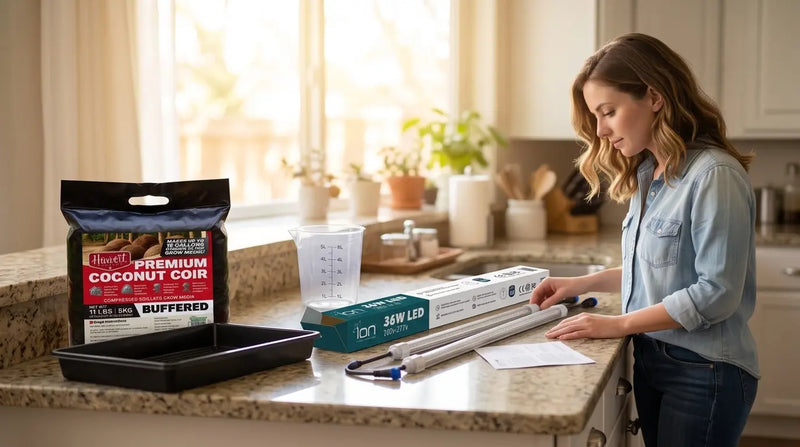
Pick a full-spectrum LED
Start with a full-spectrum LED sized to your space, a small panel or bar for a windowsill, a tray-sized light for seed starting. It covers the light plants need, runs cool, and is the most forgiving choice for a first grow light.
Shop grow lights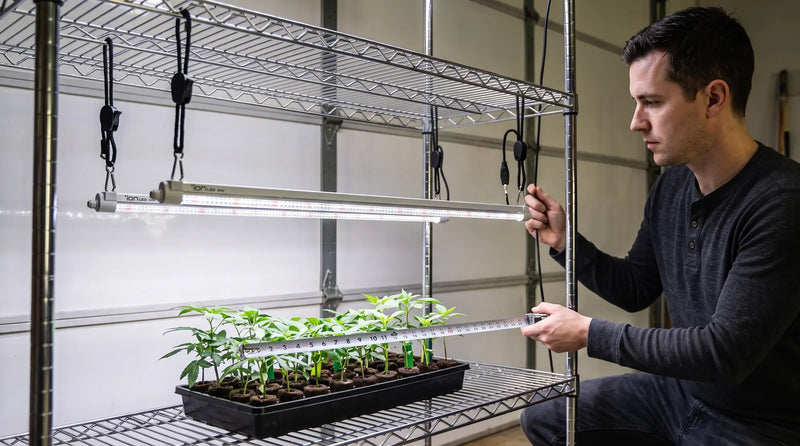
Set the right distance
Position the light a few inches to a foot above the plants, following the guidance for your specific light. Closer suits seedlings that want strong light; raise it as plants grow so the nearest leaves never sit too close.
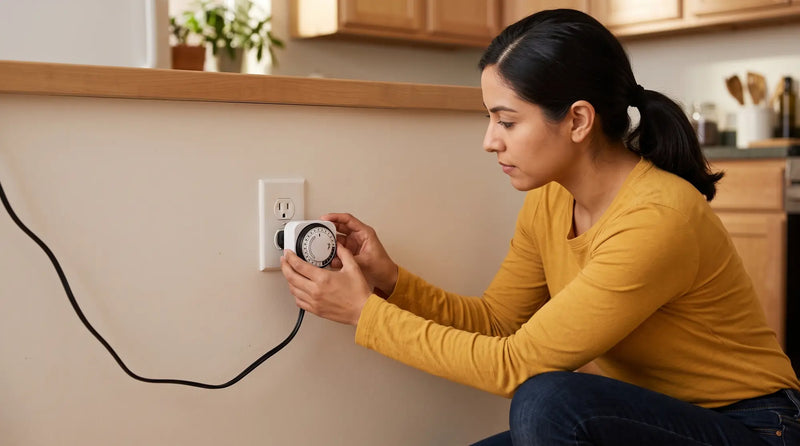
Run it on a timer
Give plants roughly twelve to sixteen hours of light a day, then a dark rest. A simple plug-in timer makes the schedule automatic, so the light comes on and off without you remembering, which keeps growth steady.
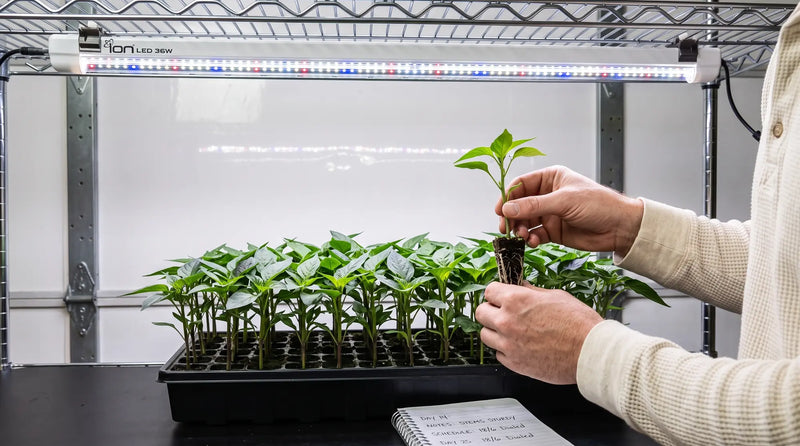
Watch and fine-tune
Compact, well-colored growth means the setup is right. If plants still stretch toward the light, lower it or add hours; if leaf edges bleach or curl, raise it. The plants tell you whether to adjust.

A full-spectrum LED sized to a standard 1020 tray, an easy first grow light for seedlings, herbs, and greens. It gives the strong, even light that keeps young plants compact through dim starts and short days.

The grow light bundled with a propagation dome, tray, and coir starters, so the whole indoor light setup arrives matched and ready rather than sourced piece by piece.
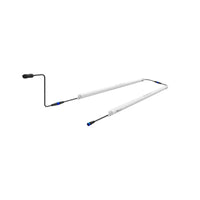
A two-bar LED made for seedlings, clones, and other early growth, with each 18W strip built on OSRAM LEDs and up to eight pairs daisy-chained from a single power cord.
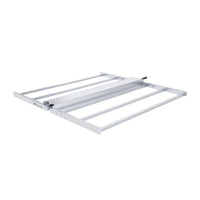
A compact, dimmable full-spectrum fixture sized for small grow tents, with a water-resistant build that handles the humidity of watering and misting under the light.
Three habits behind a poor result.
Each is a setup detail, simple to get right from the start.

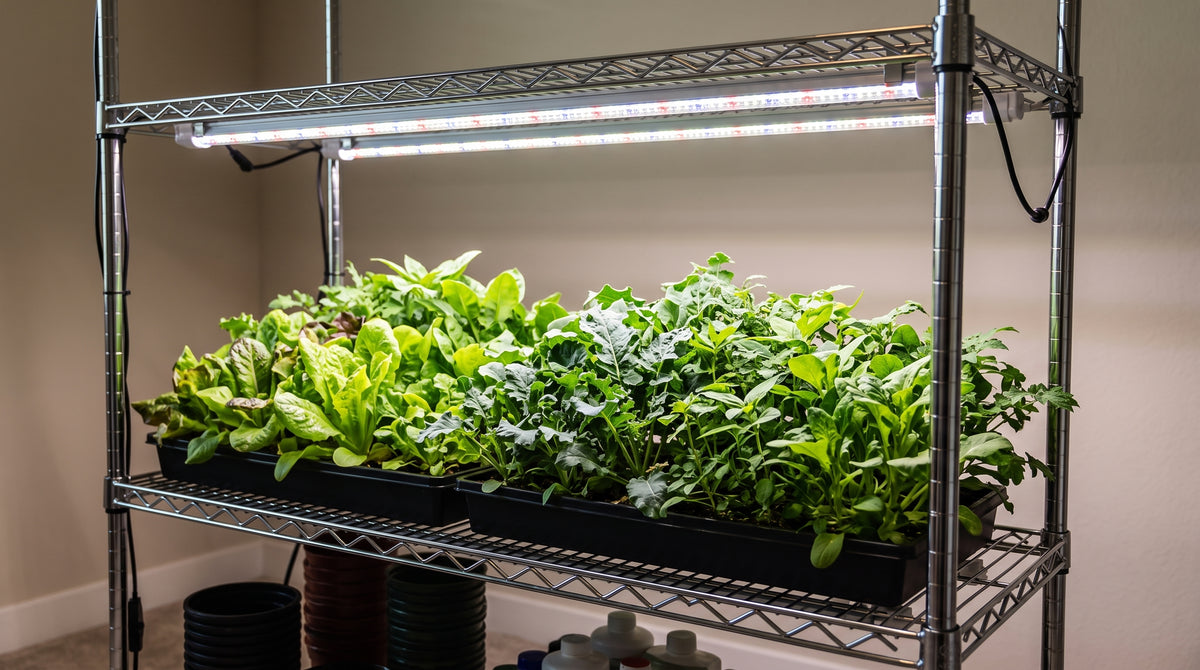
Five things to remember.
- 01A full-spectrum LED is the simplest, most forgiving grow light for a beginner growing seedlings, herbs, and greens.
- 02Distance matters as much as the light itself, so keep it close enough to prevent stretching and far enough to avoid bleaching.
- 03Run the light roughly twelve to sixteen hours a day on a timer, then give plants a dark rest period.
- 04Raise the light as plants grow so the nearest leaves never sit too close to the source.
- 05Read the growth: stretching means lower or add hours, bleached edges mean raise it, compact and green means it is right.
Questions or notes? Drop them here.
A real grower replies within a business day.
No comments yet. Be the first.