Grow Guides · Troubleshooting

Common Garden Pests (Identify & Treat)

June 5, 2026· 8 min read· 0 comments

A few bugs on a leaf are not a crisis, they are a signal that asks for a name before it asks for a treatment. The home garden sees the same short list of pests again and again, and each one has an organic response that works once you know which one you are looking at. At The Harvest Company we treat the first sighting as the cheapest moment to act.

What the damage looks like, where on the plant it shows up, and whether the insect is on the leaf or in the soil are the three things that point you to the right organic response.

Quick answer
Most home-garden pests are soft-bodied and organically controllable. Clustered insects on new growth are usually aphids, fine webbing means spider mites, and a white cloud lifting off the plant means whiteflies. Small flies around the soil are fungus gnats, which is a wet-media problem rather than something to spray for. Identify first, then match the treatment.
Common Garden Pests (Identify & Treat)
Before anything else

Identify the pest before you reach for any treatment, because the response differs by pest and the wrong one wastes time the bugs are using to multiply. A two-minute look at the damage and the insect itself decides the whole plan.

The common mix-up

Fungus gnats hovering around the soil look like an infestation but are really a wet-media problem, not something to spray for. Letting the top inch dry between waterings starves the larvae far more reliably than any leaf treatment.

Identify the pest

What you see, and what it is.

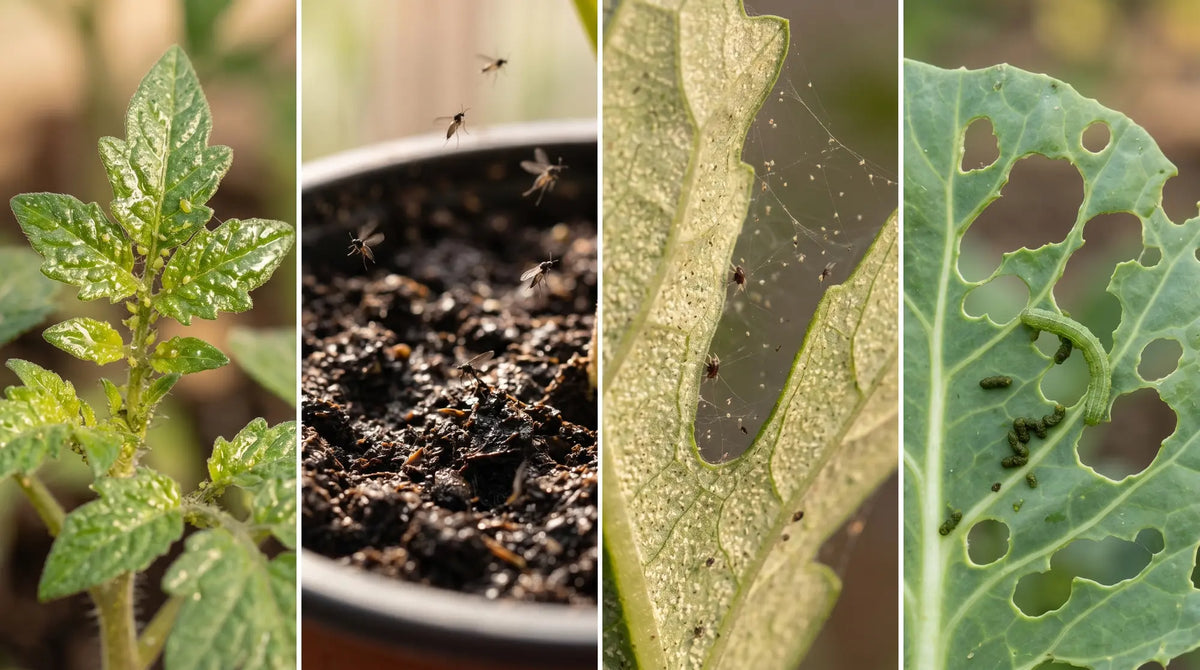
Match the damage sign on the left to the pest, then read across to the organic treatment that fits it.
Damage sign
Organic treatment
Aphids
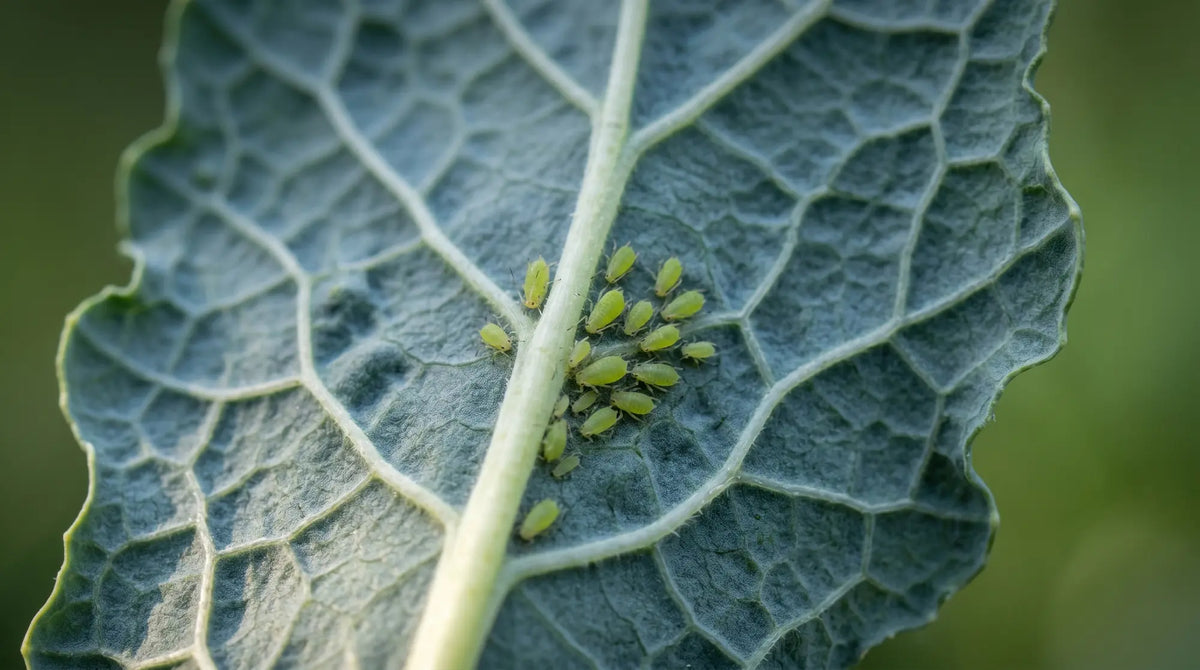
Tiny soft insects clustered on new growth, with sticky residue and curling young leaves.
Rinse them off with a firm spray of water, then treat with organic neem oil on a five to seven day interval.
Fungus gnats
Small dark flies hovering low around the soil surface, worst on pots that stay wet.
Let the top inch of media dry fully between waterings, which starves the larvae. Do not spray the leaves.
Spider mites
Fine webbing and pale stippled leaves, usually in dry heat and on the leaf undersides.
Raise humidity around the plant and treat the leaf undersides directly with organic neem oil.
Whiteflies
A white cloud of tiny insects lifts off the plant when you disturb a leaf.
Repeat organic neem oil treatments and remove the worst affected leaves to lower the population.
Caterpillars and cabbage worms
Chewed and ragged leaves with dark droppings left behind on and below the foliage.
Hand-pick the visible ones and apply an organic caterpillar control, repeating as new ones hatch.
Symptom checker

I see this on my plant.

Match the symptom to the most likely pest and the first thing to try. Work from the highest-severity match down.
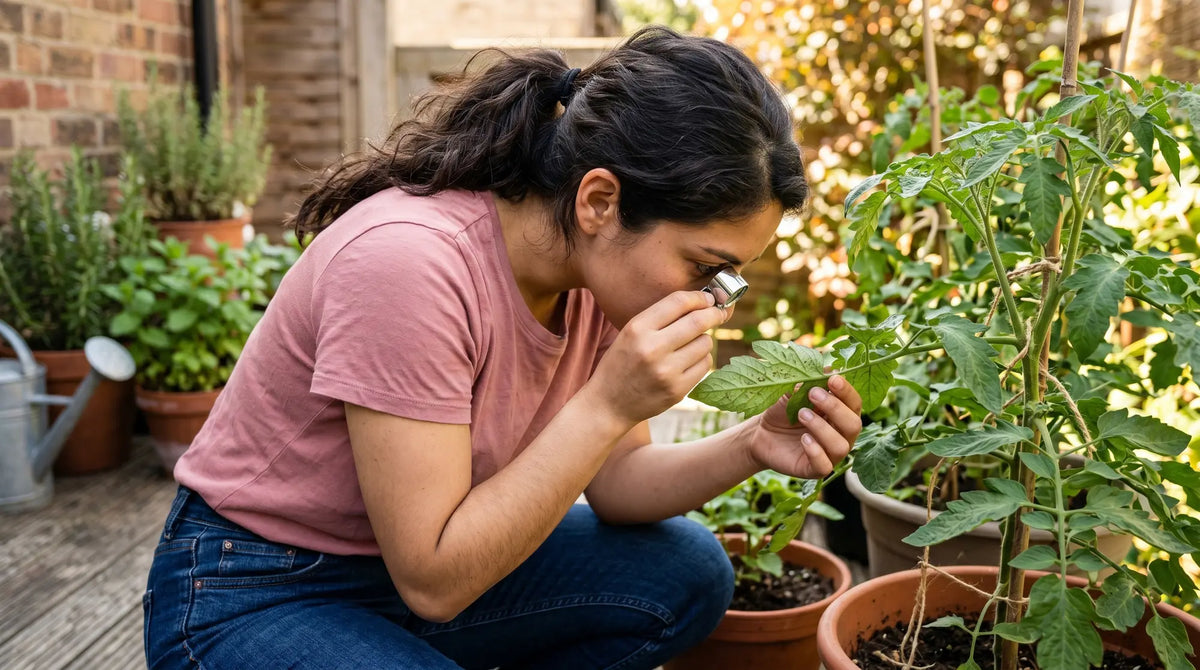
Symptom
Likely cause
Quick fix
Severity
Sticky leaves and clustered tiny insects on new growth
Aphids feeding on soft new growth and excreting a sticky residue that coats the leaves below.
Rinse them off with a firm spray of water, then start an organic neem oil treatment on a five to seven day interval.
Medium
Small flies hovering around the soil surface
Fungus gnats breeding in wet media, where the larvae feed in the constantly damp top layer.
Let the top inch dry between waterings so the larvae cannot survive, and do not spray the leaves.
Low
Fine webbing and pale stippled leaves in dry heat
Spider mites, which thrive in hot dry air and feed on the undersides until the leaf goes pale and dry.
Raise humidity around the plant and treat the leaf undersides with organic neem oil, repeating on a tight interval.
High
A white cloud lifts off the plant when disturbed
Whiteflies, a soft-bodied sap feeder that gathers under the leaves and scatters when the plant is touched.
Treat with repeated organic neem oil and remove the worst leaves to bring the population down.
Medium
Chewed leaves with dark droppings
Caterpillars or cabbage worms working through the foliage, often hidden against the leaf they are eating.
Hand-pick the ones you can find and use an organic caterpillar control, repeating as more hatch.
Medium
Seedlings cut off at the soil line overnight
Cutworms, which feed at night and sever young stems right where they meet the soil.
Put a collar around each stem at the soil line so the cutworms cannot reach the seedling.
High
Why this keeps happening

Three habits behind most reinfestations.

Each is a small adjustment, not new gear.

Common beginner mistakes
No.
Mistake
What goes wrong
The fix
Severity
01
Treating once and stopping
Applying one treatment and assuming the problem is solved, when a single application misses the next batch of eggs about to hatch.
Repeat on the pest's cycle until it clears, since the eggs you could not reach are the ones that bring it back.
Most common
02
Spraying in midday sun
Treating with neem oil on the leaves in direct hot sun, which can mark the foliage where the oil sits in the heat.
Treat in the early morning or the evening when the light is low and the leaves are cooler.
Common
03
Skipping the leaf undersides
Treating only the tops of the leaves, when most pests sit and feed underneath where the spray never reaches them.
Turn the leaves over and treat where the pests actually are, not only where the damage is easiest to see.
Underrated
Key takeaways

Five things to remember.

  1. 01Identify the pest before treating, because the right organic response is different for each one and a wrong guess buys the bugs time.
  2. 02Most home-garden pests are soft-bodied and organically controllable once you know which one you are looking at.
  3. 03Neem oil works on contact, so it needs repeating on the hatch cycle rather than as a single pass.
  4. 04Fungus gnats are a watering problem, not a spray problem, so let the top inch dry between waterings instead.
  5. 05Isolate a badly infested plant early, since one untreated plant keeps reseeding every plant near it.
Discussion

Questions or notes? Drop them here.

A real grower replies within a business day.

No comments yet. Be the first.

FAQ

Common questions about garden pests.

Fungus gnats and aphids are the two most home growers meet first. Fungus gnats show up around consistently wet soil, while aphids cluster on the softest new growth. Both are organically manageable once you have named which one you are seeing.
Neem oil is a common organic choice for food gardens, used as a tool rather than a guarantee. Treat as a general practice that you rinse harvested produce well before eating and follow the directions on the product label, since the label is the authority for any specific use.
A repeat interval is the point, not a single pass. A five to seven day rhythm is a common starting cadence so each round catches insects that have hatched since the last one. Follow the timing on the product label, and keep going until the pest clears.
Treat fungus gnats as a watering problem, not a spray problem. Let the top inch of media dry fully between waterings so the larvae in the damp surface layer cannot survive. A drier top layer breaks the cycle more reliably than treating the leaves.
When one plant stays heavily infested after honest, repeated treatment and is reseeding the plants around it, the calm move is to isolate it early and remove it if it does not recover. Protecting the rest of the garden is worth more than holding on to one struggling plant.
The promise

Grow better. Eat better. Every day.

Your partner in every harvest. Name the pest first, and the right organic move tends to follow on its own.

Posted June 5, 2026 · Updated June 5, 2026 · 8 min read