
Why Root Health Matters
Most of what makes a home garden thrive happens out of sight, down in the root zone where water, air, and nutrients meet. Look after the roots and the plant above the soil mostly looks after itself, and the harvest follows.
A few simple habits keep the root zone healthy all season, and a quick look at the roots tells you most of what you need to know. Here is what healthy roots look and feel like, and how to keep them that way.

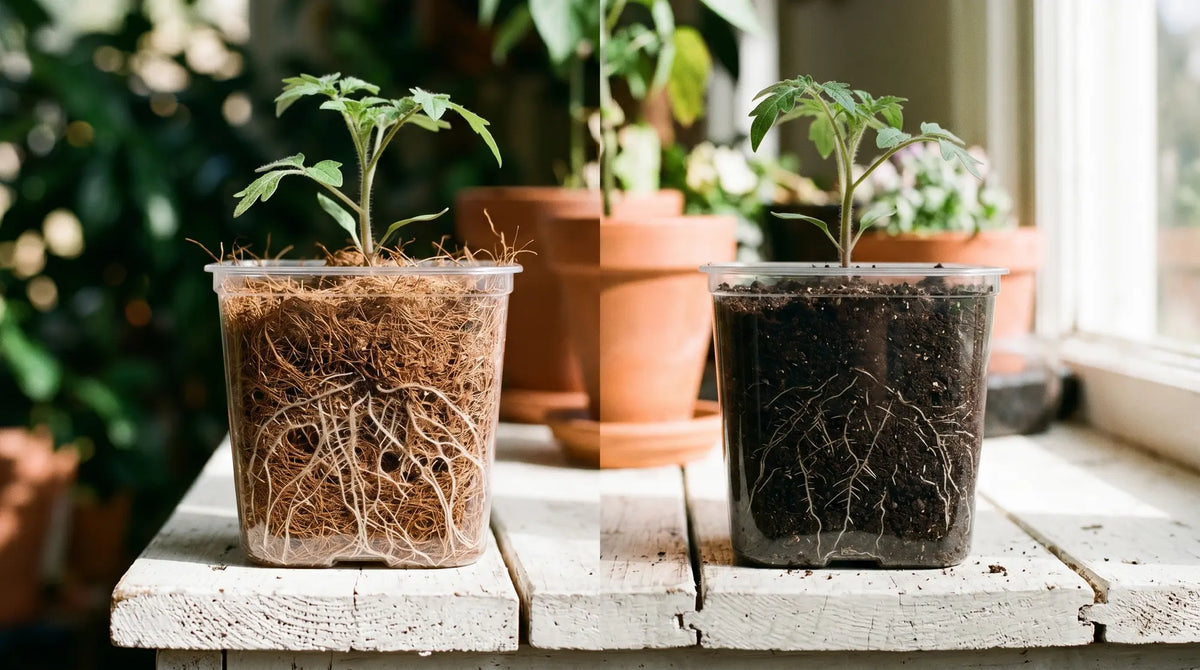
Air. Roots need oxygen at the same time they need water. A medium that holds both at once (like coir) is more forgiving than one that swings between the two (like compacted soil).
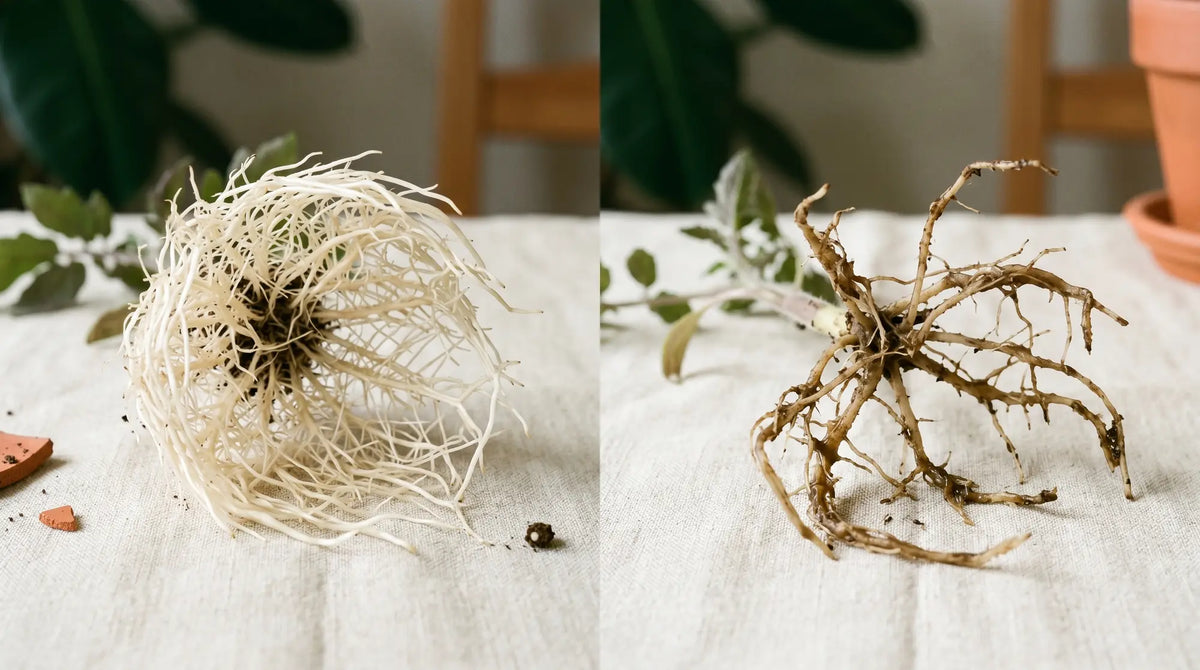
Pull a struggling plant gently from its container and look at the roots. Pale and firm is good. Brown and mushy means the root zone has been wet too long. The leaves on top are a lagging indicator.
Three jobs at the same time.
Roots have three responsibilities. They take up water. They take up dissolved nutrients. They breathe in oxygen and exhale carbon dioxide, the same way leaves do but in reverse. All three jobs are happening at the same time, all the time, while the plant is alive.
When one of those three is missing, the plant compensates for a while. When two are missing, the plant stalls. When all three break down, the plant declines fast, often before the gardener notices anything wrong above the surface.
The medium decides whether all three can happen. Soil that holds too much water for too long suffocates the roots before they can use it. Soil that drains too fast leaves them thirsty. The good media for home growing find the middle.

Above-ground symptoms, below-ground causes.
The leaves are not where root problems show up first. By the time a plant is yellow or wilting visibly, the roots have already been in trouble for some time. Knowing about that lag is what lets you treat the cause instead of chasing the symptom.
Yellow lower leaves usually mean the roots are not delivering nutrients. The cause is almost always either nutrient lockout (in over-watered or unbuffered coir) or root damage from chronic saturation. Wilting in a wet pot means the roots cannot take up water even though it is available, which means they are damaged. Slow growth in spite of feeding usually means the root zone is compacted.
The single most useful diagnostic move at any point in the season is to pick up the pot and feel its weight, then push a finger one inch into the medium. Most root-zone diagnoses become obvious in the first ten seconds.

A quick visual check.
Looking at the roots is the one check most home growers skip, and it is the most telling, because the visual difference between healthy and unhealthy roots is unmistakable.
Healthy roots are pale, almost white, with a slight tan tint. They are firm to the touch and snap with a clean break if you flex a finer one. They reach toward the edges of the container, evenly distributed, neither circling nor matted at the bottom.
Unhealthy roots tell the opposite story. Brown or black coloring, mushy texture, a sour or musty smell from the medium, and a tangle either at the very top or the very bottom of the pot all signal that the root zone has been compromised. The good news is that most damage is repairable if caught early.

A side-by-side check.
Pull a plant gently from its container. Compare what you see to the columns. Most root issues fit one of these patterns.
Healthy roots are the quietest part of a good harvest, and the part worth checking first.

Five things to remember.
- 01Roots do three jobs at once: water, nutrients, oxygen. A good medium lets all three happen at the same time.
- 02Above-ground symptoms are a lagging indicator of root-zone problems. Pull the plant and look at the roots when something is off.
- 03Healthy roots are pale, firm, abundant, and evenly distributed. Unhealthy roots are brown, mushy, and concentrated at the top or bottom.
- 04Most root damage traces to one of three causes: compacted media, no drainage, or chronic saturation. All three are fixable.
- 05Coir-based media keep oxygen and water available together, which is why they are forgiving for first-time growers.
Questions or notes? Drop them here.
A real grower replies within a business day.
No comments yet. Be the first.