
What Is Coco Coir? (Beginner Guide)
Coco coir is the fibrous material from the husk of a coconut, processed into a soft, sponge-like growing medium that holds water and air at roughly equal parts. It is one of the most forgiving media for a first-time grower, and it has quietly become the default for indoor home gardens.
The term gets used a lot without ever being explained from the start, so here it is from the start: what coir is, why it works, and how to tell good coir from average coir at the bag.

Coco coir is sponge-like coconut husk processed into a growing medium. It holds water without compacting, lets oxygen reach the roots, and ships compressed into bricks. Buffered, low-EC coir is the right starting product for almost any home grower.
From coconut husk to growing medium.
Every coconut has an outer fibrous husk surrounding the hard shell most people recognize. For most of human history that husk was either burned as fuel or thrown out. The fibers were used for ropes, mats, and brushes long before anyone tried to grow plants in it.
In the late twentieth century, growers began noticing that the leftover dust and short fibers (called coir pith or coir peat) had ideal properties for plant roots. It held water like a sponge but never compacted. It drained well but never let the roots dry out instantly. After processing, it became the default soilless medium across hydroponic operations and slowly migrated to home gardens.
The coir on the market today is washed, sometimes screened, sometimes buffered with calcium and magnesium, and compressed into bricks for shipping. The brick is the recognizable form most home growers see at the garden center.

Roots want water and air at the same time.
The thing that makes a growing medium good or bad is how it manages water and air at the root zone. Soil that holds too much water suffocates roots. Soil that drains too fast lets the roots dry out before they can take what they need.
Coir lands in the middle. Each fiber holds water on its surface, so the medium stays moist. The spaces between fibers stay open, so air keeps moving through the root zone. The result is that roots are wet and breathing at the same time, which is the combination they want.
For a first-time grower, that translates into something practical: the rhythm of watering becomes more forgiving. A missed day is rarely fatal. An overzealous watering does not produce the same anaerobic soup that bagged soil can become.

Three labels worth reading.
Coir is not all the same. The cheapest products skip steps that make a difference once the plant is in the ground. Three label words to look for tell most of the story.
Buffered coir has been pre-rinsed with calcium and magnesium so the naturally-occurring sodium and potassium do not block other nutrients. Unbuffered coir works, but it asks the grower to manage cal-mag from the start. Buffered is the default for beginners.
Low EC means the electrical conductivity (a proxy for salt content) is low. High-EC coir comes from poorly washed husks and creates nutrient lockout that is hard to diagnose. Look for low EC on the bag.
Compressed brick is the most efficient form. The brick takes up little space until you need it, then expands into many times its volume when soaked. A 5 kg brick rehydrates into roughly 75 liters of usable medium.

Coir terminology, decoded.
A short reference for the words that come up on bags and in product descriptions.
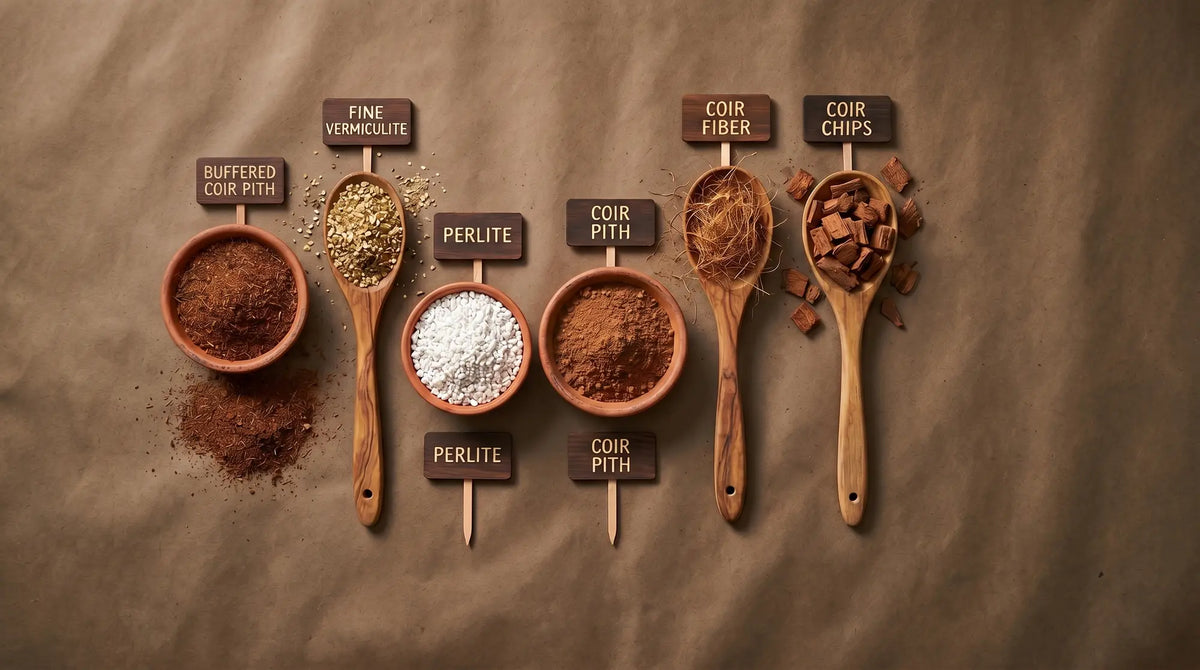
- Buffered
- Pre-rinsed with calcium and magnesium so naturally-occurring sodium and potassium do not lock out plant nutrients. Always preferred for beginners.
- EC (Electrical Conductivity)
- A measure of salt content in the medium. Low EC indicates well-washed coir. High EC creates nutrient lockout.
- Coir pith
- The fine, peat-like dust between the longer fibers. Holds the most water of the three coir grades.
- Coir fiber
- The longer hair-like strands. Provides structure and air space in the medium.
- Coir chips
- Larger pieces of husk that boost drainage. Common in mixes for fruiting crops or aroids.
- Hydration
- The process of soaking a coir brick in water to expand it into usable medium. A 5 kg brick wants about 20 liters of water and 30 minutes.
- OMRI listed
- Certified by the Organic Materials Review Institute as compliant with USDA organic standards. Worth seeking for organic gardens.
What you may have heard, and what is true.
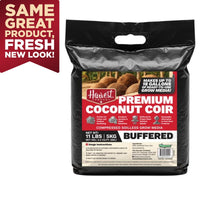
Triple-washed, pH-balanced, low EC. The default starter brick for indoor home gardens.
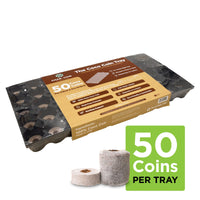
A 50-cell propagation tray with pre-filled coir plugs. Skip the brick-soaking and start with even moisture across the tray.
Five things to remember.
- 01Coco coir is the husk fiber of the coconut, washed and processed into a soft sponge-like growing medium.
- 02Coir holds water and air at roughly equal parts, which is the combination roots want for most edible crops.
- 03Always start with buffered, low-EC coir. The label is the only thing that distinguishes good coir from average coir.
- 04A compressed brick is cheap to ship and easy to store. A 5 kg brick rehydrates into about 75 liters of medium.
- 05Coir feeds nothing on its own. Plan to add a light feeding program once seedlings are established.
Questions or notes? Drop them here.
A real grower replies within a business day.
No comments yet. Be the first.