
Small Space Gardening Guide
Small space gardening is mostly about getting more out of less, and a four-by-four bed produces more food than most growers expect once the layout is working for you. A balcony rail with hanging planters doubles the floor space, and a vertical setup on a sunny wall turns 8 square feet of footprint into 20 square feet of growing area. Most home gardens are small spaces, and the layout matters far more than the acreage.
The layout principles, the crops that produce the most per square foot, and the simple vertical setups that turn any small space into a real garden.

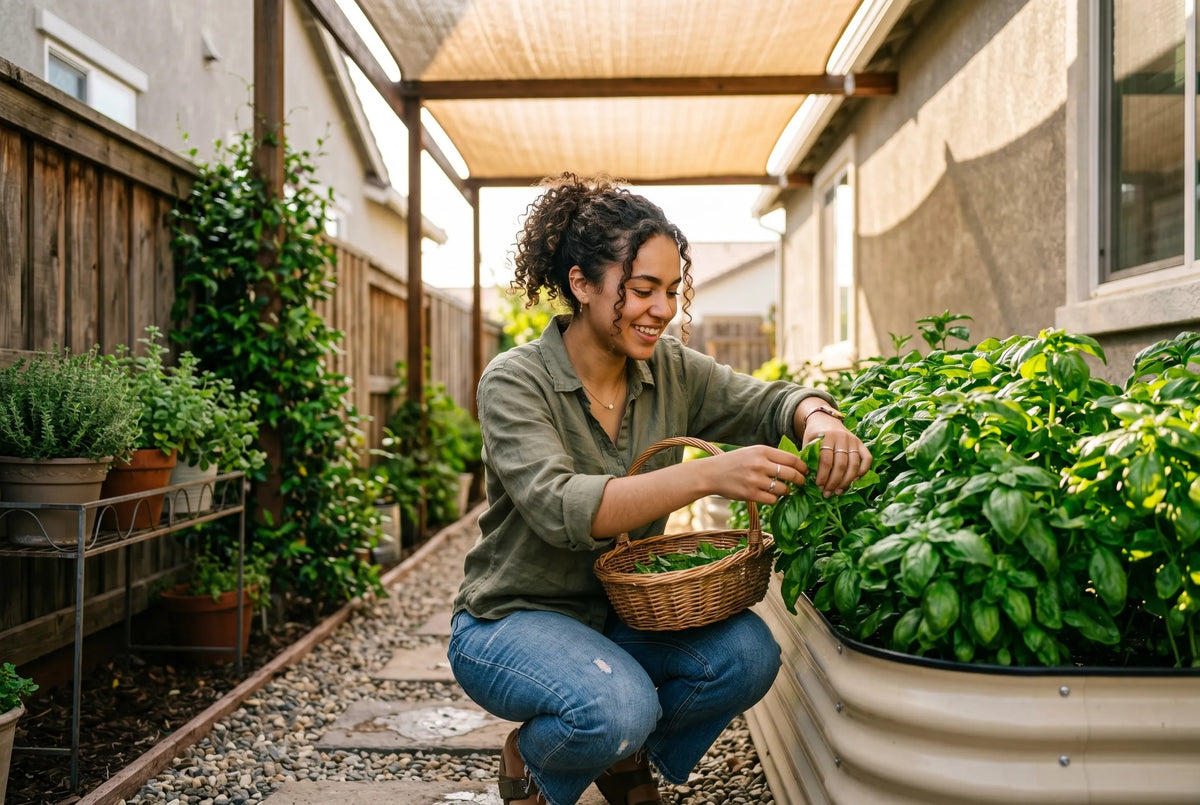
Forget seed packet row spacing. Divide the bed into 12-inch squares and plant by the square. One tomato per square. Sixteen carrots per square. Nine bush beans per square. The math is in your favor.
Vertical growing only works if the structure can hold the weight. A trellis loaded with tomatoes weighs more than you would guess. Anchor it well or plan on rebuilding it midseason.
Three formats that actually work.
What kind of small space are you working with? Each format has its own playbook.
A balcony 4 to 6 feet wide. Five to ten pots, vertical wall use, over-the-rail planters.
Apartment guideA side yard or backyard with 100 square feet or less of growing space. Raised bed plus vertical structures.
Outdoor guideCounter or shelf space inside, no yard or balcony. Microgreens, herbs, and grow-light setups.
Indoor guideThe math changes when you stop walking on the soil.
Conventional row planting is designed for fields where a tractor walks between the rows. Home growers do not need that space. Plant by the square instead.
Mark a 4-by-4-foot bed into sixteen 12-inch squares. Each square holds one mature crop: one tomato, one pepper, one squash. Or a cluster: four lettuces, nine bush beans, sixteen carrots, sixteen radishes. The bed becomes a quilt of crops, each in its own square.
The yield per square foot triples versus row planting. The work drops because every square is reachable from the edge of the bed. You never walk on the soil, which keeps it loose for roots.

Vertical structures multiply the growing area.
A pot with a 12-inch footprint grows one tomato. A trellis above that same pot grows three vines of pole beans up the strings. The vertical surface above the soil is unused real estate in most small gardens.
Useful vertical structures: trellises against a fence or wall, hanging planters over a balcony rail, wall pockets on a sunny outside wall, tower planters stacked on a patio, and over-the-rail balcony hooks. Each multiplies the growing area without adding floor footprint.
Match the structure to the crop. Cucumbers, pole beans, peas, and small melons climb. Cherry tomatoes can be trained. Strawberries cascade beautifully out of wall pockets and hanging planters. Lettuces and herbs fill the lower zone.

A realistic small-space layout.
Four-foot by four-foot raised bed, no walking on the soil, every square earning its keep.
Mark the bed in squares
A 4x4 bed contains sixteen 12-inch squares. Use string or thin wood strips to mark the grid for the first year. The visual structure helps with the spacing math.
Shop mediaPlace anchors first
The biggest plants go in first: tomato, pepper, eggplant. One per square. Place along the north edge so they do not shade smaller crops. Anchor any trellises to the bed frame or a wall.
Browse seedsCluster the middle layer
Bush beans, peppers, broccoli, and other medium plants go in the middle squares. One to four per square depending on mature size. Read the packet for square-foot count, not row spacing.
Shop seedsFill in with quick crops
The remaining squares go to fast-growing, dense-planting crops: lettuce, radishes, carrots, onions, herbs. Sixteen radishes per square. Nine carrots per square. Four lettuces per square.
Browse seedsAdd the vertical layer
Above the bed, a trellis or two adds another dimension. Pole beans, cucumbers, small melons, and peas all climb. The trellis can be panel wire, lashed bamboo, or a wall-anchored grid.
Browse kitsFour traps in small-space gardening.


Triple-washed, pH-balanced. Use as an amendment in raised beds or as the base medium in containers. One brick rehydrates into roughly 75 liters.
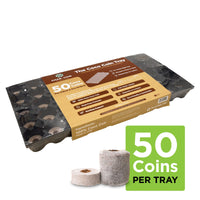
Start seedlings indoors before transplant into the small-space bed. A 50-cell tray of pre-filled coir plugs.

Six things to remember.
- 01Plant in squares, not rows. A 4x4 bed produces three times more per square foot.
- 02Use vertical structures to multiply the growing area without adding footprint.
- 03Tall plants go on the north edge. Avoid shading your own bed.
- 04Pick high-yield crops: lettuces, herbs, cherry tomatoes, pole beans, radishes.
- 05Anchor trellises to a frame, wall, or fence. Vines get heavy fast.
- 06Succession planting keeps every square producing through the season.
Questions or notes? Drop them here.
A real grower replies within a business day.
No comments yet. Be the first.