
Apartment Gardening Guide
An apartment grows more food than most people expect, usually from a window or a corner of the balcony you already walk past every day. There is no yard and the light is limited and the lease may not love drilling into the balcony, but almost every one of those limits has a friendly workaround once you know it.
The four most common apartment setups, the crops that thrive in each, and the renter-friendly habits that keep a garden producing without leaving a mark on the unit.

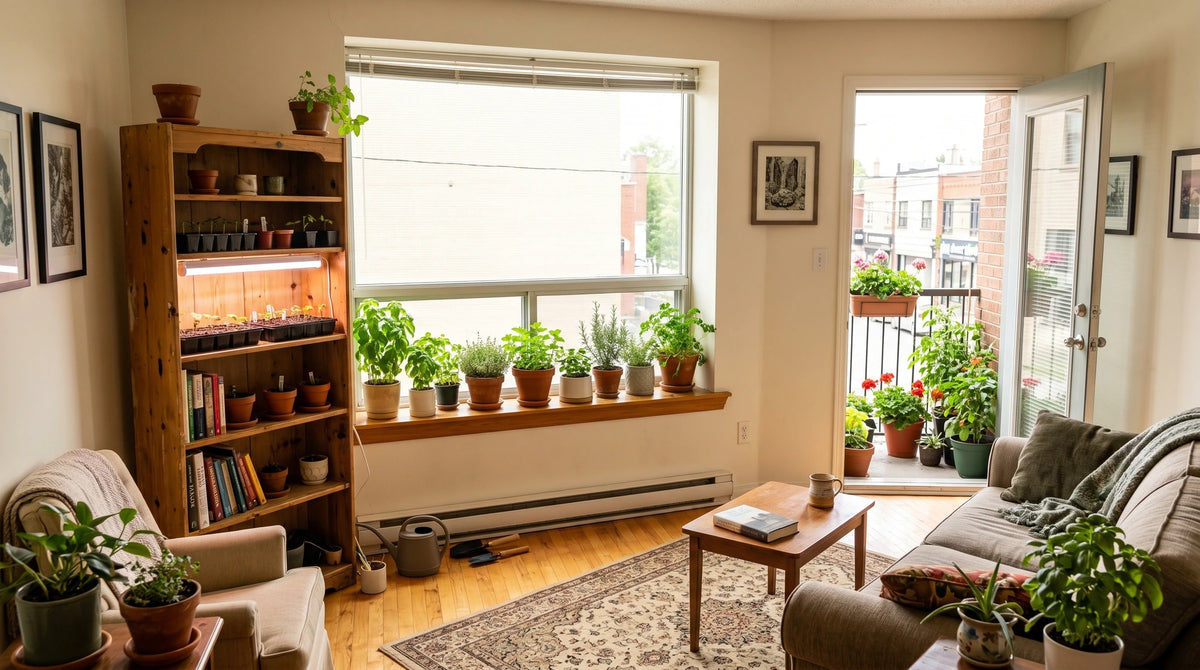
Apartment counter space is precious. Vertical pot stackers, hanging planters, and over-the-rail balcony hangers turn unused wall and rail space into productive growing area without sacrificing your living space.
Every container indoors needs a saucer. Every balcony container needs a tray that catches drips before they reach the floor below. Two cheap purchases that save much bigger headaches.
Where the garden actually goes.
Pick the one that matches your unit. Each works with a few hundred dollars of setup or less.
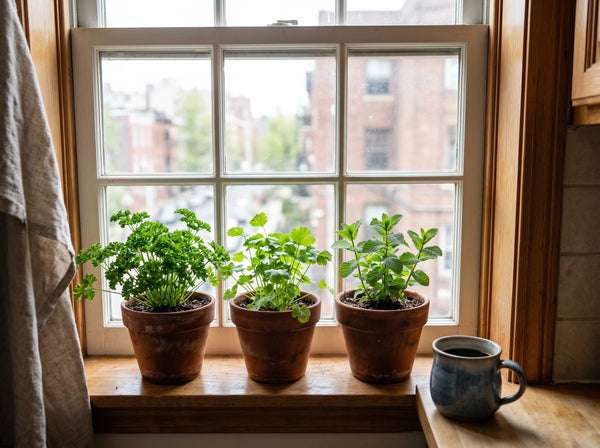
The kitchen window
The shortest distance between gardener and harvest. Three to five 6-inch pots of herbs on the sill. Visible while cooking, watered while waiting on the kettle. Hard to forget.
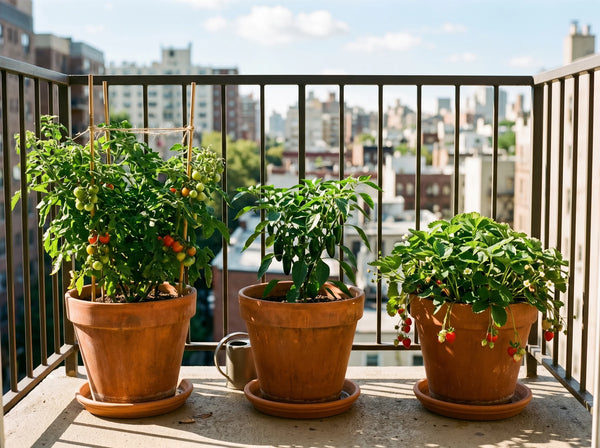
The balcony
Real outdoor light, real container range. Five to ten 12 to 18-inch pots can produce serious quantities of tomatoes, peppers, herbs, and leafy greens. Every pot needs a saucer to protect the floor.
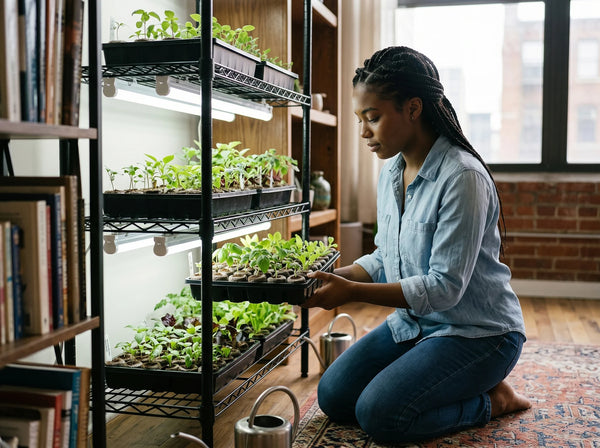
The grow-light shelf
A bookshelf, a console, or a small standalone shelf with an LED grow light overhead. Opens up any room regardless of window. The right move for apartments where the brightest window still gets less than four hours.
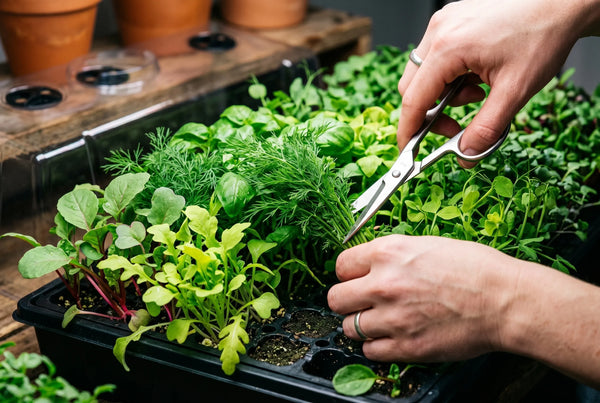
The microgreens tray
No window required. A single 10x20 tray of microgreens (radish, pea, sunflower) on a counter produces a salad of nutrient-dense greens in 10 to 14 days. The most productive square footage in apartment gardening.
What plants actually need.
Every edible plant in the world wants the same four things. When something is going wrong, the cause is almost always one of these four.
Most apartment windows give 4 to 6 hours of usable light. South-facing wins. For dimmer windows, a 20 to 40-watt LED grow light covers what the window misses.
Free-standing pots, removable shelf brackets, over-the-rail planters. Skip drilled drainage, anchored trellises, or anything that needs spackle when you move out.
Bagged soil can host fungus gnats and mold spores. Coir starts cleaner and stays cleaner. Important when the garden lives where you sleep.
Water plants over a sink when possible. Use saucers and trays everywhere else. Plastic nursery pots inside decorative cover pots make the watering trip easy.
Find the brightest two hours of the day.
Apartment light depends on what is across the street as much as what direction the window faces. A south-facing window in a low-rise unit with no buildings opposite gets full sun. The same window in a tower with another tower across the street might get an hour at best.
Watch one full day. Note when direct light hits each window. The window with the most cumulative direct sun is your prime spot, regardless of compass direction. Most apartments have one window that gets four or more hours; that is the garden window.
If no window hits four hours, you have two options. Add a small LED grow light over the dimmest spot, or commit to leafy greens and herbs (which tolerate less light) and skip fruiting crops entirely.

The most underused space in most apartments.
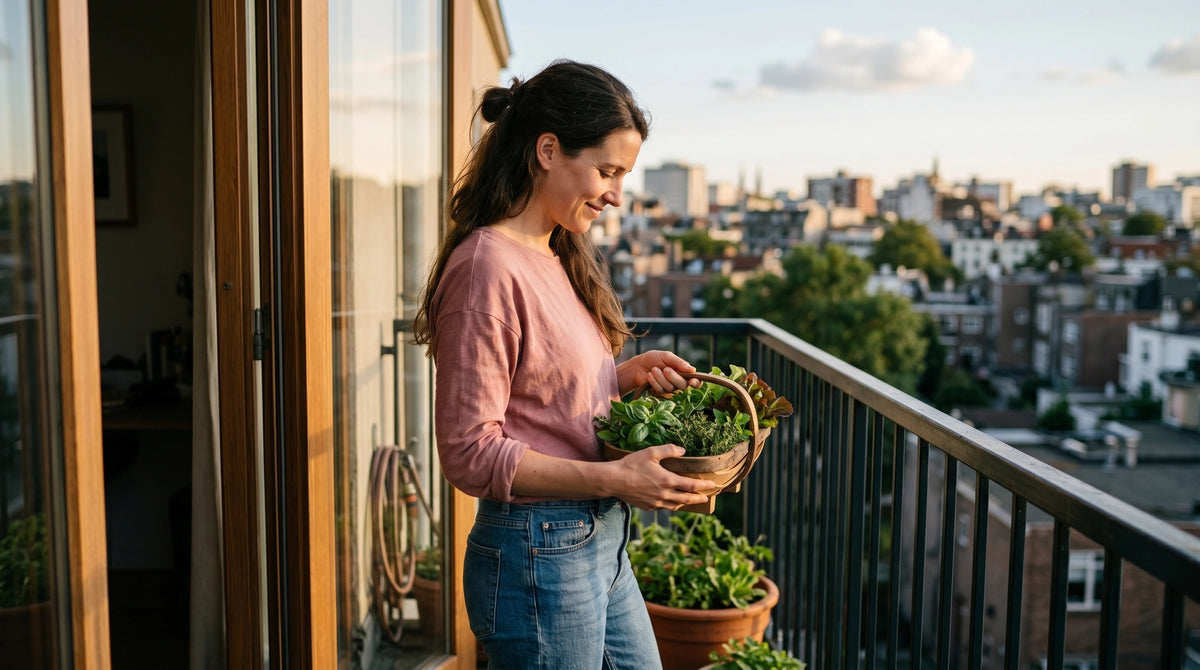
A 4-by-8-foot balcony fits five to ten productive containers, easily growing tomatoes, peppers, cucumbers, beans, and herbs. The light is usually better than the apartment interior. The temperature swings are more pronounced, which is good for fruiting crops in summer.
The biggest balcony mistake is undersizing pots. A 12-inch pot is the minimum for vegetables. An 18-inch pot is better. Wind dries containers faster outdoors, so a larger pot stretches the watering rhythm from twice daily to every other day.
Drainage is a different problem outdoors. Most balconies are not designed for repeated water draining off the surface. Use deep saucers, lift pots onto plant trays with reservoirs, or water over the edge of the railing into a drip catcher. Whatever the method, do not let water sheet across the floor toward the neighbor below.

Four traps that come with the territory.

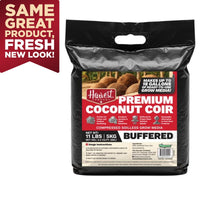
Stores compressed on a shelf until you need it. Rehydrates into about 75 liters of usable medium. Cleaner than bagged soil for indoor and balcony use.
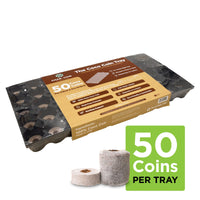
A 50-cell tray of pre-filled coir plugs. No brick rehydration, no mess. Fits on a kitchen counter for two to three weeks of germination.
Six things to remember.
- 01Find your brightest two hours of light first. That is the garden window.
- 02Balconies are full-blown gardens. Use 12 to 18-inch pots and saucers for drip control.
- 03Match the crop to the light. Herbs and greens for dim windows, fruiting crops for bright or grow-lit spots.
- 04Coir is cleaner than bagged soil for apartment use. Stores compact, rehydrates as needed.
- 05Saucers and trays under everything. Renter deposits depend on it.
- 06Microgreens turn any counter into a productive garden in 10 to 14 days.
Questions or notes? Drop them here.
A real grower replies within a business day.
No comments yet. Be the first.