Grow Guides · Troubleshooting

Why Are My Plant Leaves Yellow?

June 4, 2026· 7 min read· 0 comments

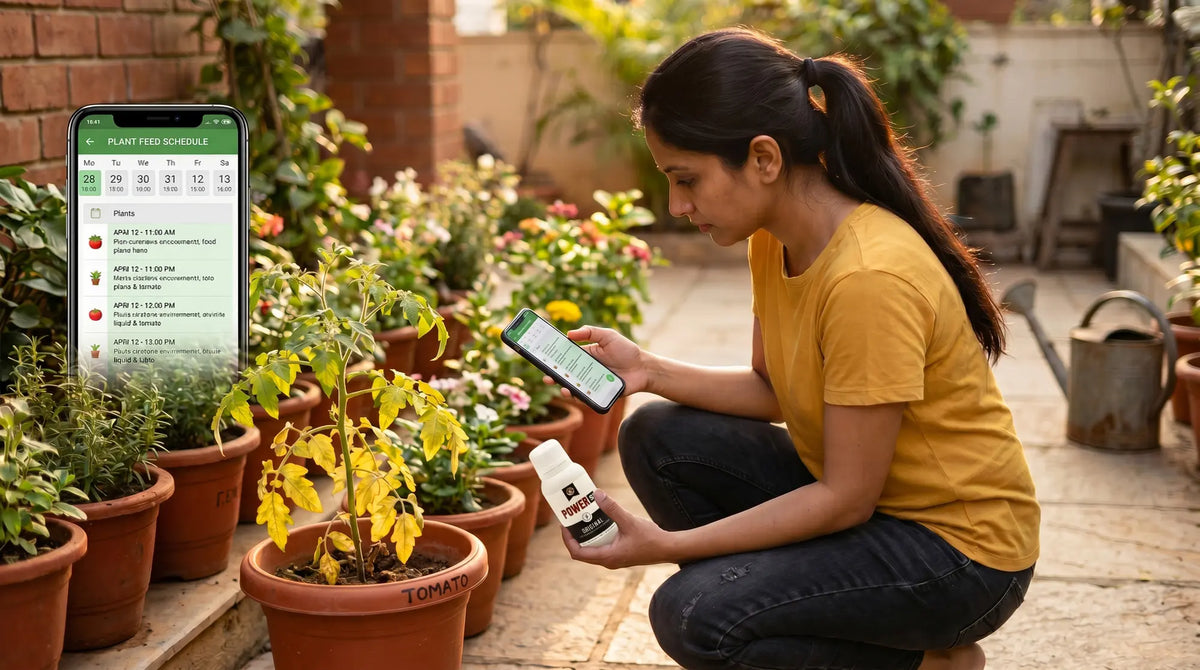
A yellowing leaf is rarely a verdict, it is one signal, and the same color can point to water, feed, or pH depending on where it shows up. Reading the pattern across the whole plant is what turns a worry into a clear next step. At The Harvest Company we treat yellow as information, not a failing.

Which leaves turned, how fast it happened, and what the soil is doing one inch down are the three things that separate a water issue from a feed issue from a pH issue.

Quick answer
Soft yellowing on the lower leaves with wet soil usually points to overwatering. Uniformly pale new growth points to low nitrogen. Yellow between green veins points to pH locking out iron. Check soil moisture one inch down before you change anything else.
Why Are My Plant Leaves Yellow?
Before anything else

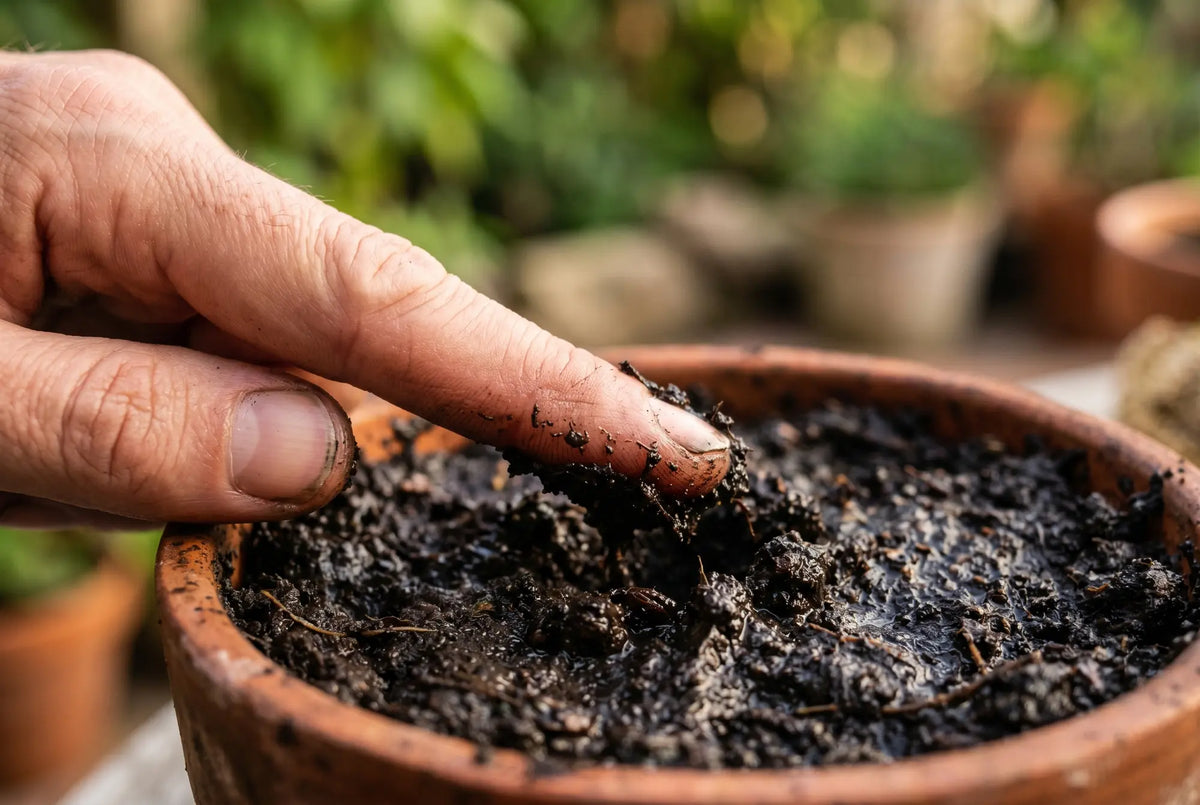
Push a finger one inch into the media before you assume the plant is hungry. Most early yellowing is a water story, not a nutrition story, and the soil tells you which one you are reading.

The common mix-up

Overwatering and nitrogen hunger both turn leaves yellow, which is why they get confused so often. Feeding a waterlogged plant pushes it further down, so the moisture check has to come first.

The three patterns side by side

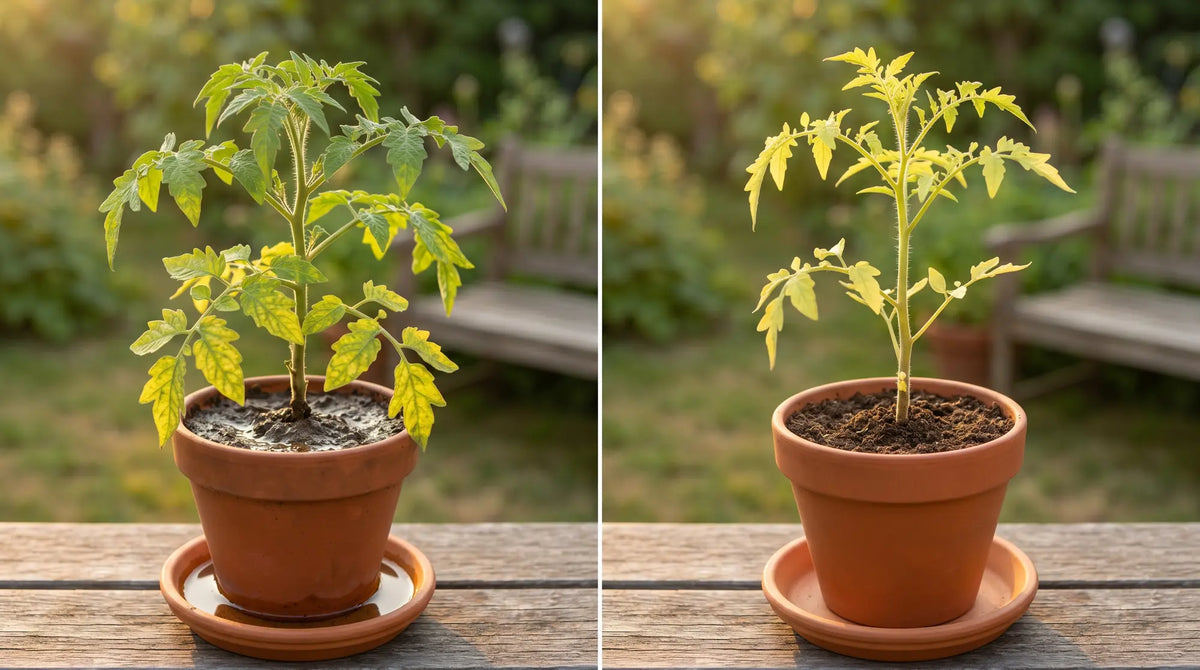
Same yellow, different cause.

Match where the yellow shows up and what the soil is doing to the column that fits.
Overwatering
Feed / pH
Which leaves
Lower and older leaves go first, turning soft and pale before they drop.
Newer growth at the top fades, either evenly pale or yellow between still-green veins.
Soil one inch down
Wet and heavy, sometimes with a faintly sour smell at the surface.
Moisture is normal, the pot has a reasonable rhythm of wet and dry.
Speed
Builds over a week or two as roots sit starved of air.
Comes on gradually as a feed gap widens, or stalls in place when pH is off.
Other signs
Limp tissue, slow stunted growth, a heavy pot that never seems to dry.
Growth is slow but tidy, new leaves are smaller and lighter than the older ones.
First fix
Stop watering and let the top inch dry fully before anything else.
Check runoff pH first, then start a light balanced feed at half strength.
Symptom checker

I see this on my plant.

Match the symptom to the most likely cause and the first thing to try. Work from the highest-severity match down.
Symptom
Likely cause
Quick fix
Severity
Lower leaves yellow and soft, soil wet
Overwatering, the roots are sitting in saturated media and starved of air.
Stop watering, let the top inch fully dry, then confirm the drainage holes are open and not blocked.
High
New growth uniformly pale green to yellow
Nitrogen is running low, common in coir and after several weeks with no feed.
Begin a light balanced liquid feed at half strength and watch the next set of leaves.
Medium
Yellow between green veins on newer leaves
pH has drifted out of range, locking out iron even when feed is present in the pot.
Check the runoff pH and bring it back into range before you add any more feed.
Medium
Older leaves yellow then drop, growth slow
Natural aging on the lowest leaves combined with a light, ongoing feed deficit.
Remove the spent leaves and start a steady half-strength feed to support new growth.
Low
Sudden yellowing after a hot dry spell
Underwatering stress from a sharp drying period, not a feed problem at all.
Deep-water until it runs from the drainage holes, then repeat the soak after an hour.
Medium
Yellow with a sour smell from the soil
Chronic saturation has pushed the root zone anaerobic and the media has gone off.
Repot into fresh airy media, the real issue here is drainage rather than feed.
High
Why this keeps happening

Three habits behind most yellowing.

Each is a small adjustment, not new gear.

Common beginner mistakes
No.
Mistake
What goes wrong
The fix
Severity
01
Feeding the symptom
Reaching for fertilizer the moment a leaf yellows, even when the soil is actually waterlogged and the roots cannot use what is already there.
Check soil moisture one inch down before you feed, and let a wet pot dry out first.
Most common
02
Ignoring pH
Adding more feed when the feed already in the pot cannot be taken up, because pH has drifted out of the range plants can absorb from.
Check runoff pH whenever new growth yellows between the veins, then correct it.
Common
03
Reading one leaf
Acting on a single yellow leaf instead of the pattern across the whole plant, which sends the response in the wrong direction.
Read which leaves turned, how fast, and what the soil is doing, all together.
Underrated
Key takeaways

Five things to remember.

  1. 01Yellow is one signal with several causes, and the pattern across the plant is what decides the fix.
  2. 02Soft lower leaves plus wet soil point to overwatering, so the plant needs to dry out before it needs feed.
  3. 03Pale, even yellowing on new growth points to low nitrogen, so a light balanced feed is the first move.
  4. 04Yellow between green veins points to a pH lockout, so correcting pH comes before adding more feed.
  5. 05Forgiving media that holds water and air together makes the most common wet-soil pattern far less likely.
Discussion

Questions or notes? Drop them here.

A real grower replies within a business day.

No comments yet. Be the first.

FAQ

Common questions about yellow leaves.

Usually not. Once a leaf has yellowed the plant has already moved its resources elsewhere, so the goal is healthy new growth rather than a recovered leaf. Remove the spent leaves and focus on the conditions for the leaves still to come.
Only after you have ruled out wet soil. If the media one inch down is still soggy, feeding adds salts the roots cannot use and pushes a struggling plant further back. Let it dry, then feed lightly if the new growth still looks pale.
Yellowing that starts on the lowest, oldest leaves usually points to water or nitrogen rather than disease. The plant pulls mobile resources up to new growth first, so the bottom fades when something is short.
Yes. A hot, dry spell can yellow leaves through underwatering stress rather than any feed issue. Check the soil one inch down and lift the pot, a light pot after a heatwave points to thirst, not hunger.
Coir holds very little feed of its own, so a light, steady feed is part of the program rather than a sign anything is wrong. Pale new growth in coir usually just means it is time to start that gentle feed.
The promise

Grow better. Eat better. Every day.

Your partner in every harvest. Read the pattern, and the right move tends to follow on its own.

Posted June 4, 2026 · 7 min read