Grow Guides · Setup & System Design

Best Containers for Growing Vegetables

June 11, 2026· 7 min read· 0 comments

The container you choose sets the limits for how deep roots can go, how quickly the mix dries, and how easily water leaves between waterings. The Harvest Company approaches container selection the same way it approaches any grow-system decision: get the material, size, and drainage right at the start, and the setup rewards you through the whole season. A tomato in too small a pot runs out of room before it runs out of growing season, while the right container lets the root zone expand as the plant pushes into its productive peak.

Material and size are the two decisions that matter most. Drainage is the one thing you cannot skip regardless of which you choose.

Quick answer
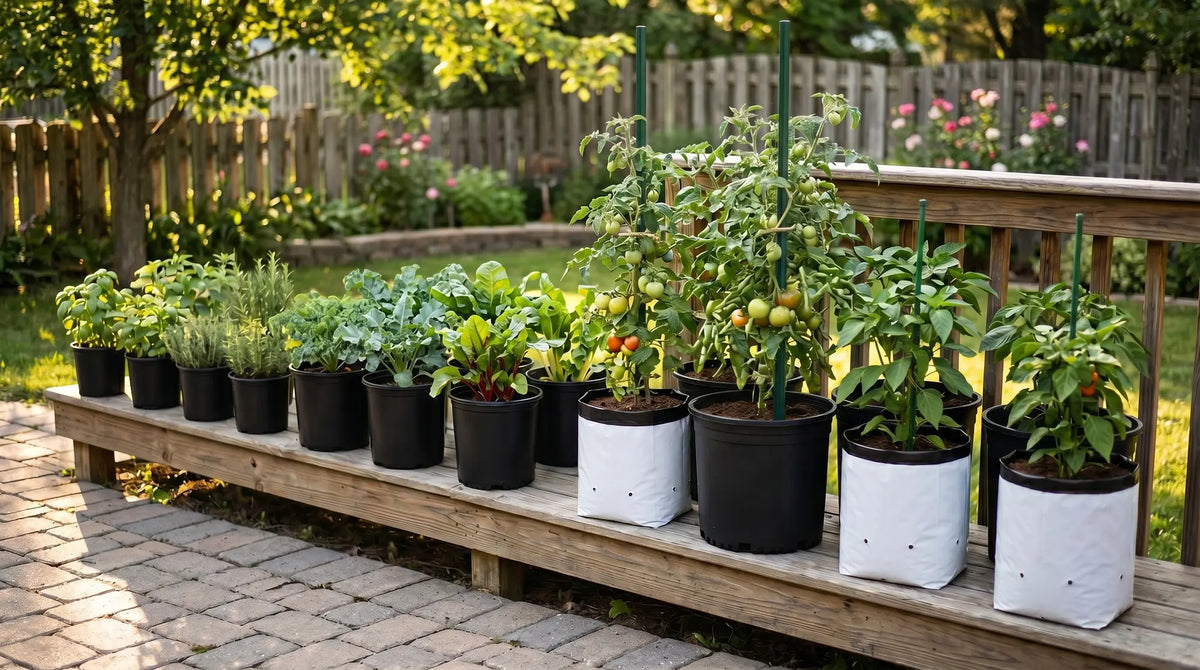
For tomatoes and peppers, use at least a 5-gallon container so the root zone has the depth it needs to support a full season of fruiting. Herbs and greens do well in 1 to 2 gallons. Root crops like carrots need at least 12 inches of depth. Whatever the material, every growing container must have open drainage holes so water can leave freely after each watering.
Best Containers for Growing Vegetables
Size the container to the crop

A 5-gallon pot for tomatoes is not a suggestion, it is the minimum that lets the root zone grow deep enough to support a full season of fruiting. Size by what the plant needs, not by what fits the shelf or the patio corner.

Drainage holes are not optional

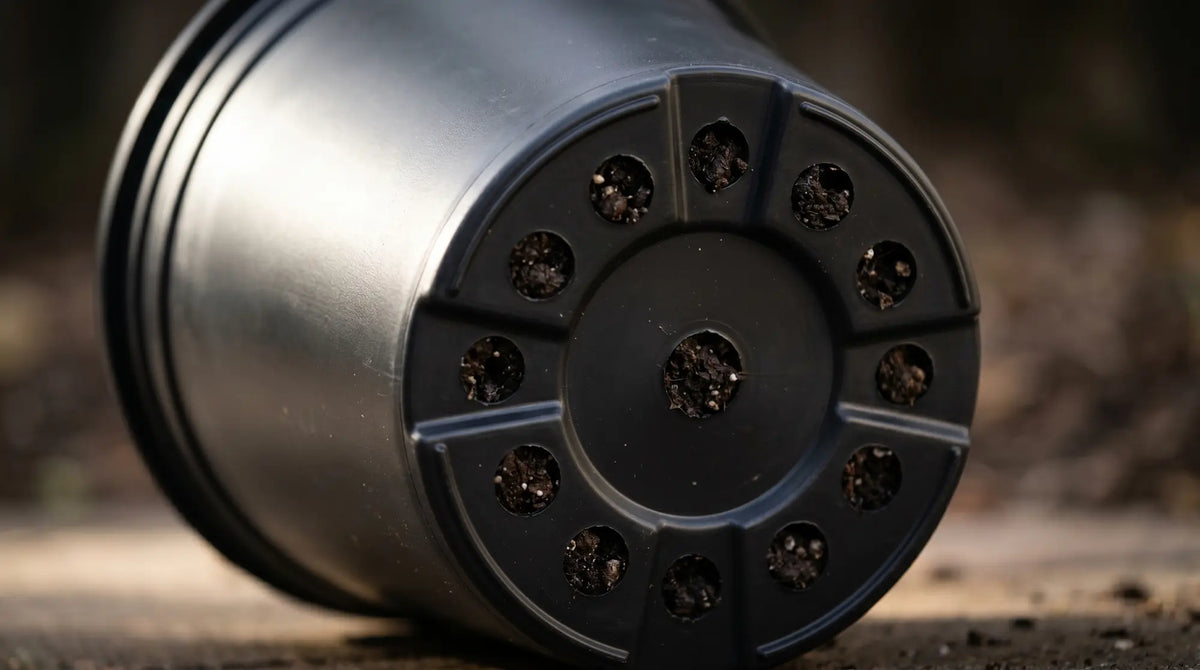
A container without clear drainage holds water against the root zone, which starves roots of air and sets off a slow decline that looks like drought stress but is not. Every container you grow in needs open, unblocked holes at the base.

Container types side by side

Plastic pots or fabric grow bags.

Both grow good vegetables. The right choice depends on how you water and what you value most in a container.

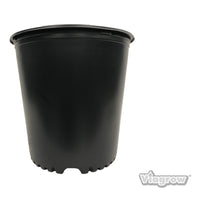
Plastic pots
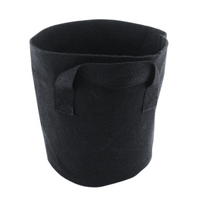
Fabric grow bags
Drainage & air
Drainage holes move water out, though solid walls mean air reaches roots only through the media itself.
The porous wall lets air reach roots from every direction, and water moves out quickly after each watering.
Moisture retention
Solid walls slow evaporation, so the mix stays moist a little longer between waterings in warm or dry weather.
The fabric dries faster on all sides, which suits growers who water on a regular schedule or live in humid climates.
Durability & reuse
A quality nursery pot holds up for several seasons with basic rinsing and stacks flat for off-season storage.
Fabric bags last for multiple seasons when rinsed and dried between uses, though heavy bags can show wear at the handles over time.
Root health (air-pruning)
Roots that reach the wall circle the inside surface, which can restrict growth when the pot is sized too small.
Roots that reach the fabric wall are air-pruned naturally, keeping the root zone dense and branched rather than circling.
Best for
Growers who want a dependable, reusable container that holds moisture through dry spells between waterings.
Growers who want the best possible root structure for heavy feeders like tomatoes and peppers, or who water on a daily rhythm.
Where containers hold growers back

Three choices that limit the harvest.

Each one is straightforward to avoid at the selection stage.

Common beginner mistakes
No.
Mistake
What goes wrong
The fix
Severity
01
Going too small on container size
Picking a container that looks about right on the shelf rather than checking the root depth the crop actually needs, which leaves fruiting plants short of room before the season is half done.
Use at least 5 gallons for tomatoes and peppers, 1 to 2 gallons for herbs and leafy greens, and at least 12 inches of depth for root crops like carrots.
Most common
02
Skipping drainage
Growing in a decorative pot without drainage holes, or keeping a saucer full of standing water under the container, so roots sit in saturated media and lose access to air.
Every growing container needs open drainage holes, and any saucer underneath should be emptied after watering rather than left to pool.
Common
03
Filling containers with garden soil
Filling pots or grow bags with native garden soil or heavy bagged topsoil, which compacts inside a container, drains poorly, and leaves roots in a dense, airless zone within a few weeks.
Fill containers with a mix built for container growing, such as coconut coir with compost and perlite worked through, so water moves freely from the start.
Underrated
Key takeaways

Five things to remember.

  1. 01Match container size to the crop first: tomatoes and peppers need at least 5 gallons, while herbs and greens do well in 1 to 2.
  2. 02Drainage holes are not a detail, they are what separates a container that grows healthy roots from one that drowns them.
  3. 03Plastic pots hold moisture longer and suit dry climates or less frequent watering; fabric bags drain faster and keep roots air-pruned.
  4. 04Garden soil compacts in containers; a coir-based mix with perlite drains freely and stays open through the whole season.
  5. 05A container sized for the crop, draining freely, and filled with an open mix gives vegetables the foundation to grow through a full season.
Discussion

Questions or notes? Drop them here.

A real grower replies within a business day.

No comments yet. Be the first.

FAQ

Common questions about container growing.

Most tomato varieties do best in at least 5 gallons, and larger indeterminate types appreciate 7 to 10 gallons to support the root zone through a long fruiting season. Compact or determinate varieties can manage in 5 gallons with consistent watering and feeding.
Yes, fabric bags dry out faster because the porous walls let air and moisture move through from all sides. In warm or dry conditions a large tomato plant may need watering every day, so a consistent daily schedule matters more with fabric bags than with plastic pots.
A mix built on coconut coir with compost and a portion of perlite drains well, holds enough moisture between waterings, and stays open rather than compacting over time. Avoid filling containers with native garden soil or heavy bagged topsoil, which packs down inside a pot and drains poorly.
Yes, as long as the container is deep enough for the crop. Carrots and parsnips need at least 12 inches of depth, while radishes and beets do well in 8 inches. A narrower but deep container works well for root crops without taking up too much patio space.
Most culinary herbs grow well in 1 to 2 gallons. Basil, parsley, and cilantro do fine in a single 1-gallon pot each, and a 2-gallon container gives mint or chives enough room to spread a little. Grouping a few small pots together on a tray keeps watering and harvesting straightforward.
The promise

Grow better. Eat better. Every day.

Your partner in every harvest. Choose the right container once, and the season stays manageable from the first watering.

Posted June 11, 2026 · Updated June 23, 2026 · 7 min read