Grow Guides

How Often to Water Plants (Beginner Guide)

May 11, 2026· 7 min read· 0 comments

How often to water plants is the question every first-time grower asks, and the honest answer is that it depends on the plant, the container, the media, and the room. The good news is that the rhythm is easy to learn once you know what to feel for.

The Harvest Company carries the gear and the guidance for any home garden. Watering is the habit that most shapes how a garden comes along, and a few simple rules cover almost every situation you will meet through the season.

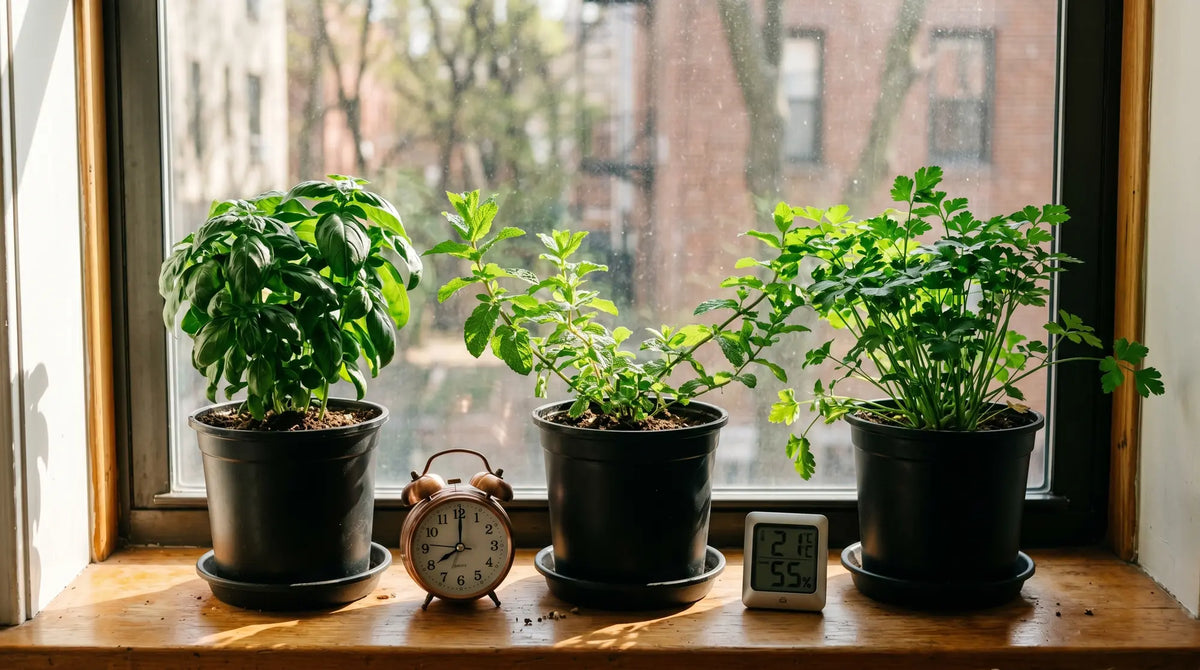
Quick answer
Most edible plants want watering when the top inch of media has begun to dry, not on a fixed daily schedule. For most home gardens that lands at every two to four days, more often in heat and less often in cool weather. The finger test is the only reliable check.
How Often to Water Plants (Beginner Guide)
2–4 days
Average rhythm
3 days
Indoor herbs
Daily
Hot balcony pots
2× / week
Raised beds
1 inch
Finger test depth
The one rule

Water by feel, not by calendar. The finger test, one inch into the media, is the most reliable signal a beginner has.

Why fixed schedules fail

A weekly schedule ignores temperature, humidity, sun exposure, and stage of growth. The same plant in the same pot can want water twice as often in summer as in winter.

Deep, then dry

Water until it runs from the drainage holes. Then wait until the top inch is dry. Light daily sips train shallow roots and weaken the plant.

The four basics

What plants actually need.

Every edible plant in the world wants the same four things. When something is going wrong, the cause is almost always one of these four.

01
The finger test
One inch down

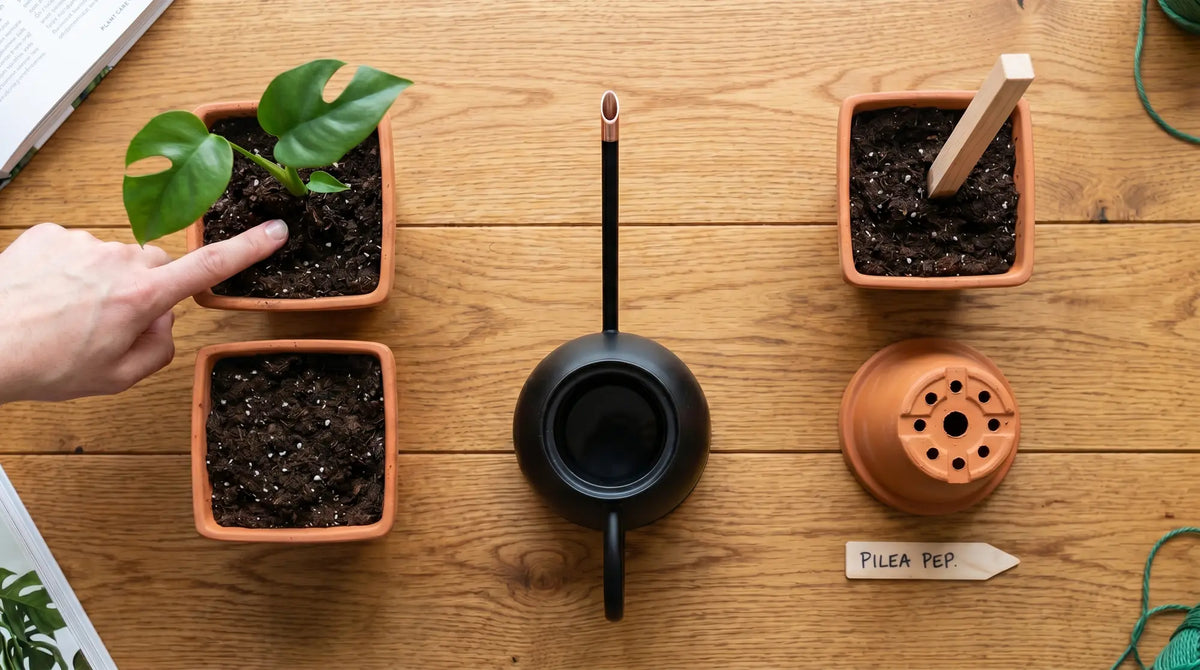
Push a finger straight down into the media to the first knuckle. If it feels dry there, it is time to water. If it feels cool and moist, wait another day.

02
Lift the pot
Weight tells you

A pot that has dried out feels noticeably lighter than one with moisture in the root zone. Pick up a pot you just watered, then check it again in two days to learn the difference.

03
Watch the leaves
Tip down before fully wilting

Most plants drop their leaves slightly before they truly need water. That early droop is a useful signal. Water at that point, not after a full wilt.

04
Read the room
Heat, sun, and airflow

Hot rooms, direct afternoon sun, and strong airflow all dry media faster. The same plant in the same container can want water twice as often in summer as in winter.

When to water

Morning vs evening, end of day.

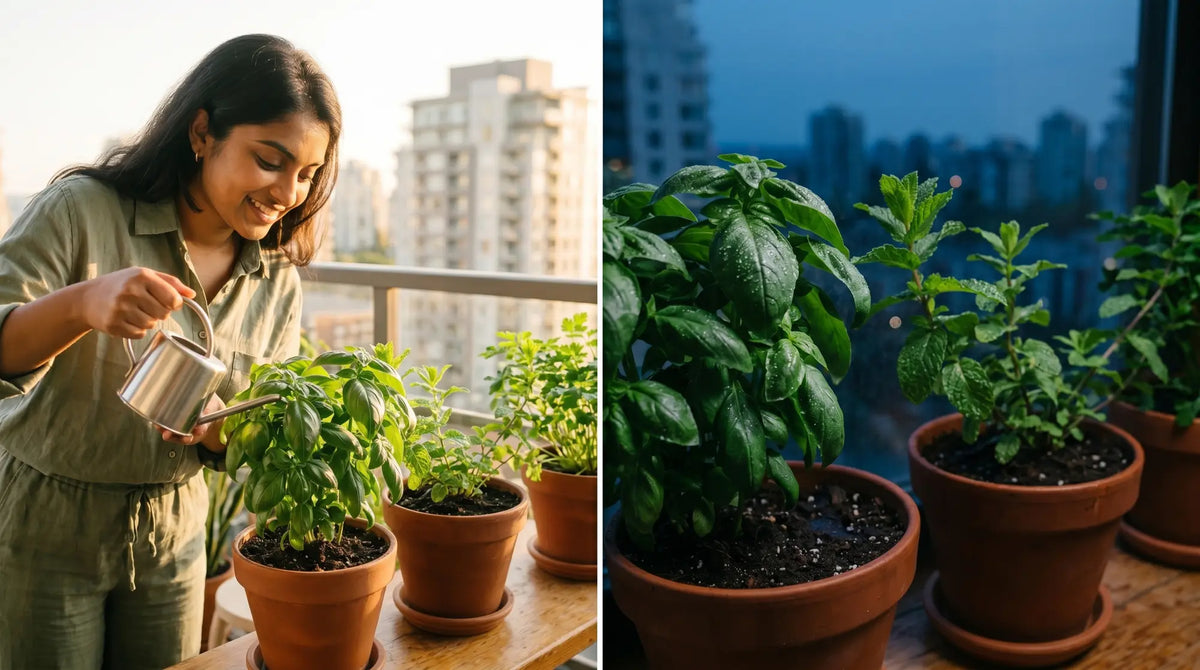
Both work. Morning is the better default for most home gardens. Here is how the two compare for the things that actually matter.
Morning watering
Evening watering
Best for
Most home gardens, indoor and outdoor.
Outdoor gardens during heat waves where a second watering is needed.
Plant uptake
Roots are hydrated for peak photosynthesis through the day.
Cooler temperatures mean less evaporation, more reaches the roots.
Fungal risk
Foliage dries during the day. Low risk.
Leaves can stay wet overnight. Higher mold and mildew risk indoors.
Convenience
Fits a routine before work or coffee.
Works for outdoor schedules, less practical indoors.
Recommendation
Default for indoor herbs, leafy greens, and most container gardens.
Outdoor only, with care to wet roots and not foliage.
Symptom checker

I see this on my plant. What now?

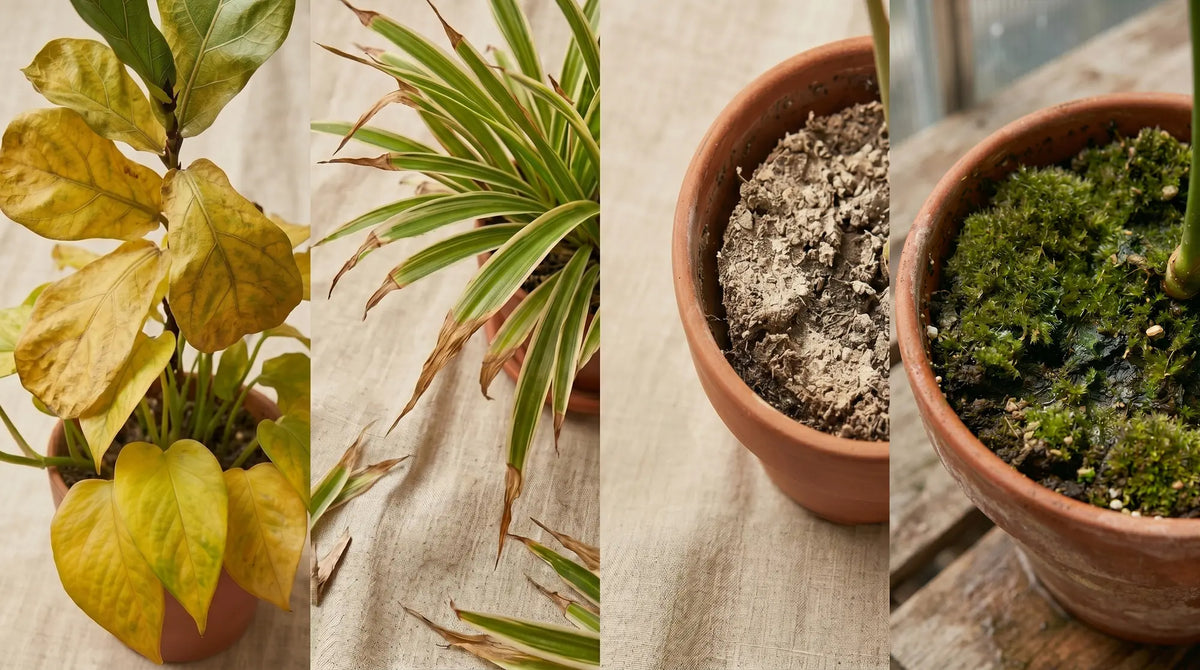
Match what you see to the most likely cause and the first thing to try. Most signals point to either watering rhythm or drainage.
Symptom
Likely cause
Quick fix
Severity
Soil feels wet, plant droops
Roots damaged by saturation cannot take water up. Common with no drainage.
Stop watering. Move to a warm, dry spot. Repot if the soil smells sour.
High
Soil feels dry, plant droops
Standard underwatering. Recovery is fast.
Water deeply until water runs from drainage. Plant should perk up within an hour.
Low
Yellow lower leaves
Most often overwatering. Sometimes nutrient flush.
Let the top inch dry before the next watering. Confirm drainage.
Medium
Crispy brown leaf edges
Underwatering or low humidity in dry indoor air.
Water deeply. Group plants together to raise local humidity.
Medium
Soil pulls away from the pot edge
Hydrophobic dry media. Water runs down the sides without soaking in.
Submerge the pot in a tray of water for ten minutes to rehydrate the core.
Medium
Common watering myths

What you may have heard, and what actually happens.

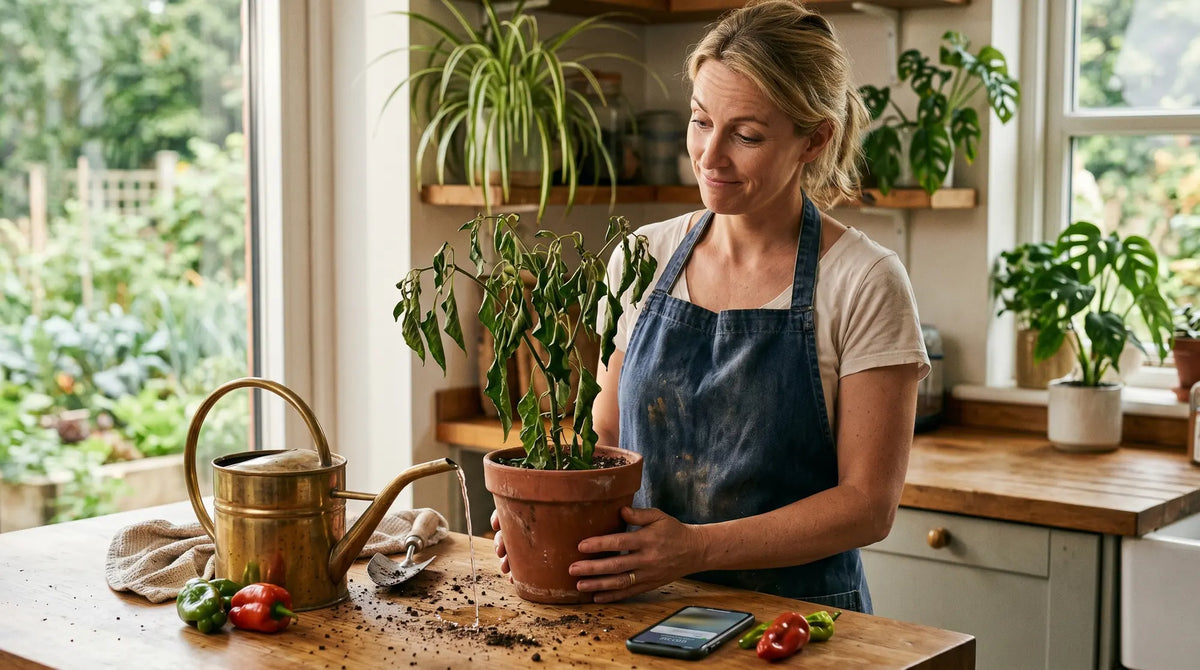
A handful of recurring misconceptions account for a lot of the early frustration. Here are the ones to let go of.
Common belief
What actually happens
Plants need water every day to thrive.
Most edible plants want a deep watering every two to four days, with the top inch drying in between. Daily watering trains shallow, drought-prone roots.
Yellow leaves always mean the plant needs more water.
Yellow lower leaves most often mean overwatering. Check the soil moisture before adding water.
A drainage saucer of water keeps plants hydrated longer.
Standing water in the saucer keeps the root zone wet for too long, which is the leading cause of root rot. Empty the saucer after watering.
Misting the leaves is the same as watering.
Misting raises local humidity briefly but does not water the roots, where almost all uptake happens. Water the soil, not the leaves.
Cold tap water is fine for plants.
Very cold water on warm media is a shock that slows root activity. Use room-temperature water, especially indoors in winter.
Watering mistakes

Four habits behind almost every watering problem.

Each one is a small adjustment, not a new piece of gear. Read for the situation that fits, and shift the habit.

Common beginner mistakes
No.
Mistake
What goes wrong
The fix
Severity
01
Watering on a fixed schedule
A weekday-by-weekday rhythm ignores how the weather and the room change moisture loss.
Use the finger test as the trigger, not the calendar.
Most common
02
Light, frequent sips
A surface splash never reaches the lower roots and trains them to stay shallow.
Water until it runs from the drainage holes, then let the top inch dry.
Common
03
No drainage holes
Roots sit in standing water and suffocate within days.
Use containers with real drainage. Decorative cover pots only if you remove the inner pot to water.
Common
04
Cold water on warm media
A sudden cold shock slows root activity and stresses the plant.
Use room-temperature water, especially indoors in winter.
Underrated

Water by feel, not by calendar. The finger, one inch down, is the most reliable instrument a beginner has.
The Harvest Company
Key takeaways

Five rules that cover almost every situation.

If you walk away with nothing else, walk away with these.

  1. 01Water by feel, not by calendar. The finger test, one inch down, is the most reliable signal a beginner has.
  2. 02Water deeply, then let the top inch dry. Light daily sips train shallow roots.
  3. 03Container size and media set the rhythm. A small pot in coir on a sunny balcony is on a different schedule from a raised bed.
  4. 04Drainage holes are not optional. A pot without a way for water to leave is a slow root-rot risk.
  5. 05Heat, sun, and airflow speed up drying. Adjust the rhythm with the weather, not against it.
Discussion

Questions or notes? Drop them here.

A real grower replies within a business day.

No comments yet. Be the first.

FAQ

Common questions about watering.

If yours is not here, write us. A real grower replies within a business day.

Most edible home-garden plants want watering when the top inch of media has begun to dry. For typical indoor herbs that is every two to four days. For outdoor containers in summer it is often daily. Use the finger test as the trigger, not the calendar.
Yellowing lower leaves, persistently soggy media, a sour smell at the surface, and a plant that wilts even when wet are the most common signs of overwatering. The fix is to let the top inch dry fully, confirm drainage, and water less often.
Morning is the better default. Foliage dries during the day, the roots are hydrated for peak photosynthesis, and the cool of evening is not lost to evaporation.
Very cold water on warm media is a shock that slows root activity. Use room-temperature water, especially indoors in winter when tap water can be near freezing.
A wet-but-drooping plant usually means the roots cannot take water up, often from waterlogged media or root rot. Check drainage, smell the surface for a sour odor, and let the media dry well before watering again.
Coco coir holds moisture differently from soil and dries from the top down. It is forgiving of a missed day and tolerates wetter conditions without compacting.
The promise

Grow better. Eat better. Every day.

Your partner in every harvest. Pick a rhythm that fits your life, and bring home the kind of harvest a home garden is supposed to make.

Posted May 11, 2026 · Updated May 19, 2026 · 7 min read