
Do Indoor Plants Need Grow Lights?
Whether an indoor plant needs a grow light comes down to one question: does the window give enough hours of strong light for what you are trying to grow. The Harvest Company treats a grow light as a tool to fill a real gap rather than a default purchase, because a sunny south window already grows herbs and greens well. The plant itself tells you when the natural light falls short, and reading that signal saves both wasted crops and unnecessary gear.
A bright window carries a lot of indoor growing on its own; a grow light earns its place when the space is dim, the days are short, or the crop wants more than the glass can give.

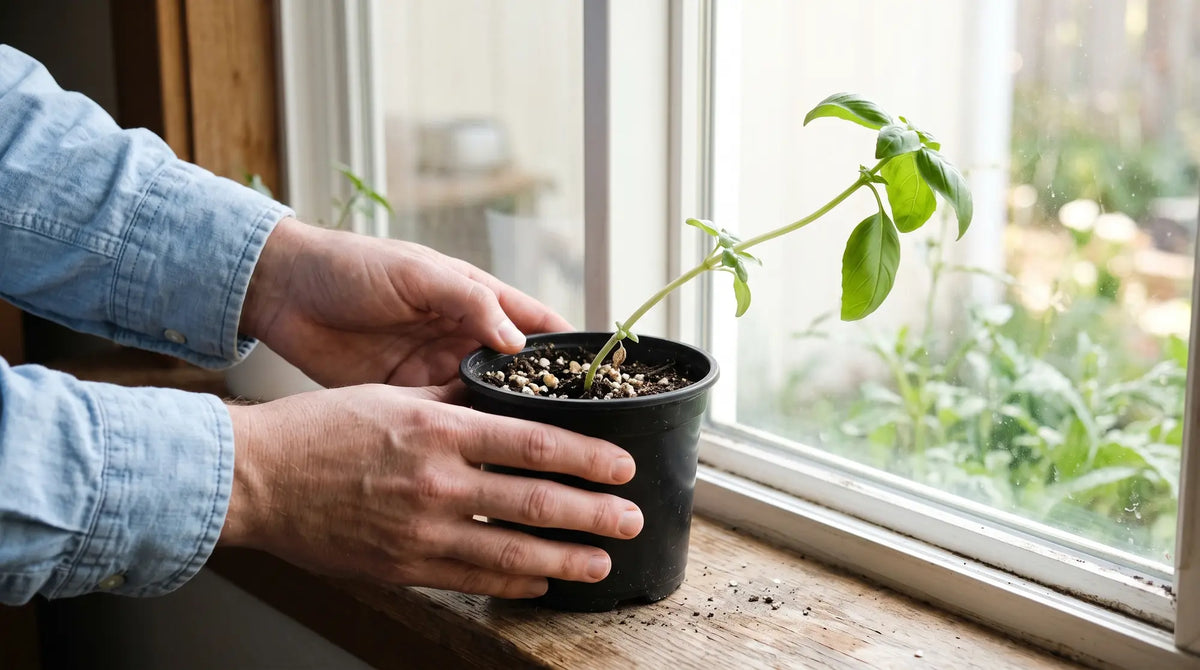
A south or west-facing window is real growing light, often enough for herbs and leafy greens through much of the year. Start there, watch how the plants respond, and add a light only if the growth tells you the window is not keeping up.
Stretching toward the glass, long gaps between pale leaves, and a steady lean are the plant asking for more light. When you see that pattern even in a bright spot, a grow light is the honest fix rather than more feed or water.
When natural light is enough.
Both can grow good food indoors. The deciding factor is how much light the space gives and what you want to grow in it.
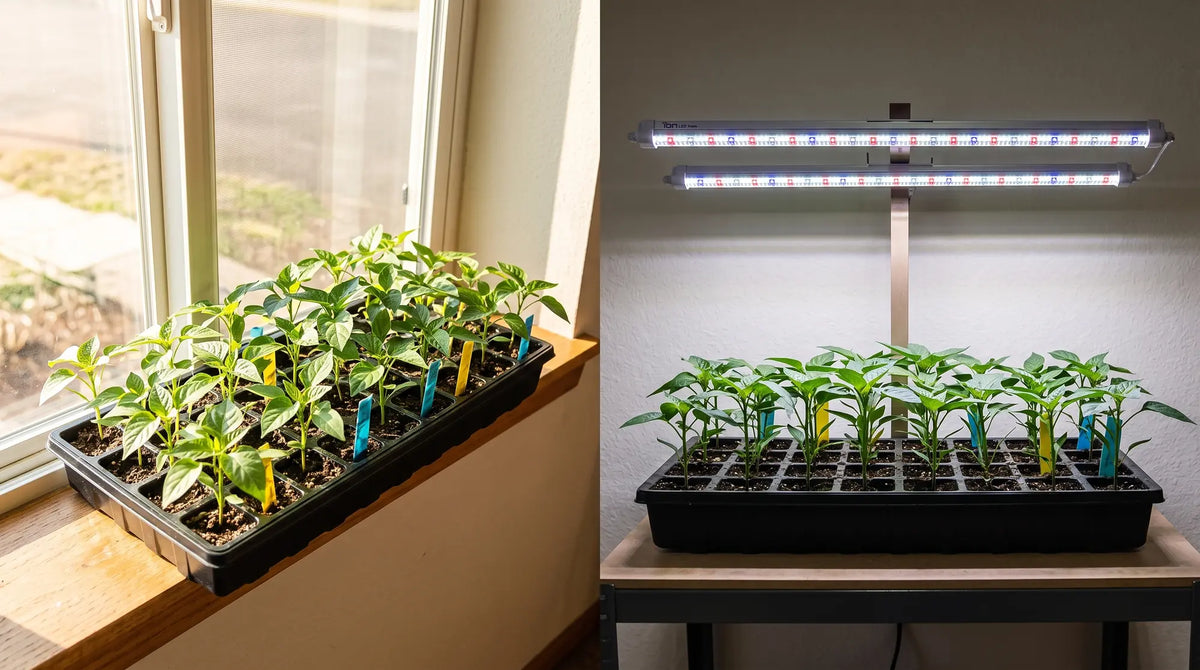

A full-spectrum LED sized for a standard 1020 tray, made for the case where a window cannot keep seedlings compact. It gives the strong, steady light that stops seedlings stretching during short days and dim starts.

The grow light paired with a propagation dome, tray, and coir starters, so a dim windowsill becomes a complete indoor starting station without sourcing each piece separately.
Three habits to avoid.
Each is easy to correct once you read the light honestly.

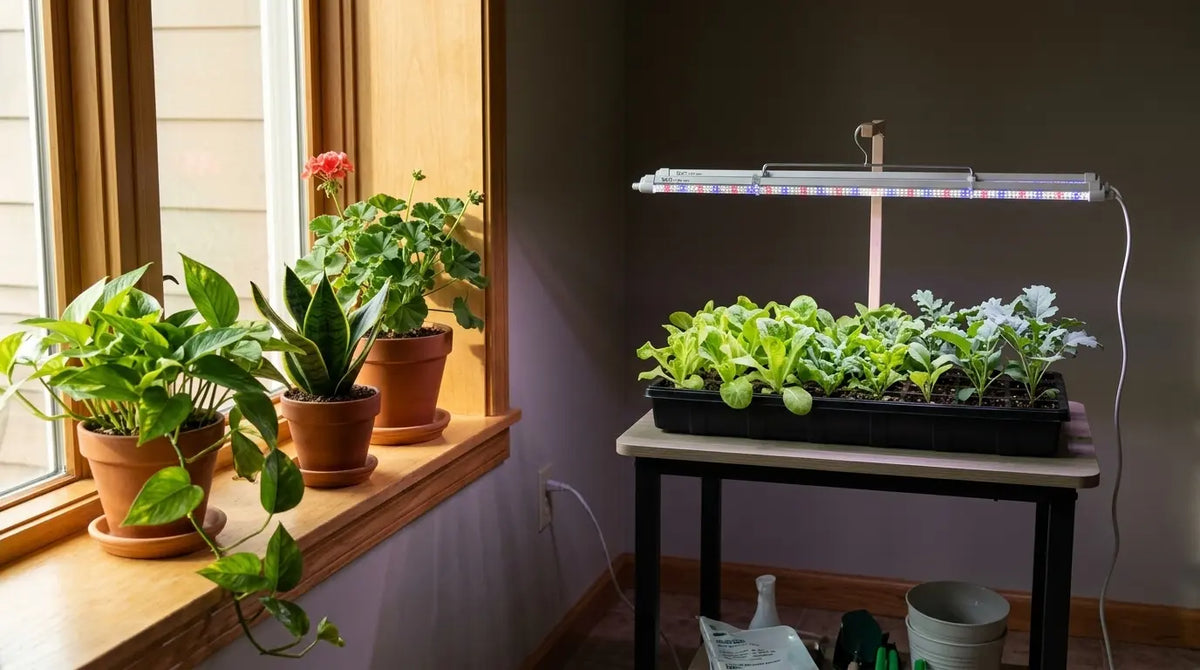
Five things to remember.
- 01A grow light is a tool to fill a real light gap, not a default purchase for every indoor plant.
- 02A bright south or west-facing window often grows herbs and leafy greens well without any extra light.
- 03North-facing rooms, short winter days, and fruiting crops are the cases where a grow light earns its place.
- 04The plant signals a shortage by stretching, leaning, and paling, which is the cue to add light rather than feed.
- 05Seedlings benefit most, since steady strong light keeps them compact and sturdy through dim starts.
Questions or notes? Drop them here.
A real grower replies within a business day.
No comments yet. Be the first.