Grow Guides · Setup & System Design

Best Starter Gardening Kits

June 11, 2026· 6 min read· 0 comments

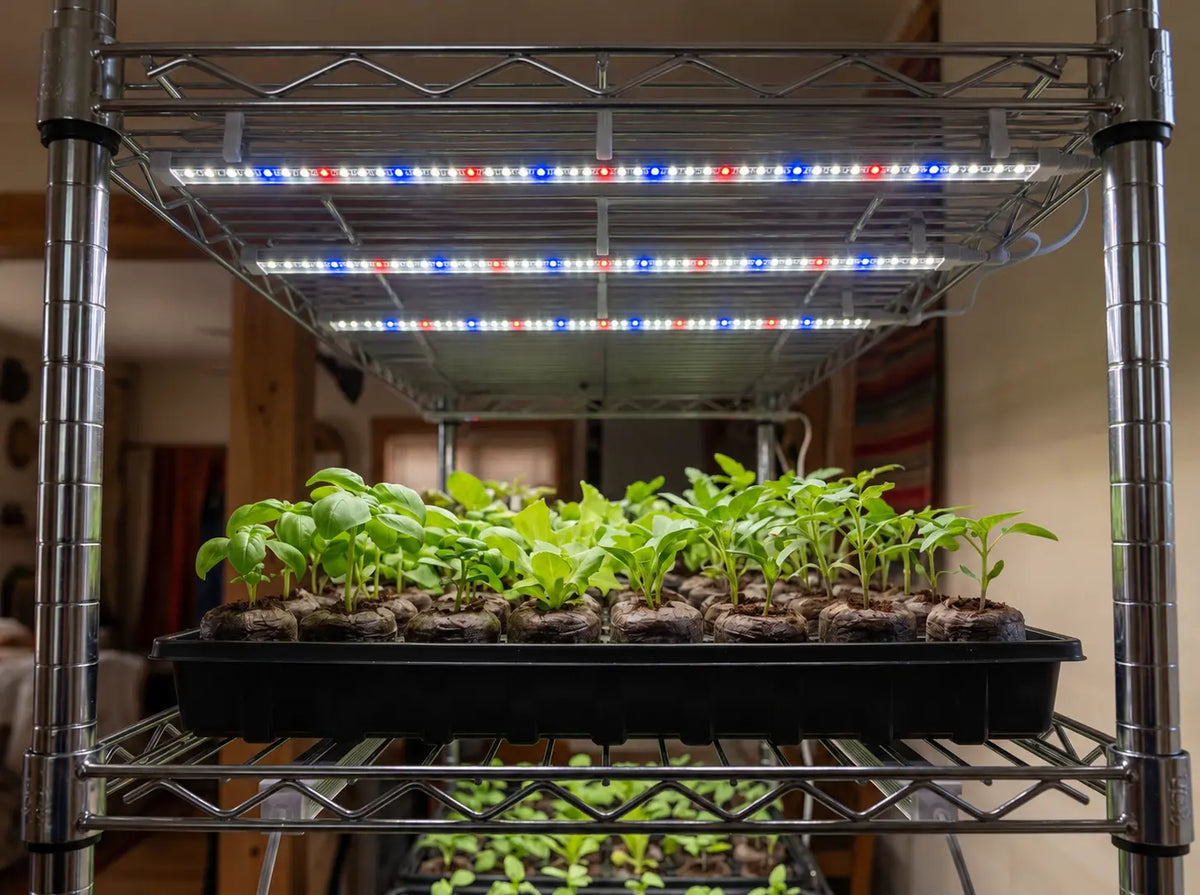
A good starter kit is not a shortcut, it is a complete system for seed starting. The Harvest Company puts kits together around what a new grower actually needs: a forgiving way to start seeds, a medium that does not punish imperfect watering, and room to grow beyond the first tray. Getting those pieces in one box is what makes the choice worth making at the start of a season.

The decision between an all-in-one kit and a build-your-own setup comes down to how much you want chosen for you, and how much of the system you already own.

Quick answer
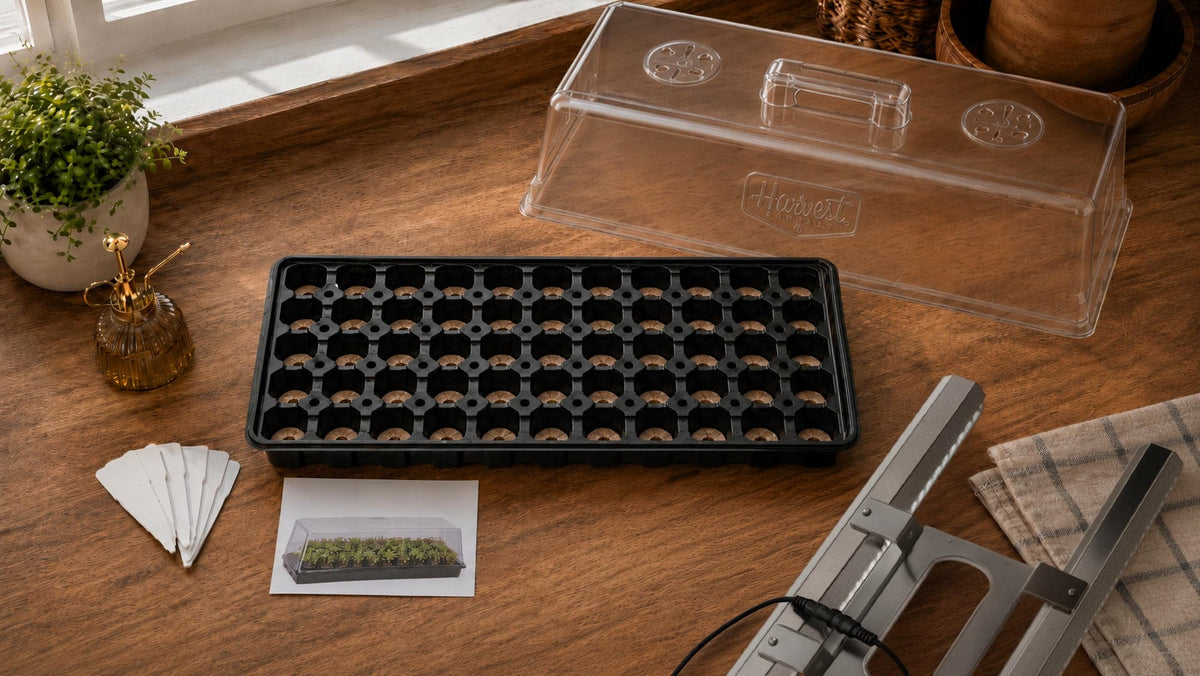
A good starter kit includes a seed-starting station, a forgiving medium like coir, and a tray and dome or a grow light. It should also leave room to expand when the first seedlings outgrow the starter cells. All-in-one kits suit growers starting from nothing who want everything matched before they open the box. Build-your-own suits growers who already have some pieces and want to fill the gaps without doubling up.
Best Starter Gardening Kits
What a kit is actually solving

A starter kit removes the research step, not the growing step. The value is in having the right components matched to each other so nothing is missing on the first weekend, and so every piece works with the rest.

Seeds are yours to bring

A good kit provides the system and the medium, not the seeds, because the grower picks the crops. That means the same kit works for basil, lettuce, peppers, or whatever the kitchen actually uses.

All-in-one or build-your-own

Two honest paths to the same first season.

Neither is wrong. Each suits a different starting point.
All-in-one kit
Build-your-own
Up-front simplicity
Everything chosen and matched before you open the box, so setup takes an afternoon rather than a week of separate research and sourcing.
You choose each component, which takes more time up front but means nothing goes unused if you already own part of the system.
Cost
Bundled pricing is usually lower than buying each piece separately, with no risk of choosing the wrong size or format for a component.
Can be lower or higher depending on what you already own. Buying only the missing pieces avoids paying for things already on the shelf.
Flexibility
The system is set at purchase, which works best when you are starting from nothing and want a single, settled decision.
You match each piece to your space, your crop list, and the light situation you already have in your home or on your balcony.
Best for
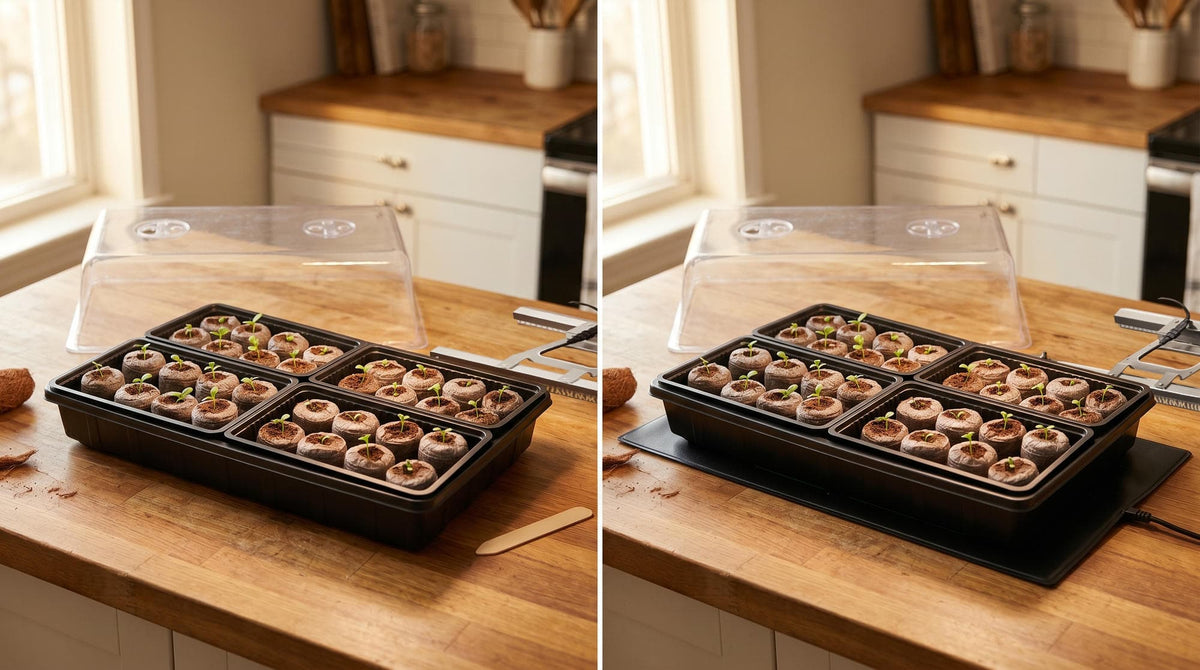
First-season growers starting indoors or on a windowsill who want to start seeds without a pile of separate purchasing decisions.
Growers who already have a tray, a container, or a light, and want to fill the one or two gaps left in their current setup.
What you still need
Seeds, which you bring yourself based on what your kitchen uses, and a plan for where seedlings will go once they outgrow the starter cells.
A clear inventory of what is already on hand before you buy, so you can avoid doubling up on components you already own.
Where starter kits go wrong

Three buying habits to avoid.

Each costs money or time, and each is easy to sidestep with one honest question before you buy.

Common beginner mistakes
No.
Mistake
What goes wrong
The fix
Severity
01
Buying for the biggest possible season
Buying a kit sized for thirty or fifty plants when the real plan is a windowsill of herbs and one container of tomatoes, leaving most of the gear unused after the first tray is done.
Match the kit to your actual setup. A ten-cell tray suits a windowsill; a fifty-cell station suits a balcony or patio. Start at the right size and expand from there.
Most common
02
Skipping the grow light in low-light homes
Assuming a bright windowsill is enough for seed starting, then watching seedlings stretch toward the glass without developing the compact, sturdy stems that transplant well.
If the sunniest window gets fewer than six hours of direct light, a grow light is not optional, it is what makes the rest of the system work. A kit with one built in removes that variable.
Common
03
No plan for after the starter cells
Treating the coir seedling starters in the kit as the only medium needed, then having nowhere for seedlings to go once they outgrow the cells and are ready for a container or bed.
Plan the next step before the first seed goes in. A buffered coir brick is the natural follow-on for growers moving transplants from the station into containers or raised beds.
Underrated
Key takeaways

Five things to remember.

  1. 01A good starter kit provides the system, not the seeds, so the grower picks the crops and the kit handles the setup.
  2. 02All-in-one kits suit growers starting from nothing who want every component chosen and matched before they open the box.
  3. 03Build-your-own works best when you already own part of the system and want to fill specific gaps without duplicating gear.
  4. 04A grow light belongs in any indoor setup where the window gets fewer than six hours of direct sun each day.
  5. 05Plan where seedlings will go after the starter cells, because the kit starts them but the next medium carries them through the season.
Discussion

Questions or notes? Drop them here.

A real grower replies within a business day.

No comments yet. Be the first.

FAQ

Common questions about starter kits.

Most kits sold as setup systems do not include seeds, and that is by design. Seeds are a personal choice based on what the household actually eats, so the kit provides the system and the grower picks the crops.
A south-facing window with six or more hours of direct sun can carry seedlings without a supplemental light. Fewer than six hours, or windows that get indirect light for most of the day, tend to produce leggy seedlings that struggle at transplant. A kit with a built-in LED removes that variable from the start.
A coir seedling starter is a compressed plug of coconut coir that expands with water to form a small, even growing cell. It holds moisture consistently across the cell, which makes it more forgiving than loose media in a tray for growers learning the watering rhythm.
Once roots begin to show at the base of the cell or the seedling has two to four true leaves, it is ready to move into a larger container or a raised bed. A buffered coir brick rehydrates into the medium that carries the plant through the rest of the season.
Match the kit to the number of plants you actually plan to grow. A ten-cell tray suits a windowsill setup with two or three crops. A fifty-cell station suits a balcony or patio with four to six varieties. Buying larger than your real plan leaves most of the gear sitting after the first tray is done.
The promise

Grow better. Eat better. Every day.

Your partner in every harvest. The right kit puts everything in place for the first season, so the focus stays on the growing.

Posted June 11, 2026 · Updated June 23, 2026 · 6 min read