
Indoor Gardening for Beginners
Indoor gardening is what happens when the kitchen becomes the garden. It can start as small as a windowsill with three pots of herbs, then grow into a counter of leafy greens, a corner with a grow light, and a year-round harvest that ignores the weather entirely.
What follows walks through what to grow indoors, where to put it, when to add a light, and how to settle into the watering rhythm that keeps the harvest coming.

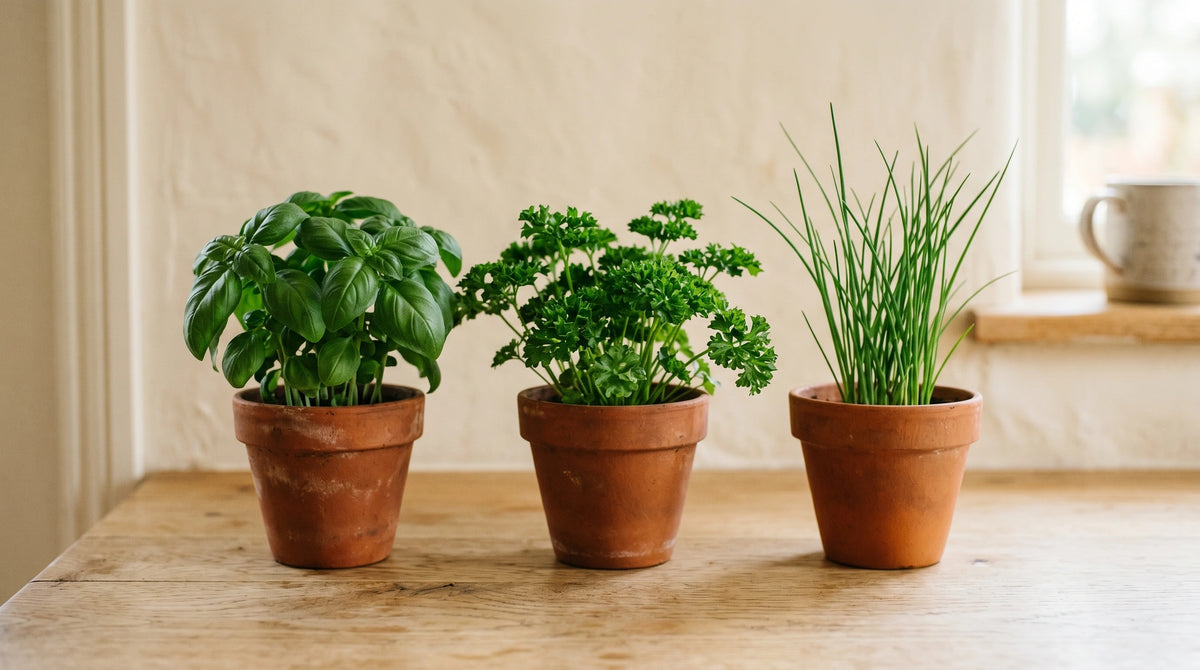
Basil, mint, parsley, and chives are the easiest indoor crops. They tolerate uneven light, forgive a missed watering, and reward harvesting (they grow back fuller). Get one season of these under your belt before moving on.
A bright window in winter is also a cold window. Move sensitive plants six inches back from the glass when overnight temps drop below freezing, or set them on a mat to buffer the chill.
What plants actually need.
Every edible plant in the world wants the same four things. When something is going wrong, the cause is almost always one of these four.
A south-facing window is the gold standard. West is fine. East works for herbs. North alone is usually not enough for edibles without supplemental light.
Indoor pots dry faster than outdoor beds. Lift the pot. Light pot means water now. Heavy means wait. The finger test confirms.
Coir holds water and air at once, which is what roots want. It rehydrates from a brick and stays clean (no fungus gnats compared to bagged soil).
Coir feeds nothing on its own. A half-strength liquid feed once a week keeps leafy greens producing without burning roots.
Three setups that actually work.
Each starts small and scales. Pick the closest match for the space you already have.
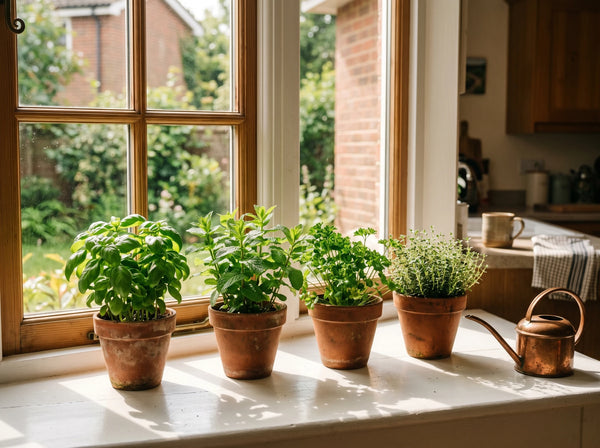
The windowsill
Three to five 6-inch pots on the brightest window in the kitchen. Herbs and leafy greens. The lowest-effort, highest-visibility setup. Perfect first season.
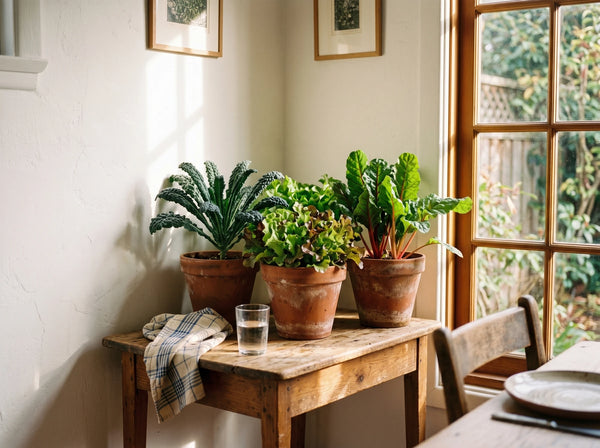
The counter or shelf
A side counter or open shelf near a window. Larger pots, room for one or two leafy greens alongside the herbs. Most home growers expand to this within a month.
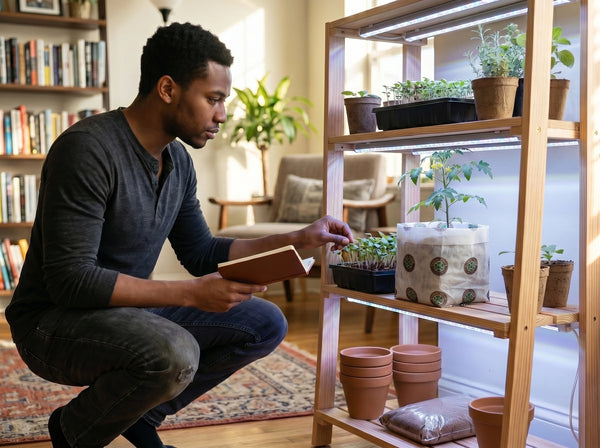
The grow-light corner
A spot away from the window with a small LED grow light overhead. Opens up the full range of indoor crops (tomatoes, peppers in dwarf form, salad greens) regardless of window orientation.
Find the brightest window and start there.
The single biggest indoor variable is light, and a south-facing window gives the most of it. West and east windows still work well for herbs and leafy greens, while a north window alone is rarely enough for edible plants without a little supplemental light.
You do not need a meter. Stand at the window at noon. If sunlight is hitting the glass directly, that is direct sun. If it is filtered by a tree, an awning, or a building across the street, that is bright shade. Direct beats bright shade for almost every edible.
The simplest test is to set a plant there for a week. If new leaves come in pale and stretched (leggy), the light is not enough. If they come in firm and compact, the spot is working.

Size up, drain well, skip the pretty.
A 6-inch pot is the minimum for herbs. An 8 to 10-inch pot is better for leafy greens. The biggest indoor mistake is starting in pots that are too small, then watching the plants stall as soon as roots hit the wall.
Drainage is not optional. Every indoor pot needs holes. If the pretty cover pot does not have them, put the plant in a plain plastic nursery pot and slip that into the cover. Take the inner pot to the sink to water, drain, then return.
Skip the rocks in the bottom of the pot. They do not improve drainage. They reduce the available root volume and create a soggy layer right where roots should be growing.

What the plant is telling you.
The most common indoor symptoms and the usual cause. Each has a simple fix.
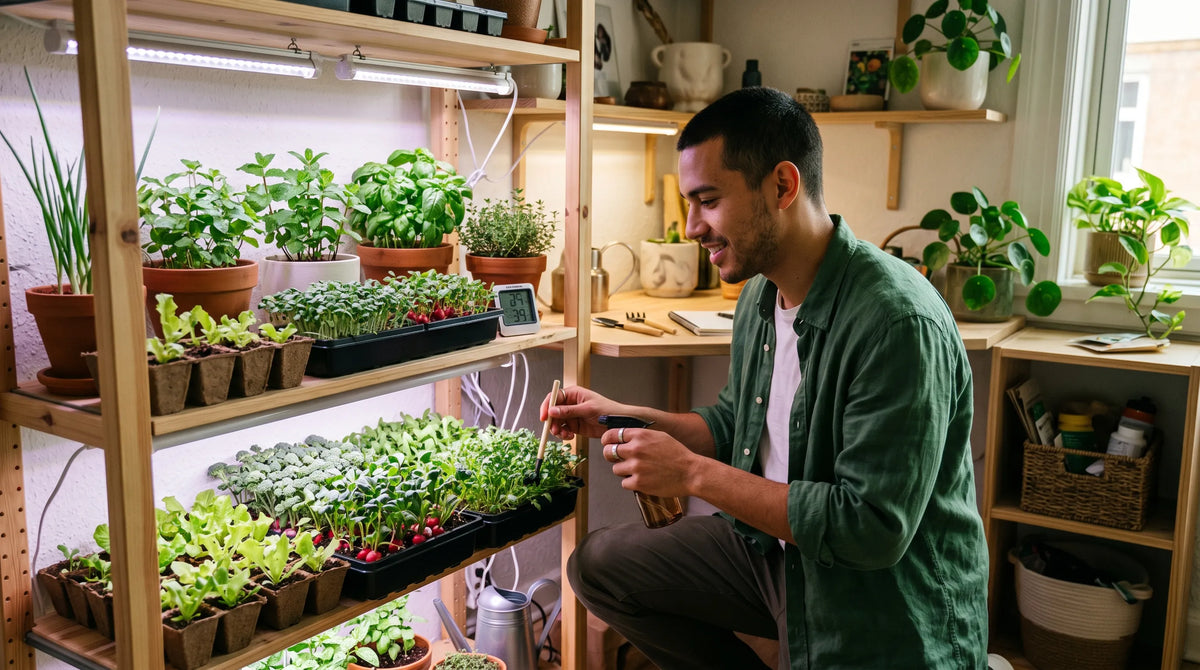
Four habits to break early.

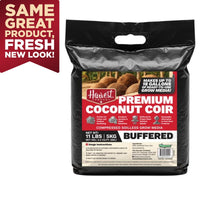
Triple-washed, low EC, ready to rehydrate. One brick fills a windowsill of pots with room to spare.
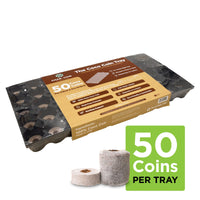
A 50-cell propagation tray with pre-filled coir plugs. The fastest path to indoor seedlings.
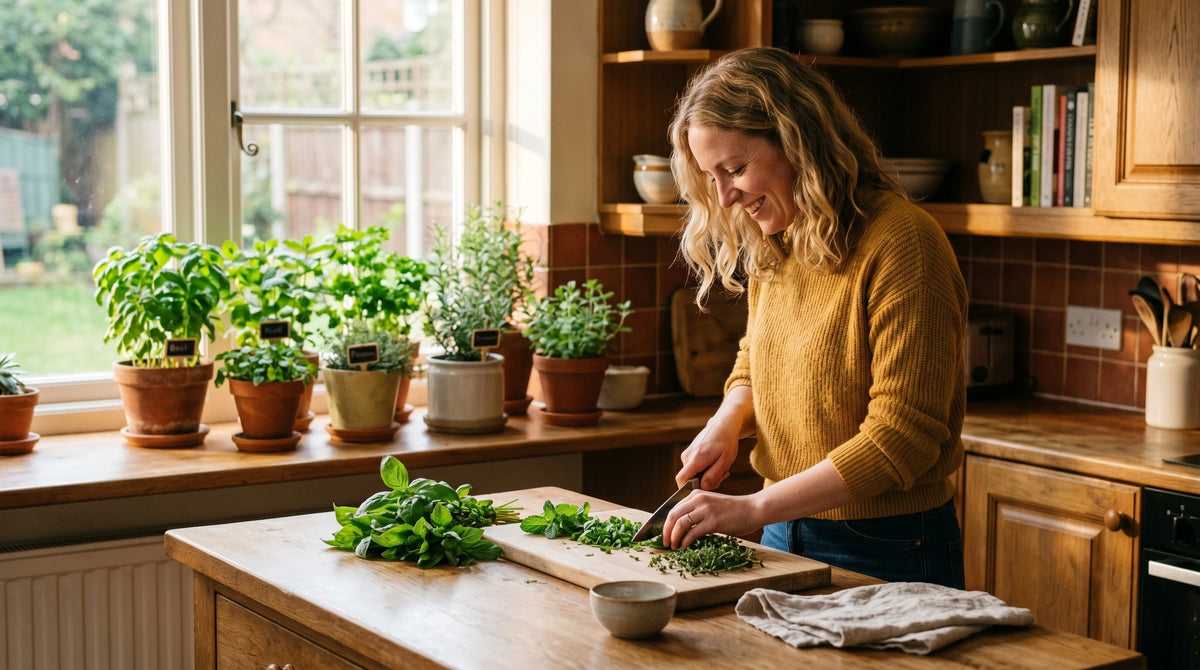
Six things to remember.
- 01Start at the brightest window you already pass every day. Most kitchens have one.
- 02Herbs and leafy greens are the easiest indoor crops. Save fruiting plants for later or for grow-light setups.
- 03Use 6 to 10-inch pots with real drainage. Skip the rocks in the bottom.
- 04Water when the top inch dries. Every 2 to 4 days for most indoor setups.
- 05Coir feeds nothing on its own. Add a light liquid feed from week three.
- 06A small LED grow light opens up any room. Worth the spend if your brightest window is dim.
Questions or notes? Drop them here.
A real grower replies within a business day.
No comments yet. Be the first.