
How to Start Seeds (Beginner Guide)
Starting seeds is the cheapest way to fill a garden, and it is far more forgiving than most first-time growers expect. A seed carries its own food for the first week or two, so the job in front of you is narrow. Keep the medium damp, keep the tray warm, and get light overhead the moment green appears.
The Harvest Company builds its seed starting kits around that same short list, so the tray, dome, and coco coin insert arrive matched to each other. This guide walks the whole arc, from choosing a seed to moving a seedling into its first real container.

What plants actually need.
Every edible plant in the world wants the same four things. When something is going wrong, the cause is almost always one of these four.
A seed absorbs water to break dormancy, and it needs that moisture to stay steady until the root emerges. A tray that dries out once mid-germination usually ends the attempt, which is why pre-filled coco coins hold their water so evenly.
Warmth sets the pace of germination more than anything else. The same tomato seed that sprouts in six days at 72 degrees can take three weeks on a cold floor, and some seeds simply wait rather than rot.
Seeds breathe while they germinate, and the medium has to hold air alongside the water. A dome keeps humidity up in the first days, and cracking its vents once sprouts appear prevents the damp stillness that invites mold.
Light matters nothing before germination and everything after. A sprout left in a dim spot for even two days stretches tall and thin looking for a window, and a stretched seedling never fully recovers its stem strength.
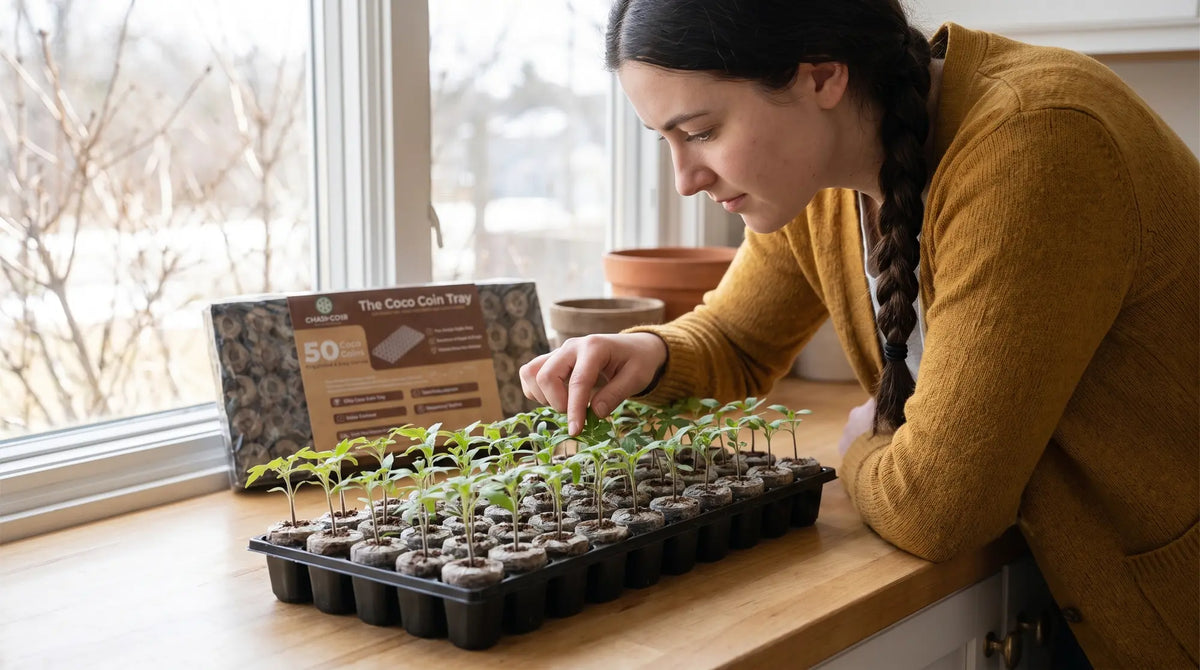
Fifty cells of coco coir, pre-spaced and pre-filled, so depth and spacing are decided before you open the seed packet. It holds moisture evenly across the tray, which removes the single most common reason a first sowing fails.
View product: Char Coir Coco Coin Propagation Tray, 50-Cell
Five steps from packet to first true leaves.
The order matters more than the equipment. Every crop in a home garden follows this same arc, whether it is a basil seed the size of a grain of sand or a squash seed you can hold between two fingers.
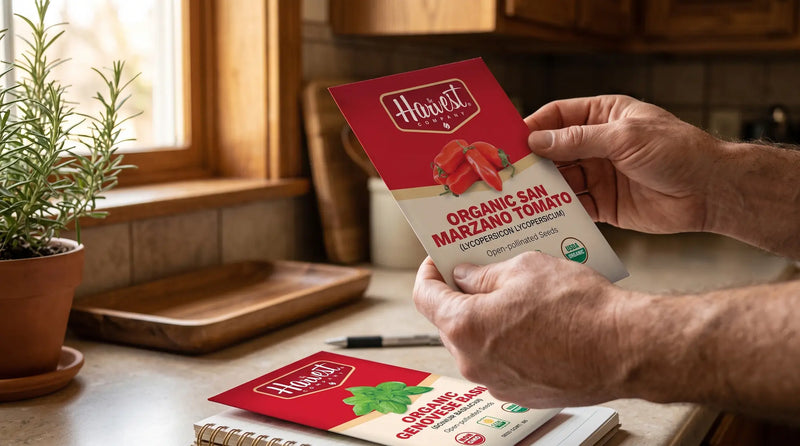
Read the packet before you open it
The packet carries the two numbers that decide everything: sowing depth and days to germination. Note them, because a seed sown at the wrong depth fails quietly and gives you no signal about why. Open-pollinated seed like our San Marzano and Genovese basil also tells you the plant will come back true if you save seed later.
Shop seed starting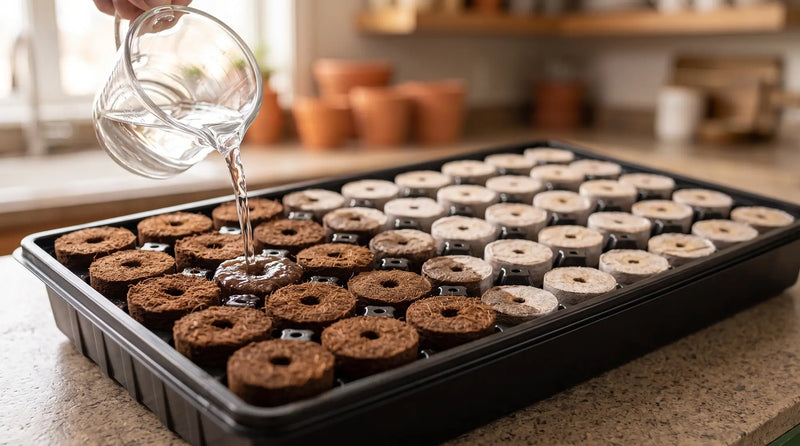
Wet the medium before you sow
Hydrate coco coins or seed starting medium until it holds together when squeezed and releases only a drop or two of water. Sowing into dry medium and watering afterward washes small seeds out of position and buries them deeper than intended.
Shop grow media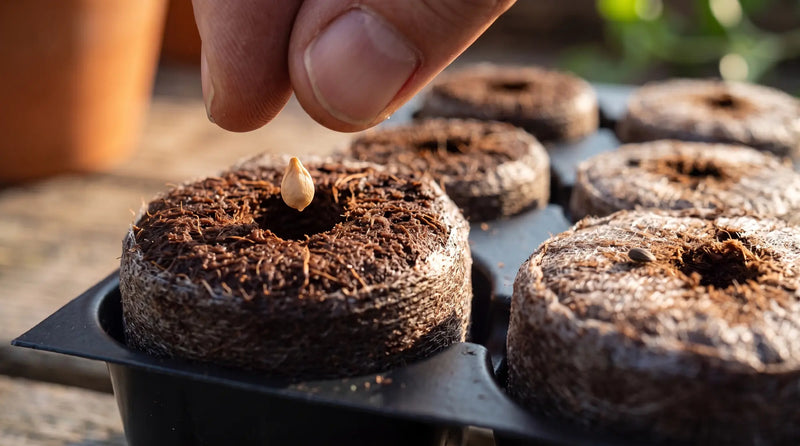
Sow at twice the seed width
The working rule is to bury a seed about twice as deep as it is wide, which puts most tomato and herb seeds a quarter inch down. Very fine seed like oregano is pressed onto the surface and barely covered, because it needs light to trigger germination at all.
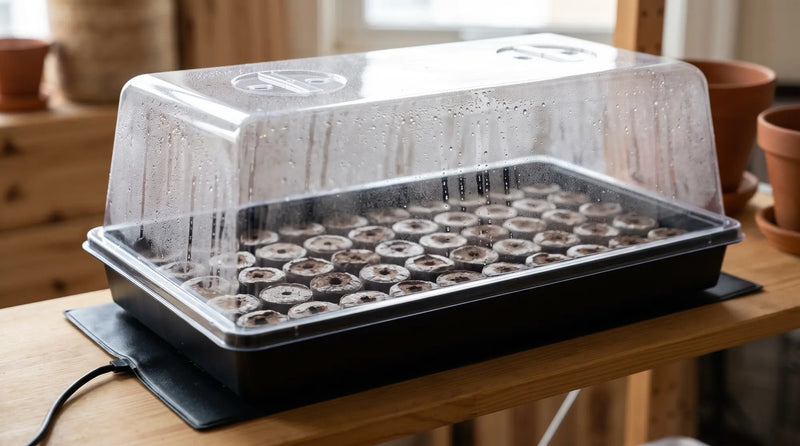
Cover, warm, and leave it alone
Put the dome on, set the tray somewhere that stays between 65 and 75 degrees, and check the moisture daily without disturbing the seeds. A heat mat earns its place here if the room runs cold, since bottom heat is what moves germination from three weeks to one.
Uncover, add light, then pot up
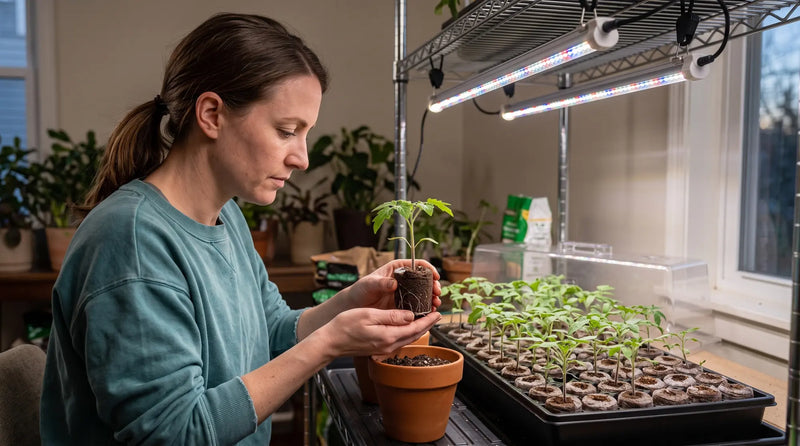
The moment you see green, crack the dome vents and get the tray under bright light. Leave it there until each seedling carries two sets of true leaves, the ones that look like the adult plant rather than the two rounded starter leaves, then move it into its long-term container.
Shop containersFour mistakes account for almost every empty tray.
None of these need new equipment to put right. They are small corrections to depth, timing, and where the tray sits while it waits.

What the first tray actually needs.
A tray, a medium that holds water and air together, and a way to keep the temperature steady. Everything else is convenience, and none of it has to be bought at once.
● Core setupCoco Coin Propagation Tray, 50-Cell
Fifty coco coir plugs, pre-filled and pre-spaced, sized to a standard propagation tray. Depth and spacing are handled before you start, and moisture stays even from one end of the tray to the other.
- Buffered, low-EC coco coir
- Even moisture across all 50 cells
- Lifts out cleanly at transplant
 Everything in one box
Tomato Garden Seed Starting Kit
The whole sequence in a single box: two organic, open-pollinated tomato seed packets, a vented seven-inch humidity dome, an extra-thick propagation tray, and a pre-filled coco coin insert.
- Certified USDA Organic seed
- Vented dome for the uncovering stage
- Tray and insert already matched
 Optional
Seedling Heat Mat
Worth adding when the room runs cold, which is most of the reason a late-winter sowing stalls. Steady bottom heat is the difference between sprouting in one week and waiting for three.
- Even, gentle bottom heat
- Sits under a standard 1020 tray
- Most useful for tomatoes and peppers
Every order comes with real-person grower support. Email a question, and the reply is from a grower who has answered it before.
Five things to remember.
- 01Sow about twice as deep as the seed is wide. Fine seed like oregano sits on the surface and is barely covered.
- 02Wet the medium before sowing, not after, so small seeds stay where you put them.
- 03Warmth sets the pace. Between 65 and 75 degrees, most vegetable and herb seeds sprout in five to ten days.
- 04Light matters nothing before germination and everything the moment green appears. A stretched seedling never fully recovers.
- 05Wait for two full sets of true leaves before potting up, and the transplant will barely register.
Common questions about starting seeds.
If you don't see yours here, write us. A real grower answers within a business day.
Questions or notes? Drop them here.
A real grower replies within a business day.
No comments yet. Be the first.