
Seed Starting Mix vs Potting Soil
A bag of potting soil and a seed starting medium look similar in the hand, and they behave very differently in a tray. The difference comes down to two things: how fine the particles are, and how much stored fertilizer is sitting in them.
The Harvest Company builds its propagation media from buffered coconut coir, which holds water and air at the same time and carries almost no salt. This guide explains what a germinating seed actually needs from the medium around it.

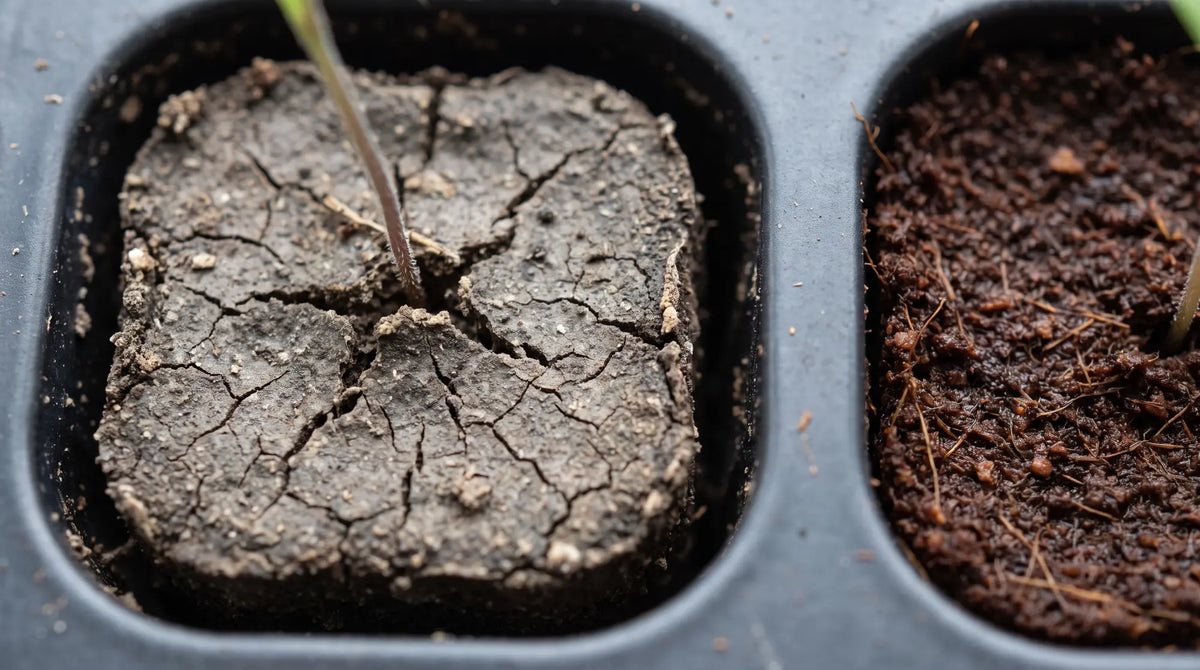
A seed contains everything it needs to reach its first true leaves, which is why a starting medium can be almost nutrient-free without any cost to the seedling. Feeding only becomes relevant once those true leaves open.
Soil dug from a bed compacts hard in a small cell, drains poorly, and brings fungal spores that cause damping off. It is the one medium worth ruling out entirely for indoor seed starting.
What actually separates them.
Both grow plants well. They are built for different stages, and using one where the other belongs is behind a surprising share of failed trays.
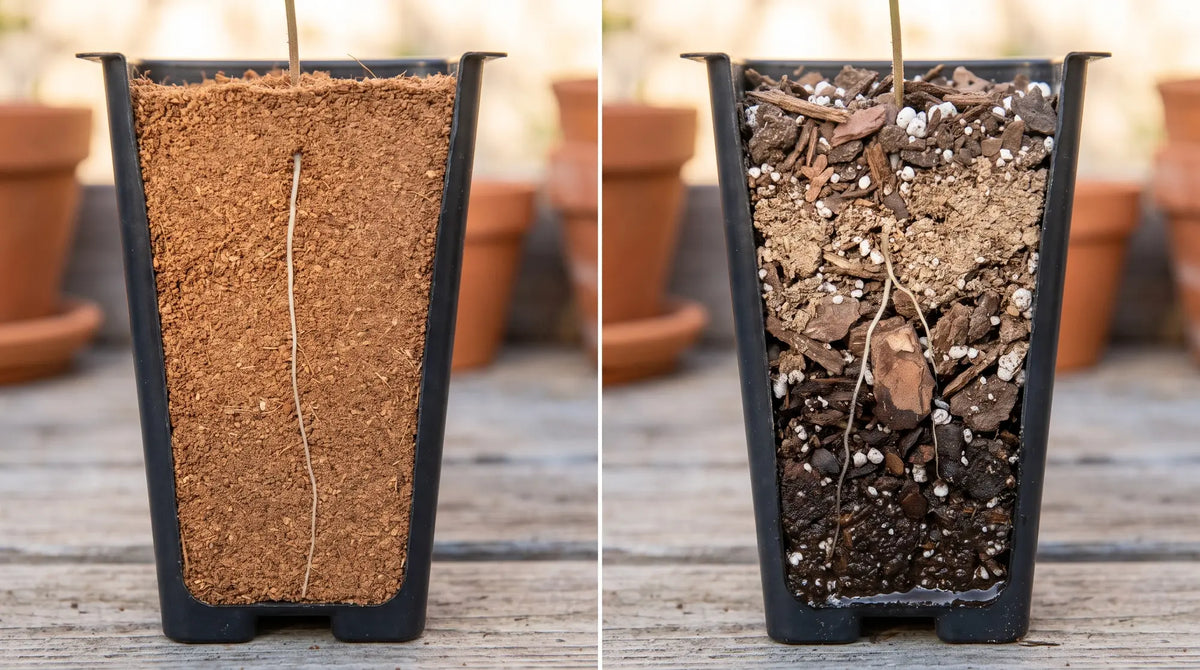
A first root has very little force.
The root that emerges from a seed is fragile and thin, and it makes progress by pushing between particles rather than through them. A fine, even medium gives it a path. A coarse one full of bark chips gives it a maze.
This is why the same seed can sprout reliably in a coir plug and fail in a pot of chunky potting mix. Nothing was wrong with the seed or the watering. The root simply spent its stored energy navigating instead of growing.
Fineness has a limit, though. A medium milled too fine packs down and squeezes out the air that roots need alongside water, which is the failure mode of using sifted garden soil.

Fertilizer is a later problem.
Potting soil is sold pre-charged with fertilizer because a mature plant in a container needs feeding. A germinating seed does not, and the salts that carry those nutrients pull water back out of tender new roots.
The visible result looks like underwatering: seedlings that emerge, then stall with browning root tips and leaf edges. Growers usually respond by watering more, which makes the situation worse rather than better.
A low-salt medium removes the whole question. Buffered coir has already had its natural sodium and potassium exchanged out, so what reaches the root is water and air rather than a background dose of salt.

The handover happens at true leaves.
A seedling runs on its own reserves until the first true leaves open, and from that point it needs an outside source of nutrition. That moment is the natural handover from starting medium to potting mix.
If a seedling has to wait in its cell past that point, a very dilute liquid feed at half the labeled strength bridges the gap without the salt load of a full-strength potting soil.
Potting up into a richer mix at two full sets of true leaves gives the plant the fertilizer it now wants, and the root system is robust enough by then to handle it comfortably.

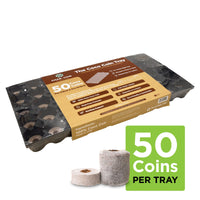
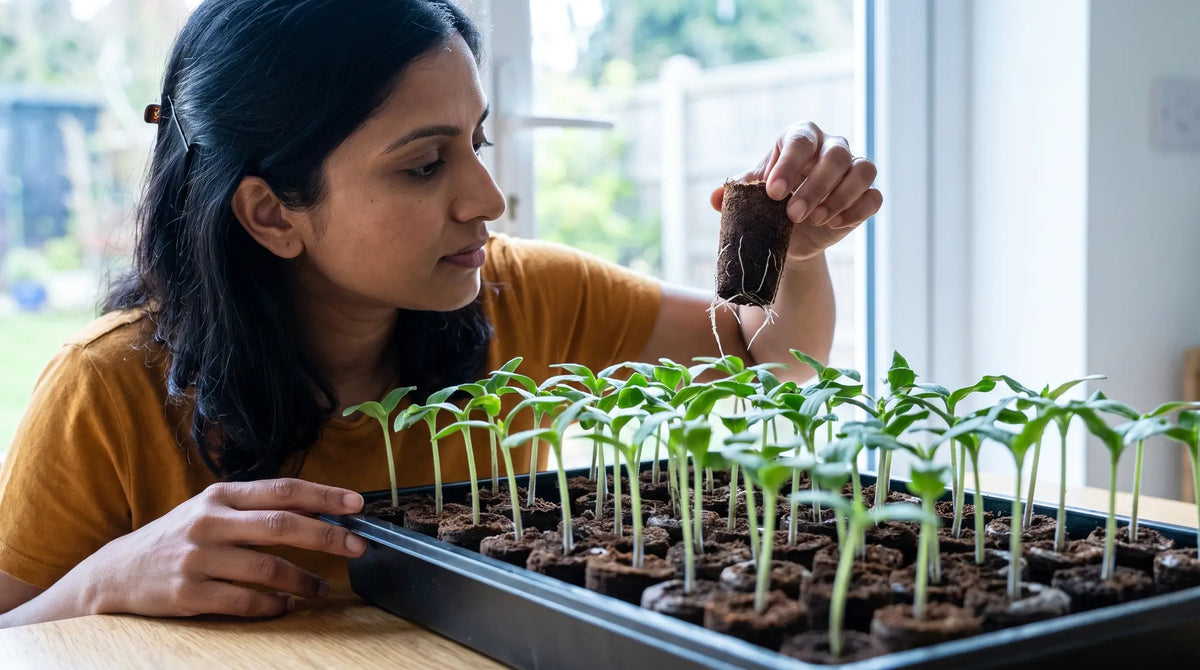
Fifty cells of buffered coco coir at the right texture and almost no salt, so depth, spacing, and moisture are all handled before the seed goes in.

Compressed coir coins that expand in water, useful when you already own a tray or want to sow a handful of cells rather than a full flat.
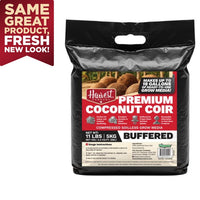
Triple-washed and buffered, so it holds water and oxygen together once the seedling has moved into its long-term container.
Five things to remember.
- 01A seed carries its own food to the first true leaves, so a starting medium needs almost no nutrition.
- 02Potting soil is pre-fertilized, and those salts pull water back out of fragile new roots.
- 03Fine, even texture lets a first root move without spending energy navigating around bark and chunks.
- 04Garden soil compacts in a cell and carries damping-off spores, so it is worth ruling out entirely.
- 05Change over to a richer mix at two full sets of true leaves, not before.
Questions or notes? Drop them here.
A real grower replies within a business day.
No comments yet. Be the first.