Grow Guides · Troubleshooting

Why Seeds Are Not Germinating

August 28, 2026· 7 min read· 0 comments

An empty tray gives you almost nothing to work with, which is what makes this the most frustrating stage of growing. Everything happens under the surface, so the useful move is to work backward through a short list of causes rather than guess.

Most bare trays trace to temperature, depth, or moisture, and all three are correctable within a day. The Harvest Company built its propagation kits around those three variables so fewer of them can go wrong at once.

Quick answer
Seeds usually fail to germinate for one of five reasons. The medium is too cold, the seed was sown too deep, or the medium dried out mid-germination. The other two are waterlogged medium that rots the seed, and seed that is simply too old. Check temperature first, because it is the most common cause and the easiest to correct. Most vegetable and herb seeds need 65 to 75 degrees and five to ten days.
Why Seeds Are Not Germinating
Wait longer than you think

Most growers re-sow too early. Oregano and parsley routinely take fourteen to twenty-one days, and a cold room can double any figure on the packet, so a bare tray at day ten is often just slow rather than failed.

Dig one up before re-sowing

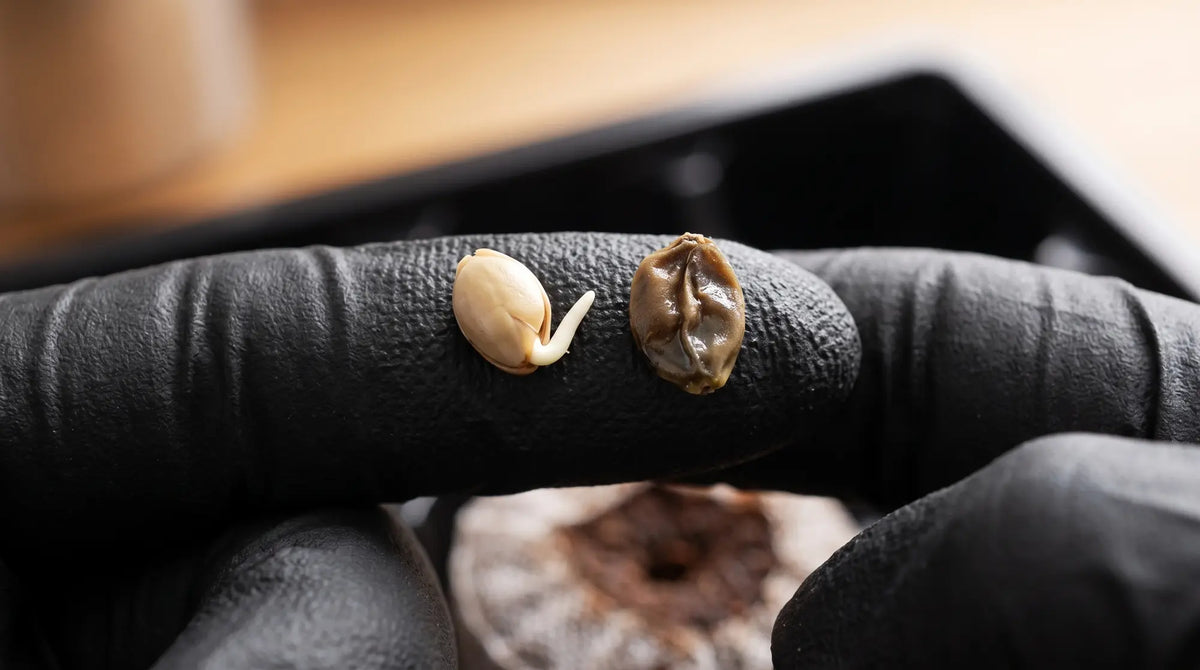
Lift a single seed with a toothpick and look at it. A swollen seed with a white root tip is working. A hard dry seed never started. A soft dark one rotted. That one look answers most of this article.

Symptom checker

What the tray is telling you.

Match what you can see, or what you find when you lift one seed, against the rows below. Each cause has a different correction, and guessing wrong costs another two weeks.
Symptom
Likely cause
Quick fix
Severity
Nothing at all after 14 days, seeds still hard and dry
The medium never held enough moisture to trigger germination.
Re-wet thoroughly until the medium holds together when squeezed, then keep the dome on.
Common
Nothing after 14 days, seeds swollen but no root
The medium is too cold, so germination has slowed rather than stopped.
Move somewhere warmer or add bottom heat, and give it another week before judging.
Most common
Seeds soft, dark, or slimy when lifted
The medium stayed waterlogged and the seed rotted before it could sprout.
Re-sow into fresh medium that is damp rather than wet, and vent the dome daily.
Serious
A few came up, most did not
Uneven sowing depth, or seed that is several years past its packing date.
Re-sow the empty cells at a consistent depth and check the packet year.
Common
Sprouted, then collapsed at the stem line
Damping off, a fungal collapse from wet, still, contaminated medium.
Start again in clean medium, vent for airflow, and water less at the surface.
Serious
Very fine seed never appeared
It was buried, and fine seed needs light on the surface to germinate.
Press oregano and similar fine seed onto the surface without covering it.
Underrated
Slow or actually failed

How to tell the difference.

These two situations look identical from above and call for opposite responses. Lifting one seed separates them in about ten seconds.
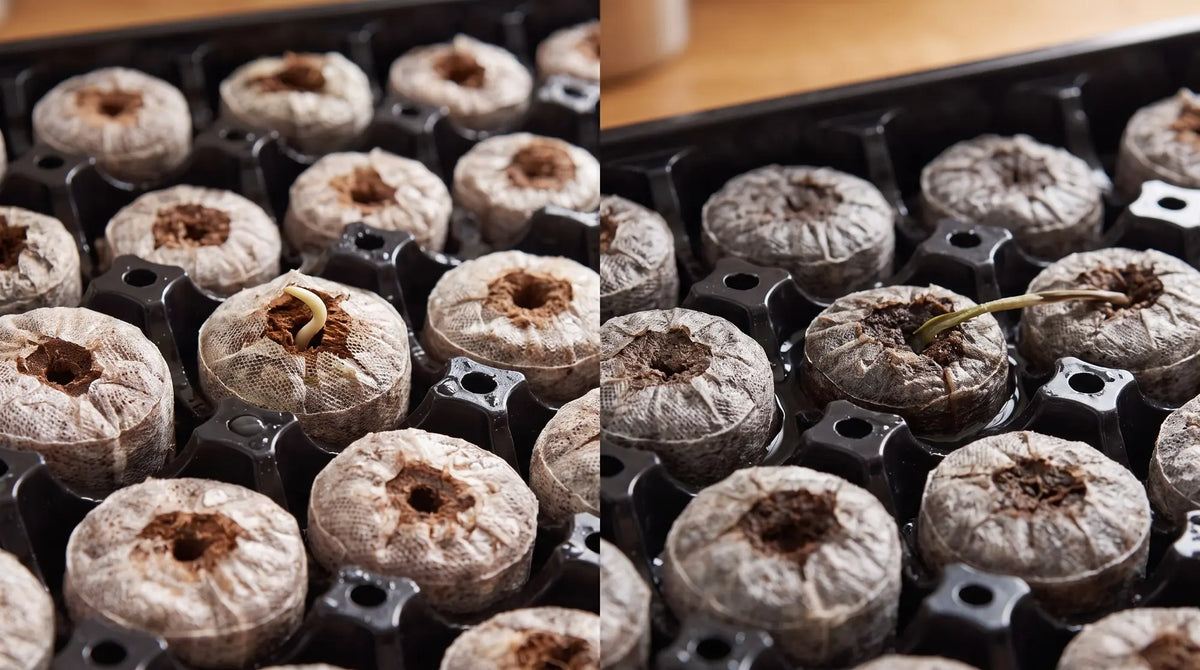
Still working
Genuinely failed
The seed itself
Swollen and firm, sometimes with a white tip.
Hard and dry, or soft and dark.
The medium
Evenly damp all the way through.
Dry through the middle, or sitting in water.
Time elapsed
Within twice the packet estimate.
Well past twice the packet estimate.
Smell
Clean and earthy.
Sour or musty at the surface.
What to do
Add warmth, keep the moisture steady, wait.
Re-sow into fresh damp medium.
What sets it up

Four habits behind most empty trays.

Each one is a small change at sowing time, and each removes a cause you would otherwise have to diagnose two weeks later.

Common beginner mistakes
No.
Mistake
What goes wrong
The fix
Severity
01
Sowing into a cold room
✕Germination slows to a crawl or stops entirely below about 60 degrees.
✓Keep the tray between 65 and 75 degrees, using bottom heat if needed.
Most common
02
Watering from the top after sowing
✕A heavy pour drives small seed deeper than intended and washes cells uneven.
✓Wet the medium fully before sowing, then mist rather than pour.
Common
03
Sealing the dome completely
✕Still, saturated air is the condition damping off needs to take hold.
✓Crack the vents daily, and open them fully once sprouts appear.
Common
04
Re-sowing on day seven
✕Slow crops get discarded while they are still perfectly viable.
✓Give any tray twice the packet estimate before deciding it has failed.
Underrated
Key takeaways

Five things to remember.

  1. 01Lift one seed and look at it. Swollen means working, hard and dry means never started, soft and dark means rotted.
  2. 02Cold medium is the most common cause, and warmth is the easiest variable to correct.
  3. 03Give any tray twice the packet estimate before deciding it has failed.
  4. 04Fine seed such as oregano needs light and should sit on the surface rather than be buried.
  5. 05Wet the medium before sowing, then mist. Pouring water on afterward buries small seed.
Discussion

Questions or notes? Drop them here.

A real grower replies within a business day.

No comments yet. Be the first.

FAQ

Common questions about failed germination.

Give the tray twice the number of days printed on the packet. For most tomatoes and basil that means about two weeks, and for oregano or parsley it can reasonably stretch to three.
Most vegetable and herb seed wants 65 to 75 degrees at the medium, not at the thermostat. A tray on a cold floor or against a winter window can easily sit ten degrees below room temperature.
Yes, and it is common in medium that stays saturated. A rotted seed lifts out soft and dark, and the correction is fresh medium that is damp rather than wet, plus daily venting.
Often, at a lower rate. Tomato seed stays viable for several years when stored cool and dry, while parsley and onion family seed drops off quickly after the first year.
That is damping off, a fungal collapse at the stem line caused by wet, still, contaminated medium. It cannot be reversed once it starts, so the answer is clean medium and better airflow next time.
It helps for larger, hard-coated seed and for parsley, which is slow to take up water. Fine seed does not need it and becomes difficult to handle and sow evenly once wet.
The promise

Grow better. Eat better. Every day.

Your partner in every harvest. Get the temperature and the moisture steady, and most trays come up on their own.

Posted August 28, 2026 · Updated October 5, 2026 · 7 min read