
Hardening Off Seedlings
Indoor light is gentle, indoor air is still, and indoor temperature barely moves. Outside is none of those things. Hardening off is the week that closes the gap, and skipping it undoes weeks of careful indoor growing in a single afternoon.
The change is physical. Leaves thicken their waxy layer and stems build supporting tissue, and both take days to finish. Seedlings raised from our kits start indoors, so this week is the bridge to the garden.

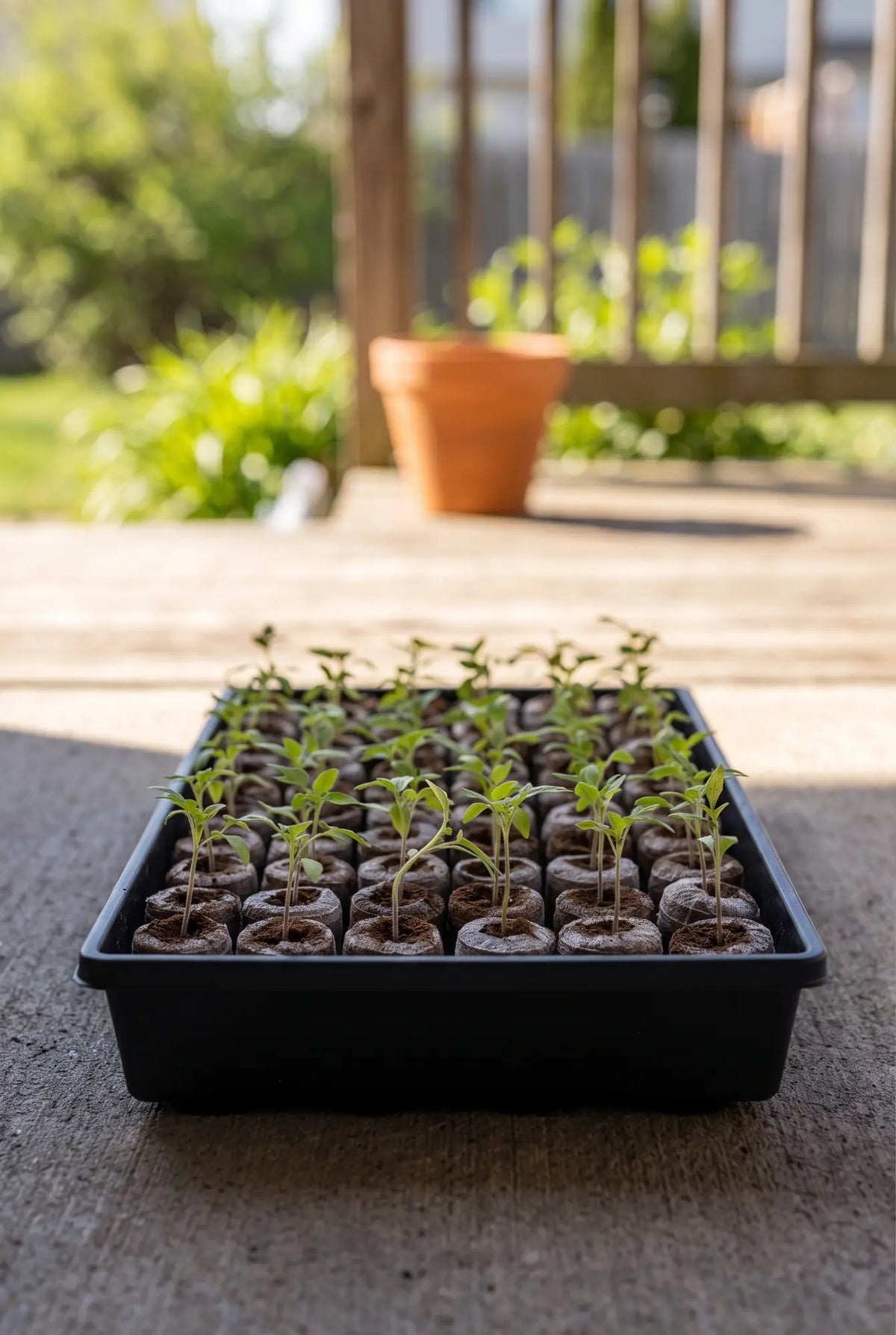
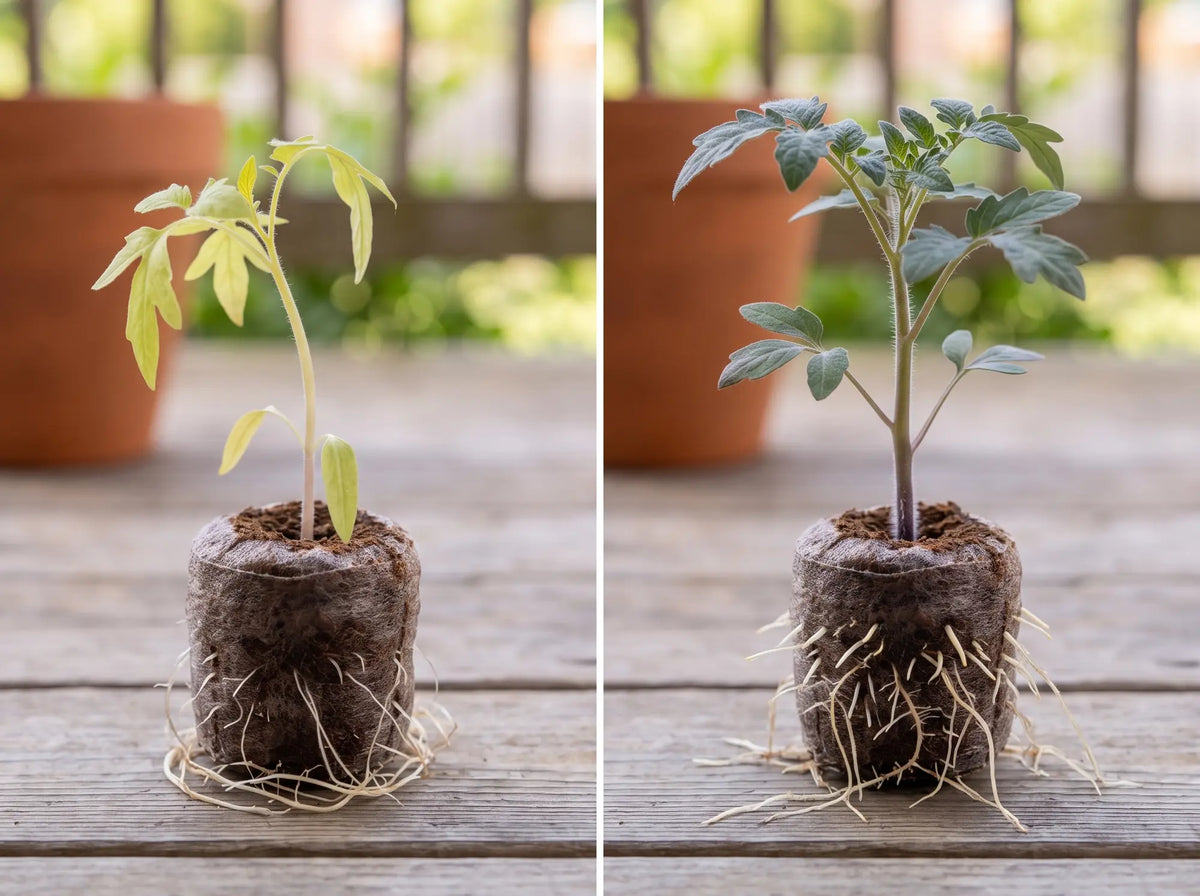
Full outdoor shade is still many times brighter than the brightest windowsill, so day one in shade is already a real step up. Direct sun before about day four is what causes the white, bleached patches growers mistake for disease.
Still indoor air means stems have never had to hold anything up. A few hours of gentle breeze each day builds the supporting tissue that stops a transplanted seedling folding over in the first storm.
From windowsill to garden in a week.
Treat the timings as a guide: cool overcast weather lets you move faster, and a hot bright week asks you to slow down. Watch the plant, not the clock.
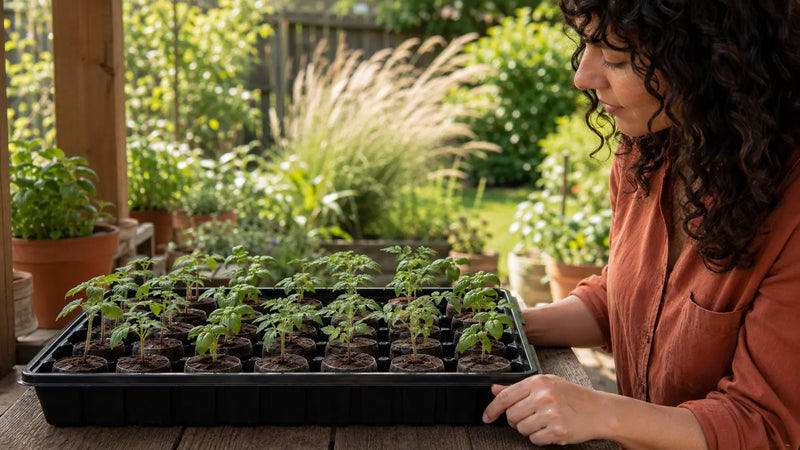
One to two hours, full shade
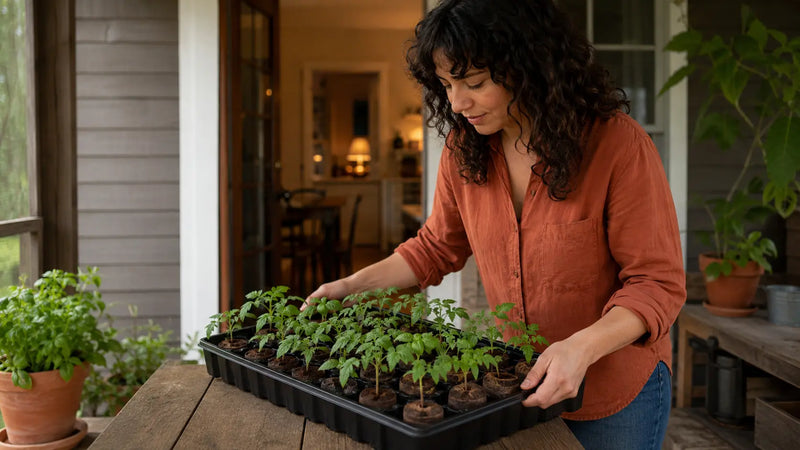
Set the tray outside in complete shade, sheltered from wind, for an hour on the first day and two on the second. Bring it back in well before evening. Even this much is a significant increase in light over any indoor position.
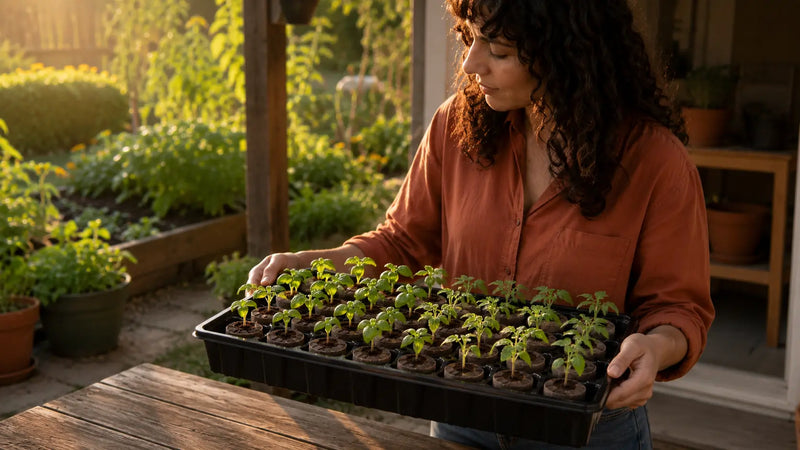
Three hours, shade with some breeze
Extend the stay and choose a spot with gentle air movement. Expect the seedlings to look slightly limp by the end, which is normal at this stage and resolves overnight indoors.
Add direct morning sun
Give one to two hours of early morning sun, then move the tray back into shade for the rest of the session. Morning sun is far gentler than afternoon sun, which is why it comes first.

Most of the day outside
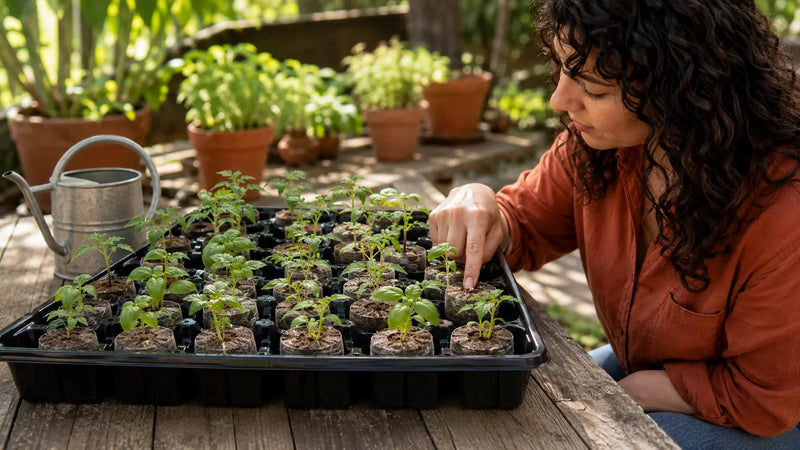
Leave the seedlings out from morning until late afternoon, including several hours of direct sun. Watch for wilting at midday and water if the medium is drying faster than it did indoors, which it will.
First night outside, then plant
If the overnight forecast stays comfortably above 50 degrees, leave the tray out overnight. A seedling that comes through that night unbothered is ready to go into its permanent bed or container.
Shop containersBefore and after the week.
The plant is not adjusting psychologically. Real structural changes happen in the leaves and stems, and they take days to build.
Four ways the week gets undone.
Impatience at the end of a long indoor stretch causes all four, which is understandable and still costly.

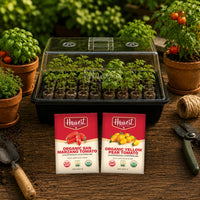
Two organic, open-pollinated tomatoes with the tray and dome to raise them indoors, which is exactly the situation this hardening-off week is written for.
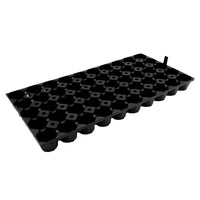
A rigid insert that lifts in and out daily without flexing, which helps when the same tray is moved outdoors and back in for seven days running.
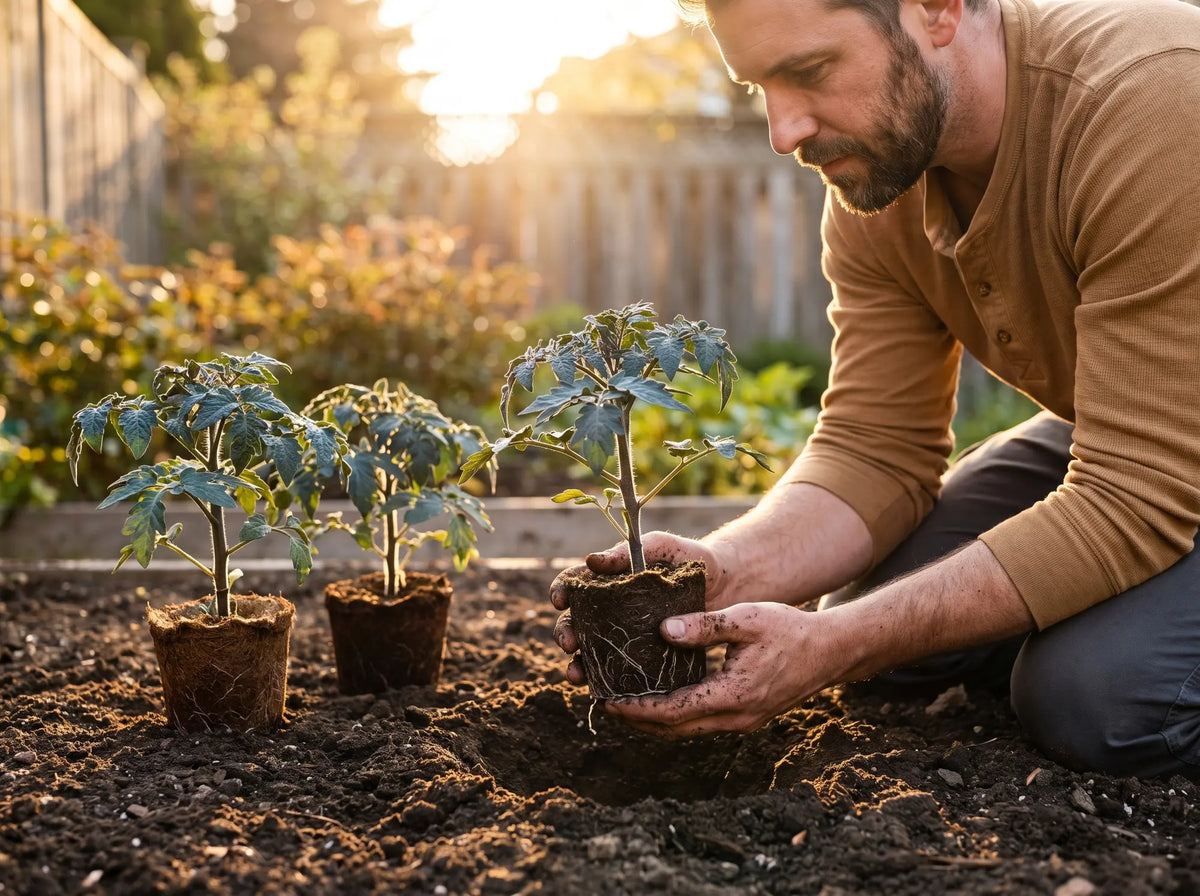
The week outside, in brief.
- 01Hardening off builds real structure in leaves and stems, and that takes days rather than hours.
- 02Start in full shade. Outdoor shade is already far brighter than any windowsill.
- 03Hold direct sun back until about day four, and favor morning sun over afternoon.
- 04Wind counts as much as light, because indoor stems have never had to hold anything up.
- 05Start tomatoes and peppers about a week after your last frost date, and check the medium every session.
Questions or notes? Drop them here.
A real grower replies within a business day.
No comments yet. Be the first.