Grow Guides · Preserving the Harvest

How to Store Fresh Herbs and Vegetables

October 15, 2026· 7 min read· 0 comments

Fresh produce from the garden is at its best the day it is picked, and how you store it in the days after decides how much of that quality reaches the table. The Harvest Company treats storage as part of the harvest, because most problems on the counter or in the refrigerator have a simple cause you can change.

Moisture, temperature, and airflow explain most of what goes wrong. Looking at how long the change has taken and which of the three is off tells you what to adjust.

Quick answer
Most storage problems come from too much or too little moisture, the wrong temperature, or crowded air. Keep leafy greens and soft herbs cool, dry, and loosely covered, keep tomatoes and basil at room temperature, and store potatoes, onions, and garlic in a cool, dark, airy spot. Throw out anything slimy, moldy, or off-smelling.
How to Store Fresh Herbs and Vegetables
Dry first, store second

Most produce stores better when it goes into the container dry. Extra water on leaves and stems is the usual start of slime and mold, so shake it off, blot it, and wash just before you cook.

Slimy or fuzzy means throw it out

Soft produce that has turned slimy, grown mold, or picked up an off smell is not worth the risk. Discard it and check the items stored beside it.

Counter or refrigerator

Not everything belongs in the cold.

Some garden crops keep best at room temperature, and some want the refrigerator. Match the crop to the column.

Counter or cool pantry
Refrigerator
Examples
Tomatoes and basil on the counter, and potatoes, onions, garlic, and winter squash in a cool, dark, airy spot.
Leafy greens, soft herbs like parsley and cilantro, carrots, beans, and broccoli.
Why
Cold dulls the flavor and texture of tomatoes and can blacken basil leaves.
Cool air slows moisture loss and wilting in tender, high-water crops.
Moisture
Keep it dry, and give the air room to move.
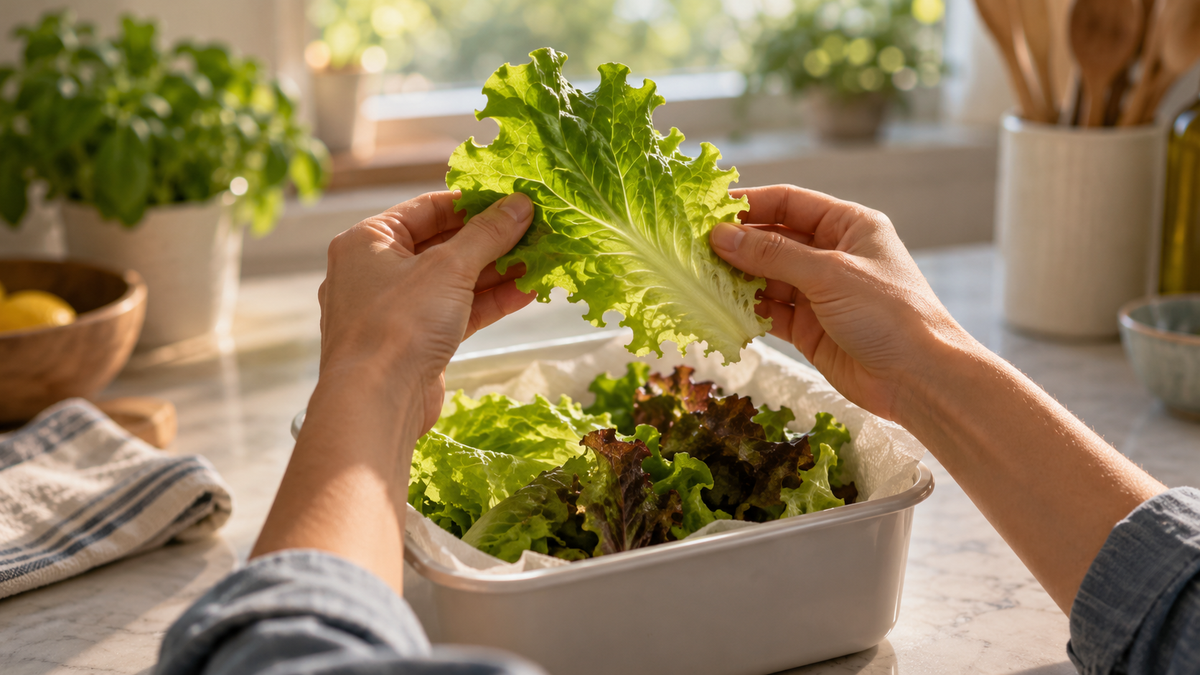
Keep leaves dry but not parched, with a paper towel to absorb extra moisture.
Container
An open bowl, a basket, or a jar of water for basil stems.
A loosely closed container or bag with some room for air.
Watch for
Sprouting, soft spots, and ripening too quickly.
Slime, limp leaves, and condensation inside the container.
Symptom checker

I see this in my stored produce.

Match the sign to the most likely cause and the first thing to change. Work from the highest-severity match down.
Symptom
Likely cause
Quick fix
Severity
Slimy leaves or stems
Trapped moisture and warmth let bacteria multiply on the surface, which is common when wet greens or herbs are sealed in a bag.
Throw out the slimy pieces, then store the rest dry in a loosely closed container lined with a paper towel.
High
Fuzzy mold or dark soft spots
Moisture, bruising, and crowded air give mold the opening it needs, and it spreads quickly between touching pieces.
Discard moldy soft produce, check its neighbors, and give the remaining produce more space and drier storage.
High
Limp, wilted leaves and herbs
Tender leaves lose water faster than the stem can supply it once they are cut, especially in warm or dry air.
Trim the stem ends, stand soft herbs in a jar of water, and keep leafy greens cool and loosely covered.
Medium
Basil turning black in the refrigerator
Basil is sensitive to cold, and the chill damages the leaves within a day or two.
Keep basil on the counter in a jar of water, out of direct sun, and use it soon.
Medium
Potatoes, onions, or garlic sprouting
Warmth, light, and humidity tell stored bulbs and tubers that it is time to grow again.
Move them to a cool, dark, well-ventilated spot, and store potatoes apart from onions.
Medium
Tomatoes turning mealy or bland
Cold storage dulls the flavor and softens the texture of a tomato that was not yet ready for it.
Keep tomatoes on the counter out of direct sun, and refrigerate only fully ripe ones you cannot use in time.
Low
Why stored produce spoils early

Three habits behind a short shelf life.

Each one is a small adjustment, not new gear.

Common beginner mistakes
No.
Mistake
What goes wrong
The fix
Severity
01
Washing everything before storing it
✕Rinsing a whole harvest and putting it away damp, which leaves moisture on leaves and stems where slime and mold can start.
✓Store produce dry and wash only what you plan to use, right before you use it.
Most common
02
Putting every crop in the refrigerator
✕Chilling tomatoes and basil along with the rest, which dulls the tomatoes and can blacken the basil.
✓Keep tomatoes and basil on the counter, and give potatoes, onions, and garlic a cool, dark spot.
Common
03
Packing containers too tightly
✕Crowding produce into a bag or crisper so air cannot move, which traps moisture and spreads spoilage between touching pieces.
✓Leave some room, check the container every few days, and use or freeze what is ahead of the rest.
Underrated
Key takeaways

Five things to remember.

  1. 01Moisture, temperature, and airflow explain most storage problems, so check those three first.
  2. 02Store produce dry and wash only what you will use, right before you use it.
  3. 03Keep tomatoes and basil at room temperature, and keep leafy greens and soft herbs cool and loosely covered.
  4. 04Store potatoes, onions, and garlic in a cool, dark, well-ventilated spot to slow sprouting.
  5. 05Discard slimy, moldy, or off-smelling produce, and freeze or dry what you cannot use in time.
Discussion

Questions or notes? Drop them here.

A real grower replies within a business day.

No comments yet. Be the first.

FAQ

Common questions about storing fresh produce.

It is usually better to wait. Extra water on leaves and stems encourages slime and mold, so shake off the dirt, store the produce dry, and wash it right before you use it.
Not until they are fully ripe. Cold dulls the flavor and softens the texture, so keep tomatoes on the counter out of direct sun, and refrigerate only ripe ones you cannot use in time.
Trim the stem ends and stand soft herbs like parsley and cilantro in a jar of water in the refrigerator, loosely covered. Keep basil on the counter, since the cold can blacken its leaves.
It is better to keep them apart. Both like a cool, dark, airy spot, but storing them side by side can speed up sprouting and spoilage in one or both.
Freeze it, dry it, or vacuum seal it for the freezer before it starts to turn. Our guides on freezing vegetables and drying herbs walk through each method step by step.
The promise

Grow better. Eat better. Every day.

Your partner in every harvest. Store what you grew with care, and more of it reaches the table.

Posted October 15, 2026 · Updated October 15, 2026 · 7 min read