
Trellis Netting for Climbing Vegetables
Climbing vegetables reach for anything they can grip, and a taut sheet of netting gives them a ladder that keeps fruit clean and leaves open to the air. Below, the two netting materials we sell are compared, followed by a walk through the setup from posts to first vines.
Netting can stand upright between two posts for vines, or lie flat above a bed for plants that need a lift. The same sheet does both jobs when you plan the install.

Young climbers do not always find the mesh on their own. Guide the first few stems onto the netting by hand, and they usually take hold from there.
Netting carries vines and light fruit well, but heavier fruit such as melons often needs extra support, such as a sling, and stronger posts at each end.
Soft polyester, or heavy-duty plastic.
These come in a square mesh you can reach through, and the crop and the length of the run decide the better fit.
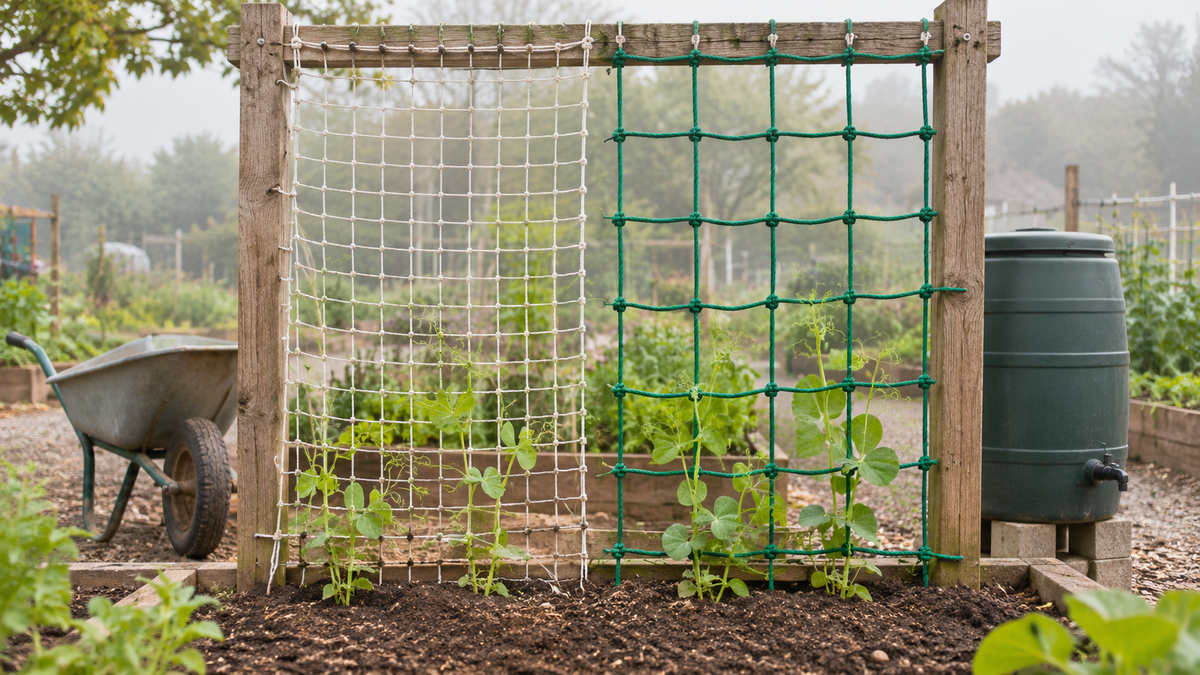
From choosing a sheet to guiding the vines.
Set it up once and check it through the season. Taut netting does most of the work.
Match the width to the plant
Pick a width that reaches the height your crop will climb, and a length that spans the row. Widths such as 4 ft, 5 ft, and 6.5 ft suit different crops.
Choose the mesh size
A 6 in mesh leaves room to reach through at harvest, and a 3.5 in mesh gives smaller vines more places to grip. Pick the one that fits your hand and your crop.
Set a sturdy post at each end
Drive posts or stakes deep enough to stay upright when the sheet is loaded with vines and wind catches it. Brace the end posts if the run is long.
Hang the netting taut
Fasten the top edge to the posts and pull it tight. Slack netting lets plants lean and drags posts over, so smooth out any sag before you plant.
Guide young vines onto the mesh
Place the first stems on the netting by hand and secure them with a soft tie if needed. Peas, beans, and cucumbers then climb on their own.
Review the netting through the season
Walk the row now and then, tuck stray stems back in, and add a tie where a heavy stem pulls away. Reach through the mesh at harvest to pick without tearing vines.
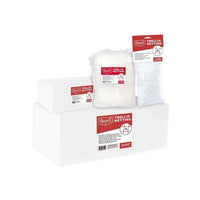
Heavy-duty plastic netting, 4 ft wide with 6 in reach-through mesh squares, in green or white. It works for both vertical and horizontal trellising and is made to keep stems, vines, and foliage supported.
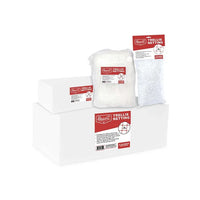
Heavy-duty plastic netting in white, 6.5 ft wide with 6 in reach-through mesh squares. It suits vertical and horizontal trellising for vines and flowering plants.
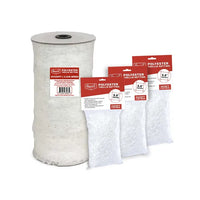
A soft, non-abrasive polyester netting, 5 ft wide with 3.5 in mesh squares, which helps limit damage to your crop. It works for both vertical and horizontal trellising.

A twist tie dispenser with a built-in metal cutter for clean cuts without scissors. It is made for securing plants, vegetables, and vines to stakes and trellises, and comes in 164 ft and 328 ft rolls.
What leaves a sheet sagging.
These show up in the install, before the vines reach the mesh.


Netting rules worth keeping.
- 01Choose a width that reaches the height your crop will climb.
- 02A 6 in mesh is easy to reach through, and a 3.5 in mesh gives small vines more to grip.
- 03Set a sturdy post at each end and stretch the netting taut.
- 04Guide young vines onto the mesh by hand and add a soft tie where needed.
- 05Support heavy fruit separately, since netting alone may not carry it.
Questions or notes? Drop them here.
A real grower replies within a business day.
No comments yet. Be the first.