
Staking Plants: When and How
A stake is one of the simplest supports in the garden, and it works best when it goes in early and matches the plant it holds. That means knowing which plants gain the most from a stake, and how to place and tie it.
Tall, top-heavy, and fruit-laden plants lean first, usually after wind or a heavy watering. A stake placed ahead of that moment keeps the stem upright and the roots undisturbed.

Pushing a stake in beside an established plant can pierce roots. Placing it at transplant time, or well off to one side of an older plant, keeps the root system intact.
A plant carrying new fruit or a tall flower spike catches wind like a sail. A stake spreads that load, so the stem bends less where it meets the soil.
A stake holds one plant. A cage surrounds it.
Each keeps a plant upright, and the plant's shape and your garden layout point to the better one.
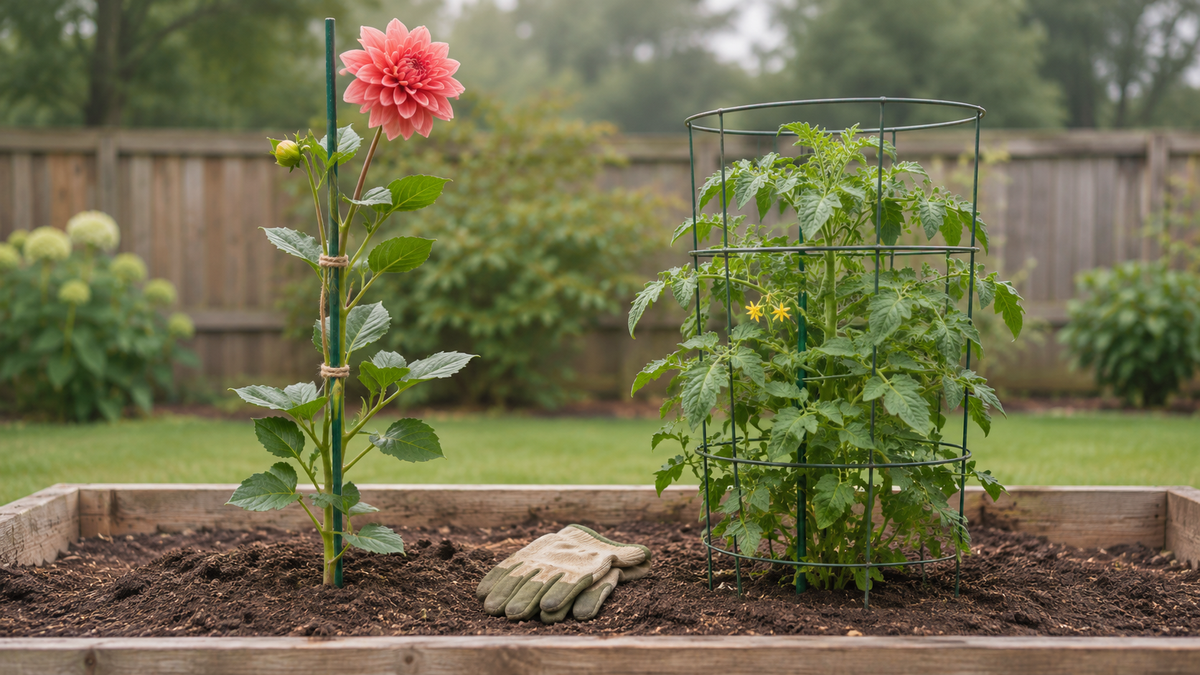
From choosing a stake to the final tie.
The stake you place early is the one that holds.
Pick the plants that need one
Look for tall growers, plants that carry heavy fruit or flowers, and anything in a windy spot. Peppers, eggplant, tall flowers, and young trees are common candidates.
Match the stake to the plant
Choose a stake that will stand above the plant's mature height once part of it is below ground, and thick enough that it does not bend under the plant's weight.
Set it at planting time
Drive the stake in a few inches from the stem before or just after you plant, so you do not have to push it through established roots later.
Push it down until it stands firm
Sink the stake deep enough that it holds steady when the plant leans on it. Many growers bury a foot or more of it, and more in loose or sandy soil.
Tie loosely with a soft tie
Loop the tie around the stake and the stem in a figure eight, with the crossing between the two. Leave a little slack so the stem can grow without being pinched.
Add ties as the plant grows
Add a tie every foot or so as the plant gains height, and check the older ones after storms. Ease off any tie that is starting to bite into the stem.
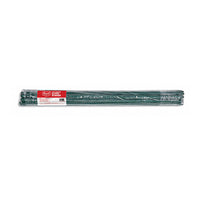
A steel-core stake, 5/16 in across, with a protective plastic coating that resists weathering, rust, mold, and deterioration. Raised spurs help keep ties from sliding, and it suits indoor and outdoor growing.
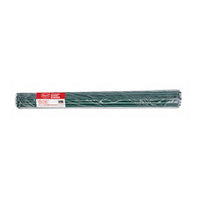
A plastic-coated steel stake, 7/16 in across, made for young trees, flowering plants, and heavy crops. Raised spurs along the stake help keep plant ties, strings, and tapes from sliding.

A soft foam-coated wire with a flexible core, made to secure stems to stakes without cutting into them. It is UV resistant, reusable across seasons, and easy to bend, twist, and cut to length.
What undoes a good stake.
Timing, stake size, and the way the tie is made explain most failures.

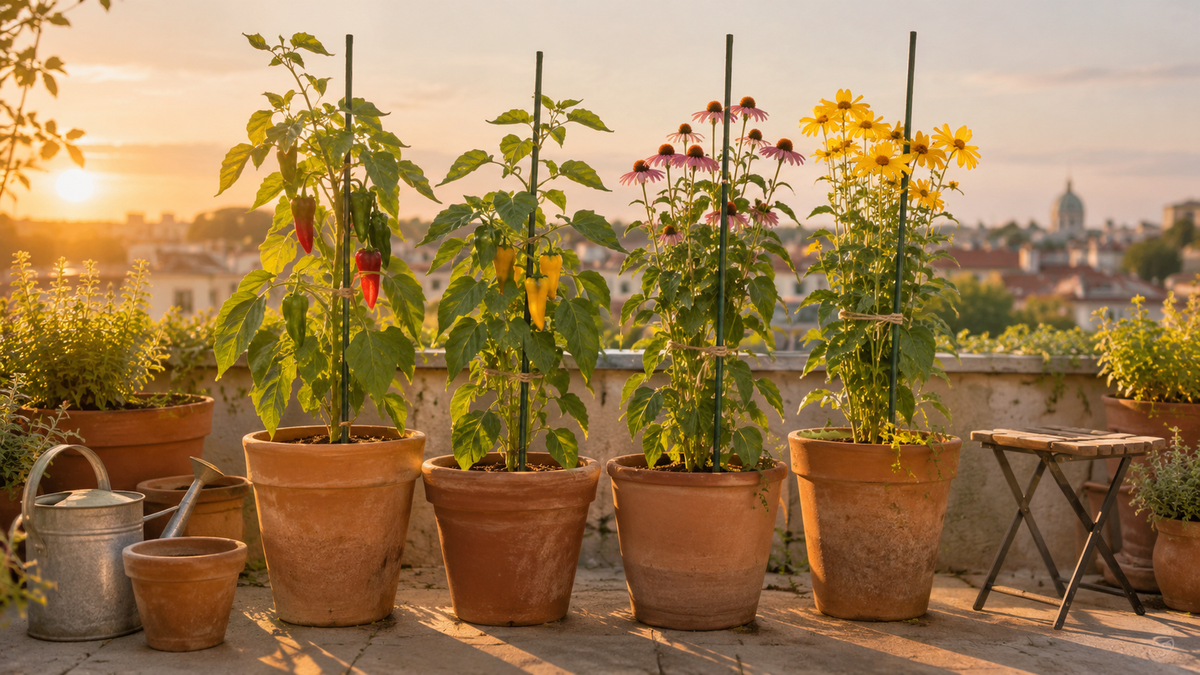
Staking in a few lines.
- 01Stake tall plants, heavy fruit bearers, and anything in a windy spot.
- 02Place the stake at planting time, a few inches from the stem.
- 03Match the stake's length and thickness to the plant's mature size.
- 04Tie loosely with a soft tie so the stem can thicken.
- 05Add ties as the plant grows and check them after storms.
Questions or notes? Drop them here.
A real grower replies within a business day.
No comments yet. Be the first.