
How to Trellis Tomatoes
Tomato vines that climb a support keep their fruit off the soil and their leaves open to air and light. The plan is to pick a support, set it at planting time, and tie the vines as they grow.
Vining tomatoes keep adding height all season, so the support you set at planting is the one you will lean on at harvest. A little planning in spring saves a tangle in July.

Setting a stake or trellis at transplant time means you never push anything through a root system that has already spread. Many growers place the support, then plant beside it.
Vining varieties, often labeled indeterminate, keep growing and setting fruit until frost. Compact varieties, often labeled determinate, stay shorter and usually need less height.
A single stake, or a netting panel.
The number of plants and the space you have decide which one fits.
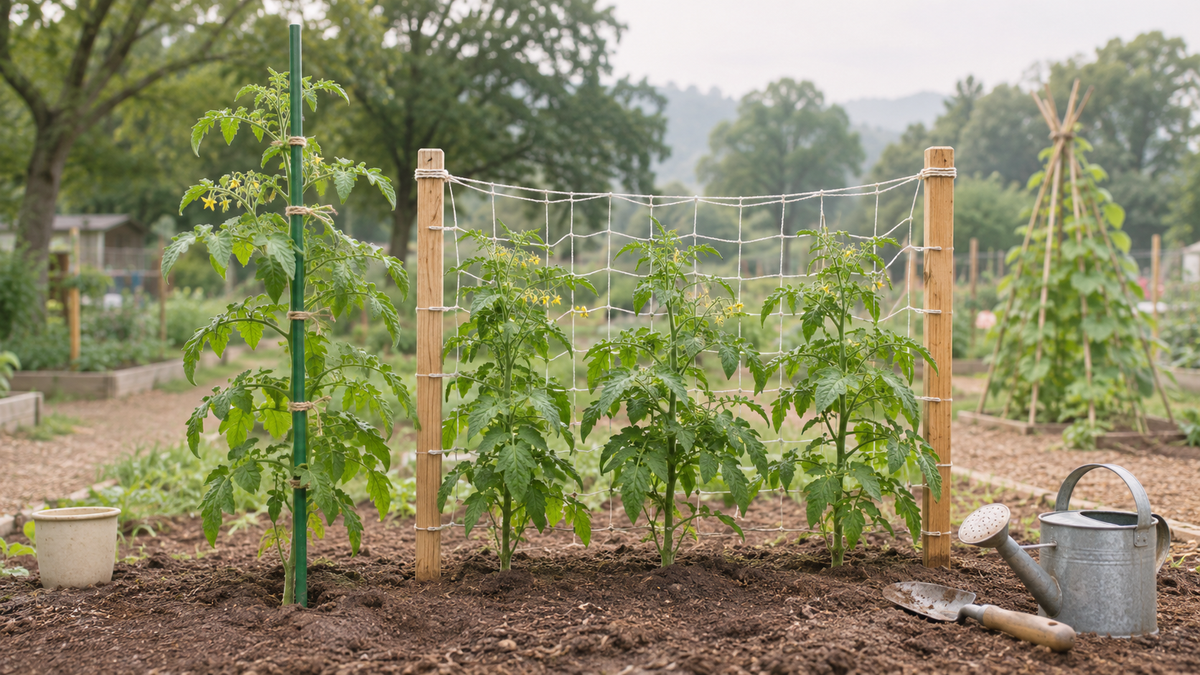
From transplant day to the last picking.
Early support does most of the work, so the first steps happen on transplant day.
Match the support to the variety
Check your seed packet or plant tag for the growth habit. Vining plants need a tall stake or a trellis, while compact plants often do well with a short stake or a cage.
Set the support before the plant
Drive the stake or post into the ground a few inches from where the stem will go, pushing it down far enough to stay steady when the plant is heavy with fruit.
Transplant beside it
Set the seedling next to the support and water it in. Placing the support first protects the young roots from being pierced later.
Tie the main stem with a soft tie
Make a loose loop or a figure eight between the stem and the support, with the crossing between them so the stem never rubs the stake. Leave room for the stem to thicken.
Add a tie as the plant grows
Many growers add a new tie every foot or so, placing it just below a leaf stem or fruit cluster so the support carries the weight and the stem does not.
Look over the ties after wind and rain
Walk the row after a storm and after each growth spurt. Loosen any tie that has begun to press into the stem, and retie anything that has slipped.
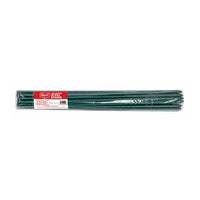
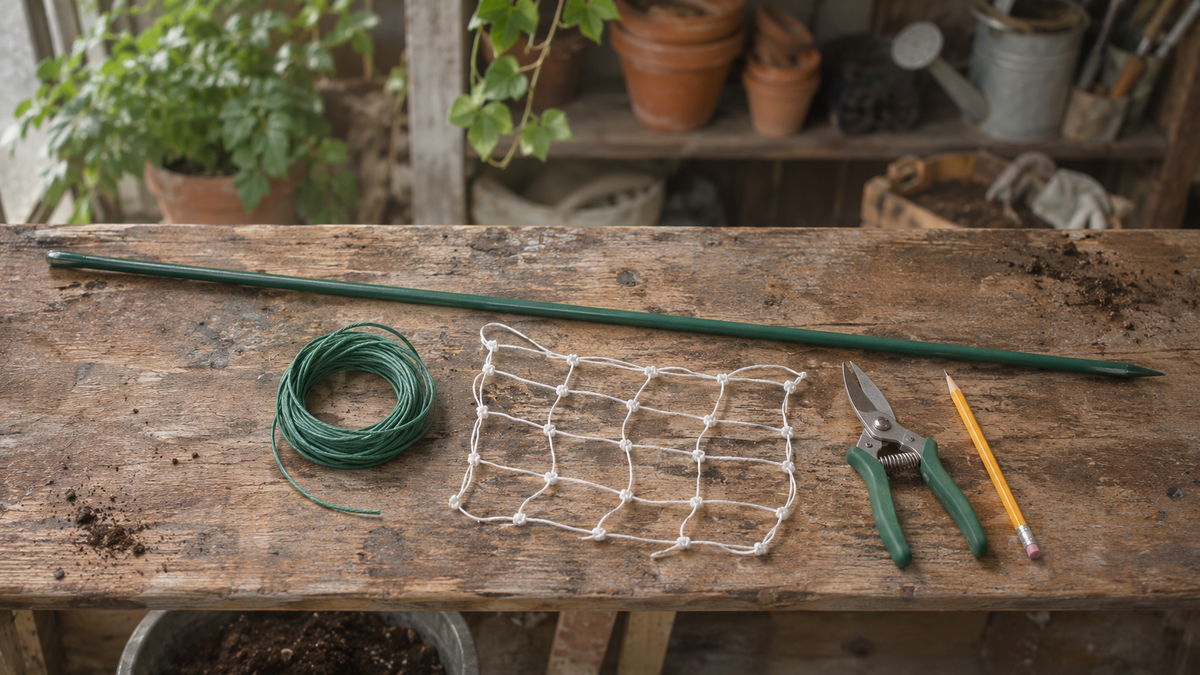
A plastic-coated steel stake, 8 ft long and 3/4 in across, made to support young trees, flowering plants, and heavy crops. The coating resists weathering, rust, mold, and deterioration, and raised spurs help keep ties from sliding.

A soft foam-coated wire that is UV resistant and made to secure plant stems to stakes, trellis netting, and cages without cutting into delicate stems. It is reusable across seasons and comes in 16, 50, and 250 ft lengths.

A soft, non-abrasive polyester netting, 5 ft wide with 6 in mesh squares, which helps limit damage to your crop. It works for both vertical and horizontal trellising.
How a tomato support turns into a tangle.
Timing of the support and placement of the ties decide most of the outcome.

Holding a tomato up, in short.
- 01Set the support at planting time so the roots are never pierced later.
- 02Vining varieties need tall support, and compact varieties often need less.
- 03Tie loosely with a soft tie and leave room for the stem to thicken.
- 04Add a new tie every foot or so as the plant grows, just under a leaf or fruit cluster.
- 05Check ties after wind, rain, and growth spurts.
Questions or notes? Drop them here.
A real grower replies within a business day.
No comments yet. Be the first.