
Tool Care and Storage
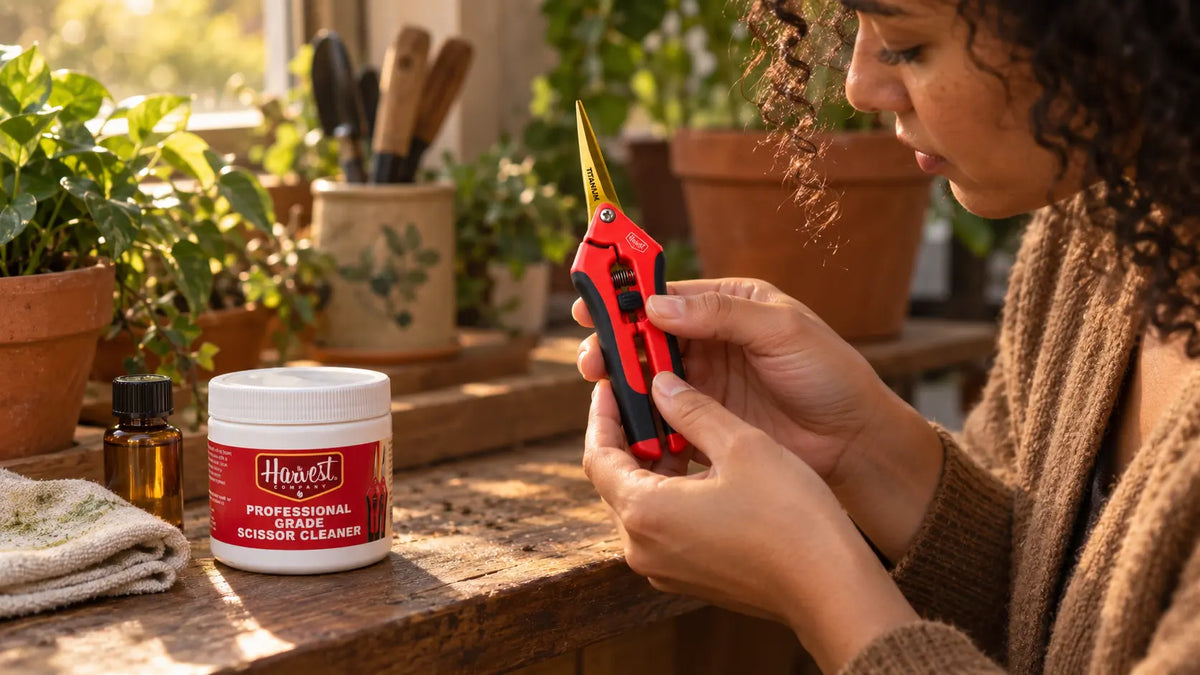
A good pair of shears is worth caring for, and the care itself takes only a few minutes at the end of a session in the garden. The Harvest Company builds pruners and shears to last for seasons, and a simple wipe, sharpen, and dry-storage rhythm is what gets a tool there.
Most tool problems trace back to three habits: putting a blade away dirty, letting it go fully dull before sharpening, and storing it somewhere damp. Fix those three and a good pair of shears lasts for years.

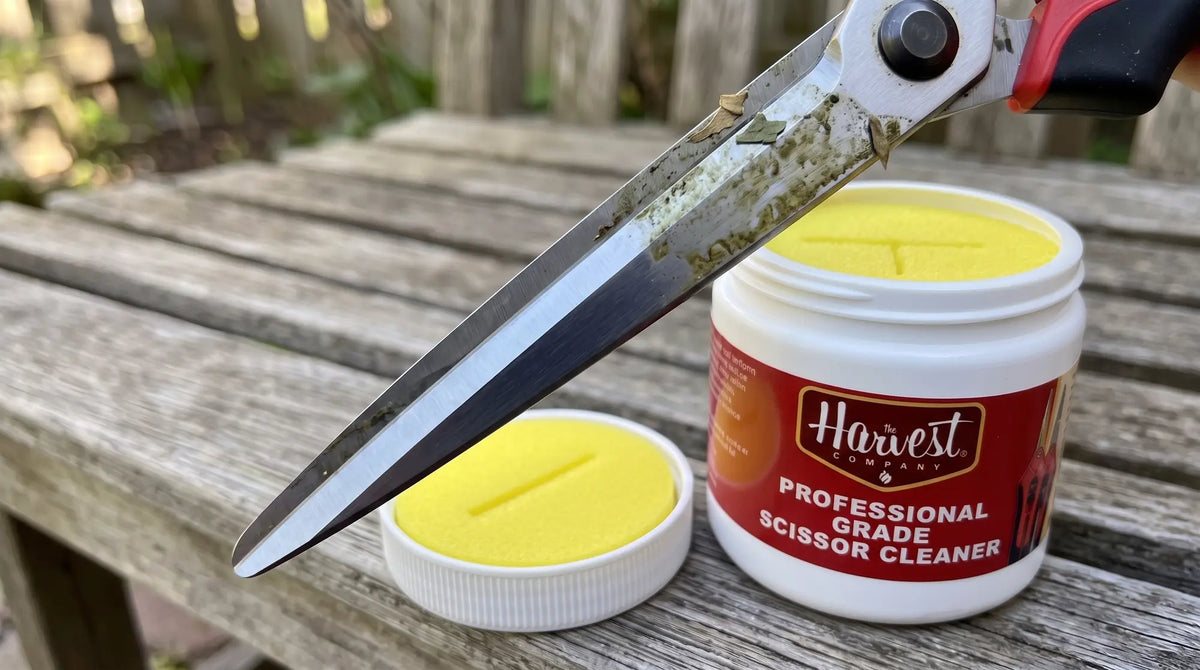
Sap and plant residue left on a blade dulls the edge faster and can carry stress between plants. Wiping the blade after each use is the single habit that does the most to keep a tool sharp.
A shear that crushes a stem instead of slicing through it cleanly is telling you it needs attention. Waiting for a fully dull blade makes the eventual sharpening harder than it needs to be.
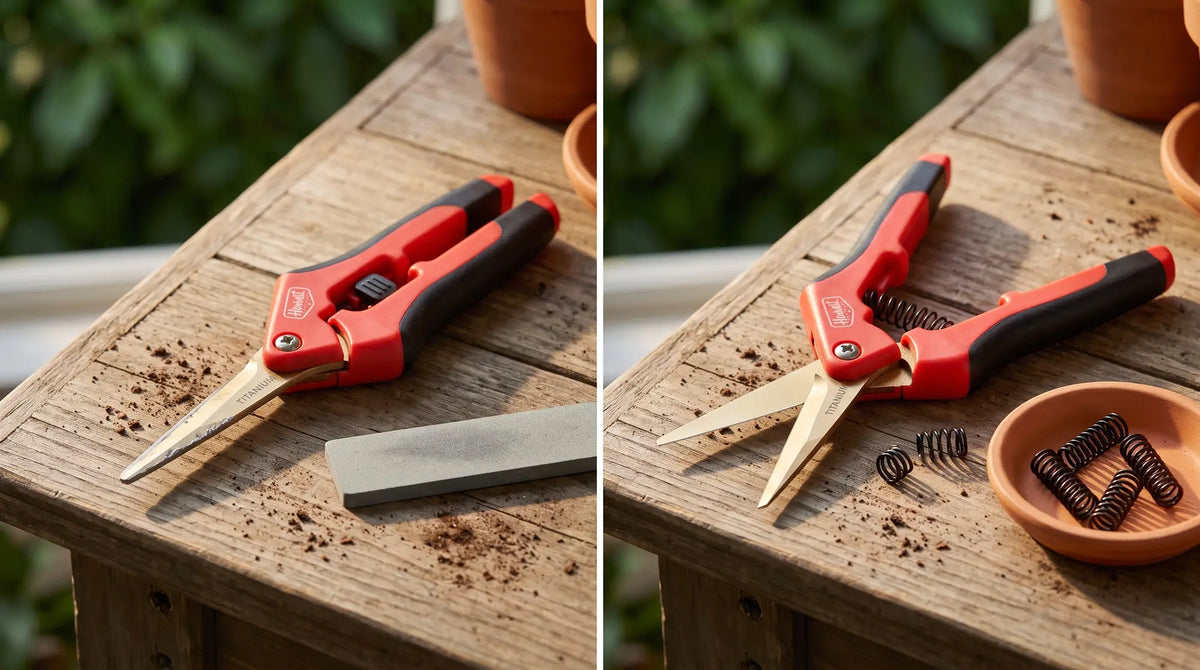
Sharpen the blade, or replace the part.
Most tool problems are a maintenance fix. A few call for a specific replacement part instead.
From last cut of the day to next season.
Five habits, in order. Together they add years to a good pair of shears.

Wipe down after every use
Sap and plant residue left on the blade dulls it faster and can spread stress or disease between plants. A quick wipe with a clean cloth after each use keeps the edge working.
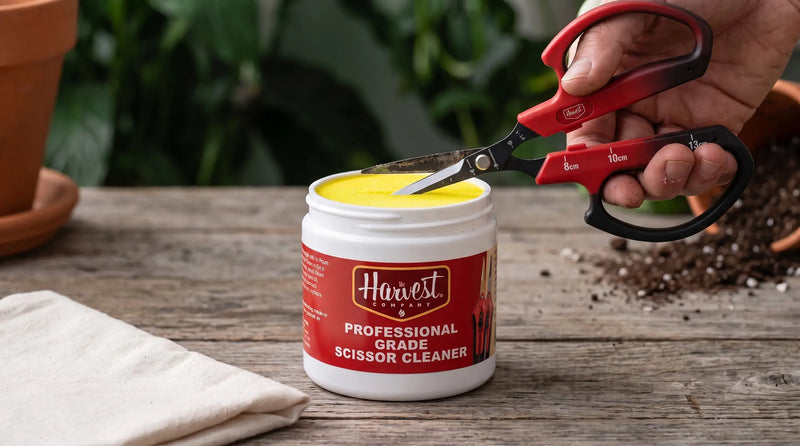
Clean deeper at the end of the week
Rinse off any built-up residue and dry the blade fully before putting it away. A deeper clean once a week catches what a quick wipe leaves behind during a busy stretch of the season.

Sharpen before the blade drags
A shear that crushes stems instead of slicing cleanly needs sharpening. Keep a light, regular rhythm rather than waiting for a fully dull blade to force the issue mid-season.
Shop pruners and shears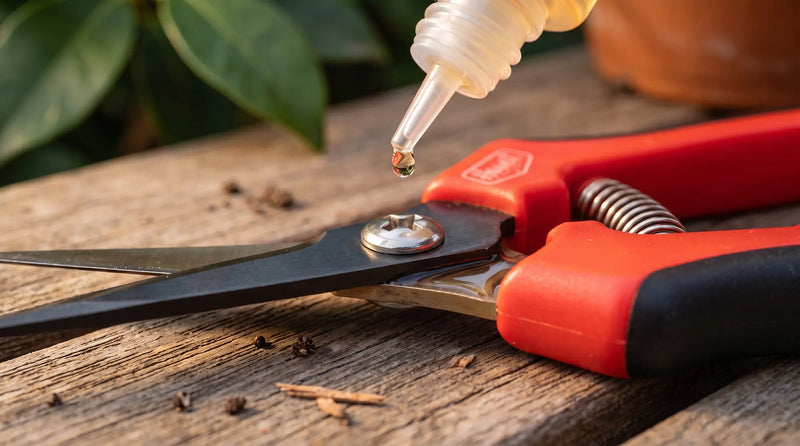
Oil the pivot point
A drop of oil at the pivot keeps the action smooth and helps the blade resist rust between uses, especially through a humid stretch of the season.
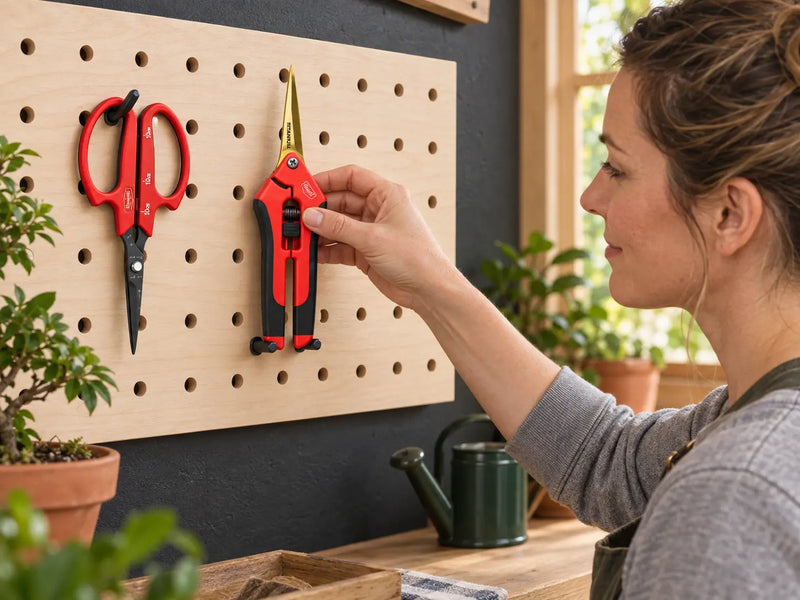
Store dry, in one place
Hanging or storing shears in a dry spot after cleaning keeps rust from setting in and means the right tool is easy to find the next time you head out to harvest or prune.
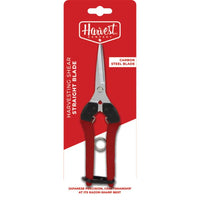
A 7.9 inch Japanese carbon steel shear that holds an edge well with regular care, and rewards the few minutes it takes to wipe, sharpen, and dry it after use.
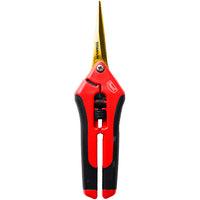
A 6 inch titanium straight-blade shear built for repeated seasons of use, and one of the tools that most rewards a simple end-of-day cleaning habit.
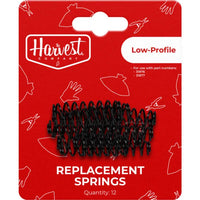
A pack of twelve replacement springs for a low-profile pruner, so a tool that has lost its snap gets a quick fix instead of an early replacement.
Three habits behind a short tool life.
Each one is a small routine fix, not new gear.

Five things to remember.
- 01Wipe a blade clean after every use, the single habit that does the most for tool life.
- 02Sharpen before a blade starts crushing stems instead of slicing them cleanly.
- 03A drop of oil at the pivot keeps the action smooth and helps resist rust.
- 04Store shears dry, in one place, so rust does not set in and the tool is easy to find.
- 05A weak or stiff spring is a quick replacement, not a reason to retire the whole tool.
Questions or notes? Drop them here.
A real grower replies within a business day.
No comments yet. Be the first.