
When and How Often to Feed Plants
Feeding works best as a steady rhythm that follows the plant through its season, starting gently, building as it grows, and shifting as flowers and fruit arrive. The Harvest Company plans a feeding schedule the way we plan a planting, around the stage the plant is in and the space it grows in.
How often you feed depends mostly on where the roots live. Containers and hydroponic systems need small, regular feedings, while garden beds draw on the soil and need less.

Water a dry pot or bed first, or feed with your regular watering. Fertilizer reaching dry roots is more likely to cause leaf tip burn than the same feed reaching damp ones.
When a label gives a range, begin at the lower rate and watch the plants for a week or two. It is easy to add more later and much harder to undo too much.
Containers feed often. Beds feed less.
The growing space sets the rhythm. Match your plants to the column that fits.

From first true leaves to the last harvest.
Six steps, in order. Each one adjusts the feed to what the plant is doing.
Wait for the first true leaves
A seed carries its own food for the first days, so there is no need to feed a fresh sprout. Once the first true leaves open, begin with a light feed at a fraction of the label rate.
Let transplants settle first
After moving a plant into a bigger pot or the garden, give it a week or so of plain water while the roots spread into the new soil. Then return to regular feeding.
Feed on a steady rhythm while plants grow
During active leafy growth, feed at the label rate on a regular schedule. A nitrogen-forward base supports the stems and leaves that will carry the harvest later.
Shift the feed when flowers appear
When tomatoes, peppers, cucumbers, and other fruiting crops start to bloom, move toward a formula higher in phosphorus and potassium. A bloom booster can be added to the base feed during this stretch.
Watch the plant, not just the calendar
Pale new growth can mean it is time to feed, while burnt leaf tips or a white crust on the mix can mean too much. Adjust the rate or the rhythm to what the plant shows you.
Ease off as growth slows
As days shorten and plants slow down, reduce the feed and then stop. Perennials and plants going into winter do better without a late push of new, tender growth.

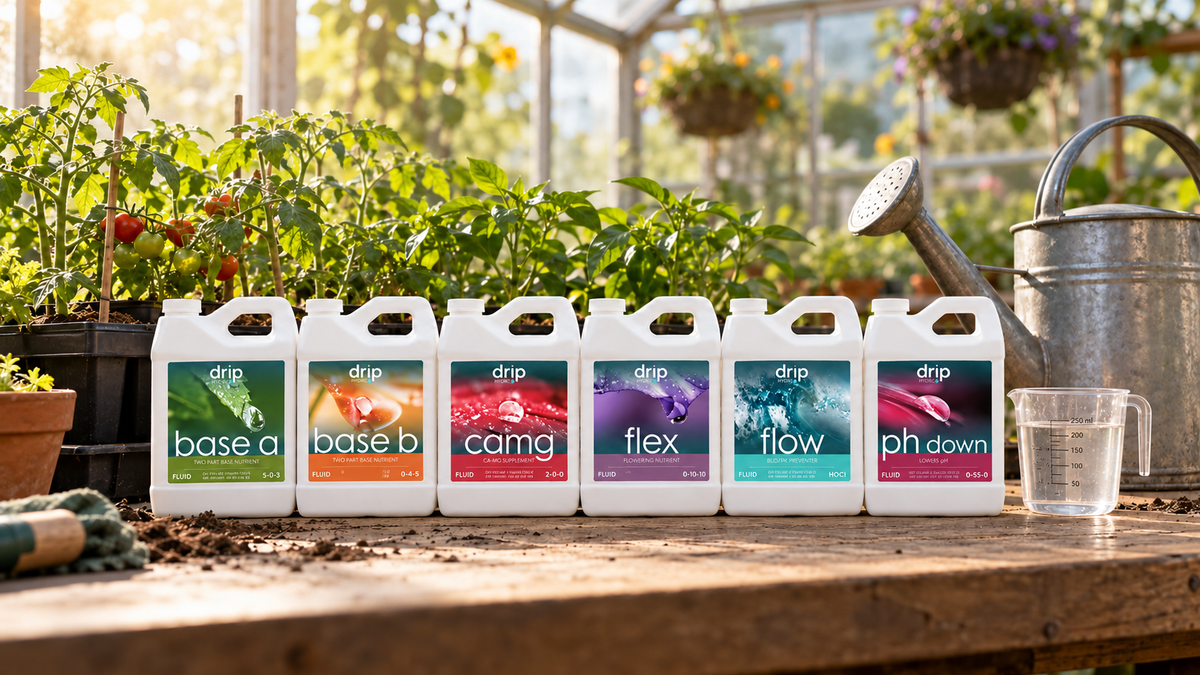
Five 1-quart bottles, Base A, Base B, CaMg, Flex PK-Booster, and Flow, that cover feeding from rooted seedlings through flowering. It mixes clear for hydroponic, coco coir, soil, and drip systems.

A water-soluble 0-10-10 bloom supplement with chelated manganese and zinc. It is used at 1 to 3 mL per gallon during the first eight weeks of flowering, alongside the base feed.

A bloom-phase microbial supplement with beneficial bacteria that help make phosphorus and potassium in the growing media more available to the plant. It works in soil, coco coir, and hydroponic systems.

A concentrated phosphoric acid solution for lowering the pH of water and nutrient mixes, used at 0.25 to 1 mL per adjustment. Keeping pH in range helps the plant take up what you feed it.
Three timing habits that hold plants back.
Each one is a change in when you feed, not how much you spend.

Five things to remember.
- 01Start feeding seedlings lightly once their first true leaves open, not before.
- 02Containers and hydroponics need small, regular feedings, while garden beds need less.
- 03Feed into moist soil, and start at the low end of any range on the label.
- 04Shift toward phosphorus and potassium when fruiting crops begin to flower.
- 05Watch the plant and adjust, then ease off as growth slows at the end of the season.
Questions or notes? Drop them here.
A real grower replies within a business day.
No comments yet. Be the first.