

Rubber Mulch vs Wood Mulch
Rubber mulch and wood mulch both cover bare ground and keep a landscape looking finished, but they behave very differently over the seasons. The Harvest Company sells rubber mulch, so this guide lays out where each one fits and where it does not.
Wood mulch breaks down and feeds the soil, so it suits planted beds. Rubber mulch holds its form and color, so it fits walkways, play areas, and decorative landscape beds.

Start with what the ground cover has to do. A bed you want to enrich for plants you harvest calls for an organic mulch, and a tidy surface that stays put is where rubber earns its place.
Rubber mulch belongs in landscape beds, walkways, and play areas. We do not recommend it for vegetable beds, where an organic mulch is the usual choice.
Wood breaks down. Rubber holds its form.
Neither is better everywhere. The difference shows up in upkeep, the soil underneath, and where you plan to use it.

From the first question to the first bag.
The answer usually comes from the first two steps, so start there.
Decide where the mulch will go
List the areas you want to cover, such as shrub beds, a walkway, or a play area. Each one may point toward a different material.
Note what is growing there
Planted beds that you want to enrich over the years suit wood mulch. Surfaces that are mostly for looks or footing suit rubber. Skip rubber in vegetable beds.
Weigh the yearly effort
Wood mulch is usually refreshed as it breaks down. Rubber is described as a low-maintenance alternative that helps reduce replacement costs, so it suits areas you would rather not redo.
Measure the area and the depth
Multiply the area in square feet by the depth in inches, then divide by 12 to get cubic feet. Our guide on how much mulch you need walks through an example.
Pick a color that suits the landscape
Rubber mulch comes in several colors, so you can match the house, the stone, or the plantings. Wood mulch gives you fewer natural shades to choose from.
Spread it evenly and keep it tidy
Rake the mulch to an even layer and pull it back a little from stems and trunks. Edging along the border of a bed or walkway keeps the surface in place.
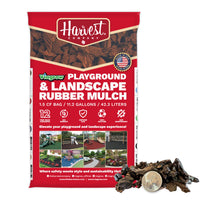
Made in the USA from 100% recycled rubber, in a 1.5 cu. ft. bag (11.2 gal / 42.3 L). Suited to playgrounds, garden beds, walkways, and commercial landscaping, as a low-maintenance alternative to wood mulch.

A landscape mulch in a 1.5 cu. ft. bag, made in the USA from 100% recycled rubber. It is ideal for playgrounds, garden beds, walkways, and commercial landscaping projects.

Each 1.5 cubic foot bag is a low-maintenance alternative to traditional wood mulch, made in the USA from 100% recycled rubber. It is described as helping reduce replacement costs.
Rubber and wood mix-ups to avoid.
A mulch picked for the wrong job is behind all of these.

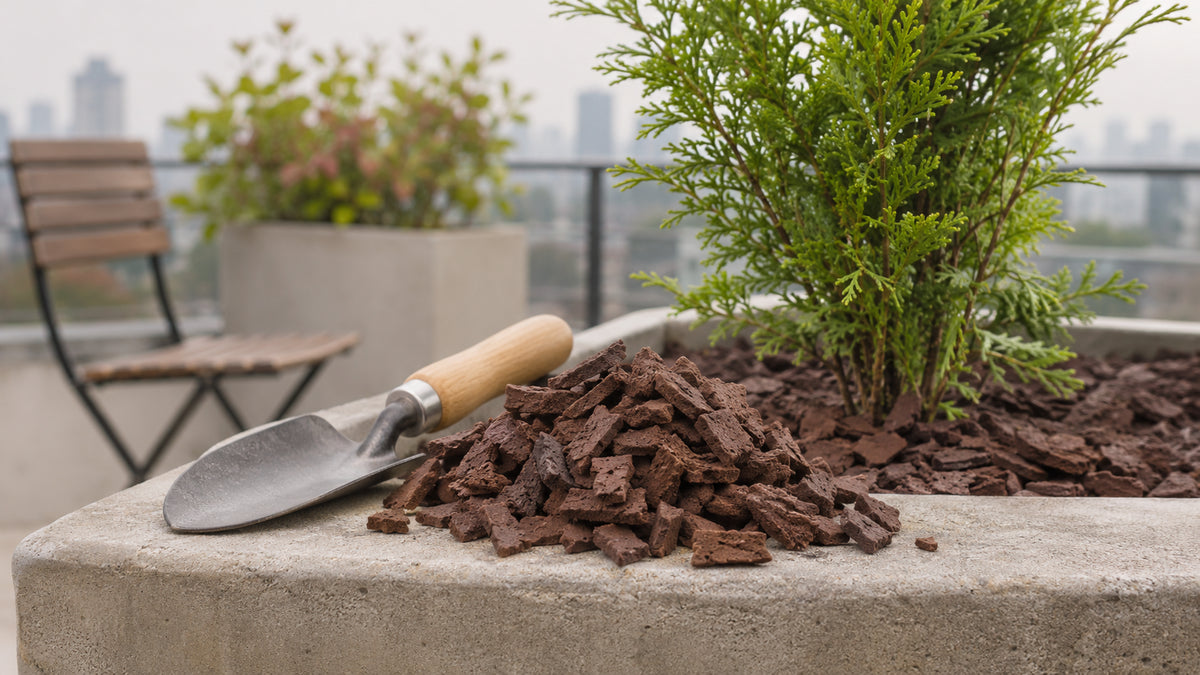
Rubber or wood, in short.
- 01Wood mulch breaks down and feeds the soil, so it needs topping up.
- 02Rubber mulch holds its structure and color, which is why it is described as low-maintenance.
- 03Rubber mulch belongs in landscape beds, walkways, and play areas.
- 04We do not recommend rubber mulch for vegetable beds. Use an organic mulch there.
- 05Measure the area and depth before you buy, then count bags.
Questions or notes? Drop them here.
A real grower replies within a business day.
No comments yet. Be the first.