
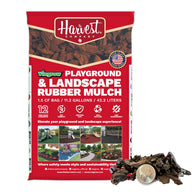
Rubber Mulch for Playgrounds: What to Check
Rubber mulch is sold for playgrounds as well as landscape beds, but a play area has requirements that a flower bed does not. This checklist covers what to confirm before you buy.
We stick to what our listings say and leave the requirements to the people who set them. Your equipment manufacturer and your local rules decide what your play area needs.

We do not set depth or surfacing requirements for play areas. Ask the equipment manufacturer and check the relevant guidance and local rules, and follow what they say.
Rubber mulch belongs in play areas and landscape beds. We do not recommend it for vegetable beds, so keep it out of the garden where you grow food.
What we state, and what to confirm.
The left column is on the listing. The right column is what you should ask about before you buy.
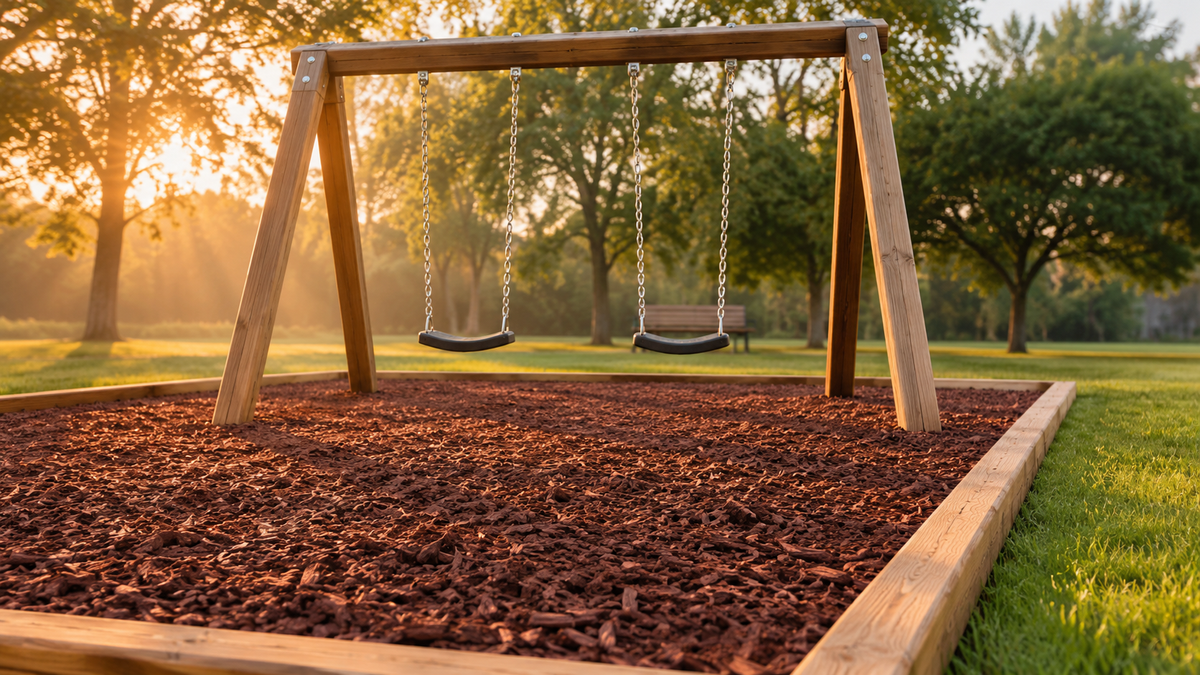
From checking the equipment to spreading the last bag.
Most of these steps are questions for someone else, so start by asking.
Find the equipment manufacturer's guidance
Look in the manual or on the manufacturer's site for what they say about surfacing under and around the equipment. Start there, since the equipment maker knows the equipment best.
Check the local rules
Schools, parks, childcare settings, and housing associations may each have rules. Ask the relevant authority and check the guidance that applies to your play area.
Read what the listing states
Our listing describes recycled rubber made in the USA, and cushioning for playground surfaces on the Brown listing. Ask us if you need more than the listing gives.
Measure the area you plan to cover
Measure the area under and around the equipment. Our guide on how much mulch you need turns that into cubic feet and bags once you know the depth.
Plan edging to contain the surface
A border helps hold the surface in the play area and keeps it out of the lawn and beds. Mulch glue is an option for slopes and exposed edges.
Walk the area and level it
Mulch can shift and compact with use. Rake it level and top up thin spots, checking against the depth you confirmed with the manufacturer.
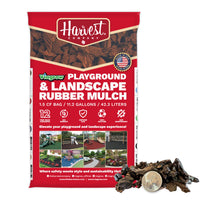
Made in the USA from 100% recycled rubber, in a 1.5 cu. ft. bag (11.2 gal / 42.3 L). The listing describes cushioning for playground surfaces and a low-maintenance alternative to wood mulch.
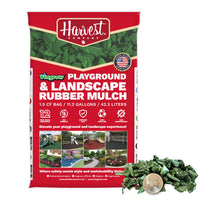
A rubber mulch made in the USA from 100% recycled rubber, sold in 1.5 cu. ft. bags. The listing describes it as ideal for playgrounds, garden beds, walkways, and commercial landscaping.
Assumptions to check before you buy.
A phone call or a page of reading settles each of these before you open a bag.


What to confirm before you order.
- 01Our listing describes recycled rubber made in the USA and cushioning for playground surfaces.
- 02It does not state a rating, a fall height, or a required depth.
- 03Check the depth and surfacing requirements with the equipment manufacturer and the relevant guidance.
- 04Check your local rules before you buy.
- 05Keep rubber mulch in play areas and landscape beds, not vegetable beds.
Questions or notes? Drop them here.
A real grower replies within a business day.
No comments yet. Be the first.