
How to Grow Basil from Seed
Basil is a warm-weather annual that grows quickly from seed once the nights stay mild, and a few plants can keep a kitchen in pesto and fresh leaves for months. The Harvest Company wrote this guide for the cook who wants that supply from one packet.
Basil is frost-tender, so the plan below starts seed indoors and moves plants outside only when the weather has settled.

Basil seed sprouts best in a warm room. If your kitchen runs cool, set the tray on a heat mat or on top of the refrigerator and check it each day.
Leaves blacken in a chilly night or a cold draft. Wait until your last frost has passed and nights stay mild before moving plants to the garden.
Start in a tray indoors, or sow in the garden.
Your climate and the length of your warm season decide which route gives you basil sooner.
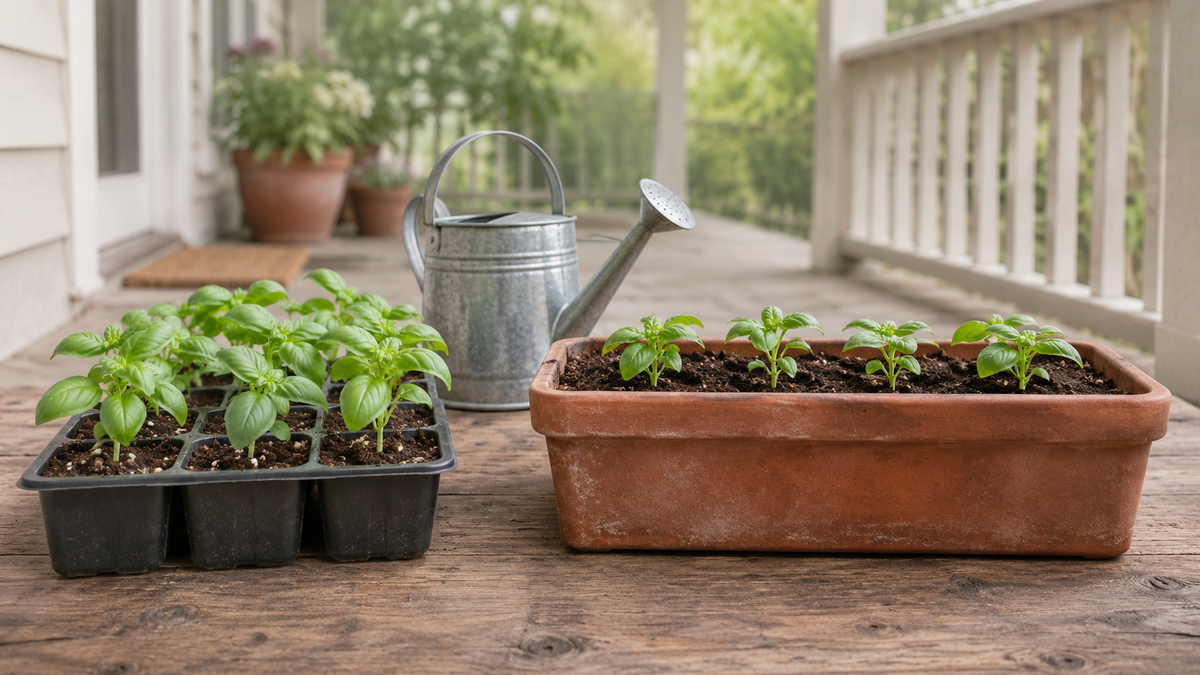
Growing basil from a packet.
Keep an eye on the weather forecast at steps one and five, since basil sulks in cold air.
Count back from your last frost
Many growers sow basil indoors around four to six weeks before the last frost. Look up your date, then mark the sowing week on a calendar.
Fill the cells and moisten them
Use a damp seed starting medium and press it level in each cell. A tray with a dome holds humidity while the seed wakes up.
Sow a few seeds per cell
Drop two or three seeds in each cell and cover them lightly, about a quarter inch deep. Check your packet for its own depth.
Give seedlings strong light
Once green appears, take the dome off and place the tray in your brightest window or under a grow light for roughly twelve to sixteen hours a day.
Harden off for about a week
After your last frost has passed, set the tray outdoors for a few hours and add time each day over about seven days. Bring it in on any cool night.
Plant out and start pinching
Set plants in a sunny spot with room to branch. When a plant has several sets of leaves, pinch the tip just above a leaf pair to make it bush out.
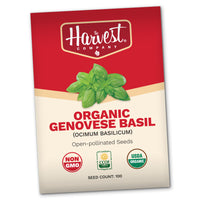
A 100-seed packet of Genovese basil, listed as non-GMO, USDA certified organic, and open-pollinated. The listing describes it as an annual that thrives in warm weather and full sun, for containers, raised beds, or garden plots.
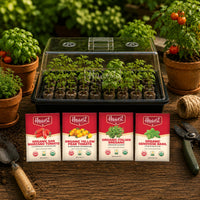
A seed-starting kit with organic basil, Italian oregano, San Marzano, and Yellow Pear seed packs, plus a vented 7 in. humidity dome, an extra-strength propagation tray, and a Char Coir coco coin insert tray.
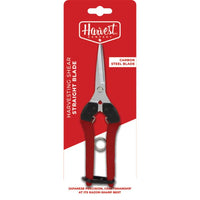
A Japanese carbon steel harvesting and pruning shear with a hard chrome plated blade polished smooth, non-slip coated handles, and a locking mechanism.
Basil trouble usually starts with the weather.
These are the three spots where a promising tray tends to slow down, and a small change to each.

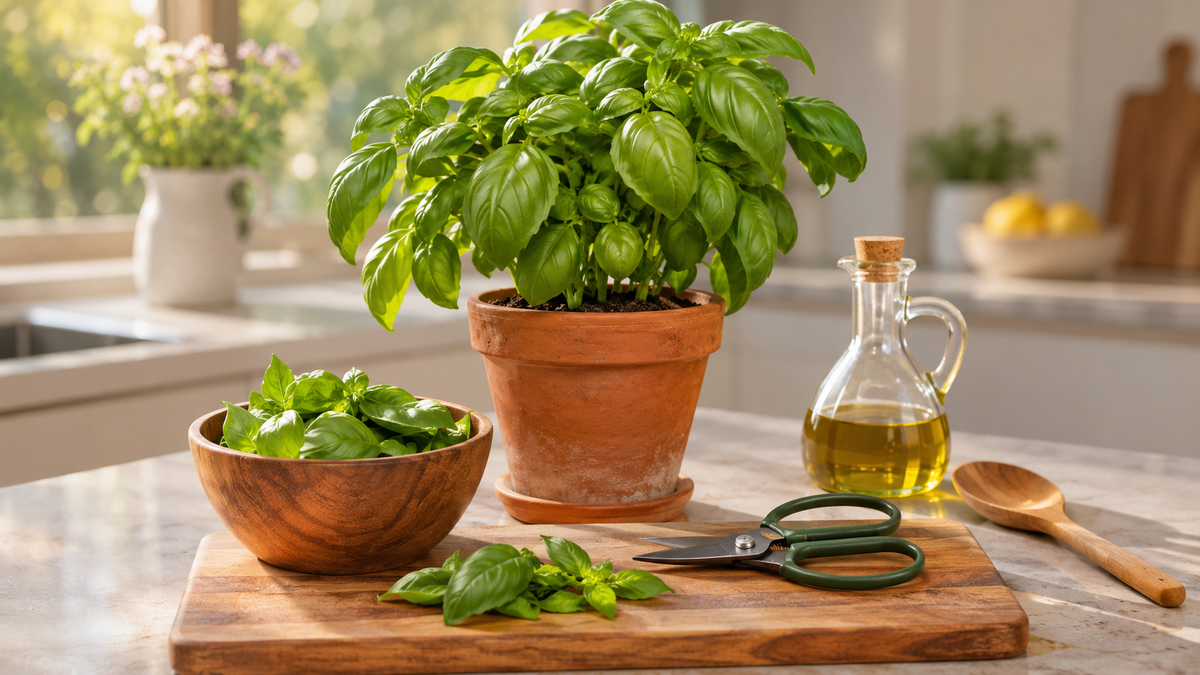
Basil at a glance, from tray to pesto.
- 01Basil is a warm-season annual and cannot take frost.
- 02Many growers start seed indoors around four to six weeks before the last frost.
- 03Seedlings need strong light, and a week of hardening off before they go outside.
- 04Pinch the tips above a leaf pair to get a bushy plant with more leaves.
- 05Remove flower buds early to keep the harvest going through summer.
Questions or notes? Drop them here.
A real grower replies within a business day.
No comments yet. Be the first.