
Coarse vs Fine Perlite: Choosing a Grade
If you have stood in front of two bags of perlite wondering why one looks chunkier, the grade is the reason. Our catalog has a standard horticultural grade and a coarse and chunky grade, and each suits a different kind of pot or bed.
Larger pieces open bigger air pockets in the root zone, while smaller pieces blend smoothly into compact mixes. Neither grade is better in every case, so the right choice follows the container.

Large containers and raised beds have room for chunky pieces to work. In small pots, smaller pieces spread more evenly through the mix.
Perlite is lightweight and dusty when dry. Dampen it before blending, and consider a mask when pouring a large bag.
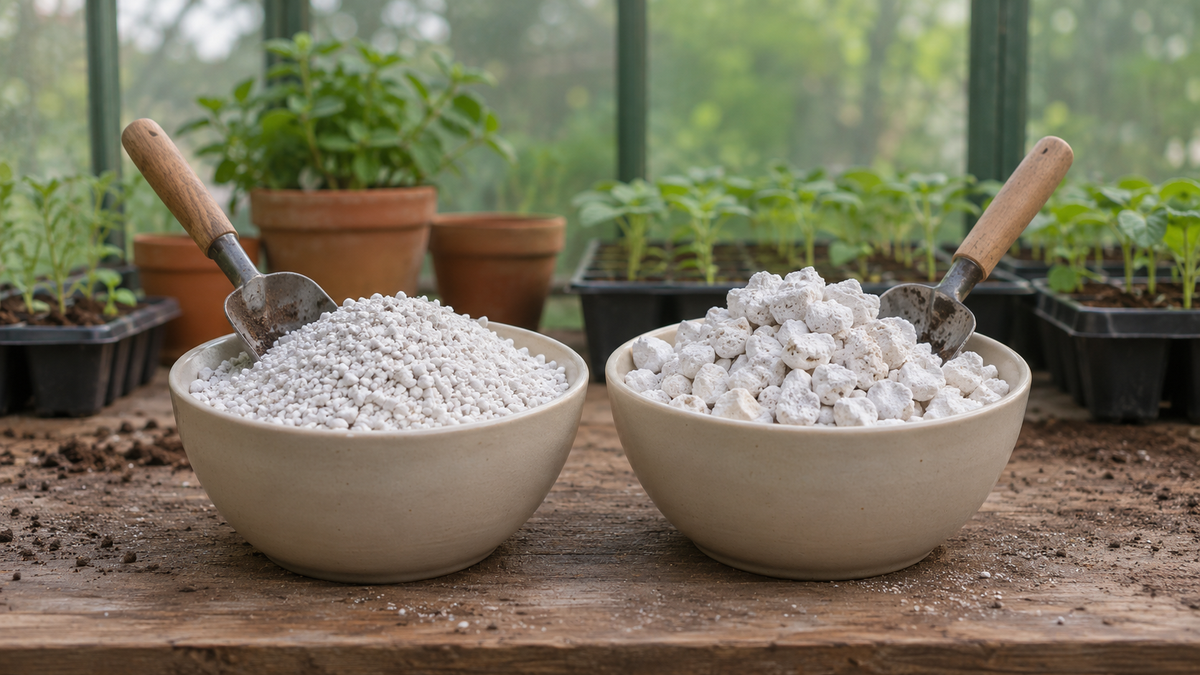
Chunkier pieces mean larger air pockets.
These are the same horticultural perlite in two piece sizes, and each fits a different place.
Five steps to the right grade.
Start with the container, then check how the mix drains.
Start with the container size
Small pots and seed trays suit the standard grade. Large containers, raised beds, and garden-scale mixes have room for the coarse and chunky grade.
Check how your current mix drains
If water lingers on top or the pot stays heavy for days, a coarser grade opens more air space. If the mix dries too fast, a standard grade is the gentler choice.
Pair the grade with your base
Coarse perlite is commonly blended with coco coir, compost, soil, and vermiculite. Standard perlite works well mixed into coir for a smooth, even texture.
Blend it through the whole depth
Dampen the perlite, then turn it through the full volume of mix. Even blending puts air around the roots at every level.
Test, then scale up
Fill one pot with a small test batch and watch it for a week. If it drains well and stays moist, mix the larger batch the same way.
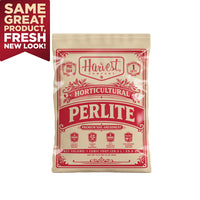
A lightweight, highly porous soil amendment designed to improve drainage, aeration, and soil performance. It helps create a balanced air-to-water ratio in soil and soilless growing media.
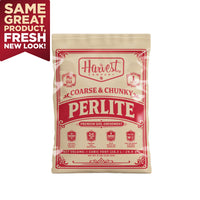
A larger-grade perlite that creates more air space in the root zone. It is suited to raised beds, containers, and hydroponic systems, and can be blended with soil, compost, coconut coir, and vermiculite.
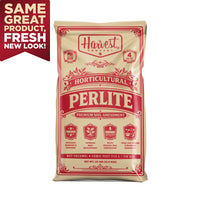
A pH-neutral, odorless chunky perlite whose coarse structure creates larger air pockets in the root zone. Its lightweight structure makes it useful for rooftop gardening, and it blends with coconut coir, vermiculite, compost, or soil.
When the grade misses the pot.
A grade can be a good product and still be the wrong fit for a given pot.


Grade, pot size, and a test batch.
- 01Coarse and chunky perlite creates larger air pockets than the standard horticultural grade.
- 02Raised beds and large containers suit the coarse grade, and small pots suit the standard grade.
- 03Both grades improve drainage and aeration and are blended with coir, compost, soil, or vermiculite.
- 04Dampen perlite before blending and mix it through the whole root zone.
- 05Test a small batch before mixing a large one.
Questions or notes? Drop them here.
A real grower replies within a business day.
No comments yet. Be the first.