
Choosing Tomato Varieties: Paste, Cherry, and Slicing
Tomato varieties fall into a few useful groups, and the group matters more than the name on the packet. The Harvest Company sorts them by what you plan to cook, then by how much room and support each plant needs.
Paste tomatoes are meaty and good for sauce, cherry tomatoes are small and sweet, and slicing tomatoes are large and juicy for sandwiches.

Packets often say determinate or indeterminate. Determinate plants stay more compact and ripen over a shorter window, while indeterminate plants keep growing and fruiting until frost.
An heirloom label tells you about the seed line, not the plant size. Check the packet for height and support needs before you place it in the bed.
Paste, cherry, and slicing at a glance.
Each type earns its spot in the kitchen in a different way, and most gardens grow one of two.
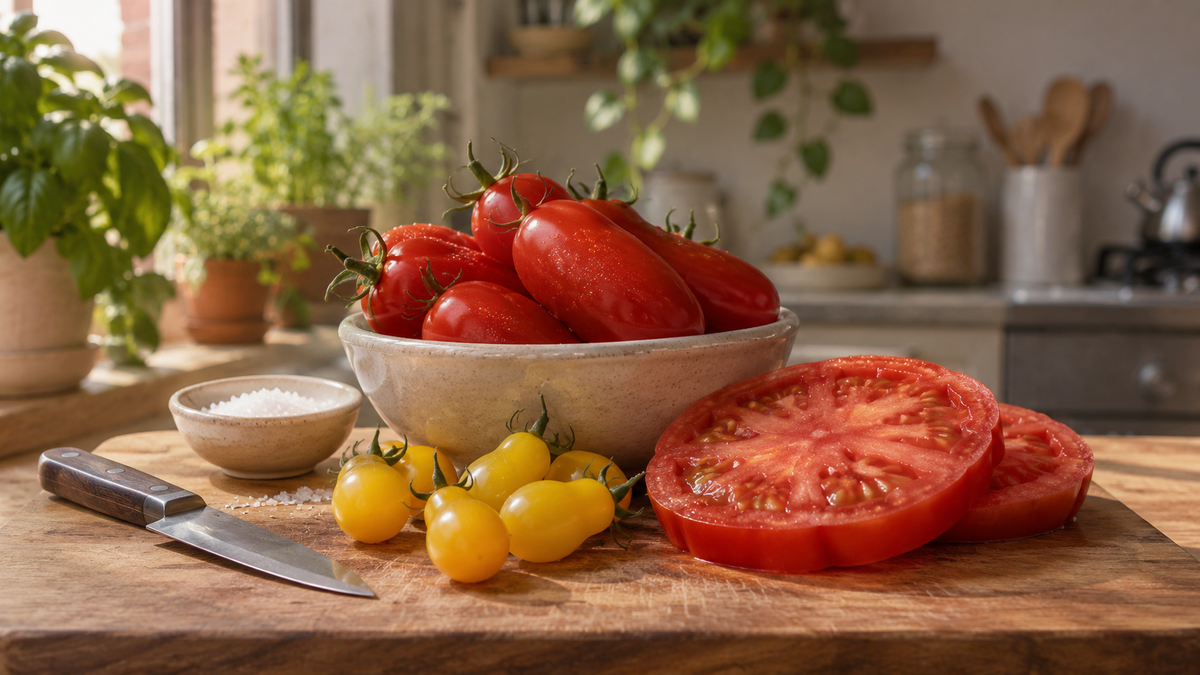
From the dinner table to the seed packet.
Your cooking decides the shortlist, so the first step happens in the kitchen.
Name the dish you grow for
Sauce, salads, and sandwiches each point to a different tomato type. Write down the dish you would make first with a basket of ripe fruit.
Match the plant to your space
Check the packet for height and spread. A tall indeterminate vine suits a bed with a trellis, while compact plants fit large pots.
Confirm six to eight hours of light
All three types fruit best in full sun. If your spot gets fewer than six hours, plan for fewer tomatoes or a grow light for the seedlings.
Start seeds six to eight weeks ahead
Sow indoors six to eight weeks before your last frost date, then plant out after it passes. Different varieties mature on different schedules, so check the packet.
Pick two types, not five
A paste and a cherry cover most kitchens. Add a slicer once you know your plants and your space.
Place the stake or cage first
Put the support in when you plant, then tie the stem loosely as it grows. Adding it later risks root damage.
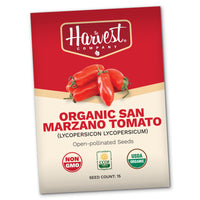
Certified organic, non-GMO, open-pollinated San Marzano seeds, 15 per pack. The listing calls it a classic heirloom-style paste tomato with dense flesh and a low seed count, suited to sauces and canning.
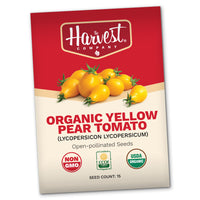
Certified organic, non-GMO, open-pollinated Yellow Pear seeds, 15 per pack. The listing describes an heirloom cherry tomato with a pear shape, bright yellow color, and sweet, mild flavor.
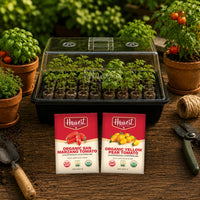
Certified organic San Marzano and Yellow Pear seed packs with a vented 7 in. humidity dome, a heavy-duty propagation tray, and a pre-filled coco coir insert. Just add water, per the listing.
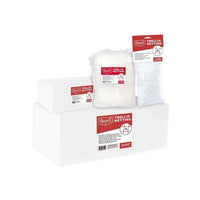
Durable plastic netting with 6 in. reach-through mesh squares for vertical or horizontal trellising, keeping stems, vines, and foliage supported.
Variety choices that leave tomatoes unused.
They begin at the seed rack with a good-looking packet and no plan for the fruit.


The tomato pick in short.
- 01Paste tomatoes suit sauce and canning, cherry tomatoes suit snacking, and slicers suit sandwiches.
- 02Choose by the dish you want to make, then by the room the plant needs.
- 03Check the packet for determinate or indeterminate growth.
- 04Start seeds indoors six to eight weeks before your last frost date.
- 05Begin with two varieties and stake them when you plant.
Questions or notes? Drop them here.
A real grower replies within a business day.
No comments yet. Be the first.