
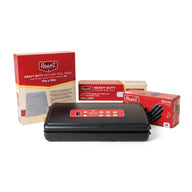
Choosing a Coir Format: Bricks, Blocks, Loose, and Pots
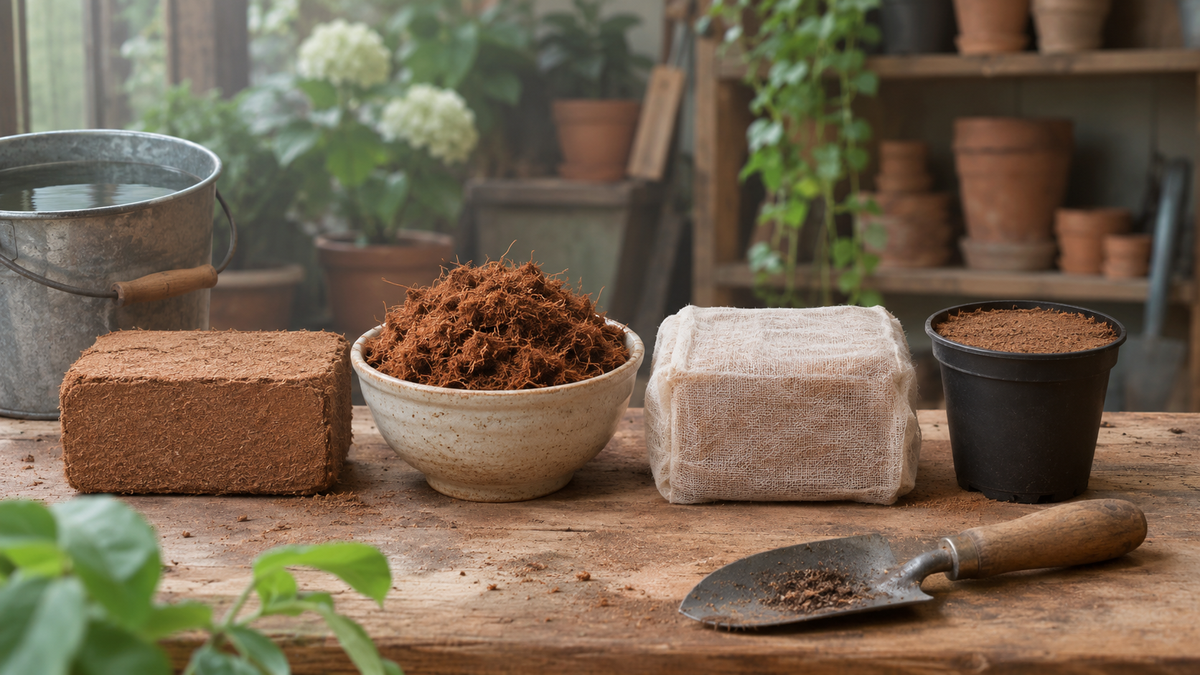
Walk the coir aisle and you will find it as bricks, blocks, loose bags, and pots that arrive ready to plant. Each of these is in our catalog, and the best one depends on how you grow.
The coir inside is similar across formats. What changes is how much you must prepare, how much you store, and how the medium fits your pots and beds.

Some coir is described as buffered, with a stabilized pH and low EC. Check the product page for that detail, especially if you grow plants that feed heavily.
Bricks and blocks grow a lot once wet. Give them room in a tub or pot, and add water as the label directs.
The same medium, packaged four ways.
Each format trades storage space against prep time and planting convenience.
Five steps to the right format.
Start with how you grow, then match the package.
Start with where you grow and store
Tight storage favors compressed bricks. If you have a shed or a shelf with room, loose bags are an easy way to keep medium on hand.
Decide how much prep you want
Bricks need hydrating and loosening, which takes a few minutes and some water. Loose coir and filled pots skip that step.
Match the format to the volume
Beds and many containers need a lot of medium, which suits bricks or large loose bags. A single plant suits a block or a pre-filled pot.
Choose a pot or block for a clone or seedling
A block or a pre-filled pot gives a young plant a finished home. Choose the size that fits the plant, and check that the drainage suits your setup.
Review after your first round
Note how long each format took to prepare and how the plants rooted. Switch formats next season if another suits your routine better.
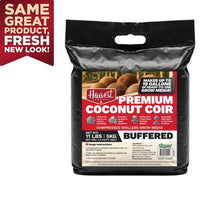
A triple-washed, sterilized, pH-balanced coir with low EC and low sodium, made for heavy-feeding plants and nutrient-intensive systems. It works as a standalone medium or as a soil amendment.

A 50 liter bag of RHP-certified, peat-free coco coir with a naturally high cation exchange capacity. It is buffered, pH stable, and triple washed to a low EC.
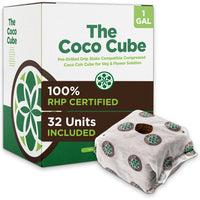
A buffered, very low EC coir block in an aerated fabric bag, equivalent in size to a 6 by 6 by 4 inch rock wool block. It holds 1 gallon (3.7 L) and is designed for planting a clone or seed.
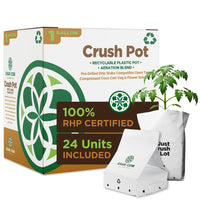
Compressed coco coir in a recyclable plastic pot with pre-drilled holes that are drip-stake compatible. Its open-top design gives easy access, and it is made for a clone or seed.
When a coir format is the wrong fit.
A format that suits one grower can be a poor fit for another.

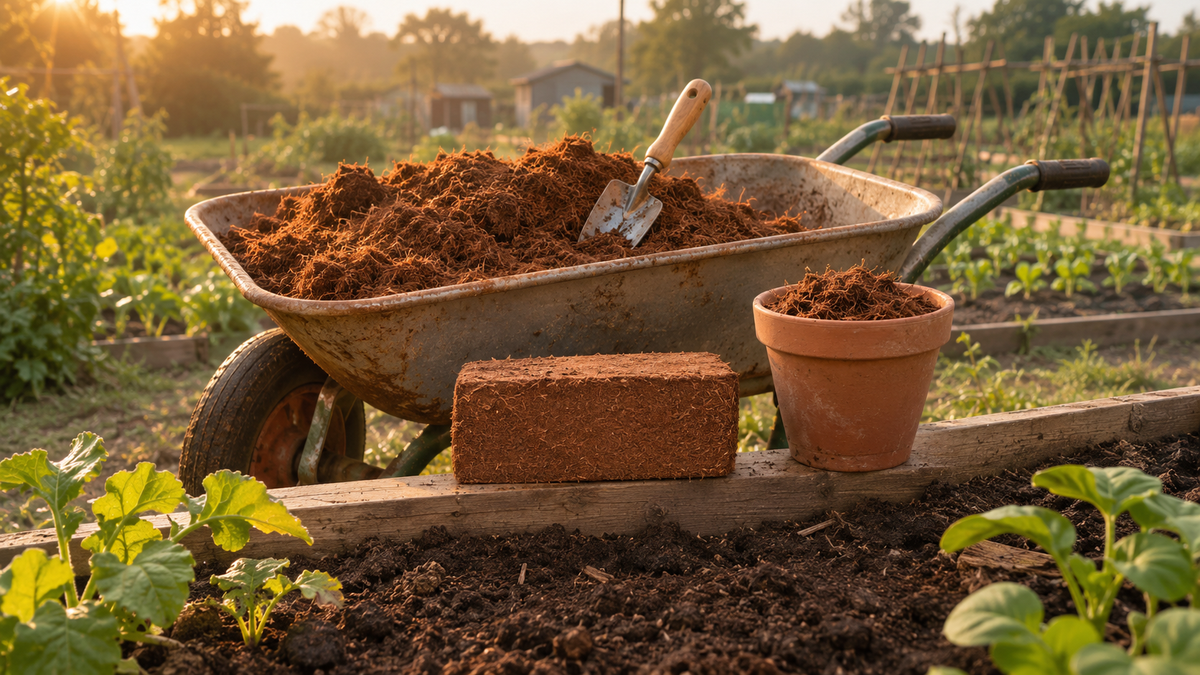
Points to settle before you buy coir.
- 01Bricks store compactly and expand when hydrated, and loose bags are ready to pour.
- 02Blocks and pre-filled pots give a clone or seedling a finished home.
- 03Choose the format by storage space, prep time, and how much medium you need.
- 04Check the product page for buffering and EC details, especially for heavy feeders.
- 05Compare finished volume and prep time along with the price of the package.
Questions or notes? Drop them here.
A real grower replies within a business day.
No comments yet. Be the first.