There are a lot of little details that work together to support a successful garden. The warmth of the sun, the moisture in the air, and the gentle breeze rustling through the leaves all play a part in keeping your plants healthy.
That gentle breeze, in particular, does more than you might think. Outdoors, air moves naturally through your garden, carrying away excess moisture and helping regulate temperature. Without that movement indoors, warm and humid air can settle around your plants, creating harmful conditions.
Recreating that breeze indoors is an important part of building a healthy growing environment. Once you understand how airflow and humidity affect your garden, you'll have another piece of the puzzle to help you take better care of your plants.
Lets break down the breeze and how it supports your garden.
Why Good Airflow Makes for Healthier Plants
Not to get too technical, but understanding how your plants operate will help you understand what they need a bit more.
During photosynthesis, plants absorb carbon dioxide from the surrounding air. They also release water vapor through their leaves in a process called transpiration. As that moisture enters the air, it can increase humidity around the plant, particularly in an enclosed growing space like your indoor garden.
Nature's gentle breeze helps disperse that moisture. Indoors, especially in grow tents and crowded growing areas, the air can become stagnant. Without adequate airflow, warm and humid pockets can develop around your plants, creating conditions where mold and certain fungal diseases are more likely to develop.
Two ways to achieve proper airflow are through circulation and ventilation. Circulation keeps air moving within your growing space. Ventilation replaces the air inside your growing area with fresh air from outside that space.
Both are important, but the right setup depends on your space.
How to Improve Airflow in Your Indoor Garden
For a small indoor garden, improving airflow can be surprisingly simple.
First things first, assess the space. Is there a ceiling fan that circulates air around the plants? Could an open window provide some fresh air for a small potted herb garden? Is your space open or enclosed? Crowded or roomy?
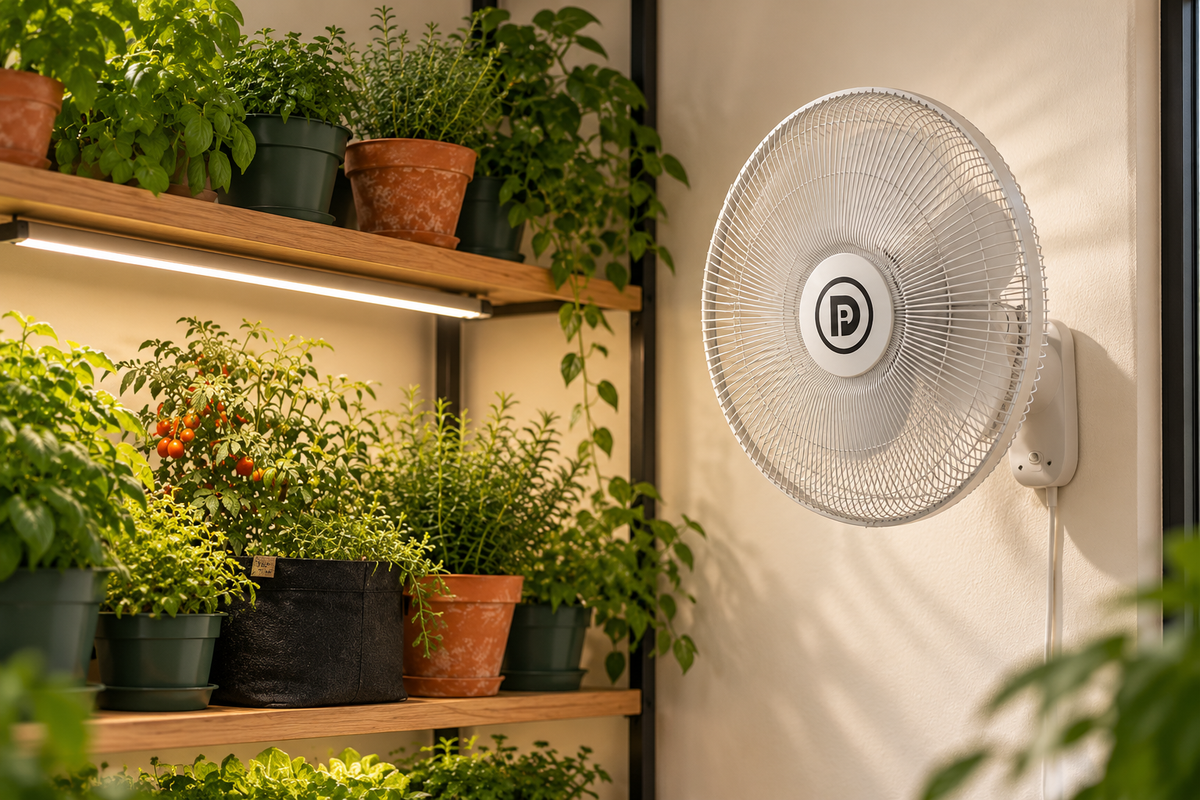
If you're growing herbs or leafy greens on an open shelf, an oscillating fan can help keep air circulating around the plants. All you need to do is position the fan nearby. Avoid pointing it directly at the leaves to not stress them out too much.
Ideally, you're recreating a gentle breeze that passes through your garden. You should notice occasional movement in the leaves without seeing them constantly bend under the force of the air. If you have an enclosed grow tent, you'll probably need an exhaust fan installed near the top where they can remove accumulated heat and humid air.
When choosing ventilation equipment, consider the size of your space, the amount of heat produced by your grow lights, and how densely your plants are arranged.
Still figuring out your setup? Our article, BRING THE GARDEN INSIDE covers the basics of choosing and preparing your growing space.
A small herb garden won't require the same ventilation setup as a tent filled with mature tomato plants. The important thing is to create steady, gentle air movement and make sure your growing space has access to fresh air.
Understanding Humidity in Your Indoor Garden
Airflow and humidity go hand in hand. As your plants grow, they naturally release moisture into the surrounding air.
As always, there's an important balance here. Excess humidity can create damp conditions that encourage mold and fungal diseases. If your air is too dry, your plants might lose moisture faster than their roots can replace it.
One of the easiest ways to monitor your indoor garden's humidity is with a digital hygrometer. This small device measures humidity levels, giving you a better understanding of how conditions change throughout the day. A hygrometer will help you decide when to adjust the airflow in your garden.
If humidity is consistently higher than your plants prefer, check that your fan is keeping air moving gently around the leaves. In an enclosed grow tent, increasing ventilation can help lower humidity by replacing moist air with drier air. If humidity is too low, check whether your ventilation system is bringing in excessively dry air. You can reduce ventilation while still maintaining enough fresh air for your plants.
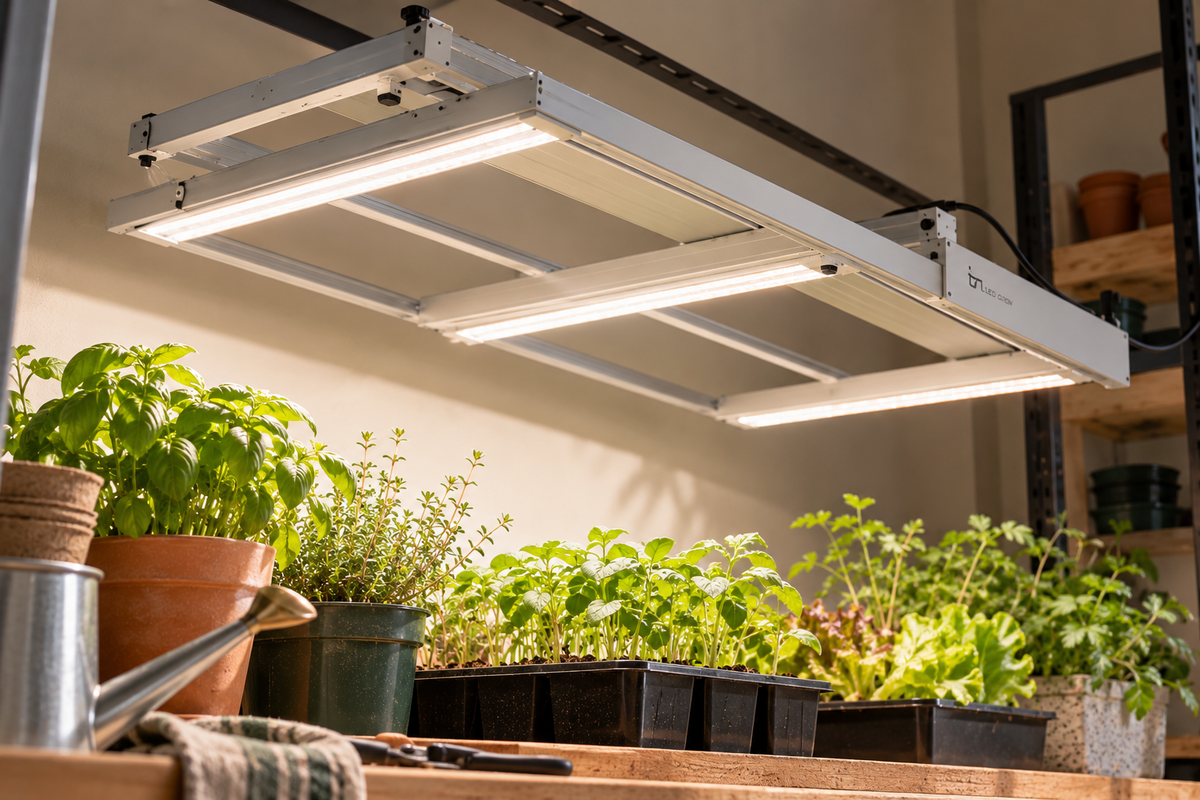
Lighting also affects your growing environment. Learn how to manage light intensity, duration, and distance in our article, GET TO KNOW YOUR GROW LIGHTS.
Too Damp or Too Dry? Read the Signs
One of the advantages of indoor gardening is that you can adjust your environment. This gives you greater control over your growing conditions, and the first step is learning what to look for.
Too much moisture in the air:
Is there condensation on grow tent walls, water collecting on nearby surfaces, or leaves that remain wet for extended periods? These can all be signs of excessive humidity.
Check if the air is blowing freely around your plants. Crowded foliage and poor ventilation can trap moisture.
Next, consider your watering habits. Overwatering can contribute to excess moisture, so check your soil before watering again or adjusting your fans too much.
If watering isn't the issue, improving circulation, increasing ventilation, or simply adding more space between your plants could make a big difference.
Pro tip: If the surrounding room is consistently humid, a dehumidifier can help manage moisture before that air enters your garden.
If the air is too dry:
Dry or browning leaf edges, wilting, and slowed growth can all be signs that your indoor garden isn't getting enough humidity. This is especially common during winter, when heating systems can make indoor air particularly dry.
If you notice these symptoms, start by checking your hygrometer. Is the humidity consistently lower than what your plants prefer?
Check your watering habits and the moisture level of your soil. Underwatering and excessive light can cause similar symptoms, so it's worth ruling those out before making adjustments.
If low humidity is the problem, check whether your ventilation system is bringing in particularly dry air. Fans blowing directly onto your plants can also increase moisture loss, so make sure the airflow is gentle.
If the air remains too dry, pro tip number 2, a humidifier can help restore moisture to your growing space. Just remember to keep gentle air circulation going.
Keeping Your Growing Environment in Balance
One of the most important parts of becoming a successful indoor gardener is understanding how your growing environment works as a whole. Light, water, temperature, humidity, and airflow all influence one another, and learning to recognize their relationship will help you better understand how to care for your plants.
The more familiar you become with your growing space, the easier it gets to recognize when something needs adjusting.
You don't need to control every detail perfectly. You just need to understand how your garden responds and make adjustments when necessary.
A little air movement can go a long way. Explore Harvest Co.'s oscillating fans and find the right equipment to keep fresh air circulating around your indoor garden.