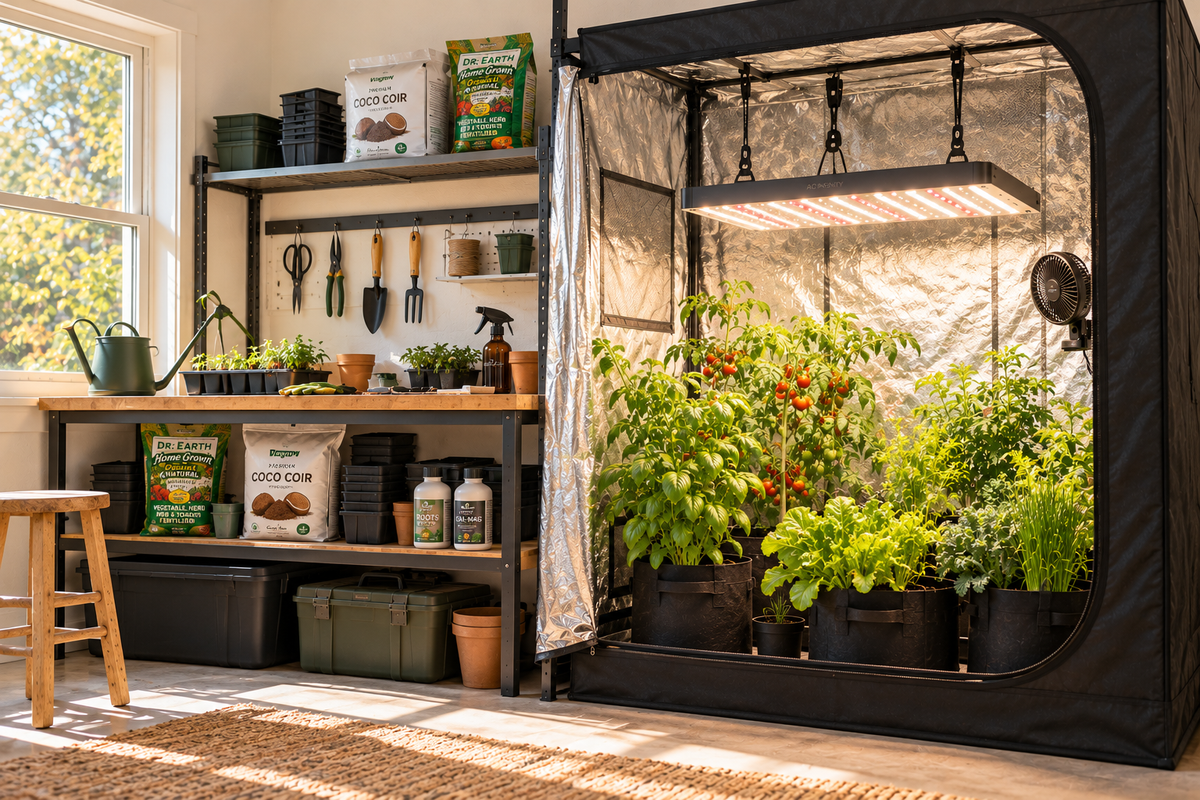
You've brought a little bit of the outdoors inside, and now you get to watch your plants settle into their new home.
No need to pack up all your gardening knowledge until the spring. An indoor garden lets you have the pleasure of using your green thumb all year round. Not to mention enjoying fresh herbs and vegetables no matter the season. You might even have a better chance of growing winter produce without having to worry about the overnight frosts.
A lot of your skills as an outdoor gardener transfer indoors. Once you've learned how to create the right indoor growing environment, one of the first things you'll notice is how your plants respond to light.
Whether you're supplementing a sunny window or growing entirely under LED grow lights, learning how your plants respond to these lights will help you take better care of them.
You might notice your basil leaning toward the window or that your seedlings are growing taller than expected. These little changes can tell you a lot about how the environment you've created is influencing your plants.
And while a sunny window can be a great starting point, shorter winter days don't always provide enough light to keep your garden growing.
That's where grow lights come in.
Grow Lights 101: What Your Plants Need
Light is like food for your plants. They use it to produce the energy they need to grow, and just like us, they need the right amount of nourishment to stay healthy.
Outdoors, the sun takes care of that. But when you bring your garden inside, you're the one deciding how much light your plants get and when they get it. That's one of the great advantages of indoor gardening. You can create a consistent lighting environment instead of relying on changing weather and shorter winter days.
If you're growing plants by a window, a grow light can give them a little extra light when the sunshine isn't enough. And if you're growing somewhere without much natural light, grow lights can provide the reliable light source your plants need to thrive.
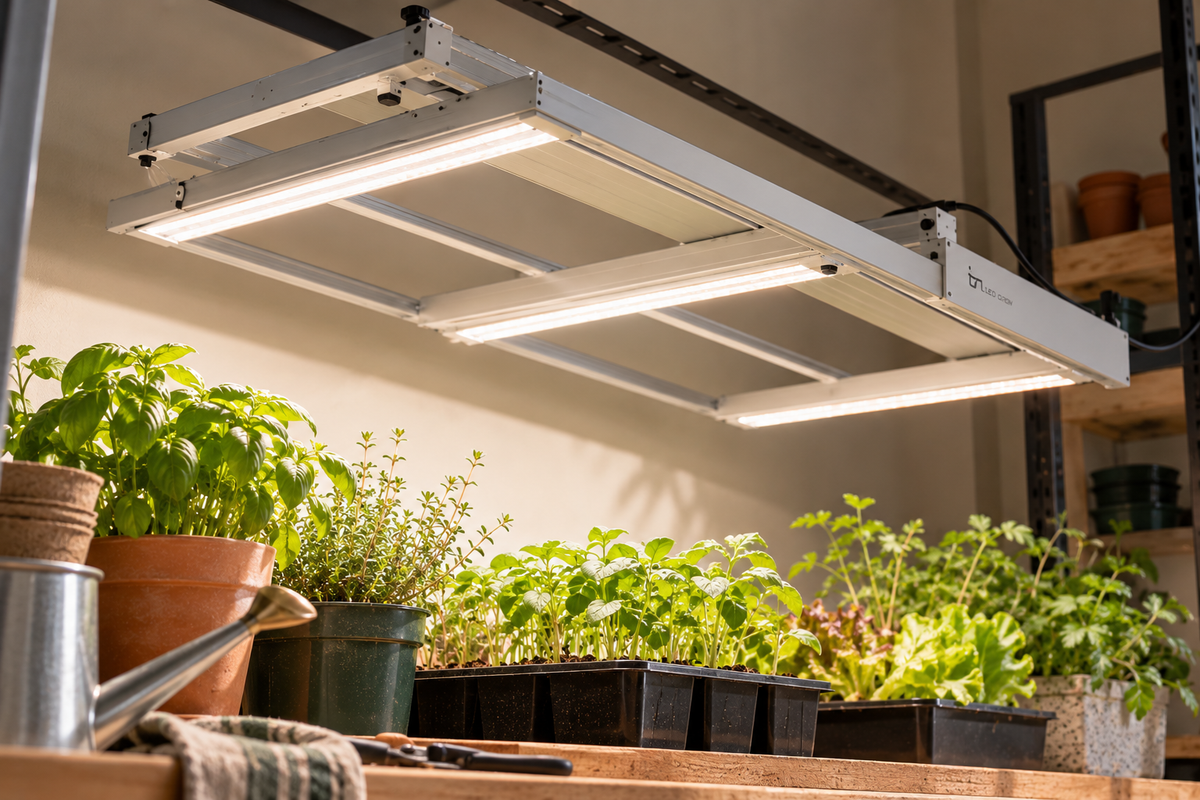
Full-spectrum LED grow lights are a popular choice because they provide a broad range of light wavelengths that support plant growth. They're energy efficient, relatively easy to use, and come in sizes suited to everything from a few pots of herbs to a larger vegetable garden.
Getting the most out of your grow lights comes down to understanding three things: how strong the light is, how long it stays on, and how close it is to your plants.
Intensity: How Strong Is the Light?
Some plants are hungrier for light than others. Leafy greens and many herbs are happy with moderate lighting, while tomatoes, peppers, and other fruiting vegetables need more intense light to support flowers and fruit.
When shopping for grow lights, don't judge them by how bright they look to your eyes. Check the manufacturer's recommended growing area and look for a PPFD chart. It shows how much light reaches different spots beneath the fixture at a given distance, helping you choose a grow light that suits your space and your plants.
Duration: How Long Should the Lights Stay On?
How long your lights stay on matters just as much as how bright they are. Different plants need different amounts of light throughout the day, and a simple outlet timer can help you maintain a consistent schedule while giving your plants a regular period of darkness.
Distance: How Close Should the Light Be?
If your grow light is too far from your plants, it might not give them enough energy. If it's too close, it can cause stress. Start with the manufacturer's recommended distance, then pay attention to how your plants respond. As they grow, you can adjust the light to keep them happy and healthy.
Getting your lighting right takes a little practice, but your plants can tell you a lot about what's working and what needs adjusting.

Your Plants Want More Light
One of the clearest signs your plants need more light is the way they grow. When they aren't getting enough, they'll naturally stretch toward the strongest light source they can find.
Have you noticed your basil growing a little taller than usual, with long, thin stems and fewer leaves? Or maybe your seedlings are determined to lean toward the window, no matter how often you turn their containers.
They're probably looking for more light.
If you're noticing this kind of growth, it's worth taking another look at your lighting setup. If your plants are relying on a window, adding a grow light can give them a more consistent source of light throughout the day.
Already using one? Check how far your grow light is from your plants. You may be able to move it a little closer to encourage stronger, more compact growth. Make small adjustments and see how your plants respond rather than moving the light too close all at once.
If you've got several plants sharing one fixture, make sure they're all getting enough coverage. Sometimes those larger plants can be sneaky and start shading the smaller ones. You might need to rearrange things just a bit, or consider a fixture that covers a larger growing area.
Those long, stretched stems aren't going to shrink back down, but after you've adjusted your lighting, pay attention to the new growth. If your plants start developing sturdier stems and more closely spaced leaves, you'll know you're moving in the right direction.
A Little Too Much Light
Just as plants can struggle without enough light, they can also become stressed when they're getting too much.
One of the first places you might notice this is in the leaves closest to your grow light. If they're curling upward, developing pale patches, or beginning to look damaged, the light may be too strong or too close to the plant.
You might also notice some wilting, although this can happen for several reasons. Before making any changes to your lighting, check the soil to see if your plants need water. If the soil is still damp from the last time you watered, take a closer look at your grow lights. Pay attention to how close the fixture is and how warm the growing area feels.
Even energy-efficient LED grow lights produce some heat, and when plants get too warm, they can lose moisture faster than their roots can replace it.
If you suspect your lighting is causing stress, start by checking the manufacturer's recommended distance. Raising the fixture a little or reducing its intensity with a dimmer may be enough to make your plants more comfortable.
Give your plants some time to respond before making another adjustment. Leaves that are already damaged may not recover, but healthy new growth will help you recognize when you've found a better balance.
Healthy Plants, Slow Growth
Are your plants looking healthy but not producing much?
Maybe your herbs are staying green without producing many new leaves, or your tomato plants are getting taller but haven't started flowering. If everything else in your garden seems to be in good shape, your lighting schedule might be worth another look.
Plants need enough light throughout the day to support healthy growth and a delicious harvest. Even if your grow light is bright, it may not be providing enough energy if it's only running for a few hours.
For many herbs and leafy greens, around 12 to 16 hours of suitable artificial light each day is a good starting point. If your plants seem healthy but aren't producing much, check how long your lights are running.
If your lights are already running for the right amount of time, consider whether they're powerful enough for what you're growing. A small LED grow light might work perfectly for herbs but struggle to provide enough light for tomatoes.
Fruiting vegetables generally need more light to support flowering and fruit production, so a stronger fixture could make a noticeable difference in your harvest.
Remember, lighting is just one part of your growing environment. Keep an eye on watering, temperature, nutrients, and airflow before making major changes to your setup. If those conditions are in good shape, adjusting your lighting could help get things growing again.
You've Found the Sweet Spot
As you learn to recognize when your plants need a little extra attention, make sure you're noticing when they're doing well, too. Healthy growth is just as valuable a sign as anything else, and it can tell you a lot about what's working in your indoor garden.
You created this wonderful indoor environment and now you get to watch your plants grow within it. And just like an outdoor garden, the more time you spend tending to it, the easier it becomes to understand.
And when everything is growing well, take a moment to appreciate it. You've put in the work to bring your garden inside, and now you get to look forward to the harvest.