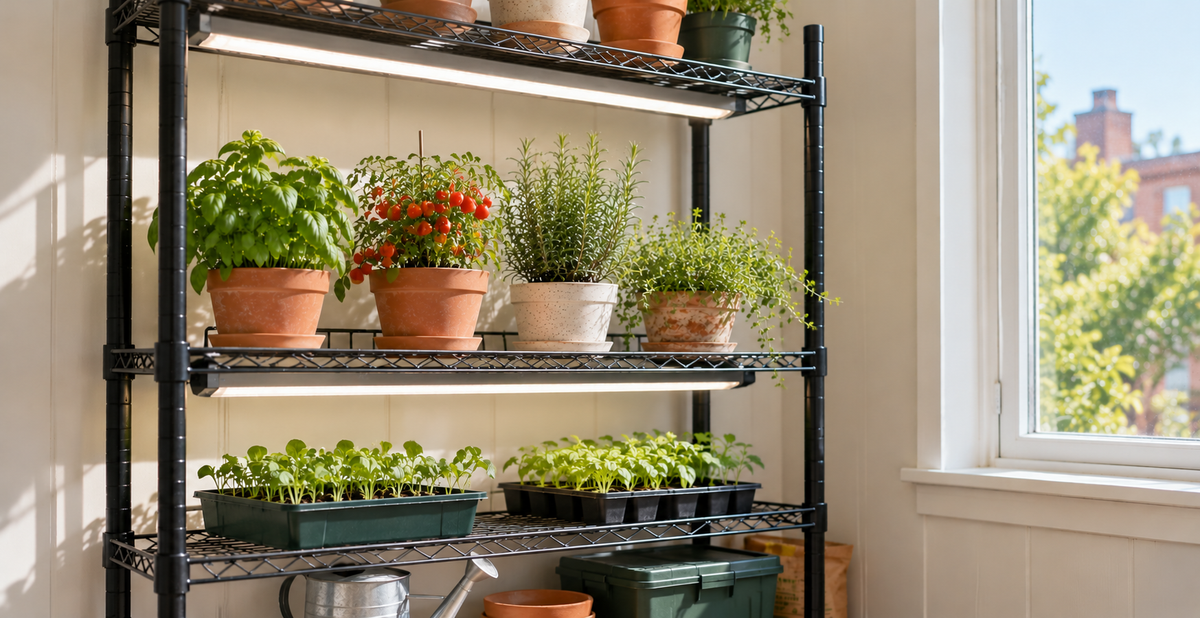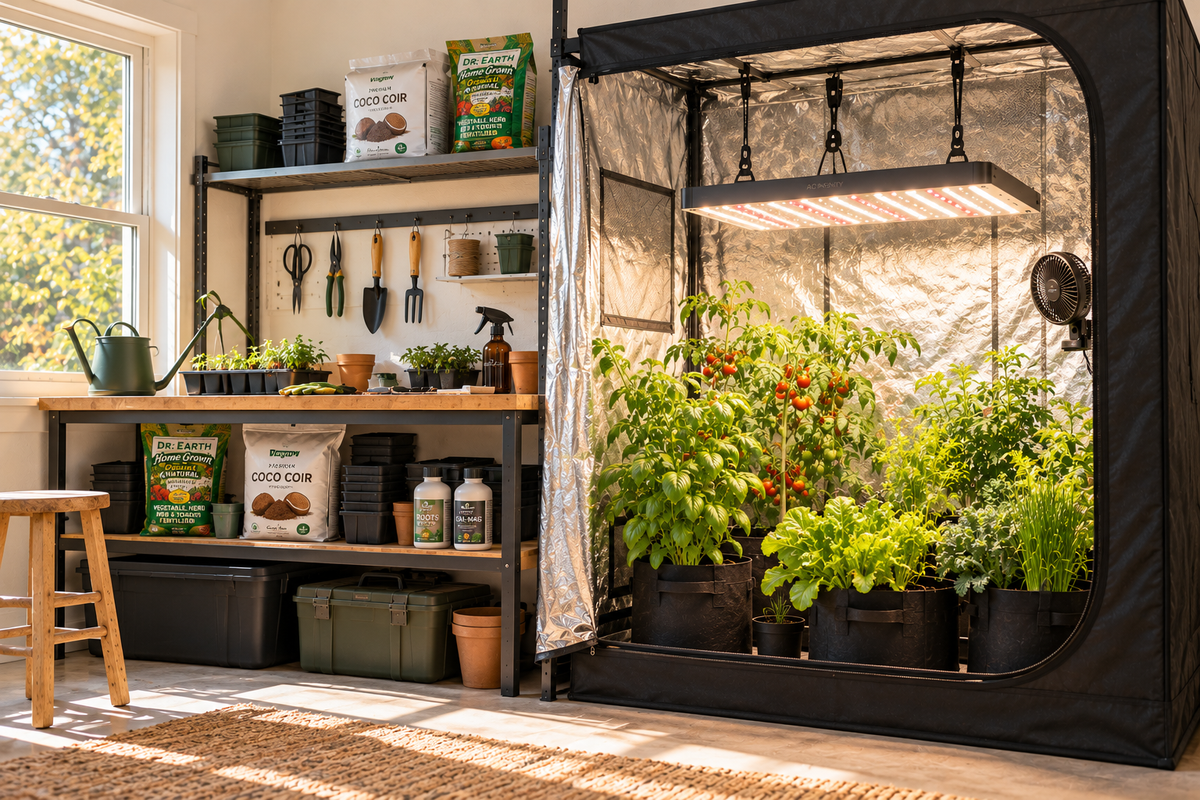
When the magic of a warm summer garden gives way to winter’s frosty mornings, that magic doesn’t just go away. It gets moved from the outdoors to indoors. A successful indoor garden is a curated environment containing all the elements of an outdoor garden, but instead of leaving your plants vulnerable to the elements, you control the elements.
All of a sudden you get to control the light, moisture, airflow, and all other variables that breathe life into your plants.
It might sound like a lot to pull off, but more often than not, you already have the perfect space for the project. A kitchen shelf, empty corner, spare room, or a little extra space in the basement are all the perfect starting spots for an indoor set up.
The easiest way to approach an indoor garden is by starting with the four constants that you have control over—space, water, light, airflow—and then learning about the variables in your environment.
Let's break this down.
Building as you read? Explore our gardening essentials to find the tools you need
First, Find the Right Space
Before you buy equipment, find where your indoor garden is actually going to live. A shelving unit, countertop, basement corner, closet, or unused section of a room can all become productive growing spaces.
Start by thinking about the plants you want to grow and how much room they will eventually need. A few trays of herbs will take up less room than tomatoes or peppers. The goal is to give the plants enough room to reach their full size.
Once the plant’s size is accounted for, imagine yourself caring for the garden once it’s full. Can you easily water every plant? Move around it easily to inspect the leaves?
Oh and pro tip, if you’re using grow lights, you’ll want to pick a spot that's close to an outlet. This will help you avoid purchasing too many extension cords and creating a tripping hazard while carrying a water tray to your bathroom.
These details will start to really matter once maintaining the garden becomes part of your daily routine.
Next, Look at the Light
Once you have a location in mind, look at how much light it gets.
Natural light can contribute to an indoor garden, but it doesn’t always provide enough light for a plant.
Watch the space throughout the day and notice how many hours of direct light your plants will receive. You may be growing in a very shaded corner or a room that gets no light at all.
If that’s the case, not a problem, this is where a grow light comes in. A grow light allows you to control the exact amount of light for the exact amount of time your plant needs. You won’t have to adjust for dark evenings or worry when the forecast calls for dreary winter weather.
When choosing a light make sure it will fit in your growing area and is easily adjustable. For a small shelf or countertop garden, start with a compact light designed to cover that footprint. Larger growing areas will need more coverage and intensity. Later on, the plants themselves will tell you how you need to adjust the light.
Then, Think About the Air
Now that you know where the garden will be and where its light will come from, pay attention to the air around it.
Air is constantly moving around plants outdoors. Indoors, however, will usually lack proper air circulation. Especially if your plants are in a closet or a more enclosed space. When plants lose that circulation, warm and humid air can settle around leaves preventing them from growing strong.
Stand where you’re going to put your plants and consider, does the ceiling fan reach this part of your space? What about the AC unit? If you can feel the air circulating in your chosen space, then you may not need extra airflow. If the air feels still and stagnant, a fan is a must purchase.
You are not trying to create strong wind. Gentle, consistent circulation is the goal.
And finally, Water
Before you start bringing in plants, think through one of the most frequent jobs you will do in this space: watering.
If your garden is on a kitchen shelf, this may be as simple as filling a watering can at the sink. If it is in a basement, spare bedroom, or another part of the house, you might wind up carrying a few buckets which can get heavy and awkward. Getting the right gear here makes all the difference. Proper watering cans, buckets, or a faucet system will go a really long way.
Like any houseplant, the container needs appropriate drainage, and that water needs somewhere to go. Trays, saucers, and waterproof surfaces can protect floors and furniture while making cleanup much easier.
For a small garden, simple hand-watering tools may be all you need. As the number of plants grows, pumps, sprayers, and other watering tools can make regular maintenance much easier.

Check Your Climate
At this point, you have your four constants—space, water, light, airflow—those are the big outdoor elements that you are recreating inside. Once all of those elements come together, the magic begins. Before your very eyes, a small unique climate space will be created right inside your home.
This is where those variables start to come in. Grow lights produce heat, plants release moisture, windows can create cold spots, and enclosed spaces can trap warm air.
Time to put your green thumb to work. Just like outdoor gardening, you will begin to notice how your plants react to your environment and figure out what they need.
Pro tip number two: using a basic thermometer and humidity meter you can get a better read on the conditions your environment creates. This will help you understand the variables of your environment and how your plants are responding to them. It’ll sort of be like your weather app for the indoor season.
Ready to Build Your Setup?
Okay, let's review. You have the pieces in place: your space, light, airflow, and water.
With the basics in place, go ahead and give it a test run before the plants move in.
Run your grow lights to feel how warm the space gets, make sure air is circulating evenly throughout, test your drainage trays, and just make sure the garden feels approachable to work with.
No need to get the perfect set up on the first go. Your garden will adjust and develop as you learn from it.
Once the plants move in, the fun really begins. You get to grow!
Just like an outdoor garden, your plants will tell you what they need and you’ll get to learn the unique way they communicate indoors.