Your basil is looking beautiful, your lettuce is ready for picking, and those tomatoes you've been patiently watching are finally turning red. After weeks of tending to your garden, it's finally time to bring everything you've grown into the kitchen.
But wouldn't it be nice if there were more where that came from?
Believe it or not, the way you harvest your plants can make a big difference in how much they'll continue producing. A little snip in the right place can encourage new growth, giving you more fresh ingredients to enjoy long after your first pick.
Harvesting is more than picking what's ready to eat. It's another opportunity to care for your plants and help them stay healthy and productive throughout the growing season.
Let's take a closer look at how to harvest your plants properly and keep your garden giving.
Know When Your Plants Are Ready
Just like watering your plants or making sure they're getting enough sunlight, knowing when to harvest is an important part of caring for your garden.
It might be tempting to let your plants grow as big as possible before picking anything, but bigger doesn't always mean better. In fact, many vegetables and herbs benefit from being harvested while they're still young and actively growing.
Take lettuce, for example. You don't need to wait until the entire plant is fully grown to start enjoying it. Once the outer leaves are large enough to eat, you can begin picking a few at a time. By leaving the younger leaves in the center untouched, you're giving the plant an opportunity to continue growing and producing more lettuce.
Herbs have their own rhythms. Basil is usually ready for its first trim once it has developed several sets of healthy leaves and is growing steadily. Parsley takes a little longer to establish, but once it has plenty of mature stems, you can begin harvesting the outer ones.
Plants need time to recover after harvesting. A healthy plant with plenty of new growth will generally bounce back more easily than one that's already struggling. Taking only what you need and leaving plenty of healthy foliage behind gives your plants the energy they need to keep growing.
Think of harvesting as another part of your regular gardening routine. The goal isn't simply to take what you can get, but to leave your plants in good shape for whatever comes next.
A Little Off the Top Goes a Long Way
When it comes to harvesting herbs, a little snip in the right place can go a long way. Knowing where to make your cuts can encourage new growth and help your plants produce more of those delicious leaves.
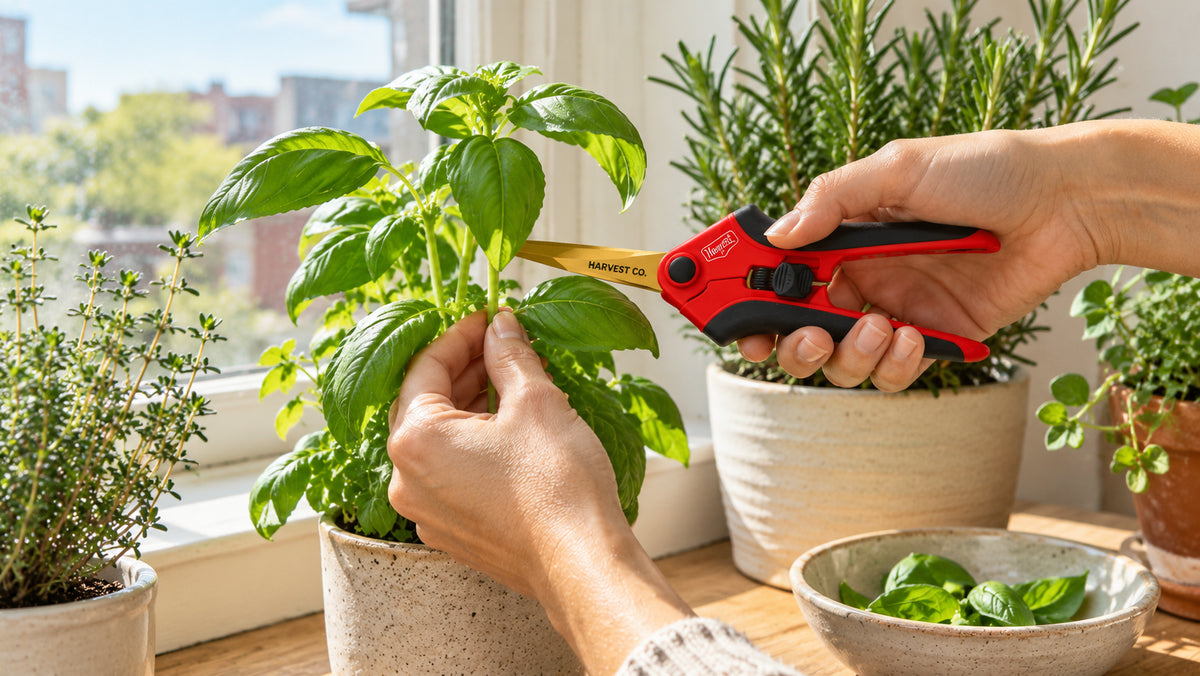
Let's use basil as an example. Take a look at one of the taller stems and find a spot where two leaves grow out from opposite sides. Using a clean pair of scissors, cut the stem just above those two leaves.
When you cut the top of a basil stem, the two small buds where the remaining leaves meet the stem can begin growing into new branches. Instead of continuing to grow from a single tip, your basil can develop two new branches that produce even more leaves. Over time, this helps your plant grow fuller and bushier, giving you more basil to enjoy with future harvests.
Other herbs have their own preferred haircut. Mint responds well to a similar approach, while parsley likes things done a little differently.
For parsley, harvest the larger outer stems close to the base of the plant rather than trimming the tops. This leaves the younger growth in the center untouched so it can continue developing.
Every herb grows a little differently, and knowing where to make your cuts can mean a lot more fresh herbs for your kitchen.
The Classic Cut-and-Come-Again Method
Some of the best plants to grow are the ones that keep giving long after your first harvest.
Leaf lettuce, arugula, and other leafy greens are great examples of what's known as cut-and-come-again harvesting. Rather than pulling up the entire plant, you harvest a few mature leaves at a time and leave the younger ones to continue growing.
When harvesting leaf lettuce, pick the larger outer leaves while leaving the smaller leaves in the center untouched. This protects the plant's growing point, allowing it to continue producing fresh leaves for your next harvest.
This is especially handy when you only need a few leaves for a sandwich or a small salad. You can take what you need and leave the rest growing for another day.
With cut-and-come-again harvesting, one planting can give you several smaller harvests instead of one big one.
Of course, no plant keeps producing forever. Eventually, your greens will slow down or begin to lose their tenderness. When that happens, it's time to make room for something new.
There's Always Something Growing
One harvest isn't all your plants are capable of. You can pick fresh lettuce for weeks and put basil in your pasta night after night. And make another mojito. Go ahead, why not? You've got plenty of mint!
The better you understand how your plants grow, the more you can get out of every harvest. Just like watering, pruning, and providing the right amount of light, harvesting is another opportunity to give your plants the care they need.
And the more familiar you become with your garden, the easier it gets to recognize when your plants are ready for a trim and when they could use a little more time to grow.
With a few good harvesting habits, you can enjoy more of what you've grown throughout the season.
So keep those scissors handy. There's plenty more to come.